
The stock exchange is the beating heart of the global financial system. For centuries, these institutions have served as the primary mechanism for capital formation, allowing businesses to raise funds and investors to build wealth. However, the image of a stock exchange has shifted dramatically—from men in top hats shouting under a buttonwood tree to invisible algorithms executing trades in microseconds within high-security data centers.
Understanding how stock exchanges have changed over time is essential for any modern investor. The evolution is not merely a story of technological progress; it is a narrative of shifting power dynamics, regulatory breakthroughs, and the democratization of wealth. This article explores the transformative journey of stock exchanges, focusing on the structural, financial, and operational shifts that have defined the modern era of investing.

The Historical Foundation: From Physical Pits to Organized Capital
The concept of a stock exchange was born out of a need for trust and liquidity. Before the digital age, the exchange was a physical destination—a hub where the “Money” category of history was written in ledger books and through handshake deals.
The Birth of the Joint-Stock Company
The origins of the modern exchange date back to the early 17th century with the establishment of the Amsterdam Stock Exchange in 1602. It was created primarily to facilitate the trading of shares in the Dutch East India Company. This was a revolutionary moment in business finance: for the first time, the risks and rewards of global trade were distributed among a broad pool of investors. This model provided the blueprint for how capital could be mobilized to fund massive industrial and commercial enterprises.
The Buttonwood Agreement and the Rise of the NYSE
In the United States, the evolution began under a buttonwood tree on Wall Street in 1792. Twenty-four brokers signed the Buttonwood Agreement, establishing a set of rules for trading securities and setting the stage for the New York Stock Exchange (NYSE). For the next two centuries, the “trading floor” was the physical manifestation of the market. Investors relied on floor brokers who used “open outcry”—a system of shouting and hand signals—to match buy and sell orders. This era was characterized by high barriers to entry and a reliance on human mediation for every transaction.
The Technological Leap: From Floor Trading to Electronic Networks
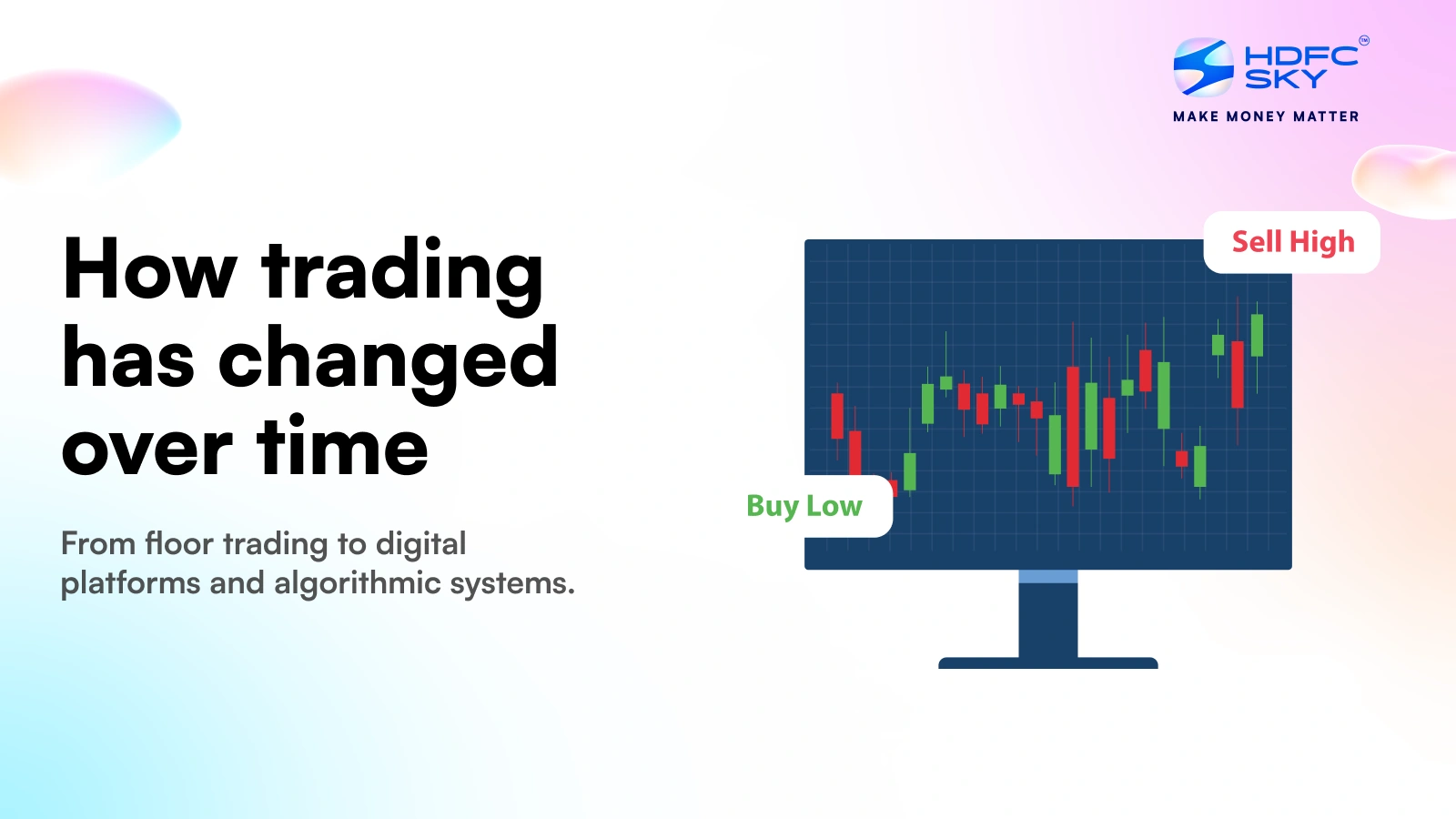
The most visible change in stock exchanges over the last fifty years has been the total migration from physical presence to digital infrastructure. This shift fundamentally altered the cost of investing and the speed of the market.
The Launch of NASDAQ and Electronic Quotations
In 1971, the National Association of Securities Dealers Automated Quotations (NASDAQ) was launched as the world’s first electronic stock market. Initially, it was simply a computer bulletin board that displayed price quotes, but it eventually evolved into a platform where trades could be executed electronically. This was a watershed moment for business finance, as it challenged the monopoly of the physical trading floors. It proved that a “market” did not need a physical location; it needed a reliable network.
The Death of the Trading Floor
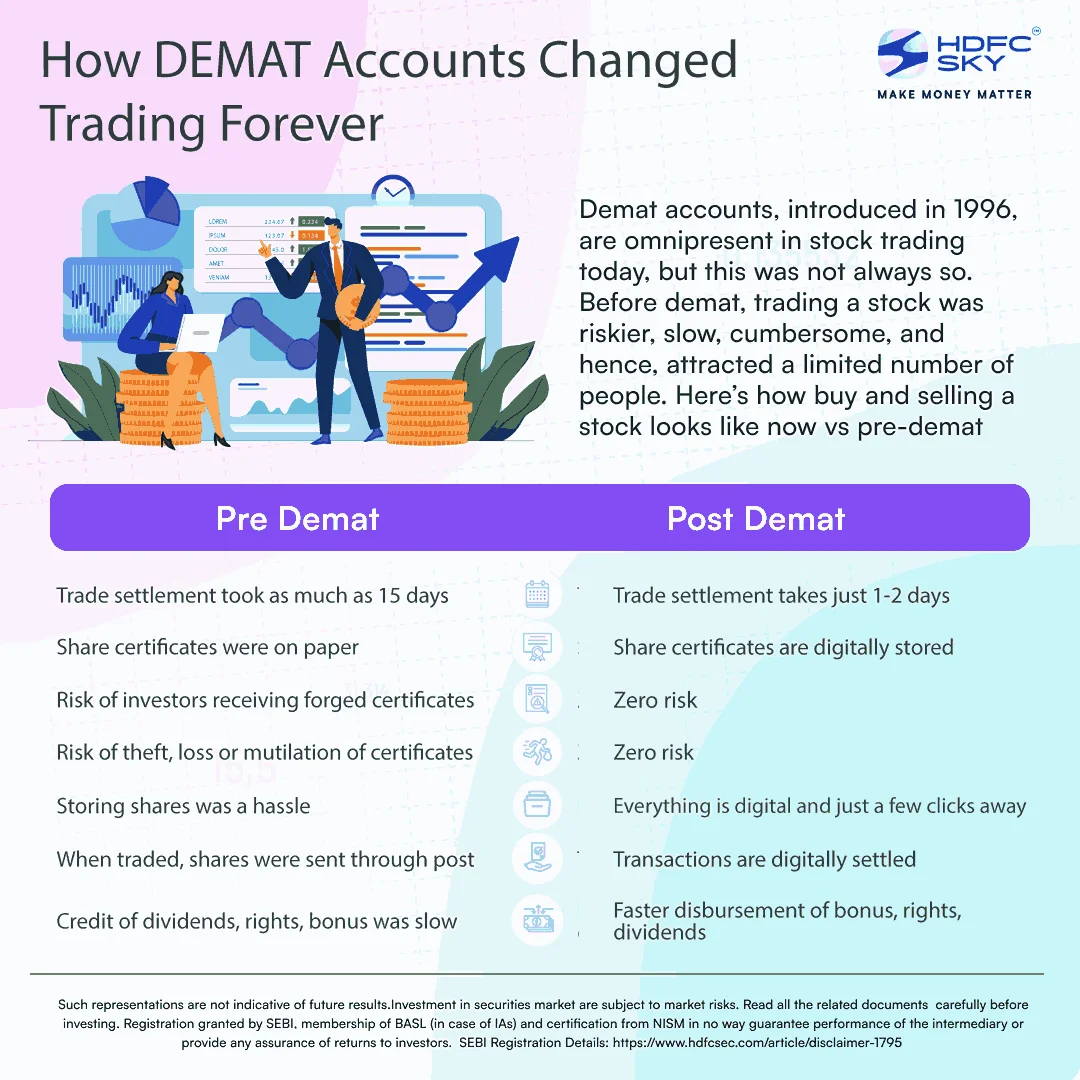
Throughout the 1990s and early 2000s, the efficiency of electronic communication networks (ECNs) made the old “open outcry” system obsolete. Exchanges globally, from London to Tokyo, shuttered their physical pits in favor of server rooms. Even the NYSE, the last bastion of floor-based trading, eventually transitioned to a “hybrid” model where the vast majority of trades are executed digitally. For the investor, this meant that the time it took to execute a trade dropped from minutes to milliseconds, and the “spread” (the difference between the buy and sell price) narrowed significantly, making investing more cost-effective.
High-Frequency Trading and Algorithmic Dominance
As exchanges became purely digital, the players changed. Today, a significant portion of trading volume is driven by High-Frequency Trading (HFT) firms. These entities use complex algorithms to analyze market data and execute thousands of orders in the blink of an eye. While this has provided immense liquidity to the money markets, it has also introduced new types of volatility, such as “flash crashes,” where prices drop and recover in minutes due to algorithmic feedback loops.
The Democratization of the Market: Lowering Barriers for the Individual
Perhaps the most impactful change for the “Personal Finance” niche is how the evolution of exchanges has invited the average person into the fold. What was once an elite club for institutional players is now accessible to anyone with a smartphone.
The End of Fixed Commissions
A pivotal moment in financial history occurred on May 1, 1975, often referred to as “May Day” in the brokerage industry. The U.S. Securities and Exchange Commission (SEC) abolished fixed commission rates, allowing brokers to compete on price. This led to the rise of discount brokerages like Charles Schwab, which lowered the cost for individual investors to participate in the stock market. Before this, buying even a small number of shares was prohibitively expensive for the middle class.
The Rise of ETFs and Passive Investing
As exchanges evolved, so did the financial products traded on them. The introduction of the Exchange-Traded Fund (ETF) in the early 1990s fundamentally changed how people manage their money. Instead of picking individual stocks, investors could buy a single share that represented an entire index (like the S&P 500). This moved the focus of many investors from active speculation to low-cost, long-term wealth accumulation, further integrating the stock exchange into the average person’s retirement planning.
The Mobile Revolution and Zero-Commission Trading
The most recent phase of democratization occurred in the late 2010s with the advent of mobile-first trading platforms. By removing commissions entirely and offering fractional shares, these platforms removed the final barriers to entry. This has led to a surge in retail participation, where individual investors now account for a substantial percentage of daily trading volume. The exchange is no longer a distant institution; it is a tool in the pocket of the consumer.
Global Fragmentation and the Modern Market Structure
The modern stock exchange is no longer a single, monolithic entity. The market has become fragmented, globalized, and increasingly complex.
Dark Pools and Alternative Trading Systems
In the past, almost all trading happened on public exchanges. Today, a large portion of “Money” moves through “Dark Pools”—private exchanges where institutional investors can trade large blocks of shares without revealing their intentions to the public market until the trade is completed. This prevents sudden price swings but has also raised questions about market transparency and whether “lit” exchanges (the public ones) still provide a fair price for all participants.
The Globalization of Capital
Stock exchanges have also moved toward consolidation and globalization. We have seen mergers like the creation of Euronext, which combined multiple European exchanges, and the London Stock Exchange Group’s expansion into data and analytics. Investors today have “24/7” access to global markets, allowing a trader in New York to invest in Japanese tech firms or emerging markets in Africa with the same ease as buying a local stock. This interconnectedness means that financial shocks in one part of the world now ripple through the global exchange network almost instantly.
The Frontier: Blockchain and Decentralized Finance (DeFi)
Looking toward the future, the very definition of an “exchange” is being challenged by blockchain technology. Decentralized exchanges (DEXs) allow for the peer-to-peer trading of digital assets without a central authority or clearinghouse. While still in its infancy compared to the NYSE or NASDAQ, the move toward “tokenization”—where traditional assets like stocks or real estate are represented as digital tokens—could be the next major phase in the centuries-long evolution of how we exchange value.
Conclusion: A Future Built on Efficiency and Access
The evolution of stock exchanges over time is a testament to the relentless pursuit of market efficiency. We have moved from the slow, exclusive, and physical markets of the 18th century to the lightning-fast, inclusive, and digital ecosystems of today.
For the modern investor, these changes have been overwhelmingly positive, resulting in lower costs, greater transparency, and unprecedented access to global wealth-building tools. However, as the “Money” landscape continues to shift toward automation and decentralization, the challenge for investors and regulators alike will be to ensure that the exchanges of the future remain stable, fair, and resilient in the face of ever-accelerating change. The stock exchange will likely continue to transform, but its core purpose—connecting capital with opportunity—remains as vital as ever.
aViewFromTheCave is a participant in the Amazon Services LLC Associates Program, an affiliate advertising program designed to provide a means for sites to earn advertising fees by advertising and linking to Amazon.com. Amazon, the Amazon logo, AmazonSupply, and the AmazonSupply logo are trademarks of Amazon.com, Inc. or its affiliates. As an Amazon Associate we earn affiliate commissions from qualifying purchases.