
The modern automobile is no longer a purely mechanical beast defined by gears, valves, and combustion. Instead, it has evolved into a sophisticated mobile data center. At the heart of this digital transformation is the Powertrain Control Module (PCM). Often referred to as the “brain” of the vehicle, the PCM is an embedded system that integrates the functions of the Engine Control Unit (ECU) and the Transmission Control Unit (TCU). In the context of modern technology trends, understanding the PCM is essential for grasping how software-defined vehicles operate, how real-time data processing optimizes performance, and how digital security measures protect our physical mobility.

The Architecture of Automotive Intelligence: How the PCM Functions
To understand what the PCM controls, one must first understand its architecture. The PCM is a high-performance embedded computer designed to survive extreme environments—ranging from the freezing temperatures of winter to the intense heat of an engine bay—while processing millions of calculations per second.
The PCM as the Central Nervous System
In the hierarchy of automotive electronics, the PCM serves as the primary node in a complex network of microcontrollers. Using a communication protocol known as the Controller Area Network (CAN bus), the PCM receives data from dozens of sensors positioned throughout the vehicle. It interprets this data and sends out commands to actuators in real-time. This creates a seamless feedback loop where the software constantly adjusts mechanical outputs to match the driver’s intent and environmental conditions.
Processing Power and Embedded Software
The software architecture of a PCM is remarkably complex. Unlike a standard consumer laptop, the PCM runs a Real-Time Operating System (RTOS). This ensures that critical tasks—such as firing a spark plug at exactly the right millisecond—are prioritized over non-critical tasks. The firmware within the PCM contains “lookup tables” or “maps” that the software references to decide how much fuel to inject or when to shift gears. As automotive technology trends move toward “over-the-air” (OTA) updates, the software within the PCM can now be patched or optimized by manufacturers remotely, much like a smartphone operating system.
Core Functions: Managing the Engine and Transmission
The primary responsibility of the PCM is the holistic management of the vehicle’s drivetrain. By combining engine and transmission management into a single module, the vehicle can achieve a level of coordination that was impossible in the era of mechanical linkages.
Real-Time Engine Optimization
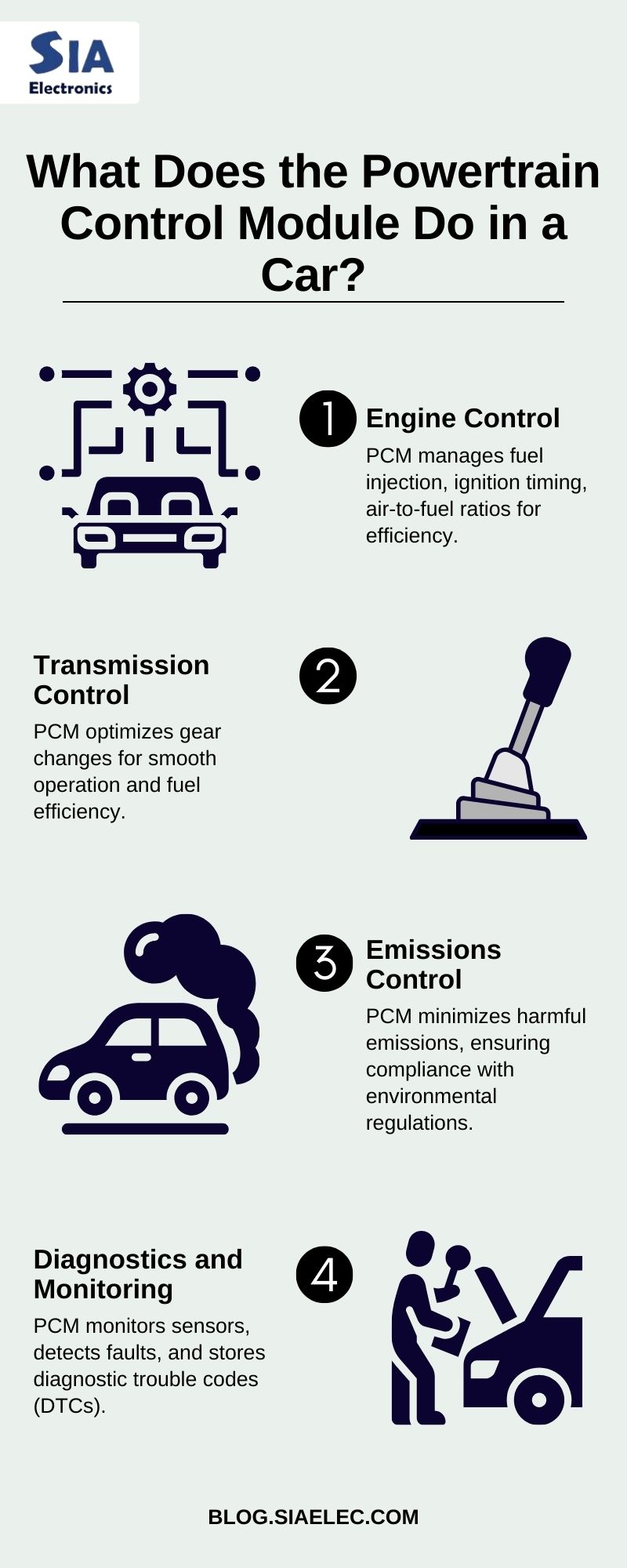
The PCM manages every facet of the internal combustion process. Its most critical tech-driven functions include:
- Fuel Injection Timing: The PCM calculates the precise micro-duration for fuel injectors to stay open based on air intake and throttle position.
- Ignition Spark Timing: To maximize efficiency and power, the PCM adjusts when the spark plug fires relative to the piston’s position.
- Emissions Control: By monitoring oxygen sensors in the exhaust, the PCM adjusts the air-fuel ratio to ensure the catalytic converter functions efficiently, reducing the vehicle’s carbon footprint through software-driven precision.
- Idle Speed Control: Even when the vehicle is stationary, the PCM manages the idle air control valve to ensure the engine doesn’t stall under varying loads, such as when the air conditioning compressor kicks in.
Transmission Dynamics and Gear Shift Logic
In vehicles with automatic or dual-clutch transmissions, the PCM (or the TCU sub-section within it) governs gear selection. Modern shift logic is no longer just about speed; it is about predictive algorithms. The PCM analyzes throttle position, vehicle pitch (sensing if you are going uphill), and even braking patterns to determine the optimal gear. This tech integration ensures that power delivery is smooth while maximizing fuel economy, a feat achieved through complex mathematical modeling of torque and load.
The Data Ecosystem: Sensors, Inputs, and Feedback Loops
The PCM does not operate in a vacuum. It relies on a massive influx of data from a diverse array of sensors. This data ecosystem is what allows the vehicle to be “aware” of its internal state and its external environment.
Interpreting Sensor Telemetry
The PCM processes a constant stream of telemetry data. Key sensors include:
- Mass Air Flow (MAF) Sensor: Tells the PCM the volume of air entering the engine.
- Throttle Position Sensor (TPS): Relays how hard the driver is pressing the accelerator.
- Knock Sensors: These act as “ears” for the PCM, detecting internal vibrations that could indicate pre-ignition, allowing the PCM to instantly retard timing to prevent engine damage.
- Coolant and Intake Air Temperature Sensors: These allow the PCM to adjust performance based on thermal conditions, ensuring the engine operates within its optimal digital “map.”
Closed-Loop Control Systems
One of the most impressive technical aspects of the PCM is its ability to operate in a “closed-loop” mode. In this state, the PCM looks at the results of its own actions. For example, after adjusting the fuel mixture, it checks the oxygen sensor to see if the combustion was too “lean” or too “rich.” It then uses this feedback to correct its next calculation. This is a classic example of automated machine control, ensuring that the vehicle remains efficient even as mechanical parts wear down over time.
Diagnostics and Digital Security: The Software Shield
As vehicles become more reliant on code, the role of the PCM expands into the realms of digital diagnostics and cybersecurity. The PCM is the primary gatekeeper for the vehicle’s diagnostic data and its defense against unauthorized access.
On-Board Diagnostics (OBD-II) and Data Logging
The PCM is responsible for the On-Board Diagnostics system. When a sensor reports a value outside of its programmed threshold, the PCM generates a Diagnostic Trouble Code (DTC) and triggers the “Check Engine” light. Tech-savvy enthusiasts and professional technicians use specialized software and hardware interfaces to “handshake” with the PCM, downloading data logs that reveal the vehicle’s performance history. This level of transparency is a cornerstone of modern automotive maintenance, turning mechanical troubleshooting into a data science problem.
Cybersecurity in Automotive Control Modules
With the advent of connected cars, the PCM has become a potential target for digital threats. If an attacker gains access to the CAN bus—either through a physical port or a wireless vulnerability—they could theoretically send malicious commands to the PCM. To combat this, modern PCM architecture includes encrypted firmware and secure gateways. Manufacturers are increasingly implementing “code signing,” where the PCM will only execute software that has been digitally verified. This intersection of automotive engineering and digital security is one of the most critical trends in the tech industry today.
The Future of Powertrain Tech: AI and Electrification
The transition from internal combustion engines to electric vehicles (EVs) is fundamentally changing what we consider a “powertrain control module.” However, the underlying technology of centralized digital control remains more relevant than ever.
Transitioning to Electric Vehicle Control Units (VCU)
In the world of EVs, the PCM is often replaced or augmented by a Vehicle Control Unit (VCU). Instead of managing fuel injection and spark timing, the software now manages high-voltage battery discharge, regenerative braking, and inverter frequencies. The complexity has moved from thermodynamics to electrodynamics. The “code” now dictates how many kilowatts of power are delivered to the motors at any given millisecond, requiring even faster processing speeds and more robust software stability.
AI-Driven Predictive Maintenance and Performance
The next frontier for the PCM is the integration of Artificial Intelligence and Machine Learning. Future iterations of control modules will not just follow static lookup tables; they will learn from the driver’s habits and environmental data. For instance, an AI-enhanced PCM could predict a component failure before it happens by identifying subtle anomalies in sensor data that would be invisible to traditional diagnostic thresholds. This shift toward predictive analytics represents the ultimate convergence of automotive hardware and advanced AI software.

Conclusion
The Powertrain Control Module is the unsung hero of the modern technological landscape. By serving as a bridge between the physical world of mechanical movement and the digital world of software and data, the PCM enables the efficiency, safety, and reliability we expect from 21st-century transportation. Whether it is managing the micro-bursts of fuel in a high-performance engine or securing the data integrity of a connected EV, the PCM remains the most critical computer most people will ever own. As we move toward a future of autonomous driving and fully software-defined vehicles, the evolution of the PCM will continue to be at the forefront of global technology trends.
aViewFromTheCave is a participant in the Amazon Services LLC Associates Program, an affiliate advertising program designed to provide a means for sites to earn advertising fees by advertising and linking to Amazon.com. Amazon, the Amazon logo, AmazonSupply, and the AmazonSupply logo are trademarks of Amazon.com, Inc. or its affiliates. As an Amazon Associate we earn affiliate commissions from qualifying purchases.