
In the rapidly evolving world of technology, terms that were once relegated to sociology textbooks have taken on profound new meanings. When we ask, “what does minorities mean” within the context of the tech industry, we are not simply looking for a demographic definition. We are exploring a multifaceted concept that touches upon workforce diversity, algorithmic integrity, data representation, and the very architecture of our digital future.
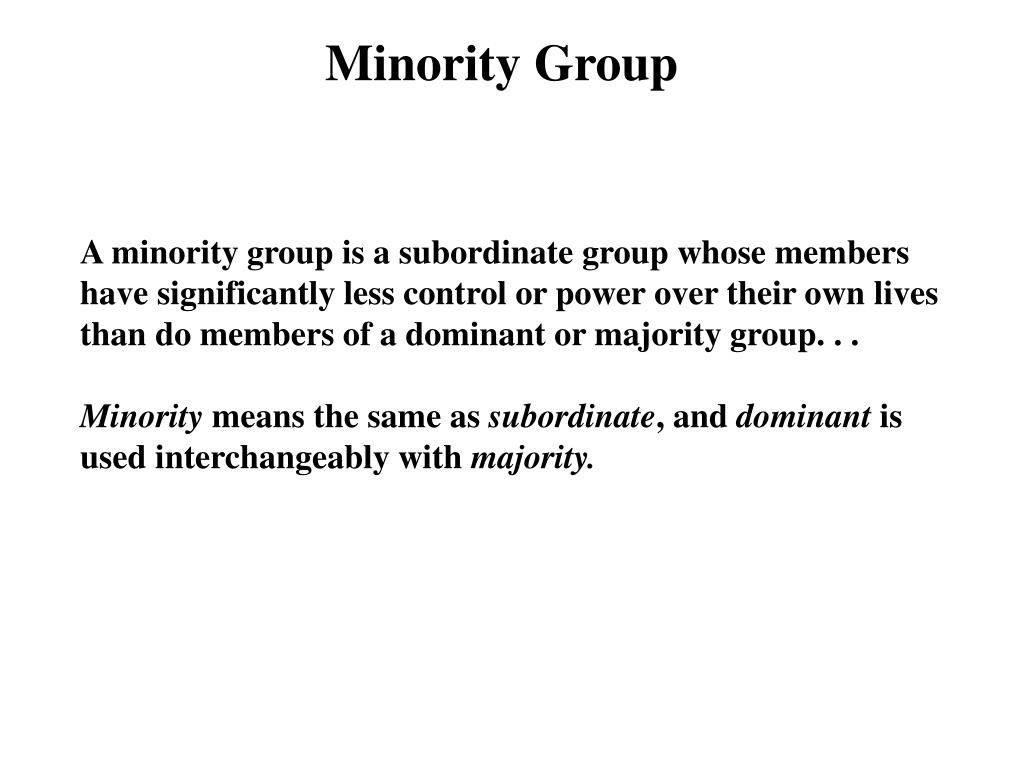
In the tech sector, “minorities” refers to groups that are underrepresented relative to their proportion in the general population. This includes racial and ethnic groups, women in technical roles, the LGBTQ+ community, and individuals with disabilities. However, as we transition into an era dominated by Artificial Intelligence (AI) and big data, the term also encompasses “data minorities”—those whose digital footprints are too small or too skewed to be accurately served by modern software. Understanding these nuances is essential for any professional navigating the current technological climate.

Defining Minority Representation in the Global Tech Workforce
The most visible interpretation of “minorities” in tech is found within the corporate headquarters of Silicon Valley and global tech hubs. Despite decades of discussion regarding Diversity, Equity, and Inclusion (DEI), the industry continues to struggle with a “leaky pipeline” that limits the participation of specific groups.
Identifying Underrepresented Groups in STEM
In the United States and Europe, Black, Hispanic, and Indigenous populations remain significantly underrepresented in software engineering, data science, and leadership roles. This disparity is often rooted in systemic barriers that begin in early education. When we discuss minorities in this context, we are looking at the lack of access to high-level STEM (Science, Technology, Engineering, and Mathematics) training and the cultural barriers that persist within high-growth tech companies.
For the tech industry, this lack of representation is more than a social issue; it is a creative and functional one. A homogeneous workforce tends to suffer from “groupthink,” where software is designed with a narrow set of use cases in mind. By failing to integrate the perspectives of various minorities, tech companies inadvertently build products that do not serve a global, diverse user base.
The Impact of Geographic and Socio-economic Disparity
Broadening the scope, “minority” also applies to geographic regions that are left out of the global tech boom. While North America and parts of Asia dominate the software landscape, developers in the Global South are often treated as a peripheral minority. This geographic underrepresentation means that the “default” settings of the internet—from language support to bandwidth requirements—are optimized for Western standards, leaving billions of potential users in the digital dark.
Algorithmic Bias: When Data Fails to Represent the Minority
As we move deeper into the technical side of the industry, the definition of “minorities” shifts toward data science. In machine learning, an algorithm is only as good as the data used to train it. If a group is a minority within a training dataset, the resulting AI model will likely perform poorly for that group.
The Challenge of Small Sample Sizes in Machine Learning
Machine learning models require vast amounts of data to identify patterns. When a specific demographic represents only a small fraction of the input data, the model may treat their characteristics as “noise” or outliers. For example, in medical diagnostic AI, if the majority of training images are from light-skinned patients, the software may struggle to identify skin cancer on darker skin tones. In this scenario, being a “data minority” can have life-altering consequences.
This technical definition of minorities highlights a critical flaw in “objective” technology. Developers must actively seek out “over-sampling” techniques—where minority data is intentionally bolstered—to ensure that the software functions equitably. Without this, technology becomes a mirror of existing societal biases, reinforced by the perceived authority of “the algorithm.”
Facial Recognition and Natural Language Processing Gaps
The practical impact of being a minority in a data set is most evident in Facial Recognition Technology (FRT) and Natural Language Processing (NLP). Studies have shown that FRT systems have significantly higher error rates for women and people of color. Similarly, voice-activated AI tools, such as virtual assistants, often fail to recognize accents or dialects that are considered “minority” variations of a standard language.
For tech leaders, solving these issues requires a shift in how we define “success” in software development. It is no longer enough for an app to work for 90% of users if the remaining 10%—the minorities—are excluded or misidentified due to technical oversight.
The Digital Divide and the Concept of “Access Minorities”
Beyond workforce and data, there is a third dimension to what “minorities” means in tech: the “Access Minority.” This refers to individuals who, due to physical disability, age, or socioeconomic status, are unable to engage with technology in the way it was designed.
Broadband Infrastructure as a Barrier to Entry
In an increasingly cloud-based world, those without high-speed internet access become a marginalized minority. This “Digital Divide” creates a tiered society where access to information, remote work, and digital services is a privilege. Rural populations and low-income urban dwellers often find themselves as “minorities” in the eyes of service providers, who prioritize high-density, affluent areas for the rollout of 5G and fiber-optic networks.
This exclusion has a compounding effect. As more essential services—from banking to government applications—move exclusively online, the access minority finds itself further removed from the modern economy. For tech innovators, addressing this requires “lite” versions of apps, offline-first functionality, and a commitment to low-bandwidth optimization.
Designing for Accessibility: Disability as a Minority Focus
Often overlooked in the “minority” conversation are the billion-plus people worldwide living with some form of disability. In the tech world, “accessibility” (often abbreviated as a11y) is the practice of ensuring that digital products are usable by everyone, including those with visual, auditory, or motor impairments.
When developers treat accessibility as an afterthought, they categorize people with disabilities as a “fringe minority” rather than a core user base. However, the tech industry is beginning to realize that “inclusive design” actually improves the experience for everyone. Captions designed for the deaf help people watching videos in loud environments; high-contrast interfaces designed for the visually impaired help everyone see screens in bright sunlight. By focusing on the “minority” user, tech becomes more robust for the majority.
Strategies for Inclusive Innovation
The tech industry is at a crossroads. To remain relevant and ethical, companies must move beyond a superficial understanding of what “minorities” means and integrate inclusivity into their core development cycles.
From Recruitment to Retention: Structural Changes
Addressing the workforce minority gap requires more than just diverse hiring targets. It requires a culture of “belonging.” Tech companies are increasingly investing in Employee Resource Groups (ERGs) and mentorship programs that support minority developers throughout their careers. By fostering an environment where diverse perspectives are valued, companies can reduce turnover and ensure that their leadership reflects the global market.
Furthermore, remote work technology has become a powerful tool for inclusion. By decoupling employment from expensive tech hubs like San Francisco or London, companies can tap into “minority” talent pools in diverse geographic regions, bringing fresh perspectives into the development process.
Open Source and the Democratization of Tech
One of the most promising solutions to the “minority” problem in tech is the Open Source movement. By making code accessible and modifiable by anyone, Open Source democratizes the creation of technology. It allows minority groups to build their own tools, adapt existing software to their specific languages and needs, and bypass the traditional gatekeepers of the tech industry.
Moreover, “Ethical AI” frameworks are being developed to audit algorithms for bias against minorities. These frameworks provide checklists and testing protocols to ensure that before a product is launched, it has been vetted for its impact on underrepresented groups.
Conclusion: The Future is Inclusive
When we ask, “what does minorities mean” in the tech sector, we find that the answer is central to the future of innovation. It is a term that encompasses the engineers building our world, the data points informing our AI, and the users who rely on digital tools for their daily lives.
For the tech industry to reach its full potential, it must move away from treating minorities as an “edge case.” Whether it is through diversifying the workforce, auditing algorithms for bias, or ensuring digital accessibility for all, the goal is clear: technology should not just serve the majority; it should empower everyone. By placing the needs and perspectives of the minority at the center of the design process, we create a more resilient, innovative, and equitable digital world.
aViewFromTheCave is a participant in the Amazon Services LLC Associates Program, an affiliate advertising program designed to provide a means for sites to earn advertising fees by advertising and linking to Amazon.com. Amazon, the Amazon logo, AmazonSupply, and the AmazonSupply logo are trademarks of Amazon.com, Inc. or its affiliates. As an Amazon Associate we earn affiliate commissions from qualifying purchases.