
In the modern automotive landscape, the vehicle has transformed from a mere mode of transportation into a sophisticated mobile tech hub. While much of the attention is often directed toward autonomous driving features, infotainment screens, and connectivity, one of the most critical pieces of hardware for the user experience remains hidden beneath the dashboard or under a seat: the power amplifier.
To the uninitiated, a car amplifier—or “amp”—is simply the device that makes the music louder. However, from a technical perspective, the amplifier is a complex piece of signal-processing hardware responsible for maintaining data integrity, managing thermal loads, and driving the physical movement of speakers. Understanding what an amp does in a car requires a deep dive into electrical engineering, signal processing, and the evolution of digital audio technology.
The Anatomy of Audio Processing: Signal Boosting and Signal Integrity
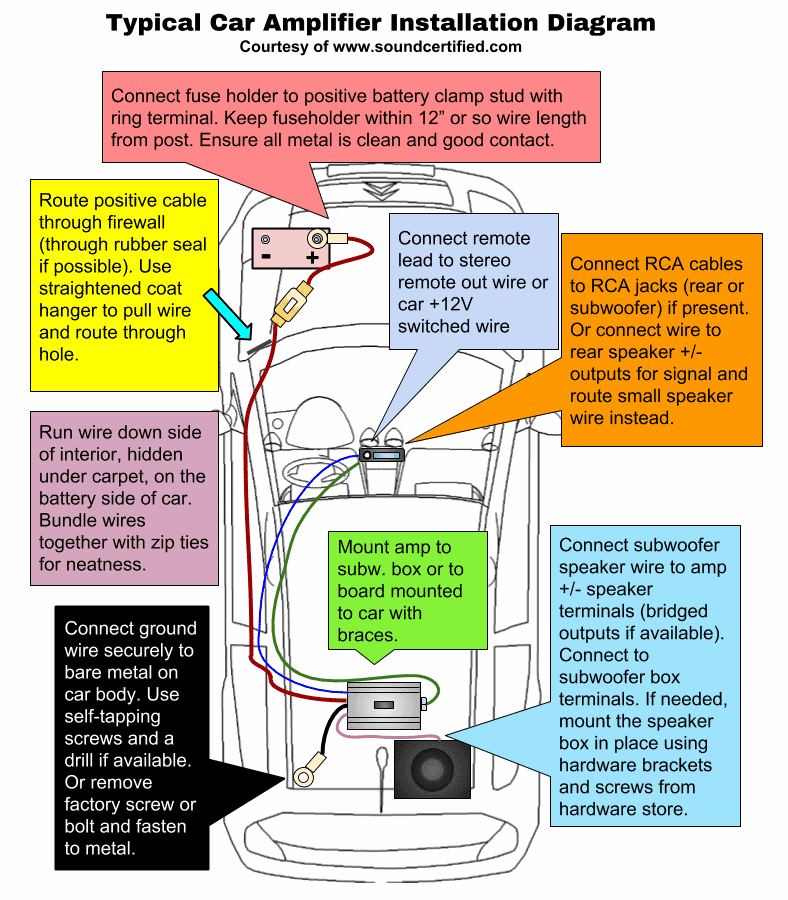
At its core, the primary function of a car amplifier is to take a low-level electrical signal from a source (the head unit or a smartphone) and increase its voltage and current so that it is powerful enough to move the cones of the speakers. However, the tech involved is far more nuanced than just “turning it up.”
From Pre-Amp to Power Amp
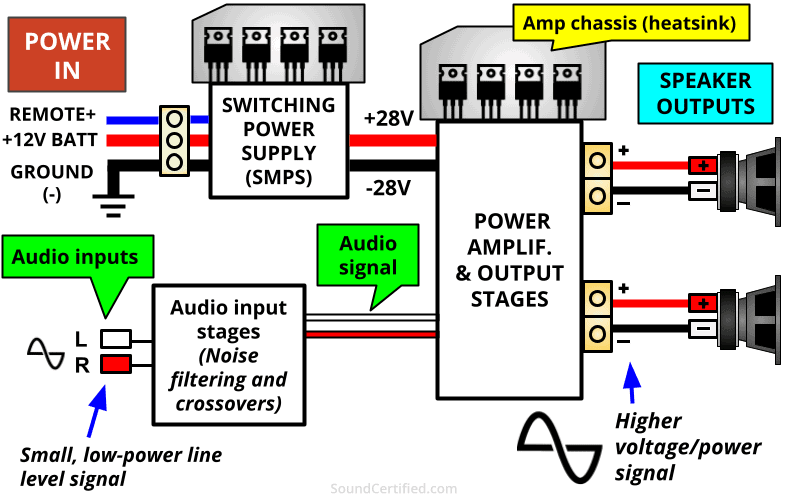
The audio signal generated by your car’s head unit is known as a “line-level” signal. This signal is measured in millivolts—far too weak to physically push a speaker’s voice coil against its magnet. The amplifier acts as the intermediary. It takes this delicate, high-impedance signal and uses a dedicated power source (the car’s battery and alternator) to create a much larger version of that same waveform. The technological challenge here is “linear gain”—ensuring that the output signal is an exact replica of the input signal, just larger.
Managing Total Harmonic Distortion (THD)
One of the most important technical metrics of a car amplifier is Total Harmonic Distortion (THD). When an amplifier pushes its hardware to the limit, the peaks of the electrical waves can become “clipped” or flattened. In the tech world, this results in digital noise and physical heat that can destroy speakers. High-end amplifiers use sophisticated circuitry and high-quality transistors to keep THD at negligible levels (often below 0.01%), ensuring that even at high volumes, the audio remains a high-fidelity representation of the original file.
The Role of the Digital-to-Analog Converter (DAC)
In many modern “smart” amplifiers, the device does more than just amplify; it translates. If you are streaming high-resolution audio via a digital optical cable or USB, the amplifier often houses a high-quality Digital-to-Analog Converter (DAC). The quality of this chip determines how much detail is recovered from the digital bitstream. A superior DAC can identify the subtle textures in a recording that a standard factory-installed system would simply discard as “background noise.”
Power Management and Hardware Architecture
The internal architecture of a car amplifier is a masterclass in electrical efficiency. Because cars operate on a limited 12-volt DC system, the amplifier must use a switching power supply to “step up” that voltage to much higher levels to drive high-performance speakers.
Understanding Wattage: RMS vs. Peak Power
From a technical specification standpoint, consumers often get distracted by “Peak Power” ratings. However, tech experts focus on RMS (Root Mean Square) power. RMS refers to the continuous power an amplifier can output without failing or distorting. A high-quality amplifier uses robust capacitors and transformers to ensure that when a bass drop requires a sudden surge of energy, the hardware can provide it instantly without a voltage sag that would affect the rest of the car’s electronics.
Class A/B vs. Class D: The Efficiency Trade-off
The most significant technological divide in the world of amplifiers is the “Class” of the circuitry.
- Class A/B: These are the traditionalists. They use a linear design that provides incredible sound purity but is highly inefficient, losing about 50% of their energy as heat.
- Class D: This is the modern tech standard for automotive applications. Class D amplifiers use “Pulse Width Modulation” (PWM). They essentially turn the output transistors on and off thousands of times per second. This makes them incredibly efficient (often over 90%), allowing for massive power output in a compact chassis that doesn’t overheat in the cramped quarters of a vehicle.
Thermal Management and Heat Dissipation Tech
Because amplifiers are processing high levels of current, they generate heat. Advanced amplifiers feature sophisticated thermal management systems. This includes heavy-duty aluminum heat sinks with high surface area and, in some cases, internal cooling fans governed by temperature sensors. Some modern smart amps even feature “thermal rollback” technology, which uses a microprocessor to slightly reduce the power output if the unit gets too hot, rather than shutting down entirely—a clear example of software and hardware working in tandem to preserve the user experience.
Integration and the Smart Car Ecosystem
The modern car amplifier is no longer a “dumb” box of transistors. It is increasingly becoming a computer that integrates with the vehicle’s broader tech ecosystem, including CAN-bus systems and digital infotainment platforms.
DSP (Digital Signal Processing) and Acoustic Calibration
The most significant advancement in car amp tech over the last decade is the integration of the Digital Signal Processor (DSP). The interior of a car is an acoustic nightmare—glass reflects sound, fabric absorbs it, and the speakers are positioned at different distances from the listener’s ears.
An amplifier with a built-in DSP allows for “Time Alignment.” This tech delays the signal going to the speakers closest to the driver by microseconds, ensuring that the sound from all speakers reaches the driver’s ears at the exact same moment. It creates a “sound stage” where the music feels like it is coming from the center of the dashboard rather than from the door panels.
Multi-Channel Configurations for Immersive Sound
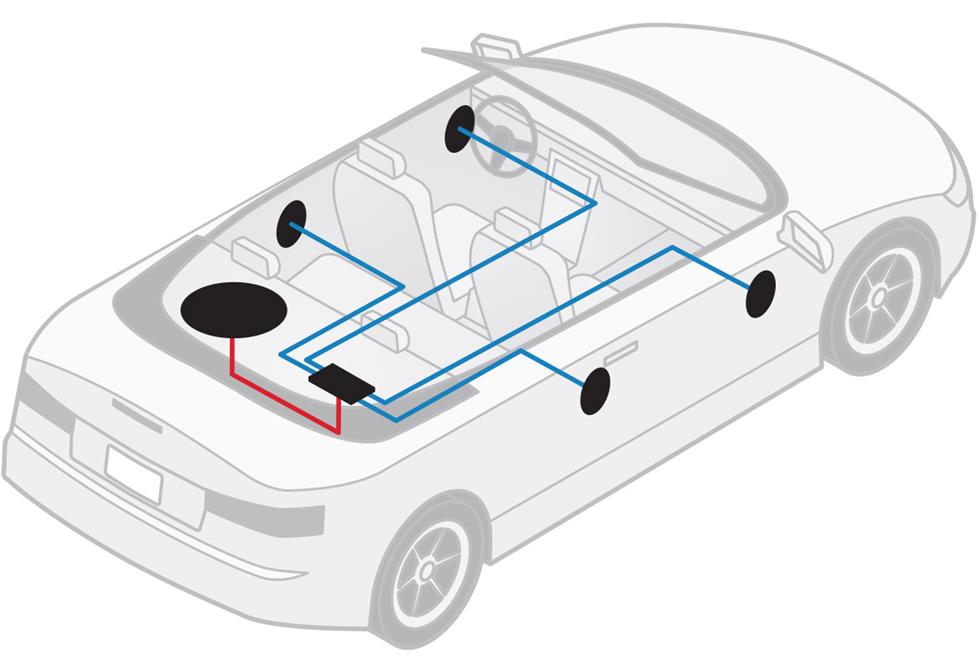
Technology has moved beyond simple “Left/Right” stereo. Modern car amplifiers often feature 5, 6, or even 12 channels of amplification. This allows for dedicated power to be sent to tweeters (high frequencies), mid-range drivers, and subwoofers separately. Using active crossovers—software-controlled filters—the amplifier ensures that each speaker only receives the frequencies it was designed to play. This prevents low-end bass from rattling a small tweeter and ensures crystal-clear highs.
Connecting with Modern Infotainment Systems
Modern factory head units are often impossible to replace because they control the car’s climate, GPS, and safety settings. Therefore, modern aftermarket amplifiers are designed to tap into these systems using “High-Level Inputs” and “Signal Summing.” This technology takes the processed, messy signal from a factory radio, strips away the factory’s poor equalization, and “cleans” it before re-amplifying it, effectively upgrading the car’s brain without replacing the dashboard hardware.
Why Modern Tech Demands Dedicated Amplification
As we move toward electric vehicles (EVs) and quieter cabins, the demand for high-performance audio tech has increased. In a silent EV, the flaws in a low-power audio system become much more apparent.
Overcoming Road Noise with Dynamic Range
Dynamic range is the difference between the quietest and loudest parts of a track. In a car, road noise (tire roar, wind) creates a “noise floor” that masks the quiet details of music. A powerful amplifier provides the “headroom” needed to lift the music above this noise floor without distortion. It’s not about being loud; it’s about having the electrical potential to handle sudden musical peaks with precision.
Driving High-End Component Speakers
Mainstream factory speakers are made of paper and lightweight magnets because they have to be easy for a weak factory radio to move. However, high-tech component speakers use materials like Kevlar, carbon fiber, and silk. These materials are stiffer and heavier, requiring the high-current output of a dedicated amplifier to move them accurately. Without the amp, these high-tech speakers would actually sound worse than the cheap factory ones because they wouldn’t be receiving enough current to function within their designed parameters.
Future Trends in Car Audio Technology
The trajectory of car amplifiers is moving toward further miniaturization and smarter software integration. As vehicles become more digitized, the amplifier will likely evolve into a centralized “Audio Control Module.”
GaN (Gallium Nitride) Semiconductors
A major trend in the tech hardware world is the shift from Silicon to Gallium Nitride (GaN) for power electronics. GaN transistors can switch much faster and more efficiently than silicon. In car amplifiers, this means even more power can be packed into a device the size of a smartphone, reducing the weight and energy consumption of the vehicle—a critical factor for maximizing EV range.
AI-Driven Sound Stage Optimization
We are beginning to see the introduction of AI and machine learning in audio calibration. Future amplifiers will likely use internal microphones to constantly monitor the ambient noise levels and cabin acoustics in real-time, adjusting the EQ and gain dynamically to compensate for an open window or a change in road surface. This “Self-Healing” audio tech ensures that the fidelity remains constant regardless of the environment.
In conclusion, a car amplifier is far more than a volume booster. It is the heart of the vehicle’s media technology, a sophisticated power management tool, and a high-speed signal processor. Whether it’s through the efficiency of Class D circuitry or the precision of a 64-bit DSP, the amplifier is what bridges the gap between a digital file and an immersive, high-fidelity emotional experience on the road. For anyone looking to understand the intersection of automotive hardware and digital audio, the amplifier is the most vital piece of the puzzle.
aViewFromTheCave is a participant in the Amazon Services LLC Associates Program, an affiliate advertising program designed to provide a means for sites to earn advertising fees by advertising and linking to Amazon.com. Amazon, the Amazon logo, AmazonSupply, and the AmazonSupply logo are trademarks of Amazon.com, Inc. or its affiliates. As an Amazon Associate we earn affiliate commissions from qualifying purchases.