
In the ever-evolving landscape of automotive technology, few devices have sparked as much technical intrigue—and legal debate—as the radar detector. To the uninitiated, it is often viewed simply as a “speeding gadget,” but from a technological perspective, a radar detector is a sophisticated piece of radio-frequency (RF) engineering. It is essentially a specialized radio receiver designed to intercept specific electromagnetic signals before those signals can be used to calculate a vehicle’s velocity.
Understanding what a radar detector does requires a deep dive into the physics of radio waves, the evolution of Digital Signal Processing (DSP), and the ongoing “arms race” between law enforcement hardware and consumer electronic countermeasures.
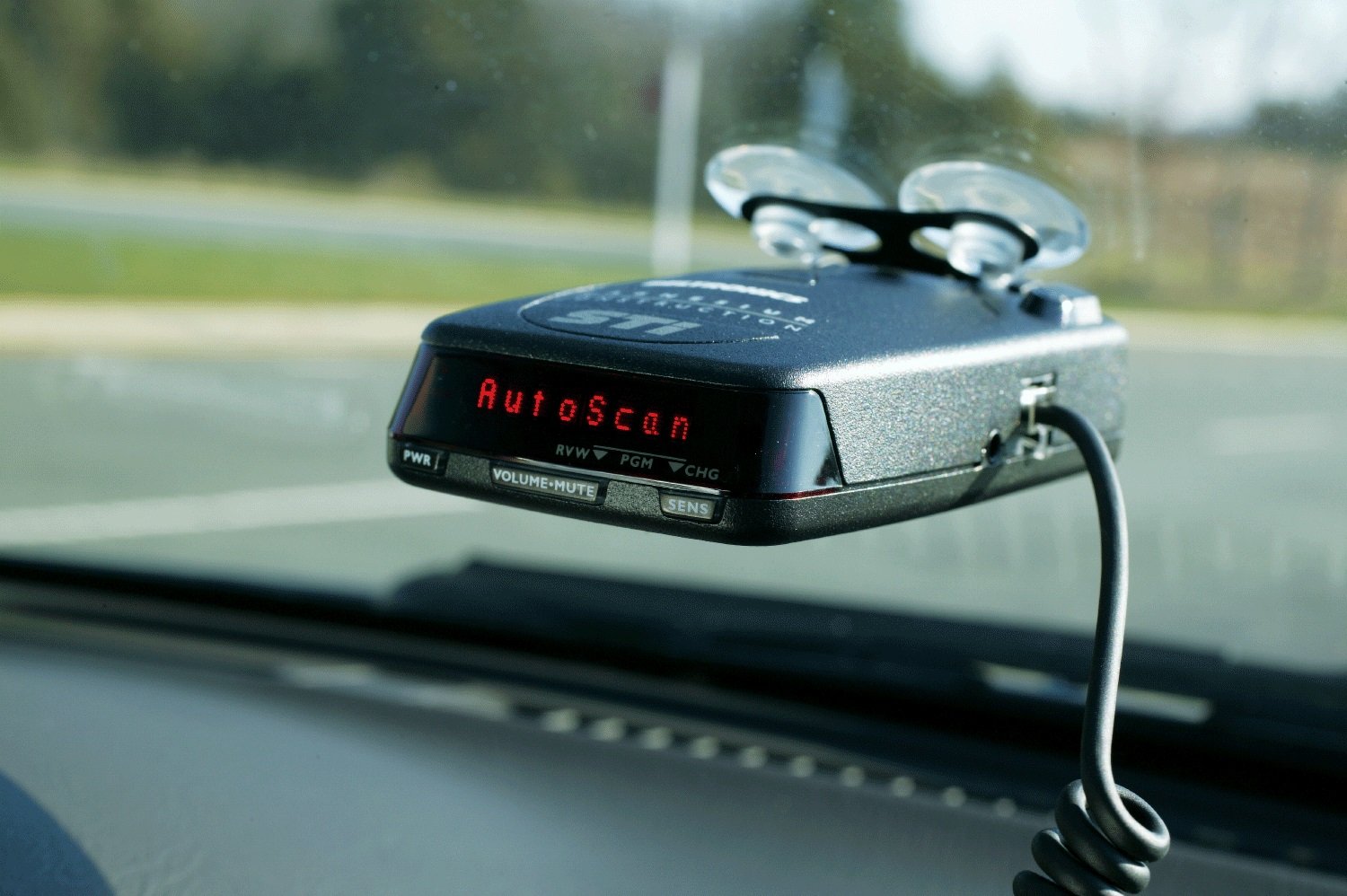
The Core Mechanics: How Radar Detection Works
At its most fundamental level, a radar detector is a passive scanning device. Unlike the radar guns used by law enforcement, which are “active” (meaning they emit energy), a standard detector is designed to listen. It scans the microwave frequency bands allocated by the FCC for use in speed measurement.
Radio Waves and the Doppler Shift
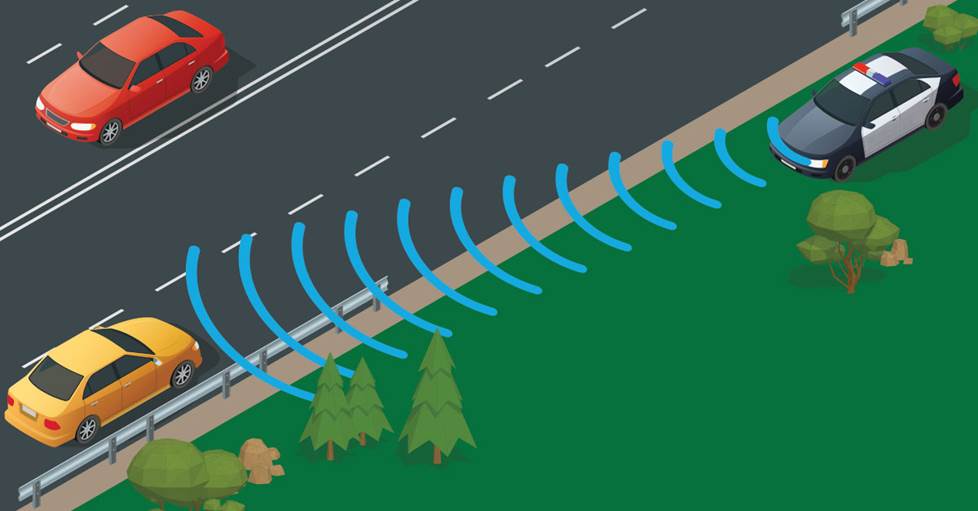
Police radar operates on the principle of the Doppler Effect. A radar gun sends out a concentrated beam of radio waves at a specific frequency. When these waves hit a moving object, they bounce back to the gun at a shifted frequency. By measuring the difference between the transmitted and received frequencies, the radar gun’s internal processor calculates the vehicle’s speed.
A radar detector’s job is to intercept these waves as they propagate through the air. Because radio waves do not stop exactly at the target vehicle—they “scatter” and reflect off various surfaces—a sensitive detector can often pick up “overspray” or “bounce” from a radar gun being used on a car several hundred yards ahead.
The Electromagnetic Spectrum in Law Enforcement
The “tech” of radar detection is defined by the specific slices of the electromagnetic spectrum it monitors. Law enforcement primarily utilizes three microwave bands: X, K, and Ka. A modern detector must be wide-band enough to monitor all three simultaneously while remaining sensitive enough to detect the minute energy levels of a distant signal.
Frequency Bands and Detection Layers
To understand what a detector does, one must understand the complexity of the signals it is looking for. Not all radar is created equal, and the hardware inside a detector must be tuned to recognize various iterations of radar technology.
X, K, and Ka-Bands: The Evolution of Frequency
- X-Band (8.0 to 12.0 GHz): This is the oldest frequency used for speed detection. Because it requires large antennas and is easily blocked by environmental factors, it has largely been phased out by police. However, it is still used for automatic grocery store doors and older traffic sensors, making it a primary source of “noise” for tech enthusiasts.
- K-Band (18.0 to 27.0 GHz): Introduced in the 1970s, K-band is more difficult to detect at long range because the waves are smaller and dissipate faster. It remains widely used by police today.
- Ka-Band (33.4 to 36.0 GHz): This is the modern standard for law enforcement. It allows for smaller, handheld guns and “Instant-On” (IO) bursts. Detecting Ka-band requires high-end circuitry and superior lens/antenna design.
Laser Detection and LIDAR Technology
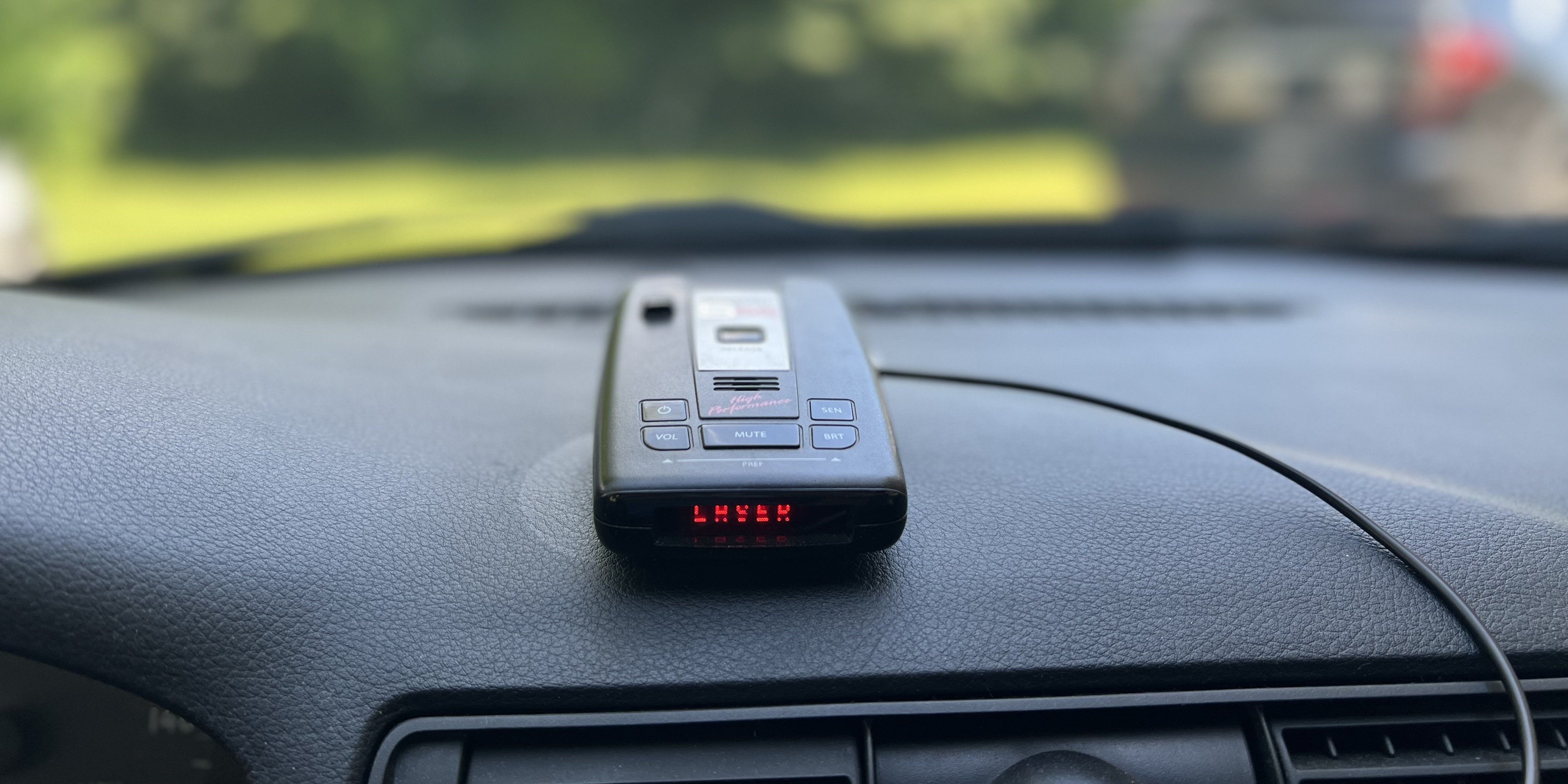
While “radar” uses radio waves, modern law enforcement often uses LIDAR (Light Detection and Ranging). LIDAR uses pulses of infrared light rather than radio waves. A radar detector with “laser detection” capabilities uses a series of optical sensors (photodiodes) to identify these specific light pulses.
From a tech standpoint, laser detection is significantly more difficult than radar detection. While radar is like a floodlight that scatters everywhere, a laser beam is like a needle. By the time a detector alerts a driver to a laser hit, the beam has usually already struck the vehicle, making laser detection a “reactive” tech rather than a “proactive” one, unless it picks up a “scatter” from a nearby vehicle.
Advanced Signal Processing and False Alert Filtering
If a radar detector simply beeped every time it encountered a microwave signal, it would be useless in a modern city. The true “magic” of high-end radar technology lies in Digital Signal Processing (DSP).
Distinguishing Between Speed Traps and Blind Spot Monitors
In the last decade, the biggest challenge for radar detector engineers has been the “CAS” (Collision Avoidance System) problem. Most modern cars use K-band radar for blind-spot monitoring, adaptive cruise control, and lane-departure warnings. To a basic radar detector, a 2024 SUV looks exactly like a police speed trap.
Advanced detectors use sophisticated software algorithms to analyze the DNA of a signal. They look at the “pulse width” and the “pulse repetition interval” to determine if a signal is coming from a police radar gun or a car’s safety sensors. This filtering requires significant onboard processing power and is what separates entry-level gadgets from professional-grade tech.
GPS-Enabled Intelligence
Top-tier detectors integrate GPS modules to add a layer of location-based intelligence. When a detector encounters a stationary false alert (like a pharmacy’s automatic door), the user can “lock out” that location. The device stores the GPS coordinates and the exact frequency in its onboard memory. The next time the vehicle passes that spot, the detector remains silent unless it sees a different frequency, ensuring that a real police trap hidden near a known false-alert source is still detected.
The Evolution of Stealth: Radar Detector Detectors (RDD)
As detection technology improved, law enforcement developed “Radar Detector Detectors” (RDD), such as the VG-2 and the Spectre. These devices work by detecting the electromagnetic leakage (specifically from the local oscillator) emitted by the radar detector itself.
VG-2 and Spectre Protection
In jurisdictions where radar detectors are restricted or for professional drivers who want total privacy, “stealth” is a critical feature. Engineers achieve this through two primary methods:
- Shielding: Encasing the internal components in metal to prevent radio frequency leakage.
- Low Emission Design: Designing the local oscillator to operate at frequencies that fall outside the range of RDD devices.
The “Spectre Elite” and other RDDs are constantly updated, leading to a perpetual cycle of software and hardware updates for detectors to ensure they remain “invisible” to the very people they are designed to watch.
The Future of Driver Assistance Technology
The modern radar detector is moving away from being a standalone “beeping box” and toward becoming a central hub for driver awareness and data-sharing.
Integration with Dash Cams and Apps
The latest trend in the industry is the “connected” detector. Through Bluetooth and Wi-Fi, detectors now pair with smartphone applications (like Escort Live or Highway Radar). This creates a cloud-based network where one driver’s detection of a speed trap is instantly uploaded to the cloud and shared with every other user in the area.
This transformation from a hardware-only device to a “Software as a Service” (SaaS) model has drastically increased the effectiveness of the technology. Even if a police officer uses “Instant-On” radar (where the gun is turned off until the last second), a connected detector can warn the driver because someone else previously encountered that officer and “pinned” the location.
AI and Cloud-Based Community Alerts
We are seeing the early stages of Artificial Intelligence being applied to signal analysis. Future detectors will likely use machine learning to identify the specific “signatures” of different radar gun manufacturers (such as Stalker, Kustom Signals, or MPH Industries). By identifying the specific model of radar being used, the detector can provide the driver with a probability score of whether the threat is real or a ghost signal.
Furthermore, as vehicles become more autonomous and connected (V2X communication), the radar detector may eventually evolve into a general “Road Intelligence Receiver,” alerting drivers not just to speed enforcement, but to road hazards, emergency vehicles, and shifting traffic patterns using the same RF-sensing technology.
Conclusion
In summary, a radar detector is a marvel of miniaturized microwave engineering. It functions as a digital sentry, scanning the invisible electromagnetic environment to provide drivers with situational awareness. While its primary goal is to identify speed-monitoring equipment, the technology inside—ranging from GaAs (Gallium Arsenide) diodes to high-speed DSP chips and GPS-driven databases—represents some of the most sophisticated consumer electronics on the road today. As law enforcement technology continues to advance, the radar detector will continue to adapt, utilizing AI, cloud connectivity, and advanced filtering to stay one step ahead of the beam.
aViewFromTheCave is a participant in the Amazon Services LLC Associates Program, an affiliate advertising program designed to provide a means for sites to earn advertising fees by advertising and linking to Amazon.com. Amazon, the Amazon logo, AmazonSupply, and the AmazonSupply logo are trademarks of Amazon.com, Inc. or its affiliates. As an Amazon Associate we earn affiliate commissions from qualifying purchases.