
In the rapidly evolving landscape of modern technology, the bridge between a conceptual business problem and a functional, scalable digital product is built by the Solution Architect. As software systems grow in complexity, moving away from monolithic structures toward distributed cloud environments and microservices, the role of the Solution Architect has become indispensable. They are the master strategists of the IT world, responsible for designing the technical blueprints that ensure a system is not only functional but also secure, cost-efficient, and future-proof.
To understand what a Solution Architect does, one must look beyond simple coding or project management. This role sits at the intersection of software engineering, systems administration, and strategic planning. They are the individuals who decide which database to use, how data should flow between services, and how to ensure the entire ecosystem remains upright during a traffic spike.
Translating Complex Business Requirements into Technical Blueprints
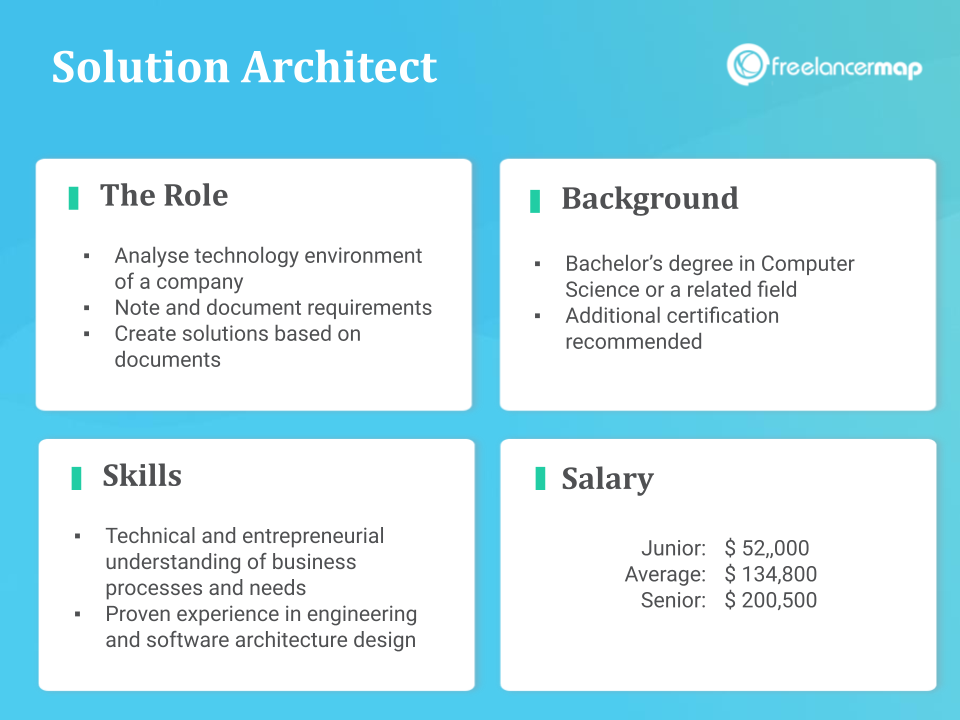
The primary function of a Solution Architect is to take high-level business goals and translate them into a concrete technical roadmap. This process is rarely straightforward. Business stakeholders might request a “seamless user experience” or “real-time data processing,” but it is the architect’s job to determine what that means in terms of latency, throughput, and infrastructure.
Bridging the Gap Between Stakeholders and Engineers
Solution Architects act as the primary translator in a tech organization. They must communicate with non-technical executives to understand the “why” behind a project, and then pivot to lead engineering teams on the “how.” By creating detailed architectural diagrams and documentation, they ensure that the development team isn’t just writing code, but building a system that aligns with the overarching business strategy.
Defining the Project Scope and Technical Constraints
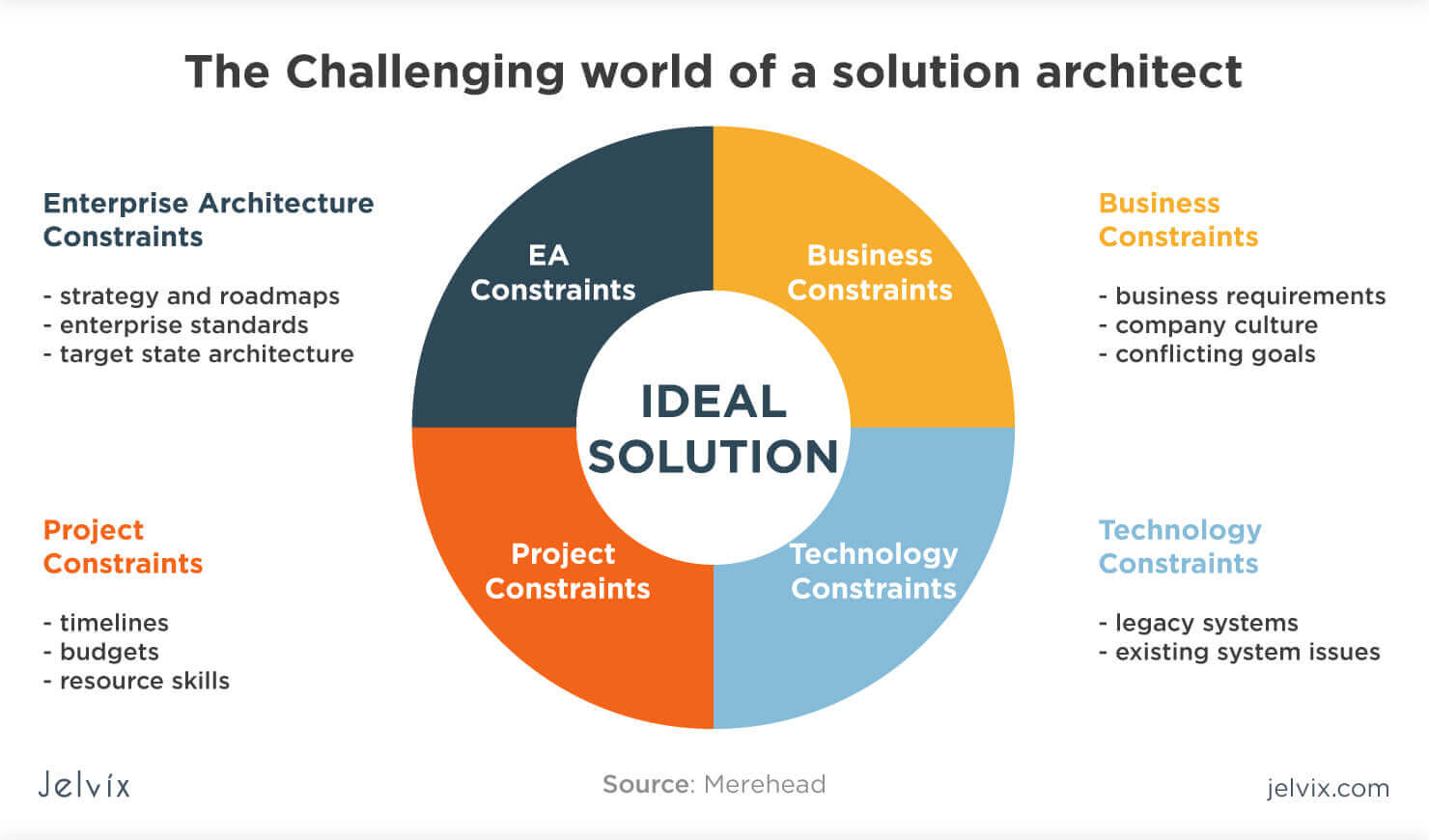
Every project exists within a set of constraints—be it budget, time, or existing legacy hardware. A Solution Architect evaluates these constraints early in the lifecycle. They perform feasibility studies to determine if a proposed solution is actually buildable with current technology. They must ask critical questions: Does this need to be a mobile-first application? Does it require 99.99% uptime? By defining these parameters, they prevent “scope creep” and technical debt from derailing the project later on.
Selecting the Right Technology Stack
One of the most visible tasks of a Solution Architect is choosing the “stack”—the combination of programming languages, frameworks, and libraries. This isn’t about picking the trendiest tool; it’s about picking the right tool for the job. An architect must decide between Python for data-heavy applications, Go for high-performance microservices, or Node.js for real-time I/O. They must also choose between relational databases like PostgreSQL and NoSQL options like MongoDB, based on the consistency and availability needs of the data.
Designing for Scalability, Resilience, and Performance
Modern technology is no longer static. Applications must be able to handle ten users today and ten million tomorrow. A Solution Architect focuses heavily on the “non-functional requirements” of a system, which are often the most difficult to implement correctly.
Implementing Microservices and Distributed Systems
In the past, many applications were “monoliths,” where all functions lived in a single codebase. Today’s architects often design distributed systems. By breaking a system down into microservices, the architect ensures that if the “payment service” fails, the “search service” continues to function. This modular approach allows for independent scaling, where specific parts of the app can be reinforced with more server power during peak demand without over-provisioning the entire system.
Ensuring High Availability and Disaster Recovery
What happens if a data center in Virginia goes offline due to a power outage? A Solution Architect designs the system so that the end user never notices. This involves setting up multi-region deployments, load balancers, and automated failover mechanisms. They implement the “Principles of Resilience,” ensuring that the system is “self-healing.” Through the use of health checks and automated orchestration, the architecture can detect a failing node and replace it instantly.
Optimizing Performance and Latency
In the digital world, milliseconds matter. Solution Architects look at the entire lifecycle of a request, from the user’s browser through the Content Delivery Network (CDN) to the back-end database. They design caching strategies using tools like Redis or Memcached to reduce database load and implement asynchronous processing for tasks that don’t need to happen instantly, such as sending confirmation emails or generating reports.
Navigating the Cloud and DevOps Ecosystem
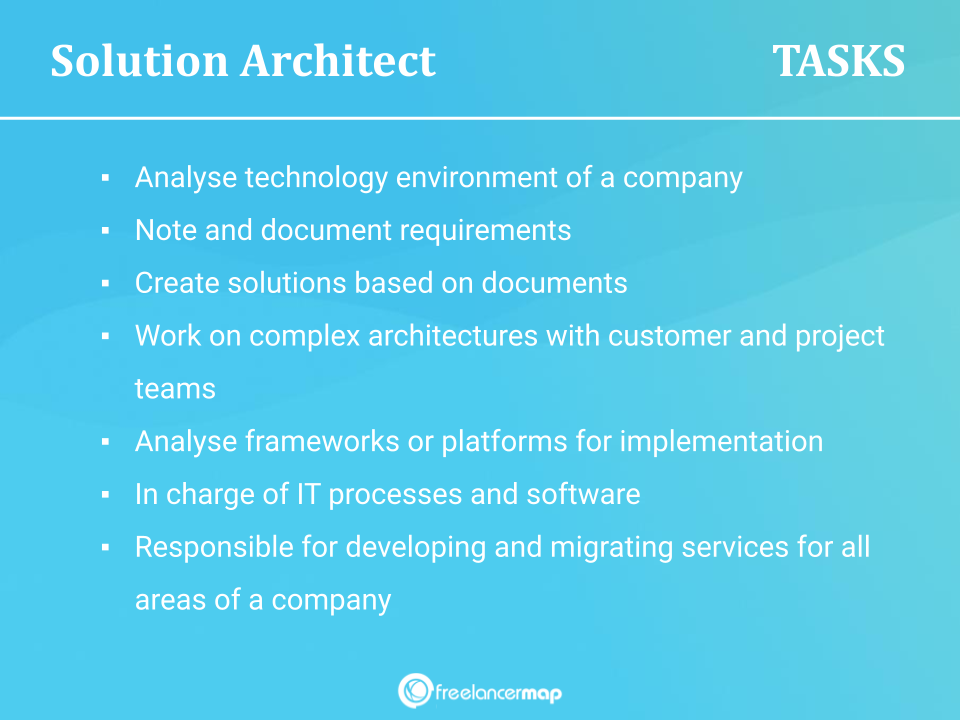
The shift from on-premise servers to the cloud has fundamentally changed the architect’s workflow. Today, a Solution Architect is almost always a “Cloud Architect” to some degree, working within ecosystems like Amazon Web Services (AWS), Microsoft Azure, or Google Cloud Platform (GCP).
Leveraging Cloud-Native Services
Instead of building everything from scratch, architects leverage managed services. They might use AWS Lambda for serverless computing, Amazon S3 for storage, or Azure Kubernetes Service (AKS) for container management. The architect’s goal is to assemble these “LEGO blocks” into a cohesive system that minimizes maintenance overhead while maximizing performance.
Integrating Security and Compliance
In an era of frequent data breaches, security cannot be an afterthought. Solution Architects practice “Security by Design.” This involves implementing Identity and Access Management (IAM) roles, encrypting data at rest and in transit, and ensuring the architecture complies with standards like GDPR, HIPAA, or PCI-DSS. They design the network topology, including Virtual Private Clouds (VPC) and firewalls, to ensure that sensitive internal data is never exposed to the public internet.
Driving DevOps and Continuous Integration
A great design is useless if it cannot be deployed efficiently. Solution Architects work closely with DevOps engineers to establish CI/CD (Continuous Integration/Continuous Deployment) pipelines. They advocate for “Infrastructure as Code” (IaC), using tools like Terraform or CloudFormation. This allows the entire technical environment to be defined in code, ensuring that the development, staging, and production environments are identical and easily reproducible.
The Evolution of the Role: AI, Edge Computing, and Beyond
The role of a Solution Architect is never static. As new technologies emerge, the architect must evaluate how these tools can be integrated into existing and future ecosystems.
Integrating Artificial Intelligence and Machine Learning
We are currently seeing a massive shift as architects are tasked with integrating AI into standard software products. This involves more than just calling an API; it requires designing data pipelines that can feed models, managing GPU resources for inference, and ensuring that AI-driven features don’t introduce latency or security vulnerabilities into the application.
The Rise of Edge Computing
As IoT (Internet of Things) devices become more common, Solution Architects are moving processing power closer to the user—the “edge.” Instead of sending every bit of data to a central cloud server, they design systems that process data locally on devices or regional gateways. This reduces bandwidth costs and drastically improves response times for critical applications like autonomous vehicles or industrial automation.
Observability and Monitoring
Modern architectures are so complex that “monitoring” (checking if a server is up) is no longer enough. Architects now design for “observability.” Using tools like Prometheus, Grafana, or Datadog, they ensure that the system provides deep insights into its internal state. This allows teams to practice proactive maintenance, identifying bottlenecks or memory leaks before they result in a system crash.
Essential Skillsets for the Modern Solution Architect
To perform these tasks effectively, a Solution Architect needs a unique blend of technical depth and broad systemic understanding. They are often described as “T-shaped” professionals: possessing deep expertise in one or two areas (like database design or networking) while maintaining a broad understanding of the entire tech landscape.
Technical Proficiency and Constant Learning
A Solution Architect must stay current. The cloud provider that was the leader three years ago might not be the best choice today. They spend a significant amount of time in “Research and Development,” testing new frameworks and attending technical conferences. They often hold high-level certifications, such as the AWS Certified Solutions Architect or Google Professional Cloud Architect, which validate their ability to design complex, multi-tier applications.
Analytical Thinking and Problem Solving
At its core, solution architecture is about solving puzzles. There is rarely a “perfect” solution; there are only trade-offs. An architect must be able to analyze these trade-offs—for example, choosing between a highly consistent system (where data is always accurate but might be slower) and an eventually consistent system (which is faster but might show slightly older data for a few seconds).
Leadership and Collaborative Design
Finally, a Solution Architect must be a leader. They don’t just hand over a document and leave; they mentor developers, lead code reviews for critical infrastructure, and advocate for best practices across the organization. They are the guardians of technical quality, ensuring that the pressure to meet deadlines doesn’t lead to a fragile, unmaintainable system.
In summary, a Solution Architect is the visionary responsible for the technical integrity of a digital product. By balancing business needs with technical possibilities, they ensure that the software we use every day is fast, secure, and capable of growing alongside the companies that build them. As technology continues to permeate every aspect of our lives, the role of the architect will only grow in importance, shaping the digital foundations of the future.
aViewFromTheCave is a participant in the Amazon Services LLC Associates Program, an affiliate advertising program designed to provide a means for sites to earn advertising fees by advertising and linking to Amazon.com. Amazon, the Amazon logo, AmazonSupply, and the AmazonSupply logo are trademarks of Amazon.com, Inc. or its affiliates. As an Amazon Associate we earn affiliate commissions from qualifying purchases.