
In the timeline of human technological advancement, few innovations serve as a more distinct “before and after” moment than the Bessemer process. Before its introduction in the mid-19th century, steel was a luxury material—rare, expensive, and difficult to produce in large quantities. It was reserved for swords, tools, and specialized machinery. However, the invention of the Bessemer converter didn’t just provide a better way to make steel; it introduced the concept of mass production to the metallurgical world, effectively acting as the “operating system” for the Second Industrial Revolution.

To understand what the Bessemer process did, one must look at it through the lens of modern technological disruption. It was the original “scalable solution,” taking a slow, artisanal process and automating its core mechanics to increase output by orders of magnitude while simultaneously slashing costs. This article explores the technical mechanics of the Bessemer process, its role in building the hardware of the modern world, and its lasting legacy in materials science and industrial technology.
The Mechanics of Innovation: How the Bessemer Converter Reimagined Metallurgy
At its core, the Bessemer process was a breakthrough in chemical engineering and process optimization. Before Sir Henry Bessemer patented his method in 1856, steel was produced via the “puddling” process or the crucible method. These methods were labor-intensive, requiring skilled workers to manually stir molten iron to remove impurities. It was a bottleneck that limited the speed of industrial growth.
The Oxidation Principle: Turning Pig Iron into Progress
The genius of the Bessemer process lay in the use of oxygen. Bessemer discovered that blowing air through molten pig iron (high-carbon iron) triggered a chemical reaction that oxidized the impurities—namely carbon, silicon, and manganese.
This was a counter-intuitive technical leap. Most contemporary engineers believed that blowing cold air into molten metal would cool it down. Instead, the oxidation of the impurities was an exothermic reaction; it actually increased the temperature of the metal, keeping it molten without the need for additional fuel. This “self-heating” mechanism was an early example of energy efficiency in industrial tech, allowing for the rapid purification of up to 30 tons of iron in a matter of twenty minutes—a process that previously took days.
Scaling Production: From Craftsmanship to Industrial Throughput
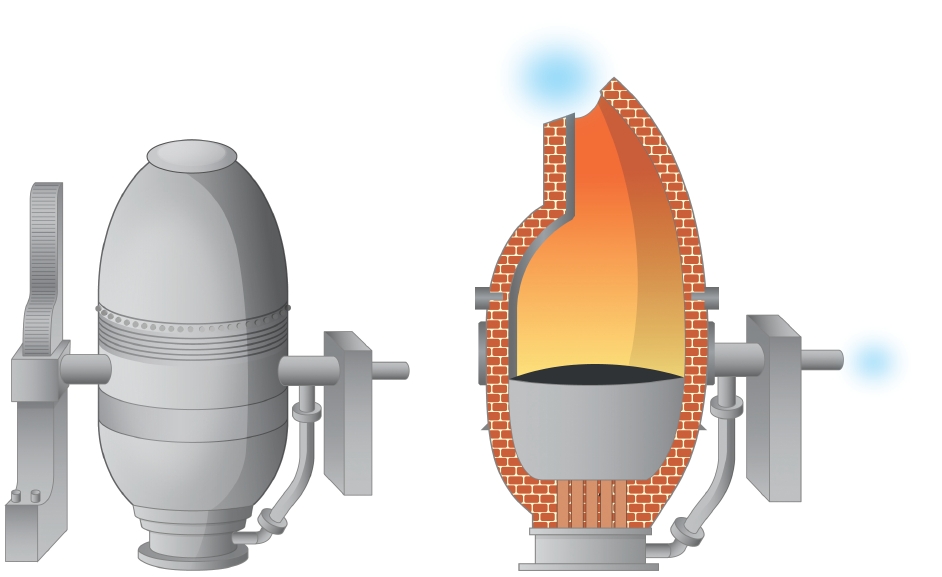
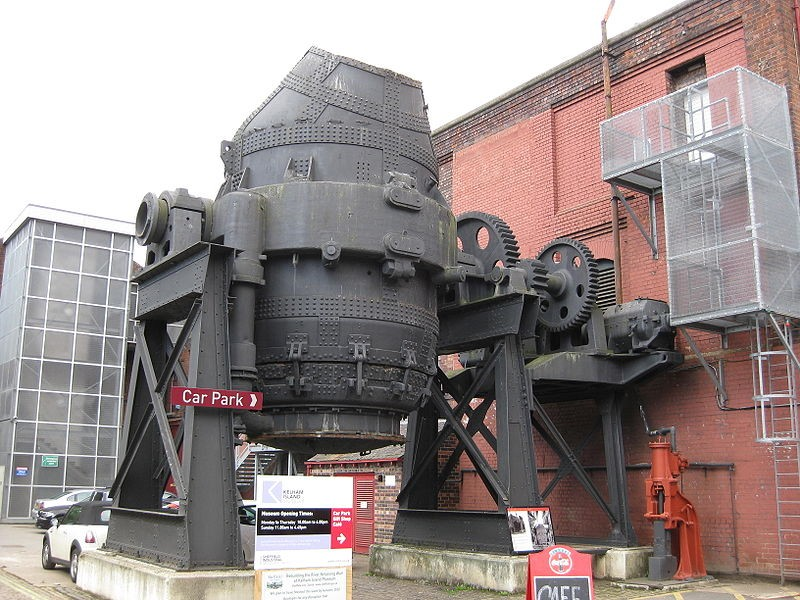
The Bessemer converter—a large, pear-shaped vessel lined with refractory material—allowed for a level of technical scalability previously unseen. By pivoting the vessel on trunnions, engineers could easily pour in the raw iron and tilt the vessel to discharge the finished steel.
This transition from “batch processing” by hand to “mechanical throughput” allowed steel plants to operate with the precision of a modern data center. It standardized the quality of the output, making steel a reliable commodity for the first time. The technical refinement of the process, particularly the addition of spiegeleisen (an alloy of iron and manganese) suggested by Robert Mushet, allowed for precise control over the carbon content, enabling the creation of different “grades” of steel for different technical applications.
Structural Disruption: The Bessemer Process as the Foundation of Modern Hardware
If we view cities and transport networks as the “hardware” of civilization, the Bessemer process was the material upgrade that allowed the system to run more complex applications. The sudden availability of cheap, high-strength steel completely restructured the physical world.
The Birth of Skyscrapers: Engineering Upward
Before the Bessemer process, buildings were limited by the compressive strength of stone and brick. While cast iron was used in some structures, it was brittle and prone to failure under tension. The introduction of mass-produced Bessemer steel provided a material with high tensile strength and elasticity.
This allowed architects and structural engineers to develop the steel-frame skeleton. This technical shift meant that the walls of a building no longer had to support its entire weight; the steel “hardware” handled the load. This led directly to the vertical expansion of urban centers, giving rise to the first skyscrapers in Chicago and New York. The Bessemer process effectively unlocked the “Z-axis” of urban development, a feat of engineering that would have been mathematically and physically impossible with previous materials.
Rail Infrastructure: Connecting the Physical World
In the 19th century, the “internet” of the day was the railroad. However, iron rails were soft and wore out quickly under the weight of heavy locomotives, requiring constant, expensive maintenance. The Bessemer process replaced iron rails with steel rails, which lasted ten times longer and could support much heavier loads.
This was a monumental shift in transportation technology. Steel rails allowed for higher speeds, longer trains, and more efficient logistics. It reduced the friction of trade and travel, much like high-speed fiber optics reduced the latency of data transmission in the digital age. The technical durability of Bessemer steel created a robust, long-lasting network that facilitated the rapid expansion of global commerce.
The Legacy of Automation: From Bessemer to Modern Materials Science
While the Bessemer process eventually gave way to the Open Hearth process and later Basic Oxygen Steelmaking (BOS), its influence on modern technology remains profound. It established the paradigm of using chemical and mechanical automation to refine raw materials at scale.
Continuous Casting and the Path to Modern Alloys
The Bessemer process taught the industry that the key to technological progress was the control of the “melt.” Today’s advanced metallurgy, which produces specialized alloys for aerospace and high-tech electronics, is a direct descendant of the Bessemer philosophy.
Modern “Continuous Casting” and “Vacuum Induction Melting” are simply more sophisticated versions of Bessemer’s original vision: using controlled environments and precise chemical adjustments to achieve a specific technical output. The transition from Bessemer’s basic air-blown vessel to modern oxygen-lanced converters represents a continuous line of technical optimization that has made steel one of the most recycled and engineered materials on the planet.
Lessons in Scalability for the Software Era
There is a striking parallel between the Bessemer process and the evolution of software deployment. Just as Bessemer automated the “compilation” of iron into steel, modern DevOps automates the compilation of code into scalable applications.
The Bessemer process was the first instance of “Industrial Dev-Ops.” It took a manual, error-prone process and turned it into a repeatable, high-velocity pipeline. Tech leaders today often look at “bottlenecks” in their systems; Bessemer looked at the bottleneck of manual stirring and applied a hardware hack (the air blast) to solve it. This mindset—identifying a physical constraint and using a chemical or mechanical breakthrough to bypass it—remains the bedrock of all technological innovation.
Sustainability and the Future of Steel Tech
In the modern era, the legacy of the Bessemer process is being re-examined through the lens of environmental technology. While the original process was a triumph of efficiency, it was also a carbon-intensive endeavor. As we move toward “Industry 4.0,” the focus has shifted from mere throughput to sustainable optimization.
Green Steel: Decarbonizing the Legacy of Henry Bessemer
The technical challenge of the 21st century is to decouple steel production from carbon emissions. “Green Steel” initiatives are now utilizing hydrogen instead of carbon-rich coke to reduce iron ore. This is the next great technological leap in metallurgy—replacing the “air blast” of the Bessemer era with “hydrogen reduction.”
This evolution reflects the same spirit of technical disruption. Engineers are currently developing “Electrolysis of Iron Ore,” a process that uses electricity to separate iron from oxygen, potentially eliminating the need for the high-heat, carbon-heavy environments that defined the Bessemer era. Just as Bessemer moved us from the Puddling Furnace to the Converter, the current tech trend is moving us toward the “Zero-Emission Smelter.”
AI and Machine Learning in Metallurgical Optimization
Finally, the Bessemer process’s focus on “precision” has been inherited by Artificial Intelligence. Modern steel plants use sensors and AI algorithms to monitor the chemical composition of the melt in real-time—something Henry Bessemer could only dream of.
Machine learning models now predict the mechanical properties of steel based on the cooling rate and chemical additives, allowing for “smart steel” that is lighter, stronger, and more flexible than anything produced in the 1800s. The Bessemer process proved that metallurgy was a science of data and chemistry; modern technology has simply increased the resolution of that data, allowing us to manipulate atoms with the same confidence that Bessemer manipulated tons of molten iron.
Conclusion: The Original Tech Disruptor
What did the Bessemer process do? It did more than just make steel; it provided the technical foundation for the modern world. By solving the problem of scalability and cost, it allowed for the creation of the hardware—the rails, the beams, the engines, and the hulls—that defined the 20th century.
From a tech perspective, Bessemer was a visionary who understood that progress is not just about a better product, but about a better process. His converter was the prototype for all high-throughput industrial systems. As we look forward to the future of materials science, AI-driven manufacturing, and green energy, we are still standing on the steel shoulders of the Bessemer process. It remains the ultimate case study in how a single technical breakthrough can rewrite the code of human civilization.
aViewFromTheCave is a participant in the Amazon Services LLC Associates Program, an affiliate advertising program designed to provide a means for sites to earn advertising fees by advertising and linking to Amazon.com. Amazon, the Amazon logo, AmazonSupply, and the AmazonSupply logo are trademarks of Amazon.com, Inc. or its affiliates. As an Amazon Associate we earn affiliate commissions from qualifying purchases.