
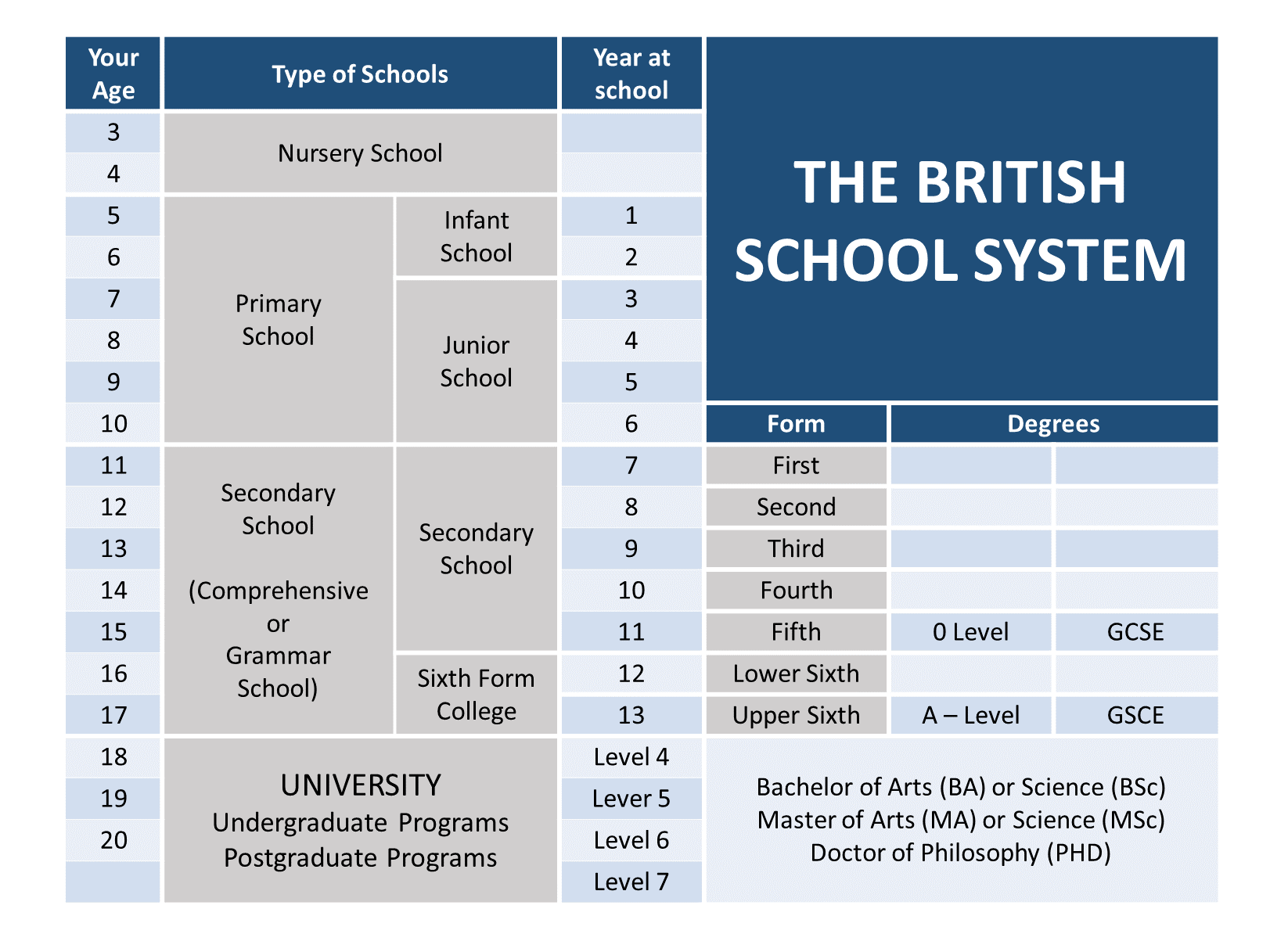
The transition from primary to secondary school in the United Kingdom is often viewed through the lens of social growth and academic rigor. However, for the modern student entering Key Stage 3, the shift is equally defined by a massive technological leap. In the primary years, technology is often a shared resource—a trolley of iPads or a weekly hour in a computer lab. Once a student moves into the secondary phase, technology becomes the primary infrastructure through which they learn, communicate, and organize their lives.
Understanding what comes after primary school in the UK requires a deep dive into the digital ecosystem of secondary education. From the integration of Artificial Intelligence (AI) in personalized learning to the transition from block-based coding to professional programming languages, the technological landscape becomes significantly more complex and influential.
The Secondary Shift: From Consuming to Creating with EdTech
In the UK, the move to secondary school marks the end of “play-based” digital interaction and the beginning of “productivity-based” technology use. Schools are increasingly moving away from traditional pen-and-paper homework logs toward comprehensive Learning Management Systems (LMS) that require students to be digitally literate from day one.
The Rise of 1:1 Device Programs and BYOD
Many UK secondary schools now implement 1:1 device schemes, where every student is issued a laptop or tablet, or “Bring Your Own Device” (BYOD) policies. Unlike primary school, where devices are often shared, a secondary student’s device becomes their digital locker, textbook, and notebook combined. This shift necessitates a higher level of hardware literacy. Students must learn to manage battery life, troubleshoot connectivity issues on school Wi-Fi, and understand the ergonomics of long-term computer use. For parents and educators, the focus shifts from “screen time” limits to “screen quality” management.
Cloud-Based Classrooms: Google Workspace vs. Microsoft 365
The post-primary experience is dominated by cloud computing. Most UK secondary schools align with either Google Workspace for Education or Microsoft 365. This transition requires students to master collaborative tools that are staples in the professional world. Sharing documents, real-time co-authoring on slide decks, and managing deadlines via digital calendars become daily requirements. This isn’t just about finishing homework; it is about learning the foundational software architecture that governs the modern global workforce.
Coding and Computer Science: The Next Stage of the National Curriculum
In primary school, the UK national curriculum focuses on the “what” of technology—understanding that an algorithm is a set of instructions. After primary school, the focus shifts dramatically to the “how.” The transition to secondary school (Key Stage 3 and eventually GCSE) introduces students to formal Computer Science as a rigorous academic discipline rather than a creative hobby.
Moving from Scratch to Python and Beyond
While primary students are often experts in Scratch or other block-based visual languages, secondary school introduces “text-based” programming. Python has become the gold standard in UK secondary education due to its readability and professional application. Students are expected to move from dragging blocks to writing syntax, handling data types, and understanding logical structures. This evolution is crucial as it moves the student from being a user of software to a potential creator of it, aligning with the UK’s goal of becoming a global tech superpower.
Preparing for GCSE Computer Science Pathways
By the time students reach the end of Year 9, they must decide if they want to pursue Computer Science at the GCSE level. This pathway involves understanding hardware architecture, binary and hexadecimal representation, and network topologies. The “tech” after primary school is no longer just about using an app; it is about deconstructing the machine. Schools are increasingly using physical computing tools, such as the BBC micro:bit (v2) and Raspberry Pi, to bridge the gap between abstract code and tangible hardware, fostering a generation of engineers and developers.

Essential Software and Productivity Tools for the Modern UK Student
As the workload increases in secondary school, the “tech stack” of a student must evolve. The transition involves a move toward sophisticated productivity tools that help students manage multiple subjects, complex revision schedules, and independent research.
AI in Education: How LLMs are Reshaping Independent Study
One of the most significant changes in the post-primary landscape is the integration of Large Language Models (LLMs) like ChatGPT, Claude, and Gemini. While primary schools may shield students from these tools, secondary students are entering an environment where AI literacy is becoming essential. Forward-thinking UK schools are teaching students how to use AI as a “Socratic tutor”—asking it to explain complex physics concepts or to provide feedback on a draft essay—rather than using it for simple output generation. Understanding prompt engineering and the ethics of AI (including hallucination and bias) is now a core part of the “what comes after” journey.
Cybersecurity and Digital Citizenship in the Teenage Years
The move to secondary school often coincides with a student’s first personal smartphone and unrestricted internet access. Consequently, the tech education they receive must pivot toward digital security and reputation management. Secondary schools in the UK now place a heavy emphasis on “Digital Citizenship.” This involves understanding end-to-end encryption, the risks of phishing, the mechanics of “cancel culture,” and the long-term implications of a digital footprint. For a Year 7 student, learning how to secure their accounts with Two-Factor Authentication (2FA) is just as important as learning their new timetable.
The Future of STEM: Virtual Labs and Immersive Learning
Beyond the standard curriculum, the technology available to students after primary school is becoming increasingly immersive. The UK government and private EdTech firms are investing heavily in Extended Reality (XR) to bring complex subjects to life in ways that were impossible in a primary classroom.
VR and AR in the Geography and Science Classrooms
Virtual Reality (VR) is beginning to play a massive role in Key Stage 3 and 4 education. Instead of looking at a 2D map of a tectonic plate, students can use headsets to “stand” inside a volcanic vent or explore the human circulatory system from the perspective of a red blood cell. Augmented Reality (AR) apps allow students to overlay complex 3D models of chemical molecules onto their desks using their tablets. This tech shift caters to different learning styles and helps bridge the gap between theoretical knowledge and practical understanding.
The Role of Data Literacy in Post-Primary Education
In primary school, data is often limited to simple bar charts and pictograms. After primary school, the tech requirements shift toward “Data Literacy.” Students begin using advanced spreadsheet functions in Excel or Google Sheets to analyze experimental data in Science or demographic trends in Geography. They learn how to interpret visualizations and identify how data can be manipulated. In an era of “big data,” this technological skill set is perhaps the most vital tool a student will acquire as they move toward higher education and the workforce.

Conclusion: Adapting to the Digital Maturity of Secondary School
What comes after primary school in the UK is more than just a change in school uniform or a larger campus; it is a fundamental shift in digital maturity. The move to secondary education represents a transition from “guided use” to “autonomous mastery” of technology. Students are no longer just playing educational games; they are utilizing professional-grade software, grappling with the ethics of AI, and learning the languages that power the global economy.
For students to succeed in this new environment, they must view technology not as a distraction to be managed, but as a suite of tools to be mastered. The leap from Key Stage 2 to Key Stage 3 is the moment the digital world opens up, offering unprecedented opportunities for those prepared to navigate its complexities. Whether it is through coding, immersive VR learning, or sophisticated AI collaboration, the tech journey after primary school is where the foundations of a modern career are truly built.
aViewFromTheCave is a participant in the Amazon Services LLC Associates Program, an affiliate advertising program designed to provide a means for sites to earn advertising fees by advertising and linking to Amazon.com. Amazon, the Amazon logo, AmazonSupply, and the AmazonSupply logo are trademarks of Amazon.com, Inc. or its affiliates. As an Amazon Associate we earn affiliate commissions from qualifying purchases.