
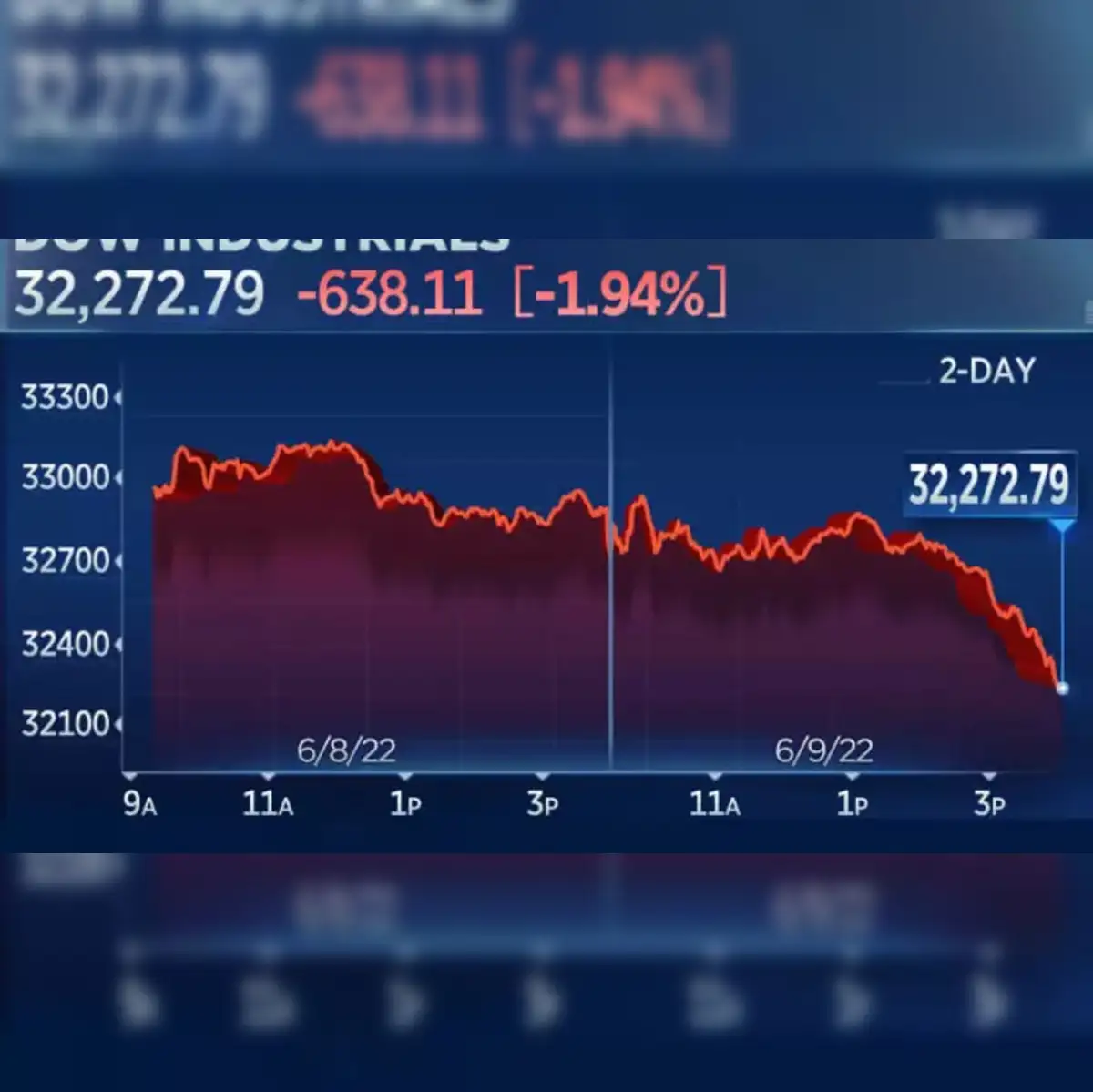
For many investors, the Dow Jones Industrial Average (DJIA) is more than just a number; it is the heartbeat of the American economy. When the ticker turns red and the headlines read that the Dow is down, it often triggers a wave of anxiety that ripples from Wall Street to Main Street. However, market fluctuations are rarely the result of a single isolated event. Instead, a decline in the Dow is typically the culmination of various macroeconomic factors, corporate shifts, and psychological triggers that influence investor behavior in real-time.

To understand why the Dow is down today, one must look beyond the immediate price action and examine the structural and fundamental forces at play. Whether it is a shift in central bank policy, disappointing earnings from a blue-chip titan, or geopolitical tremors, the reasons for a downward move are often multifaceted and deeply interconnected.
The Role of Macroeconomic Indicators and Federal Policy
The most frequent catalyst for a downward move in the Dow Jones is a shift in the macroeconomic landscape. Because the Dow is comprised of 30 of the most significant companies in the United States, it is highly sensitive to the broader economic environment, particularly regarding inflation and interest rates.
The Federal Reserve and Interest Rate Expectations
The Federal Reserve exerts more influence over the stock market than perhaps any other institution. When the Fed signals that it may raise interest rates—or keep them “higher for longer”—the Dow often reacts negatively. Higher interest rates increase the cost of borrowing for corporations, which can eat into profit margins. Furthermore, higher rates make fixed-income assets like Treasury bonds more attractive compared to stocks. If investors believe that the Fed is becoming “hawkish” (prioritizing the fight against inflation over economic growth), they may sell off equities, leading to the “down” day we see on the charts.
Inflationary Pressures and the CPI
Inflation remains the primary nemesis of a stable market. When the Consumer Price Index (CPI) or the Producer Price Index (PPI) reports come in higher than expected, it signals that the purchasing power of the dollar is eroding. For the companies within the Dow, inflation means higher input costs—raw materials, labor, and logistics. If these companies cannot pass those costs on to consumers, their margins shrink. Investors often anticipate this struggle and sell shares in advance of quarterly reports, dragging the index lower.
Labor Market Dynamics and Economic Data
Paradoxically, “good” news for the economy can sometimes be “bad” news for the Dow. For instance, a robust jobs report showing low unemployment and high wage growth can cause the Dow to drop. This happens because a strong labor market suggests the economy might be “overheating,” which could lead the Federal Reserve to raise interest rates to cool things down. Investors are constantly weighing current economic strength against the future likelihood of restrictive monetary policy.
Corporate Earnings and the Price-Weighted Index Structure
While macroeconomic factors set the stage, the individual performance of the 30 companies that make up the Dow is what ultimately moves the needle. Unlike the S&P 500, which is market-cap weighted, the Dow Jones is a price-weighted index. This means that companies with a higher stock price have a disproportionate impact on the index’s movement.
The Impact of Blue-Chip Earnings Reports
When heavyweights like UnitedHealth Group, Goldman Sachs, or Microsoft report their quarterly earnings, the entire index feels the vibration. If a high-priced stock in the Dow misses its revenue targets or provides “soft guidance” (a pessimistic outlook for the future), it can single-handedly pull the index down several dozen points. Investors look at these earnings not just as a reflection of one company, but as a bellwether for the entire sector. A slump in a Dow component often indicates broader systemic challenges within that industry.
Sector-Specific Headwinds
The Dow is intentionally diversified across various sectors, including healthcare, technology, financials, and consumer goods. If a specific sector faces a regulatory hurdle or a sudden drop in demand, the Dow will reflect that weakness. For example, a sharp decline in global oil prices might hurt energy stocks, while a change in banking regulations might lead to a sell-off in financial giants like JPMorgan Chase. Because the index is so concentrated (only 30 stocks), there is nowhere for weakness to hide.
The Nuances of Price-Weighting
Understanding why the Dow is down requires an understanding of its unique math. In a price-weighted index, a $5 move in a $400 stock affects the index far more than a $5 move in a $50 stock, even if the latter represents a much larger percentage change for that specific company. Therefore, if the Dow is down today, it may be because a few of its most expensive members are having a particularly rough session, even if the majority of the other 27 stocks are trading flat or slightly up.
Geopolitical Tensions and Global Market Interconnectivity

We live in a hyper-globalized financial ecosystem. The 30 companies in the Dow Jones Industrial Average are not just American companies; they are multinational corporations with significant operations, supply chains, and customer bases located overseas. Consequently, events happening thousands of miles away can directly cause the Dow to drop.
International Conflict and Commodity Shocks
Geopolitical instability—such as a conflict in the Middle East or Eastern Europe—tends to create an environment of “risk-off” sentiment. When uncertainty rises, investors flee from volatile assets like stocks and seek the safety of gold or government bonds. Additionally, such conflicts often lead to spikes in commodity prices, particularly oil and natural gas. Since energy is a fundamental input for almost every industry, a spike in energy costs acts as a “tax” on corporate profits, prompting a market-wide sell-off.
Trade Relations and Supply Chain Disruptions
The Dow components rely heavily on stable international trade. Any escalation in trade tensions, the imposition of new tariffs, or disruptions in global shipping routes (such as those in the Suez Canal or South China Sea) can trigger a decline. If a company like Apple or Boeing signals that supply chain issues are preventing them from meeting demand, investors react swiftly by repricing the stock downward. The Dow reflects the aggregate fear that global trade friction will slow down the pace of corporate growth.
Currency Fluctuations and the Strength of the Dollar
A “strong dollar” sounds like a positive development, but for the Dow, it can be a double-edged sword. Since many Dow companies generate a large portion of their revenue in foreign currencies, a strong U.S. dollar makes those international earnings worth less when converted back into USD. If the dollar rallies significantly against the Euro or the Yen, it can create a “currency headwind” that lowers the projected earnings of multinational giants, causing their stock prices—and the Dow—to fall.
Technical Analysis, Algorithms, and Investor Psychology
Not every “down” day in the market is driven by a tangible economic headline. Sometimes, the movement is a result of the internal mechanics of trading and the collective psychology of the people (and computers) doing the buying and selling.
Algorithmic Trading and “Stop-Loss” Cascades
In the modern era, the vast majority of trading volume is driven by high-frequency algorithms. These programs are designed to react to specific “technical levels.” If the Dow drops below a significant psychological level—such as a 200-day moving average or a previous support level—it can trigger a wave of automated selling. This creates a feedback loop where the initial drop triggers “stop-loss” orders, which causes a further drop, which then triggers more algorithms to sell.
The “Sell the News” Phenomenon
Sometimes the Dow goes down even when the news seems positive. This is often referred to as “sell the news.” In the days or weeks leading up to a major event (like a Fed meeting or a major product launch), investors may buy stocks in anticipation of good news. Once the news is actually released, the “event” is priced in, and traders take their profits and exit their positions. This profit-taking can lead to a red day on the charts despite a lack of negative fundamental news.
Market Sentiment and the VIX
Investor psychology is often measured by the Volatility Index (VIX), also known as the “Fear Gauge.” When the VIX spikes, it indicates that investors are becoming nervous and are buying “put options” to protect their portfolios. This collective nervousness can become a self-fulfilling prophecy. If the general sentiment shifts toward pessimism, even a minor piece of negative data can be magnified, leading to a sharp intraday decline in the Dow Jones.
Navigating the Downward Move: An Investor’s Perspective
While a declining Dow can be unsettling, it is a natural and necessary part of the market cycle. For the long-term investor, understanding why the market is down is more about maintaining perspective than reacting to short-term noise.
Distinguishing Between Noise and Signal
The most important skill for a financial participant is the ability to distinguish between “noise” (temporary volatility based on sentiment) and “signals” (fundamental changes in the economy). A Dow that is down because of a temporary technical correction is very different from a Dow that is down because of a looming recession. By identifying the root cause—be it interest rates, earnings, or geopolitics—investors can make more informed decisions about whether to stay the course or adjust their portfolios.
The Opportunity in Volatility
Historically, every significant downturn in the Dow Jones has eventually been followed by a recovery and new all-time highs. Down days provide an opportunity for “dollar-cost averaging,” allowing investors to purchase shares of high-quality, blue-chip companies at a discount. Rather than viewing a “down” Dow as a loss of wealth, sophisticated investors often view it as a rebalancing of value.
In conclusion, when you ask “why is the Dow Jones down today,” the answer is rarely a single sentence. It is a complex tapestry of global interest rates, corporate profitability, geopolitical stability, and the invisible hand of market psychology. By understanding these pillars, you can move beyond the “red” on the screen and develop a deeper, more strategic understanding of the financial world.
aViewFromTheCave is a participant in the Amazon Services LLC Associates Program, an affiliate advertising program designed to provide a means for sites to earn advertising fees by advertising and linking to Amazon.com. Amazon, the Amazon logo, AmazonSupply, and the AmazonSupply logo are trademarks of Amazon.com, Inc. or its affiliates. As an Amazon Associate we earn affiliate commissions from qualifying purchases.