
In the landscape of global commerce and business finance, the Value Added Tax (VAT) registration number stands as one of the most critical identifiers for any enterprise. Whether you are a solo entrepreneur scaling a side hustle or a financial officer at a multinational corporation, understanding the mechanics of the VAT registration number is essential for maintaining tax compliance and optimizing your company’s financial health. This unique identifier is more than just a string of alphanumeric characters; it is a gateway to international trade, a tool for financial transparency, and a prerequisite for complex tax accounting.
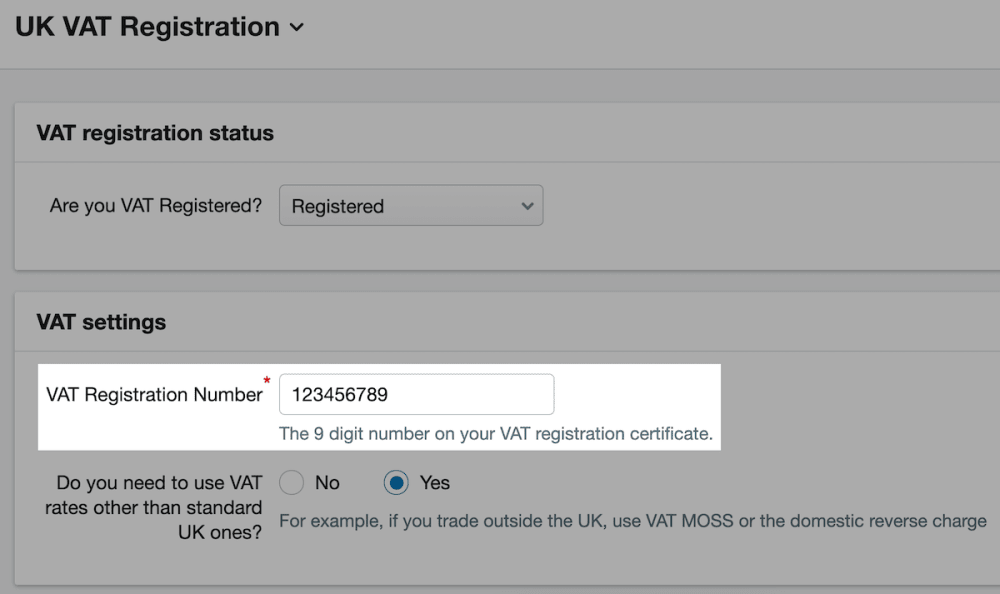
Understanding the Fundamentals of VAT Registration Numbers
At its core, a VAT registration number is a unique identifier assigned by tax authorities to businesses that are registered for Value Added Tax. This number allows governments to track the tax contributions of a business, monitor commercial transactions, and ensure that the correct amount of tax is being collected and remitted to the treasury.
Defining the VAT ID and Its Purpose
The VAT identification number (often abbreviated as VATIN or VAT ID) serves as a primary reference in the “Value Added” tax system. Unlike a general business license number, the VAT ID is specifically used for tax administration. In a VAT system, tax is levied at each stage of the supply chain where value is added to a product or service. The VAT number allows a business to distinguish itself as a taxable entity that has the legal authority to charge VAT to its customers and, crucially, the right to reclaim the VAT it pays to its suppliers.
How the Format Varies Globally
One of the complexities of international business finance is the variation in VAT number formats. While the principle remains the same, the structure is localized. In the European Union, for example, a VAT number typically begins with a two-letter ISO country code (such as “DE” for Germany or “FR” for France), followed by a block of numbers or characters unique to that entity. In the United Kingdom, the format is generally a nine-digit block, often prefixed by “GB.” Understanding these formats is vital for financial controllers who must verify the validity of foreign invoices before processing payments.
The Role of the Number in Financial Auditing
From an auditing perspective, the VAT registration number is the “thread” that links a transaction back to its source. During a financial audit, tax authorities use these numbers to reconcile records between two trading parties. If Company A claims to have paid VAT to Company B, the auditor will check Company B’s filings using their VAT ID to ensure the tax was actually declared. This interconnectedness makes the VAT number a foundational element of financial integrity in modern economies.
The Financial Impact of VAT Registration on Business Operations
Registering for a VAT number is not merely a bureaucratic hurdle; it significantly alters a company’s financial dynamics. It changes how a business prices its services, manages its cash flow, and interacts with the tax ecosystem.
Input Tax vs. Output Tax: The Balancing Act
The primary financial mechanism involving a VAT number is the distinction between input and output tax. “Output Tax” is the VAT a business charges on its sales. “Input Tax” is the VAT a business pays on its purchases. The core financial responsibility of a VAT-registered business is to calculate the difference: if output tax exceeds input tax, the business pays the difference to the government. Conversely, if input tax exceeds output tax, the business is often entitled to a refund. This “offsetting” process is only possible if the business possesses a valid VAT registration number.
Cash Flow Management and VAT Cycles
VAT can have a profound impact on a company’s liquid capital. Depending on the jurisdiction, VAT returns are filed monthly, quarterly, or annually. A business collects tax on behalf of the government and holds it until the filing date. This can provide a temporary cash flow “float,” but it also represents a significant liability. Sophisticated financial management involves setting aside these funds in interest-bearing accounts or ensuring that the business does not over-leverage itself using tax money that must eventually be surrendered.
Reclaiming VAT on Business Expenses
For many businesses, the most significant financial benefit of having a VAT registration number is the ability to reclaim tax paid on business-related expenses. This includes everything from raw materials and inventory to utility bills, professional services, and equipment. Without a VAT number, these taxes represent a final cost to the business, effectively increasing the expense of every purchase by 5% to 25% (depending on the local rate). By registering, these costs are neutralized, significantly improving the business’s profit margins.
When and Why Your Business Needs a VAT Number

The decision or requirement to obtain a VAT number is usually dictated by financial thresholds and the nature of the business’s trade. Navigating these requirements is a key component of proactive financial planning.
Mandatory vs. Voluntary Registration Thresholds
Most countries impose a “taxable turnover threshold.” If a business’s annual revenue exceeds this limit (for example, £90,000 in the UK), registration becomes mandatory. Operating above this threshold without a VAT number is a serious financial offense, leading to back-dated tax bills and heavy penalties. However, many businesses choose “voluntary registration” even if they are below the threshold. Financially, this is often done to reclaim input tax on startup costs or to position the business for growth where it expects to cross the threshold shortly.
International Trading and Cross-Border Finance
In the era of the digital economy, cross-border trade is common. If a business sells goods or services to customers in other countries, particularly within the EU or across specific economic zones, a VAT number becomes indispensable. It is often required to utilize the “Reverse Charge” mechanism, where the buyer, rather than the seller, accounts for the VAT. This simplifies the financial transaction and prevents the seller from having to register for tax in every single country where they have a customer.
Enhancing Financial Credibility with Partners
In the B2B (Business-to-Business) sector, a VAT registration number is often viewed as a marker of financial maturity. Many larger corporations refuse to trade with vendors who are not VAT-registered because they cannot reclaim the tax on those invoices. Therefore, having a VAT number can be a strategic financial move to unlock higher-value contracts and integrate more seamlessly into professional supply chains.
Practical Financial Tools for Managing VAT
Managing the data associated with a VAT registration number requires precision. Errors in VAT reporting are among the most common causes of financial audits and fines. Fortunately, modern financial technology has simplified this process.
Automated Accounting Software Integration
Most contemporary accounting platforms, such as Xero, QuickBooks, and Sage, are designed with VAT compliance at their core. By inputting your VAT registration number into these systems, the software can automatically calculate the tax on every invoice, categorize input and output tax, and generate “MTD” (Making Tax Digital) compliant reports. This automation reduces the risk of human error and ensures that the financial data remains “audit-ready” at all times.
VIES and Validation Tools
Before conducting a large financial transaction with a new partner, it is standard financial practice to verify their VAT registration number. Tools like the VAT Information Exchange System (VIES) in the EU allow businesses to check the validity of a number online. Validating a partner’s VAT ID ensures that the tax you pay them is legitimate and that you won’t face issues when trying to reclaim that tax from your local authority.
Record-Keeping for Tax Compliance
The financial obligation of having a VAT number includes a strict requirement for record-keeping. Businesses must generally keep VAT invoices, credit notes, and account records for a period of six to ten years. These records must clearly display the VAT registration numbers of both the seller and the buyer. Utilizing digital document management systems to store these financial records is no longer optional; it is a necessity for modern financial risk management.
Avoiding Financial Penalties: Best Practices for Compliance
The financial downside of mishandling a VAT registration number can be severe. Regulatory bodies are increasingly using data analytics to spot discrepancies in VAT filings, making accuracy more important than ever.
Common Filing Errors to Avoid
Many financial losses in VAT management stem from simple errors: claiming VAT on items that are exempt (like basic foodstuffs or insurance), failing to distinguish between different VAT rates (standard, reduced, or zero-rated), or miscalculating the “tax point” (the date the transaction is considered to have occurred for tax purposes). Regular internal financial reviews can help identify these errors before they are submitted to the tax authorities.
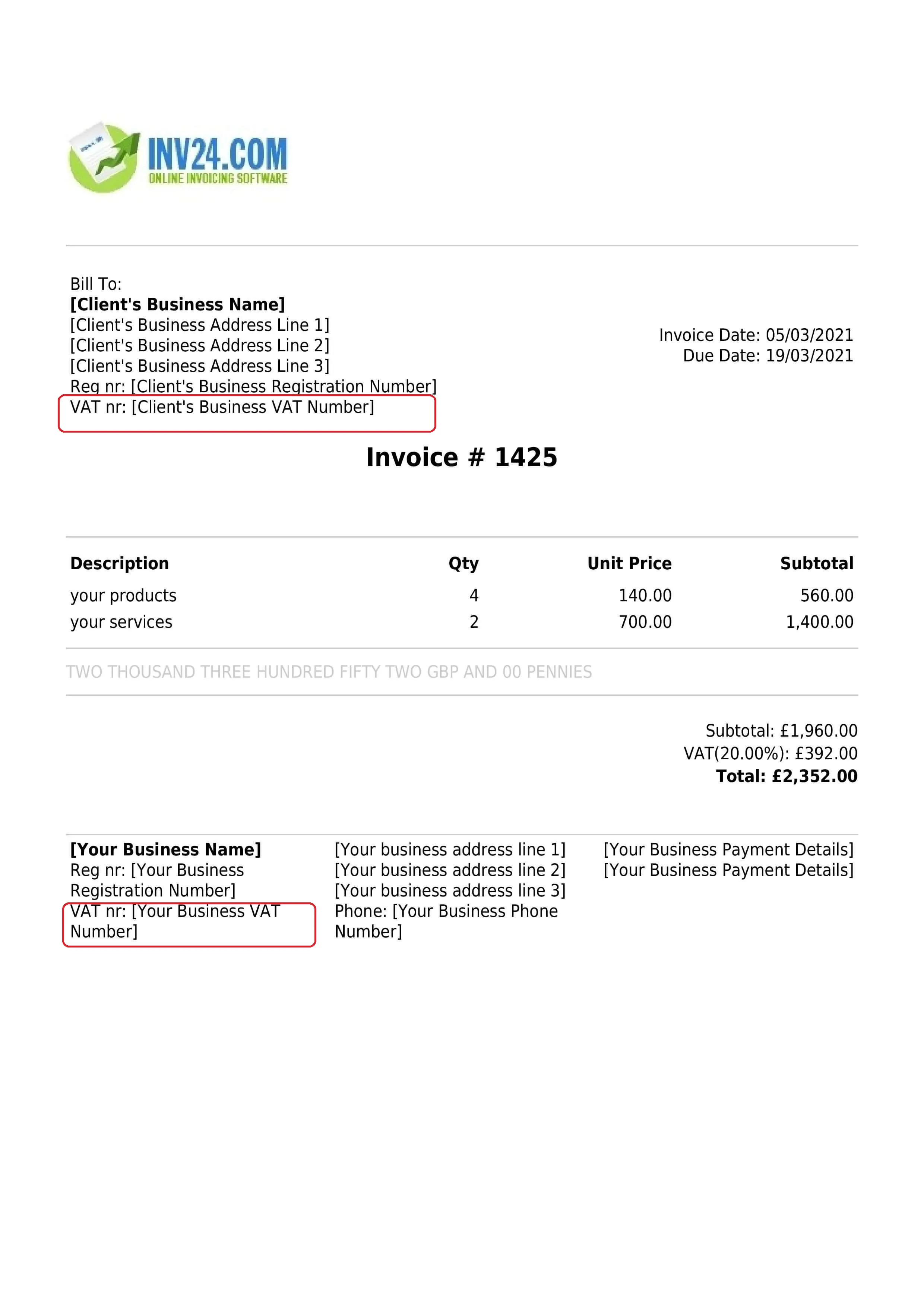
The Importance of Accurate Invoicing
A VAT registration number is only useful if it is used correctly on invoices. A valid VAT invoice must include specific details: the seller’s name and address, the VAT number, a unique invoice number, the tax point, and a breakdown of the VAT charged. If a business pays an invoice that lacks the supplier’s valid VAT ID, the tax authorities may disallow the input tax claim, resulting in a direct financial loss for the purchasing company.
In conclusion, the VAT registration number is a cornerstone of business finance. It is much more than a compliance requirement; it is a tool that, when managed correctly, protects a company’s cash flow, enables international expansion, and ensures long-term financial stability. By understanding its functions and utilizing the right tools for management, business owners and financial professionals can navigate the complexities of the tax system with confidence and precision.
aViewFromTheCave is a participant in the Amazon Services LLC Associates Program, an affiliate advertising program designed to provide a means for sites to earn advertising fees by advertising and linking to Amazon.com. Amazon, the Amazon logo, AmazonSupply, and the AmazonSupply logo are trademarks of Amazon.com, Inc. or its affiliates. As an Amazon Associate we earn affiliate commissions from qualifying purchases.