
In the landscape of global commerce, few financial milestones are as enduring or as illustrative of market dominance as the record for the most sold album of all time. While the music industry has transitioned from the tangible era of vinyl and CDs to the ephemeral age of digital streaming, the financial data surrounding Michael Jackson’s Thriller remains the gold standard for high-volume asset performance. With estimated sales exceeding 70 million units worldwide, Thriller is more than a cultural touchstone; it is a masterclass in the “blockbuster” business model, demonstrating how a single intellectual property (IP) can generate multi-generational wealth and redefine the fiscal architecture of an entire industry.
The Financial Phenomenon of Michael Jackson’s Thriller
To understand the magnitude of the most sold album of all time from a financial perspective, one must look at the sheer scale of its market penetration. When Thriller was released in November 1982, the global music market was in a state of recession. However, the album’s performance acted as a massive economic stimulus for Epic Records (a division of CBS, now Sony Music).
Breaking the 70-Million Barrier
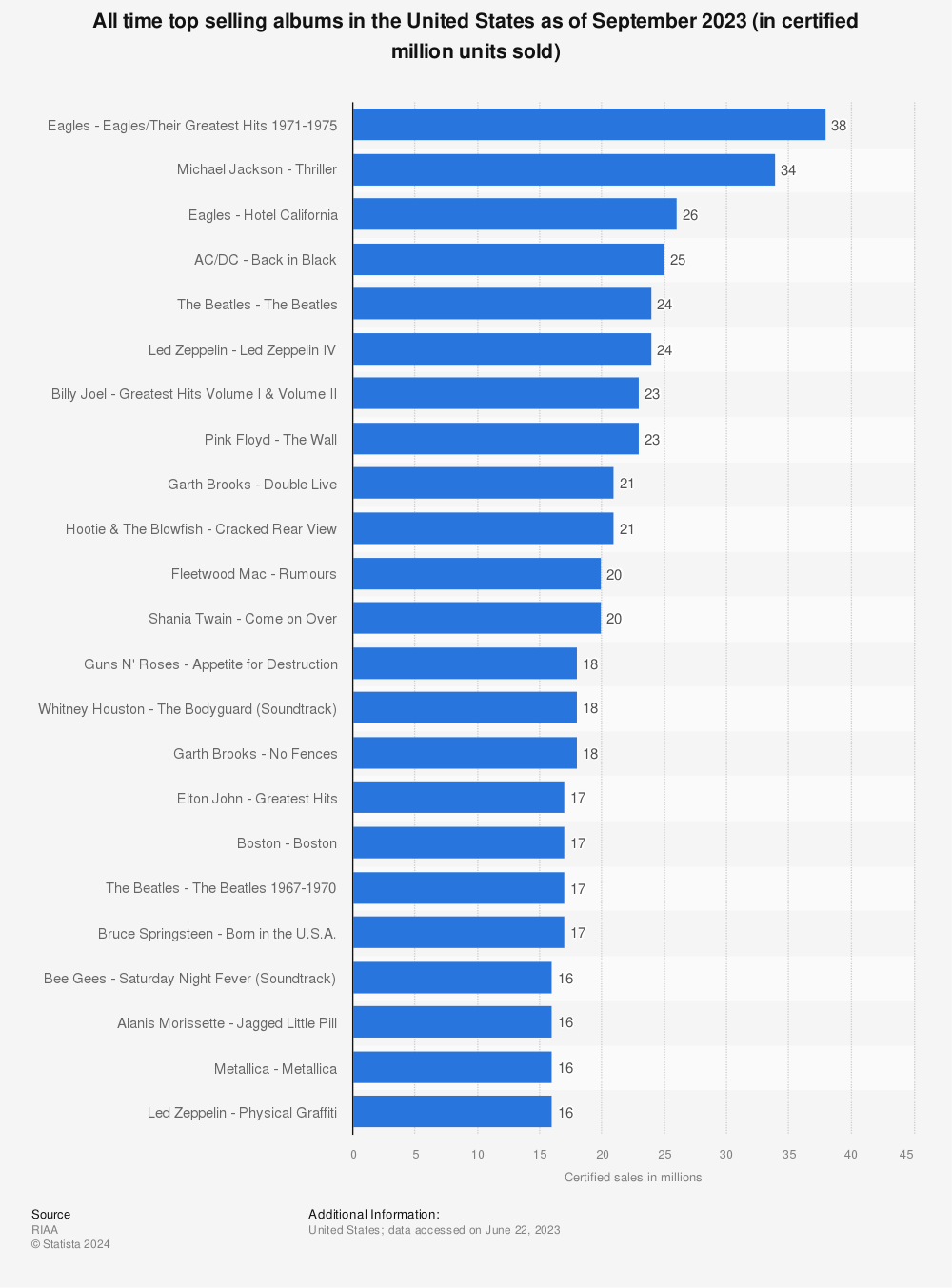
The primary metric of success for any physical product is unit sales. Thriller remains the only album to be certified 34x Platinum by the RIAA in the United States alone. From a “Money” perspective, this represents a staggering amount of gross revenue. In the 1980s, a vinyl record or CD retailed for approximately $9.00 to $15.00. Aggregating 70 million units—adjusted for various international price points and historical inflation—suggests that the album has generated billions of dollars in retail activity over its 40-year lifespan. This volume created a liquidity event for the label that allowed for massive reinvestment into other artists, effectively subsidizing the development of the music industry’s infrastructure for the following decade.
Revenue Streams Beyond Physical Unit Sales
While the initial sale of a record provides an immediate cash infusion, the “most sold” status creates a long-tail financial asset. For the Michael Jackson estate and the associated labels, the money generated does not stop at the cash register. Performance rights, mechanical royalties, and synchronization licenses (placing songs in films, commercials, and video games) provide a continuous stream of passive income. In the world of business finance, Thriller is the ultimate “cash cow.” It requires minimal maintenance capital expenditure while yielding high-margin returns. The album’s tracks are essentially high-yield financial instruments that pay dividends every time they are broadcast globally.
The Business Strategy Behind the Blockbuster Model
The success of the world’s most sold album was not an accident of art alone; it was the result of a calculated, high-stakes financial strategy. This period marked the birth of the “superstar” economy, where a disproportionate amount of capital is invested in a single project to capture the majority of market share.
Epic Records and the High-Stakes Marketing Investment
In the early 1980s, the music business operated on a diversified portfolio strategy, often spreading small bets across many artists. The strategy for Thriller was different. It involved a massive upfront capital outlay for production and marketing. Produced by Quincy Jones with a then-hefty budget of $750,000, the investment was a gamble on quality over quantity. From a corporate finance standpoint, this was a move toward “concentration of risk.” By spending more on a single “A-tier” product, the label aimed to create a product with a lower marginal cost of sales due to its universal appeal.
The Cross-Media Synergy: Music Videos as Financial Assets
One of the most innovative financial moves associated with the album was the production of the “Thriller” short film. With a production budget of $1 million—unheard of for a music video at the time—the project faced significant skepticism from accountants. However, the financial genius lay in the distribution. The estate sold the “making of” rights to MTV and Showtime to cover the production costs, effectively turning a marketing expense into a self-funding asset. This move revolutionized the ROI (Return on Investment) calculations for promotional content, proving that a high-quality “advertisement” could become a secondary revenue stream in its own right.
Valuation of Music Assets in the Modern Economy
The discussion of the most sold album of all time inevitably leads to the modern valuation of music catalogs as a distinct asset class. In recent years, institutional investors, such as the Hipgnosis Songs Fund and BlackRock, have begun treating music royalties like gold or real estate—stable assets that are uncorrelated with the volatility of the stock market.
IP Catalogues and Institutional Investors
The financial legacy of the top-selling albums provides the data points necessary for these valuations. When an album reaches the scale of Thriller, its future earnings become predictable. This predictability allows financial analysts to apply a Discounted Cash Flow (DCF) model to the asset. In 2016, Sony Corporation paid $750 million to acquire the Michael Jackson estate’s 50% stake in the Sony/ATV Music Publishing catalog. While this included more than just Jackson’s own work, the backbone of that valuation was the proven, consistent earning power of his most successful recordings. For an investor, the most sold album is not just a trophy; it is a defensive asset that hedges against inflation.
Inflation-Adjusted Earnings vs. Digital Streaming Royalties
A critical aspect of the “Money” niche in this context is the transition from high-margin physical sales to the high-volume, low-margin world of streaming. A physical CD might have netted a label $5.00 in profit, whereas a single stream on Spotify pays a fraction of a cent. For the most sold album of all time to maintain its financial dominance, it must achieve billions of streams to match the revenue of its initial physical run. Interestingly, Thriller has successfully made this transition. By staying at the top of “Classic” playlists, it continues to capture a significant percentage of the global streaming royalty pool, demonstrating how “legacy assets” can maintain their valuation even as the underlying technology and payment structures evolve.
Diversification and the Legacy of the Mega-Seller
The financial story of the most sold album of all time concludes with how that wealth is managed and diversified. High-net-worth artists and their estates rarely keep their capital in a single bucket; they use the proceeds from record-breaking sales to build diversified business empires.
The Secondary Market and Physical Collectibles
Beyond the primary sales of the music itself, the “most sold” status creates a thriving secondary market for collectibles. Original pressings, signed memorabilia, and limited-edition re-releases trade at high multiples on platforms like Discogs and at prestigious auction houses like Sotheby’s. This secondary market activity reinforces the “brand equity” of the financial asset, ensuring that the primary product remains relevant and valuable. From an investment perspective, these physical artifacts act as “alternative investments,” often appreciating at rates that outperform traditional indices.

Lessons for Modern Entrepreneurs and Independent Artists
While the era of 70-million-unit sales may be over due to the fragmentation of media, the financial lessons from the most sold album remain relevant for today’s entrepreneurs and independent creators.
- The Power of the “Long Tail”: A high-quality product may have high upfront costs but can generate revenue for decades.
- Diversified Revenue Streams: Relying on sales alone is risky; success comes from licensing, merchandising, and secondary rights.
- Scalability: The most sold album reached its status by appealing to a global demographic, crossing borders and age groups. In business, true wealth is created by products that scale across multiple market segments without requiring a proportional increase in overhead.
In conclusion, the title of the most sold album of all time—held by Michael Jackson’s Thriller—is more than a musical achievement; it is a landmark in the history of global finance. It represents the pinnacle of the blockbuster investment strategy, a masterclass in IP valuation, and a blueprint for long-term wealth creation through creative assets. In the world of money, Thriller is not just an album; it is a perennial high-performance portfolio.
aViewFromTheCave is a participant in the Amazon Services LLC Associates Program, an affiliate advertising program designed to provide a means for sites to earn advertising fees by advertising and linking to Amazon.com. Amazon, the Amazon logo, AmazonSupply, and the AmazonSupply logo are trademarks of Amazon.com, Inc. or its affiliates. As an Amazon Associate we earn affiliate commissions from qualifying purchases.