
In the world of finance, timing is often just as critical as the quality of the assets being traded. For the modern investor, understanding “when the stock market opens” is more than a simple matter of checking a clock; it is about understanding the windows of liquidity, the nuances of global time zones, and the strategic advantages of participating in different trading sessions. Whether you are a long-term value investor or an active day trader, the operating hours of global exchanges dictate the rhythm of the financial world.
This article provides a deep dive into the schedules of the world’s major stock exchanges, the mechanics of extended-hours trading, and the strategic implications of timing your entries and exits in the market.
1. Understanding Standard Trading Hours in the United States
For the vast majority of retail investors in North America, the financial universe revolves around the two titans of Wall Street: the New York Stock Exchange (NYSE) and the NASDAQ. These exchanges follow a rigorous schedule designed to concentrate liquidity and ensure fair price discovery.
The Core Session: 9:30 AM to 4:00 PM EST
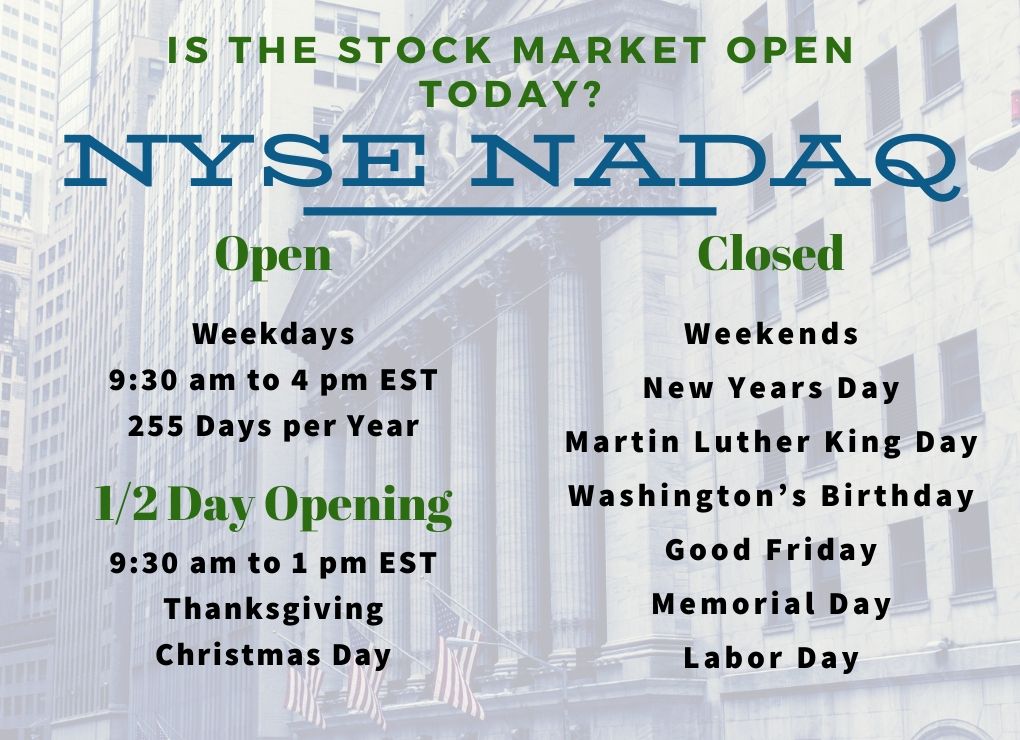
The standard trading session for the U.S. stock market begins at 9:30 AM Eastern Standard Time (EST) and concludes at 4:00 PM EST. These hours were established to provide a consistent window where buyers and sellers can interact with maximum efficiency. During these six and a half hours, the volume of shares traded is at its peak, leading to “tight” bid-ask spreads—the difference between the price a buyer is willing to pay and the price a seller is willing to accept.
The Role of the NYSE and NASDAQ
While both the NYSE and NASDAQ operate on the same 9:30 AM to 4:00 PM schedule, they utilize different models. The NYSE, located at 11 Wall Street, is traditionally an auction market where “Designated Market Makers” (DMMs) facilitate the opening and closing of stocks. The NASDAQ, conversely, is a decentralized electronic exchange. Despite these technical differences, both exchanges observe the same lunch hours (or lack thereof) and holiday schedules, acting as the synchronized heartbeat of the American economy.
Why the Opening Bell Matters
The opening bell at 9:30 AM is not merely a ceremony; it represents the moment “price discovery” begins for the day. Overnight news, corporate earnings reports released after the previous day’s close, and global economic shifts all culminate in a surge of orders at the open. This often leads to high volatility during the first 30 minutes of trading. Professional traders often refer to this as the “amateur hour,” where retail emotions can drive prices before institutional “smart money” begins to stabilize the market later in the morning.
2. Beyond the 9-to-5: Extended-Hours Trading
The digital age has fundamentally altered the concept of a “closed” market. While the physical floors may be quiet, electronic communication networks (ECNs) allow for trading outside of standard hours. This is known as extended-hours trading, divided into pre-market and after-hours sessions.
Pre-Market Trading: The Early Bird’s Opportunity
Pre-market trading in the U.S. typically begins as early as 4:00 AM EST, though the bulk of the volume doesn’t arrive until 8:00 AM EST. This session allows investors to react to breaking news that occurs before the official opening bell, such as government jobs reports or international geopolitical events. However, because fewer participants are active, the market is much “thinner,” meaning large orders can cause significant and erratic price swings.
After-Hours Trading: Reacting to Post-Close News
The after-hours session begins immediately at 4:00 PM EST and usually runs until 8:00 PM EST. This is perhaps the most critical window for corporate news, as most public companies release their quarterly earnings reports shortly after the closing bell to ensure all investors have time to digest the information before the next day’s open. For investors looking to capitalize on a positive earnings surprise or mitigate losses from a disappointing one, the after-hours session is the primary arena for action.
Risks and Rewards of Extended Trading
While extended-hours trading offers flexibility, it comes with heightened risks. The primary concern is low liquidity. With fewer buyers and sellers, it may be difficult to execute a trade at your desired price. Furthermore, many brokerage platforms only allow “limit orders” during these times to protect investors from the extreme volatility that can occur when the “market order” safety net is absent. For the average personal finance enthusiast, extended hours are often better used for observation rather than aggressive participation.
3. The Global Perspective: When International Markets Open
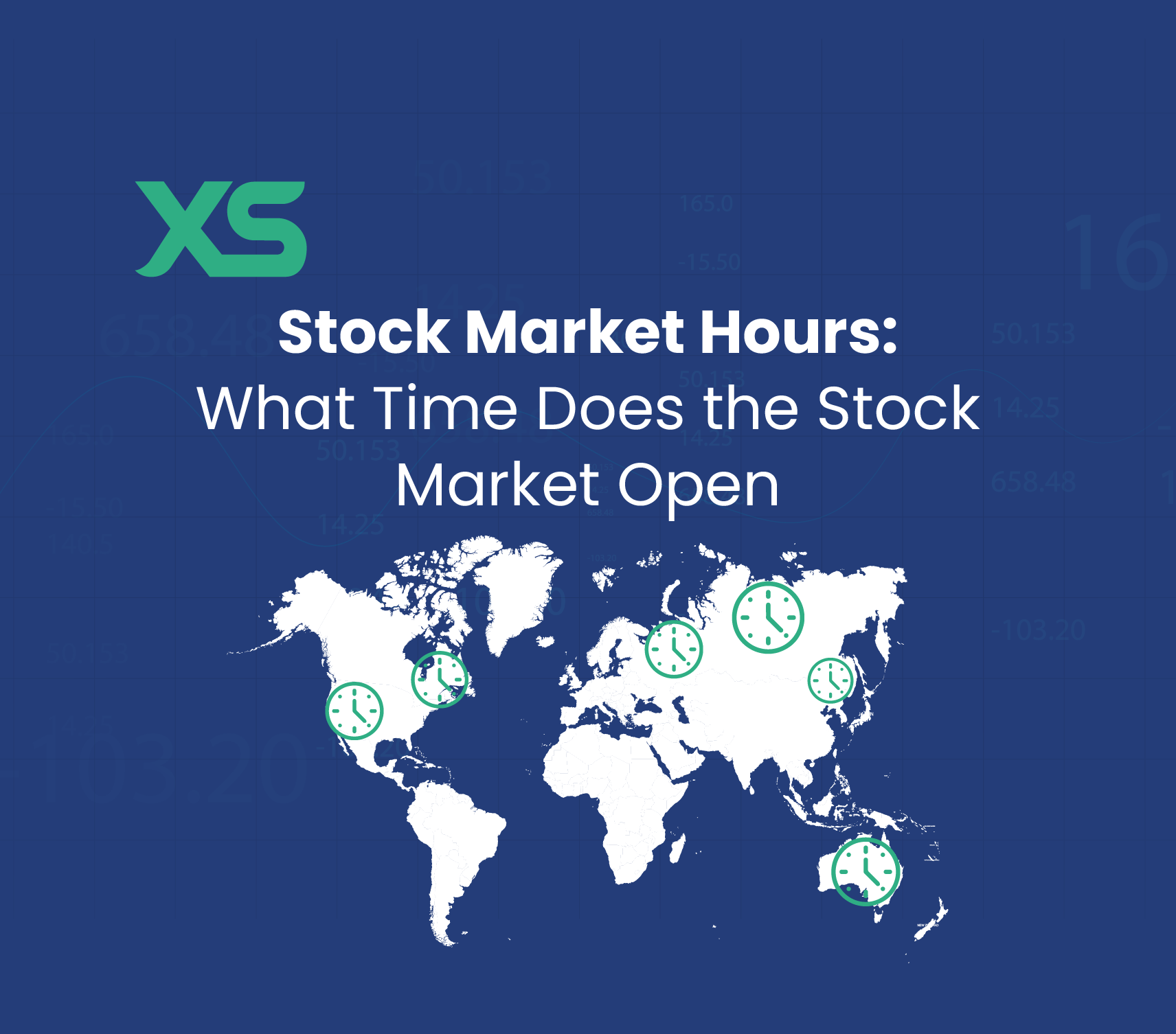
In an interconnected global economy, the U.S. market is only one piece of the puzzle. Professional investors keep a close watch on international exchanges because economic health in Europe or Asia frequently dictates the opening sentiment in New York.
European Markets: The London and Frankfurt Sync
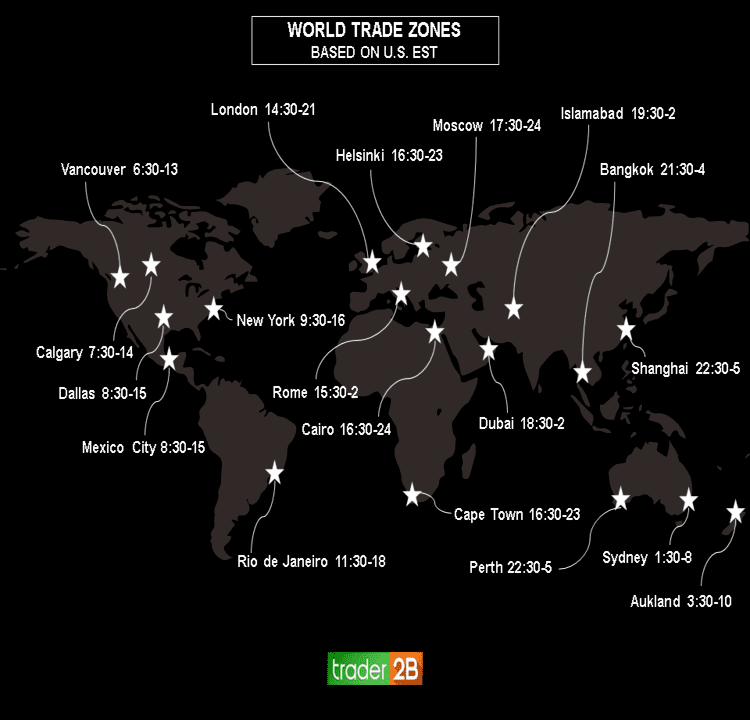
The London Stock Exchange (LSE) is one of the most influential markets in the world. It opens at 8:00 AM Greenwich Mean Time (GMT) and closes at 4:30 PM GMT. For U.S. investors, the most significant period is the “overlap” between 8:00 AM and 11:30 AM EST. During this window, both the European and American markets are open simultaneously, creating a period of intense liquidity and price movement, particularly in currencies and multi-national equities.
Asian Markets: Tokyo, Hong Kong, and Shanghai
The trading day effectively begins in Asia. The Tokyo Stock Exchange (TSE) opens at 9:00 AM local time, which corresponds to late evening in the United States. A unique feature of many Asian markets, including the Hong Kong Stock Exchange, is the “lunch break”—a period usually between 12:00 PM and 1:00 PM where trading halts entirely. This is a stark contrast to Western markets, which trade continuously through the midday hours.
The Impact of Time Zones on Global Liquidity
The sun never truly sets on the global stock market. As the Tokyo market closes, the London market prepares to open; as London winds down, New York enters its peak. This “follow-the-sun” model ensures that capital is always flowing. For a diversified investor, understanding these time zones is vital for managing “gap risk”—the risk that a stock’s price will change significantly while the local exchange is closed due to activity in another part of the world.
4. Market Holidays and Special Trading Schedules
Just as important as knowing when the market opens is knowing when it remains closed. The stock market does not follow a standard federal holiday calendar exactly, and being caught unaware by a market closure can lead to missed opportunities or liquidity traps.
Federal Holidays and Exchange Closures
In the United States, the NYSE and NASDAQ are closed for several major holidays, including New Year’s Day, Martin Luther King Jr. Day, Washington’s Birthday (Presidents Day), Good Friday, Memorial Day, Juneteenth, Independence Day, Labor Day, Thanksgiving Day, and Christmas Day. It is a common misconception that the market is open on every government holiday; for instance, the market is closed on Good Friday, which is not a federal holiday, but remains open on Veterans Day and Columbus Day, which are.
Early Closures and Modified Hours
There are specific days when the market opens as usual but closes early, typically at 1:00 PM EST. This usually occurs on the day after Thanksgiving (Black Friday) and sometimes on Christmas Eve or July 3rd, depending on how those dates fall in the calendar week. These shortened sessions are characterized by extremely low volume, as many institutional traders take the day off, leading to “drifting” price action that rarely follows a strong trend.
How to Prepare for Market Weekends
The stock market is closed on Saturdays and Sundays. While this provides a reprieve for traders, it also creates “weekend risk.” Significant news—such as a bank failure, a geopolitical conflict, or a sudden policy change—can occur when the markets are inaccessible. Successful investors use the weekend for research and strategy, preparing their “buy” or “sell” lists so they are ready the moment the futures markets open on Sunday evening (typically 6:00 PM EST) to signal where the Monday morning open might head.
5. Strategic Timing: When Should You Actually Trade?
Knowing the hours is one thing; knowing when to execute is another. The “Money” niche is as much about psychology as it is about math. The time of day you choose to enter a trade can significantly impact your “slippage” (the difference between expected price and executed price).
The Volatility of the First Hour
The first hour of trading (9:30 AM to 10:30 AM EST) is often the most volatile. This is when the market reacts to all the news that accumulated since the previous day’s close. For high-risk traders, this volatility is an opportunity. For conservative, long-term investors, it is often wise to wait until 10:30 AM or 11:00 AM, when the initial “noise” has settled and a clearer daily trend has been established.
The “Lunchtime Lull”
Between 12:00 PM and 2:00 PM EST, trading volume typically drops. Institutional traders go to lunch, and the market often enters a sideways pattern. This “lull” can be deceptive; because volume is lower, a relatively small trade can have a disproportionate impact on a stock’s price. Many professionals avoid making significant moves during this window, preferring the high-volume bookends of the day.
The Closing Cross and End-of-Day Dynamics
The final hour of trading, often called the “Power Hour,” sees a massive surge in volume as fund managers rebalance their portfolios and day traders close out their positions. The very last minutes are dominated by the “Closing Cross,” a process where the exchange matches buyers and sellers at a single price to determine the official closing price of the day. For those looking to buy or sell large positions, the liquidity available at the 4:00 PM close is often the best of the entire day.
In conclusion, the question of “when the stock market opens” is the gateway to understanding the complex machinery of global finance. By mastering the schedule of the standard session, navigating the risks of extended hours, and respecting the influence of international time zones, investors can better position themselves to grow their wealth with precision and confidence.
aViewFromTheCave is a participant in the Amazon Services LLC Associates Program, an affiliate advertising program designed to provide a means for sites to earn advertising fees by advertising and linking to Amazon.com. Amazon, the Amazon logo, AmazonSupply, and the AmazonSupply logo are trademarks of Amazon.com, Inc. or its affiliates. As an Amazon Associate we earn affiliate commissions from qualifying purchases.