
When investors ask, “What is the S&P 500 today?” they are rarely looking for a simple four-digit number. Instead, they are seeking a pulse check on the health of the American economy, the vitality of global corporate giants, and the current temperature of the financial world. The Standard & Poor’s 500 Index, or simply the S&P 500, has evolved from a list of stocks into the most important benchmark in modern finance. For the individual investor, understanding what the S&P 500 represents today is the first step toward building a sustainable and resilient portfolio.
Understanding the Mechanics: What Defines the S&P 500 Today?
The S&P 500 is often mistaken for a list of the 500 largest companies in the United States. While size is a major factor, the index is actually a curated list managed by a committee at S&P Dow Jones Indices. This committee ensures that the index remains a representative sample of the U.S. equity market, reflecting the country’s industrial diversity and economic evolution.
The Eligibility Criteria: How Companies Make the Cut
To enter the S&P 500 today, a company must meet rigorous standards. It isn’t enough to be “big.” A company must be a U.S.-based corporation, possess a highly liquid stock, and have a market capitalization that currently exceeds $15.8 billion (a threshold that adjusts periodically). Most importantly, the company must show positive earnings over the most recent four quarters. This “profitability rule” distinguishes the S&P 500 from other indices like the Russell 1000, as it filters out speculative startups that may have high valuations but no track record of generating real cash flow.
Market-Cap Weighting: Why Big Tech Dominates the Index
The S&P 500 is a float-adjusted, market-capitalization-weighted index. This means that companies with the highest total market value have the largest influence on the index’s daily movements. Today, we see an unprecedented concentration at the top. When a handful of technology giants—often referred to as the “Magnificent Seven”—experience a 2% price jump, the entire index moves upward, even if the other 493 stocks are flat. This weighting system reflects the reality of the modern economy: a few dominant platforms now control a significant portion of global commerce and profit.
The S&P 500 as an Economic Barometer: Why the World Watches
The S&P 500 is widely considered the best single gauge of large-cap U.S. equities. Because the companies within the index capture approximately 80% of the available market capitalization in the U.S., its performance is inextricably linked to the broader health of the global economy.
Measuring Corporate Health and Consumer Sentiment
When the S&P 500 rises, it typically signals that corporate earnings are strong and that investors are optimistic about future growth. Conversely, a decline often points to systemic fears, such as rising interest rates, inflationary pressures, or geopolitical instability. Today, the index is particularly sensitive to the Federal Reserve’s monetary policy. Because many S&P 500 companies rely on debt for expansion or have valuations based on future cash flows, the “cost of money” (interest rates) is a primary driver of the index’s daily fluctuations.
Historical Performance vs. Current Volatility
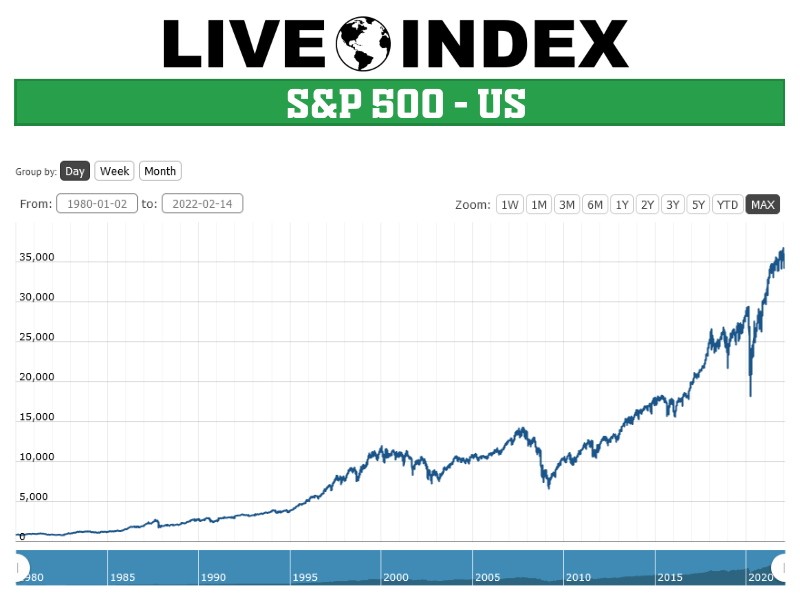
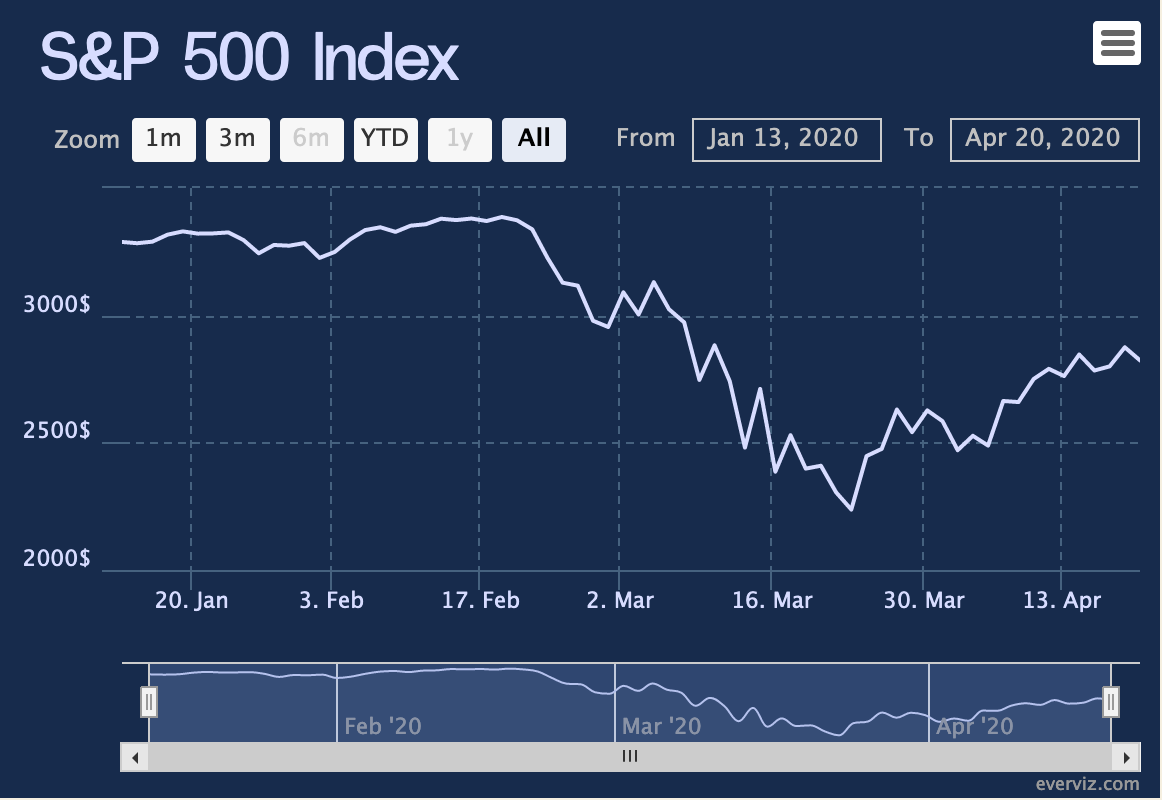
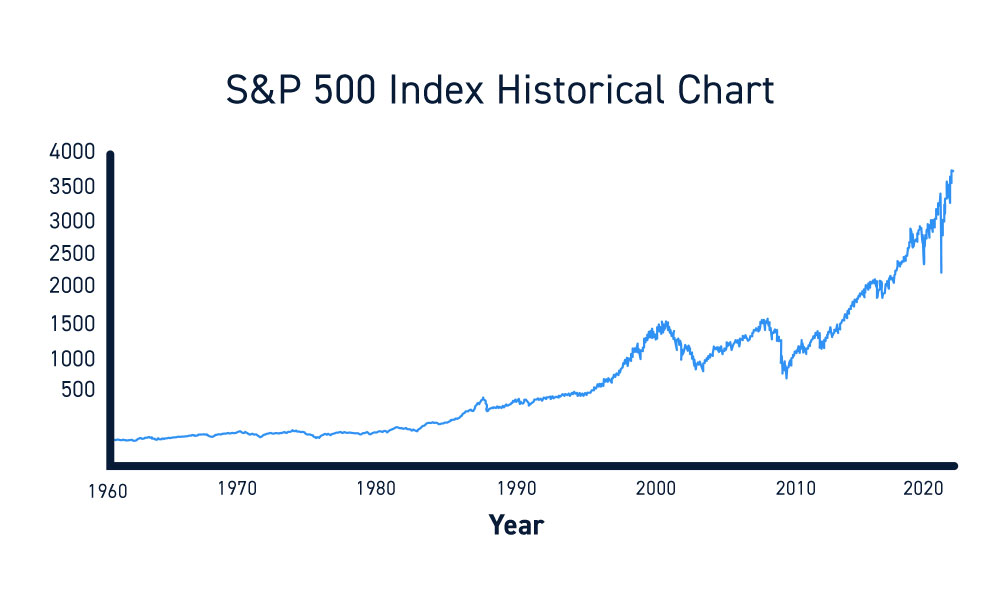
Historically, the S&P 500 has delivered an average annual return of approximately 10% before inflation. However, looking at the index “today” requires acknowledging that this 10% average is rarely achieved in a straight line. The index is prone to periods of intense volatility, driven by high-frequency trading algorithms and the 24-hour news cycle. For the modern investor, the S&P 500 serves as a reminder that while short-term movements can be erratic, the long-term trajectory of the top 500 American companies has historically been upward, tracking with technological innovation and population growth.
The Shift in Sectors: From Industrial Roots to a Tech-Heavy Future
In the mid-20th century, the S&P 500 was dominated by “smoke-stack” industries: steel, oil, and manufacturing. If you looked at the index fifty years ago, companies like General Motors and Exxon would have been the undisputed leaders. Today, the landscape is radically different, reflecting the digital transformation of the global economy.
The Influence of the “Magnificent Seven”
The current era of the S&P 500 is defined by the dominance of Information Technology, Communication Services, and Consumer Discretionary sectors. Companies like Apple, Microsoft, Alphabet (Google), Amazon, and Nvidia carry immense weight. These firms are no longer just “tech companies”; they are infrastructure providers for the modern world. Their dominance means that the S&P 500 today is more of a “growth” index than it was in previous decades. This has led to higher valuations (Price-to-Earnings ratios) compared to historical norms, as investors are willing to pay a premium for the scalable, high-margin business models that these tech giants possess.
Diversification Challenges in a Concentrated Market
While the S&P 500 is designed to provide diversification, its market-cap weighting creates a unique challenge in the current environment. Because the top 10 companies now account for nearly 30% of the index’s total value, the “diversification” benefit is somewhat skewed. Investors who think they are getting equal exposure to the 500 best companies are actually getting a heavy dose of technology and a smaller slice of utilities, materials, and energy. Understanding this concentration is vital for anyone using the S&P 500 as their primary investment vehicle; it means your portfolio is highly sensitive to the regulatory and economic headwinds facing the tech sector.
How to Invest in the S&P 500: Modern Strategies for Every Portfolio
One of the greatest financial innovations of the last century was the creation of the index fund, which allowed everyday people to own a piece of the S&P 500 without having to buy 500 individual stocks. Today, this is easier and cheaper than ever before.
Index Funds vs. ETFs: Choosing the Right Vehicle
Investors today typically choose between Mutual Funds and Exchange-Traded Funds (ETFs) to track the S&P 500. ETFs like the SPDR S&P 500 ETF Trust (SPY) or the Vanguard S&P 500 ETF (VOO) are popular because they offer low “expense ratios”—often less than 0.05%. This means that for every $10,000 invested, you pay only $5 a year in fees. These instruments provide instant liquidity, allowing you to buy or sell your position at any time during market hours, making them a cornerstone of both retail and institutional portfolios.
The Role of the S&P 500 in Long-Term Wealth Building
For most people, the S&P 500 shouldn’t be a “trade,” but a “tenure.” Wealth building through the index is best achieved through dollar-cost averaging—the practice of investing a fixed amount of money at regular intervals, regardless of whether the market is up or down. By doing this, you buy more shares when prices are low and fewer when prices are high. Given that the S&P 500 represents the collective output of the most successful companies in the world, staying invested through market cycles allows you to capture the compounding growth of American capitalism.
Conclusion: The S&P 500 as a Living Organism
To answer “what is the S&P 500 today” is to acknowledge that the index is a living, breathing entity. It is not a static list; it is a constantly regenerating group of companies that reflects the current state of human innovation and consumer demand. When a company fails to innovate or loses its market relevance, it is removed and replaced by a rising star. This self-cleansing mechanism is what has allowed the S&P 500 to survive wars, depressions, and technological shifts.
For the modern investor, the S&P 500 represents a paradox: it is simultaneously a safe haven of established corporate giants and a high-octane engine of technological growth. By understanding its mechanics, its sectoral shifts, and its role as an economic barometer, you can move beyond simply tracking the daily “number” and begin to use the index as a sophisticated tool for achieving financial independence. In the world of money, there are few benchmarks as enduring or as telling as the S&P 500.
aViewFromTheCave is a participant in the Amazon Services LLC Associates Program, an affiliate advertising program designed to provide a means for sites to earn advertising fees by advertising and linking to Amazon.com. Amazon, the Amazon logo, AmazonSupply, and the AmazonSupply logo are trademarks of Amazon.com, Inc. or its affiliates. As an Amazon Associate we earn affiliate commissions from qualifying purchases.