
In the landscape of modern technology, mathematics serves as the bedrock upon which every line of code, every database query, and every artificial intelligence model is built. When developers or data scientists encounter the symbol “U”—specifically the stylized $cup$—they are not merely looking at a character from a textbook. They are looking at the “Union” operator, a fundamental concept of set theory that governs how we organize, merge, and manipulate data in the digital age.
Understanding what “U” means in math is essential for anyone navigating the tech industry. Whether you are optimizing a SQL database, building a front-end application in JavaScript, or training a machine learning model, the logic of the Union is ever-present. This article explores the mathematical definition of “U” and its expansive applications across software engineering, data architecture, and emerging tech trends.
The Mathematical Foundation: Understanding the $cup$ (Union) Symbol
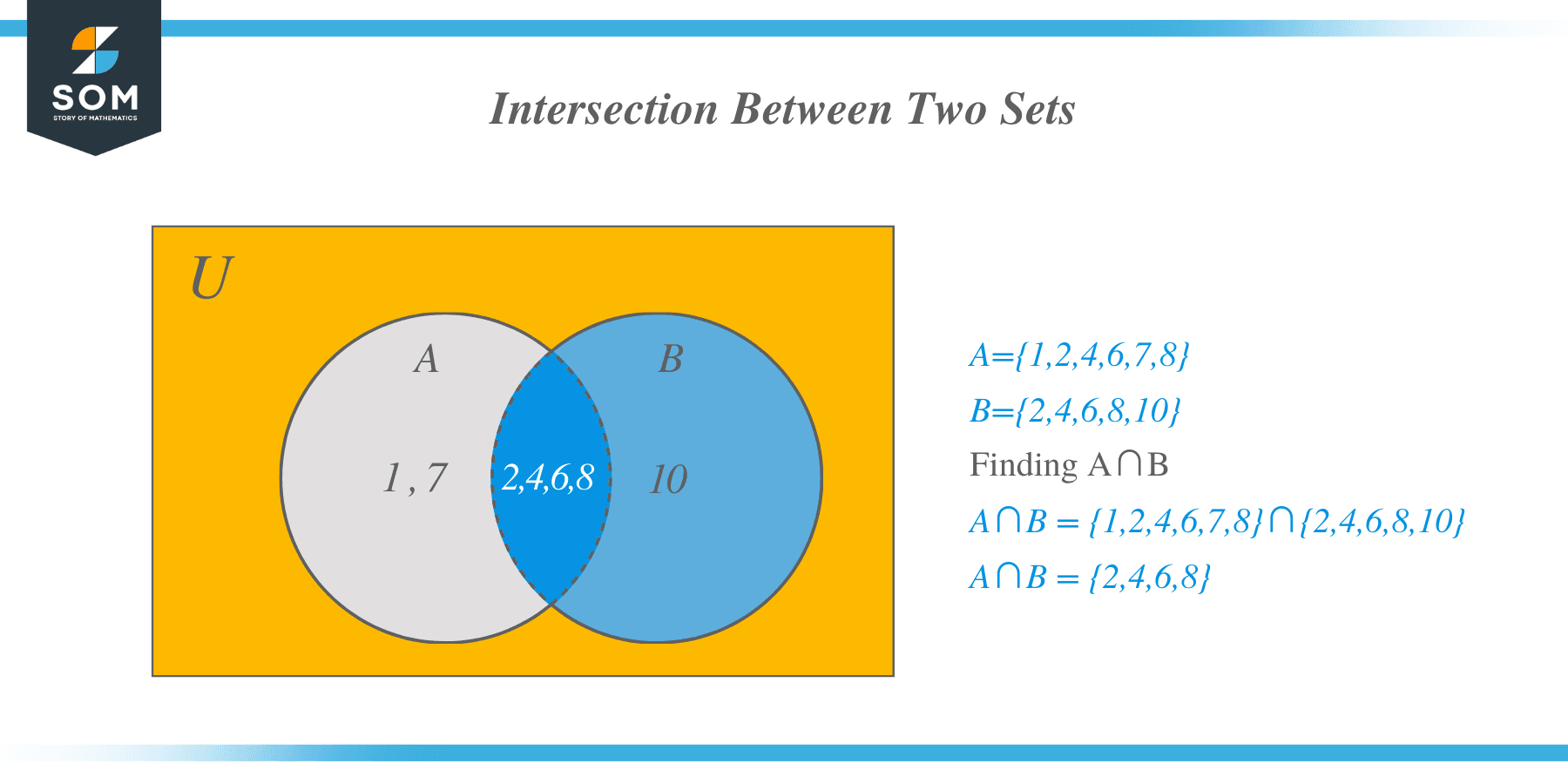
In pure mathematics, the symbol $cup$ represents the “Union” of two or more sets. A set is simply a collection of distinct objects, and the Union of two sets, A and B, is the set of all elements that are in A, in B, or in both. In notation, this is written as $A cup B$.
Set Theory as the Logic Gate of Tech
Computer science is, at its core, applied set theory. Every time a software system handles a list of users, a collection of product IDs, or a group of permissions, it is treating those collections as sets. The “U” operation allows developers to combine these collections while maintaining the integrity of the data.
In the binary world, where logic is absolute, the Union operation mirrors the “OR” logic gate. If you have a set of users who subscribe to a newsletter and a set of users who have purchased a product, the Union represents the total reach of your digital platform—everyone who has done one, the other, or both. This fundamental logic is what allows software to scale and handle complex relational data without redundancy.
How Variables “u” Function in Computational Algorithms
Beyond the Union symbol, the lowercase “u” is frequently used as a standard variable in calculus and physics-based programming. In “u-substitution” (a method for integration), “u” acts as a placeholder that simplifies complex functions. In tech, this translates to algorithmic efficiency. When programmers write code for graphics engines or physical simulations—such as those found in high-end gaming or VR—they utilize these mathematical shortcuts to reduce the computational load on the CPU and GPU.
Understanding “u” in this context is about abstraction. It represents the ability of a programmer to take a complex, multi-variable problem and distill it into a manageable format, ensuring that software remains fast and responsive.
Database Management: The “U” in SQL and Data Architecture
One of the most practical applications of mathematical set theory is found in database management systems (DBMS). For tech professionals working with Big Data, the “U” symbol translates directly into the UNION command in Structured Query Language (SQL).
Union vs. Union All: Optimizing Query Performance
In SQL, the UNION operator is used to combine the result-set of two or more SELECT statements. However, consistent with the mathematical definition of a set (which only contains unique elements), a standard UNION command automatically removes duplicate rows from the combined result.
From a technology standpoint, this requires the database engine to perform a distinct sort-and-filter operation, which can be resource-intensive. Tech architects often distinguish this from UNION ALL, which combines datasets without removing duplicates. Choosing between the mathematical purity of the Union and the computational speed of a simple merge is a daily decision for backend engineers. Understanding the underlying math ensures that the database remains performant even as the volume of data grows into the petabytes.
Relational Algebra: The Math Behind the Software
The entire concept of relational databases (like PostgreSQL, MySQL, and Oracle) is based on “Relational Algebra,” a branch of mathematics where the Union is one of the primary operators. When a tech company like Netflix or Amazon suggests a “Recommended for You” list, they are often using set operations to find the Union of your interests and the Intersections of what similar users have watched or bought.
Without the mathematical framework of the Union, these systems would struggle to aggregate data from disparate sources. The ability to take “Set A” (your history) and “Set B” (trending items) and find a meaningful Union is what drives the personalization engines of the modern web.
Programming & Development: Implementing Set Operations in Modern Languages

While SQL handles data at rest, programming languages like Python, Java, and JavaScript handle data in motion. These languages have built-in support for set theory, allowing developers to implement the “U” logic directly into their application code.
Python Sets: Handling Unique Data Efficiently
Python is currently the leading language for data science and AI, and its treatment of sets is a masterclass in mathematical implementation. In Python, you can define a set and find the Union of two sets using the pipe operator (|) or the .union() method.
set_a = {1, 2, 3}
set_b = {3, 4, 5}
union_set = set_a | set_b  # Result: {1, 2, 3, 4, 5}
The efficiency of this operation is what makes Python so powerful for tech applications. Searching a set (or performing a Union) has an average time complexity of O(1) or O(n), making it significantly faster than iterating through lists. For tech professionals, using the “U” logic means writing code that can process millions of records in milliseconds, a requirement for high-traffic applications.
JavaScript and Array Manipulations
In the world of front-end development, managing state often involves mathematical set logic. Modern JavaScript (ES6 and beyond) introduced the Set object, allowing developers to handle collections of unique values. When building a user interface that needs to combine tags, filters, or categories, developers use the concept of the Union to ensure the UI doesn’t display redundant information.
By applying the mathematical principles of the Union, developers can create “cleaner” data structures, which leads to fewer bugs and a smoother user experience. It is a prime example of how a simple mathematical symbol influences the “look and feel” of the apps we use every day.
Advanced Tech Applications: AI, Machine Learning, and Big Data
As we move into the realm of advanced technology, the “U” in math takes on even greater significance, particularly in fields like computer vision and predictive analytics.
The Intersection and Union of Data Clusters (IoU)
In machine learning, specifically in object detection (used by self-driving cars and facial recognition), there is a critical metric called “Intersection over Union” or IoU. This is a mathematical formula used to evaluate the accuracy of an AI model.
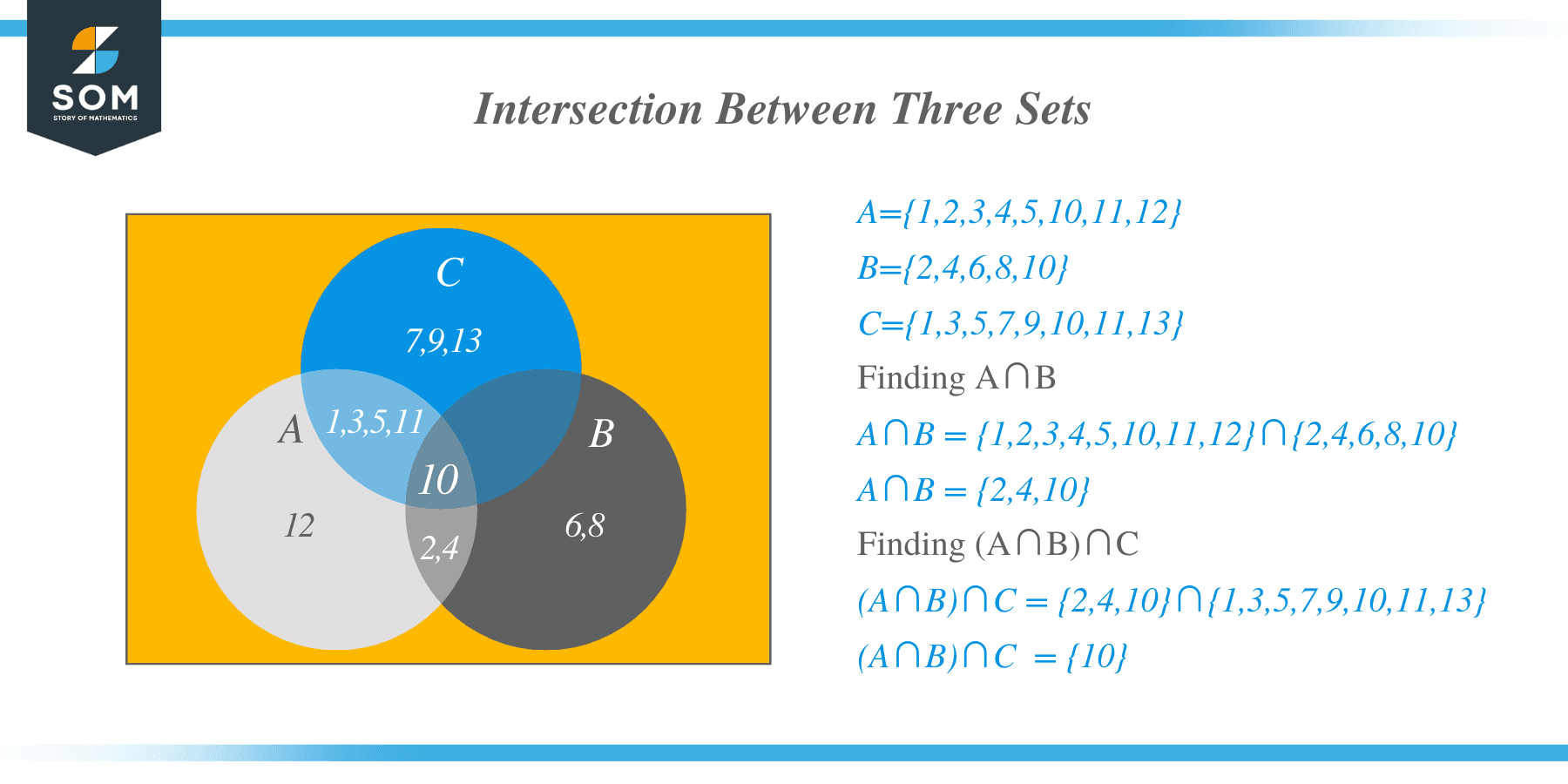
The IoU calculates the area of overlap between a predicted bounding box and a ground truth bounding box, divided by the area of their Union.
- The Intersection: Where the AI thinks the object is vs. where it actually is.
- The Union: The total area covered by both boxes.
A high IoU score means the AI is highly accurate. Here, the “U” isn’t just a theoretical concept; it is a benchmark for safety and precision in autonomous systems. If a self-driving car cannot accurately calculate the Union of its sensor data, it cannot navigate safely.
Boolean Logic and Digital Circuitry
At the hardware level, the mathematical Union is represented by Boolean logic. The “OR” operation in a circuit is the physical manifestation of the $cup$ symbol. Every transistor in a computer processor is performing these set-like operations billions of times per second.
Digital security also relies on this logic. Access Control Lists (ACLs) use Unions to determine a user’s total permissions. If a user belongs to “Group A” (Managers) and “Group B” (IT Support), their total access is the Union of all permissions granted to both groups. In cybersecurity, managing this Union correctly is the difference between a secure system and a catastrophic data breach.
Conclusion: The Mathematical Literacy of the Future
What does “U” mean in math? To a student, it is a symbol on a chalkboard. But to a tech professional, it is a tool for building the future. It represents the logic of combination, the efficiency of data retrieval, and the accuracy of artificial intelligence.
In the tech industry, math is not a separate discipline; it is the language of software and hardware. The Union operator $cup$ teaches us how to merge disparate ideas and data points into a cohesive whole. As we continue to push the boundaries of what is possible with AI, cloud computing, and software engineering, our reliance on these fundamental mathematical principles will only grow. Understanding the “U” is the first step in mastering the complex logic that powers our digital world.
aViewFromTheCave is a participant in the Amazon Services LLC Associates Program, an affiliate advertising program designed to provide a means for sites to earn advertising fees by advertising and linking to Amazon.com. Amazon, the Amazon logo, AmazonSupply, and the AmazonSupply logo are trademarks of Amazon.com, Inc. or its affiliates. As an Amazon Associate we earn affiliate commissions from qualifying purchases.