
In the rapidly evolving landscape of digital interactive media, language is not always spoken or written. In the realm of competitive gaming—a cornerstone of modern technology and social software—communication often takes the form of “emergent gameplay mechanics.” One of the most ubiquitous, controversial, and enduring of these non-verbal signals is “tea bagging.”
While the term has roots in physical slang, its transition into the digital sphere has transformed it into a complex social signifier within the tech industry. To understand what tea bagging means in a professional tech context, one must look past the surface-level provocation and examine the intersection of game physics, user interface design, and the psychology of online communities.

The Origin and Technical Mechanics of the Digital Gesture
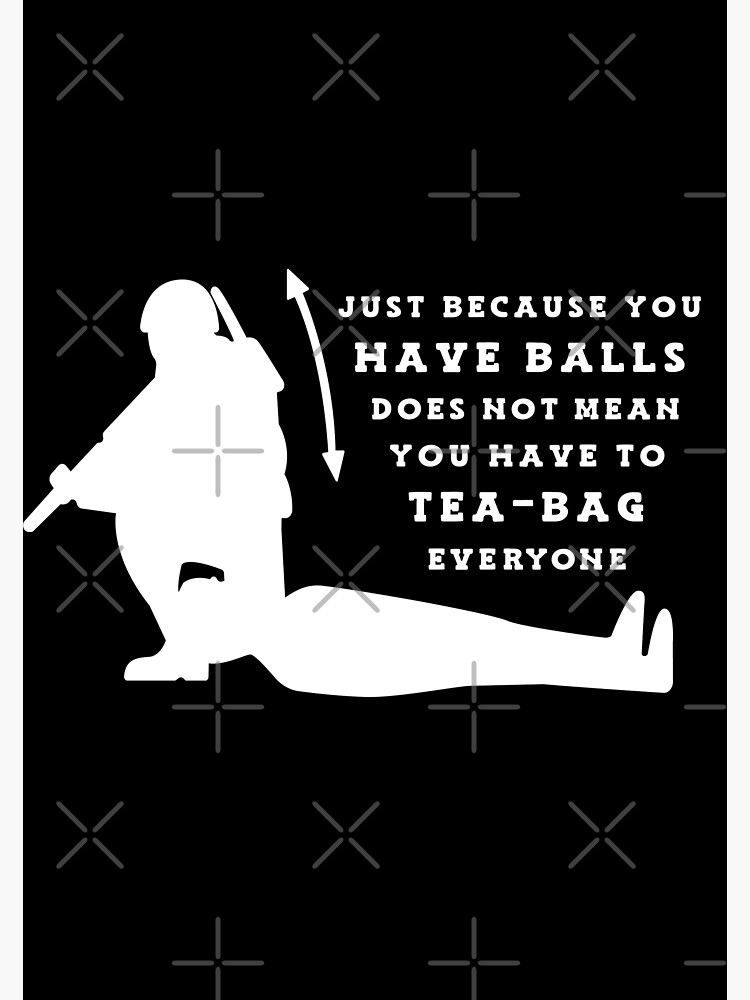
At its core, tea bagging in a digital environment refers to the act of a player-controlled character repeatedly crouching and standing over the body of a defeated opponent. While seemingly simple, the existence of this gesture is a direct result of the evolution of control schemes and physics engines in early software development.
From Crouch Mechanics to Social Signaling
The “crouch” function was originally integrated into first-person shooters (FPS) as a tactical utility. In titles like Quake and the original Counter-Strike, crouching reduced the player’s profile and increased weapon accuracy. However, as multiplayer gaming moved from local area networks (LAN) to global servers, players began repurposing these utility-based inputs for expressive purposes.
Because early gaming software lacked the bandwidth for complex emotes or high-fidelity character animations, players were forced to innovate within the constraints of the hardware. The crouch button became a rudimentary tool for communication. It could mean “hello,” “thank you,” or, most famously, a taunt of dominance after a kill.
The Role of Physics Engines in Early FPS Games
The rise of tea bagging as a cultural phenomenon is inextricably linked to the advancement of ragdoll physics. In early 3D games, when a character died, they typically followed a pre-set animation. However, with the release of games like Halo: Combat Evolved (2001), developers introduced more sophisticated physics engines.
When a player was eliminated, their character model became a dynamic object influenced by gravity and collision. This technical shift allowed the “tea bagger” to physically interact with the opponent’s digital remains. The “clipping” and collision detection between the crouching player and the fallen avatar created a visceral sense of presence that transformed a simple button press into a powerful—and often polarizing—social statement.
Digital Etiquette and the Psychology of In-Game Interaction
In the tech and gaming sectors, understanding user behavior is as critical as writing clean code. Tea bagging serves as a fascinating case study in “transgressive play”—a term used by ludologists to describe players using game systems in ways the designers did not originally intend.
Taunting as a Social Tool in Competitive Play
Psychologically, tea bagging is a form of “dominance display.” In high-stakes competitive environments, such as eSports or ranked matchmaking, psychological warfare is a recognized strategy. By tea bagging an opponent, a player may attempt to “tilt” them—a poker term used in gaming to describe a state of emotional frustration that leads to poor decision-making.
From a sociological perspective, the gesture also functions as a “shibboleth”—a custom that identifies someone as part of a specific group. Within the “hardcore” gaming tech community of the early 2000s, tea bagging was often viewed as a rite of passage or a standard, albeit aggressive, form of banter. It represented a shared understanding of the game’s competitive nature.

The Thin Line Between “Banter” and Toxic Behavior
As the demographic of tech users has expanded, the “meaning” of tea bagging has undergone significant scrutiny. What one group of users views as harmless competitive banter, another may view as “griefing” or harassment. This has forced software developers to reconsider how they design interactive spaces.
The challenge for tech companies lies in the ambiguity of the gesture. Unlike a racial slur typed into a chat box, which can be easily flagged by a string-matching algorithm, a character crouching is a legitimate gameplay mechanic. Determining the intent behind the movement requires a sophisticated understanding of context, leading to a new frontier in community management technology.
Impact on Modern Game Design and Community Management
The prevalence of tea bagging has directly influenced how modern game studios approach software architecture and user experience (UX) design. It has moved from being a player-driven quirk to a primary concern for developers aiming to build inclusive, sustainable digital platforms.
Balancing Competitive Expression with Inclusivity
Many modern developers now attempt to “design out” the necessity for tea bagging by providing healthier alternatives for expression. This is seen in the proliferation of “Emote Wheels” and “Victory Poses.” By giving players a structured, developer-sanctioned way to celebrate a victory, studios can reduce the frequency of more aggressive, non-sanctioned behaviors.
Games like Overwatch or Apex Legends have pioneered this approach. They offer high-fidelity animations that allow for personality and flair without the derogatory connotations often associated with tea bagging. This is a deliberate design choice aimed at making the software environment more welcoming to a broader audience, thereby protecting the brand’s long-term user retention.
Automated Moderation and AI Detection of Griefing
The tech industry is currently leveraging Artificial Intelligence (AI) and Machine Learning (ML) to address toxic behaviors like tea bagging. While it is difficult for a simple script to identify a “tea bag,” modern behavioral AI can analyze movement patterns.
If a player’s telemetry data shows a high frequency of crouching specifically over a defeated opponent’s coordinates, the system can flag that user for “unsportsmanlike conduct.” These automated moderation tools are essential for maintaining the health of massive multiplayer ecosystems where human moderation at scale is financially and logistically impossible. This represents a significant leap in digital security and community health tech, ensuring that the platform remains a safe space for all users.
The Future of Virtual Presence and Expressive Avatars
As we move toward more immersive technologies, such as Virtual Reality (VR) and the Metaverse, the concept of gestures like tea bagging takes on a new dimension. In a 3D spatial environment, the line between a digital avatar and a person’s physical presence becomes blurred.
Beyond the Crouch: Emotes, Skins, and Monitored Expressions
In VR, “tea bagging” is no longer just a button press; it is a physical movement made by the user in the real world, translated through sensors into the virtual one. This “embodied interaction” significantly increases the impact of the gesture. Tech companies developing VR hardware (like Meta or HTC) are currently grappling with the legal and ethical implications of “virtual haptics” and physical harassment in digital spaces.
To combat this, the industry is seeing a rise in “Personal Space Bubbles”—software features that render an avatar invisible or non-collidable if they get too close to another player without permission. This is a technical solution to a behavioral problem, showcasing how the history of a simple crouch mechanic continues to shape the code governing our future virtual lives.
Conclusion: A Microcosm of Digital Evolution
“What does tea bagging mean?” The answer is far more complex than a simple definition of a gesture. In the tech world, it represents the birth of emergent communication, the challenges of moderating decentralized social spaces, and the ongoing struggle to balance player freedom with community safety.
As software continues to become more sophisticated, the ways in which we interact within those systems will continue to evolve. Whether through a crouch, a custom-coded emote, or a VR gesture, the human desire to communicate status and emotion will always find a way to manifest through the mechanics provided by the technology. For developers and tech enthusiasts alike, tea bagging remains a permanent, if controversial, marker in the timeline of digital sociology.
aViewFromTheCave is a participant in the Amazon Services LLC Associates Program, an affiliate advertising program designed to provide a means for sites to earn advertising fees by advertising and linking to Amazon.com. Amazon, the Amazon logo, AmazonSupply, and the AmazonSupply logo are trademarks of Amazon.com, Inc. or its affiliates. As an Amazon Associate we earn affiliate commissions from qualifying purchases.