
In the modern landscape of technology, much of the infrastructure that supports our daily lives—clean water, stable electricity, and efficient manufacturing—operates quietly in the background. At the heart of these complex systems lies a specialized technological framework known as SCADA. But what does SCADA stand for, and why is it considered the central nervous system of industrial operations?
SCADA stands for Supervisory Control and Data Acquisition. It is not a single piece of hardware but a high-level architecture of software and hardware elements that allow industrial organizations to control processes locally or at remote locations. By collecting, monitoring, and processing real-time data, SCADA systems empower engineers and operators to make informed decisions that ensure safety, efficiency, and reliability.

Defining SCADA and Its Core Components
To truly understand what SCADA represents, one must look beyond the acronym and into the specific functions of its two primary halves: supervision and data acquisition.
Supervisory Control
The “Supervisory” aspect refers to the high-level management of a process. Unlike a local controller that might manage a single valve, a SCADA system provides a bird’s-eye view of an entire plant or a network of sites. It allows human operators to intervene in processes based on the data presented to them. For example, if a sensor detects that a chemical tank is nearing capacity, the SCADA system alerts the operator, who can then remotely trigger a command to close the intake valve.
Data Acquisition
“Data Acquisition” is the process of gathering information from the physical world. In an industrial setting, this involves sensors that measure temperature, pressure, flow rate, or motor speed. This raw analog data is converted into digital signals that the software can interpret. Without accurate data acquisition, the supervisory control would be “blind,” relying on guesswork rather than empirical evidence.
Hardware vs. Software in the SCADA Ecosystem
A functional SCADA system is a hybrid of tangible equipment and sophisticated code. On the hardware side, you have Remote Terminal Units (RTUs) and Programmable Logic Controllers (PLCs), which act as the “boots on the ground” by communicating directly with factory machinery. On the software side, the SCADA platform processes this information and displays it on a Human-Machine Interface (HMI), which is the digital dashboard where the magic happens.
How SCADA Systems Function in Modern Infrastructure
Understanding the definition of SCADA is only the first step; seeing how these systems operate in real-time reveals their true technological value. The workflow of a SCADA system is a continuous loop of communication and action.
The Data Loop: From Sensors to the HMI
The process begins at the field level, where sensors monitor physical parameters. This data is sent to a PLC or RTU. These controllers then package the data and transmit it through a communications network—which could be fiber optics, radio, or cellular—to the SCADA master station. Here, the software processes the data and updates the HMI, providing the operator with a visual representation of the current state of the system.
Remote Monitoring and Real-Time Decision Making
One of the most significant advantages of SCADA technology is the ability to manage vast geographic areas from a single central location. In the utility sector, for instance, a power company can monitor substations located hundreds of miles away. If a fault occurs, the SCADA system flags the anomaly instantly. This real-time visibility prevents minor mechanical failures from cascading into catastrophic outages, saving both time and resources.
The Role of PLCs and RTUs
While SCADA provides the “brain,” PLCs and RTUs provide the “reflexes.” PLCs are typically used for local, high-speed control in manufacturing lines, while RTUs are preferred for remote locations where communication might be intermittent. These devices execute the specific logic—such as “if temperature > 100°C, then start cooling fan”—allowing the system to function autonomously until human intervention is required.
The Evolution of SCADA: From Monolithic to IoT-Integrated
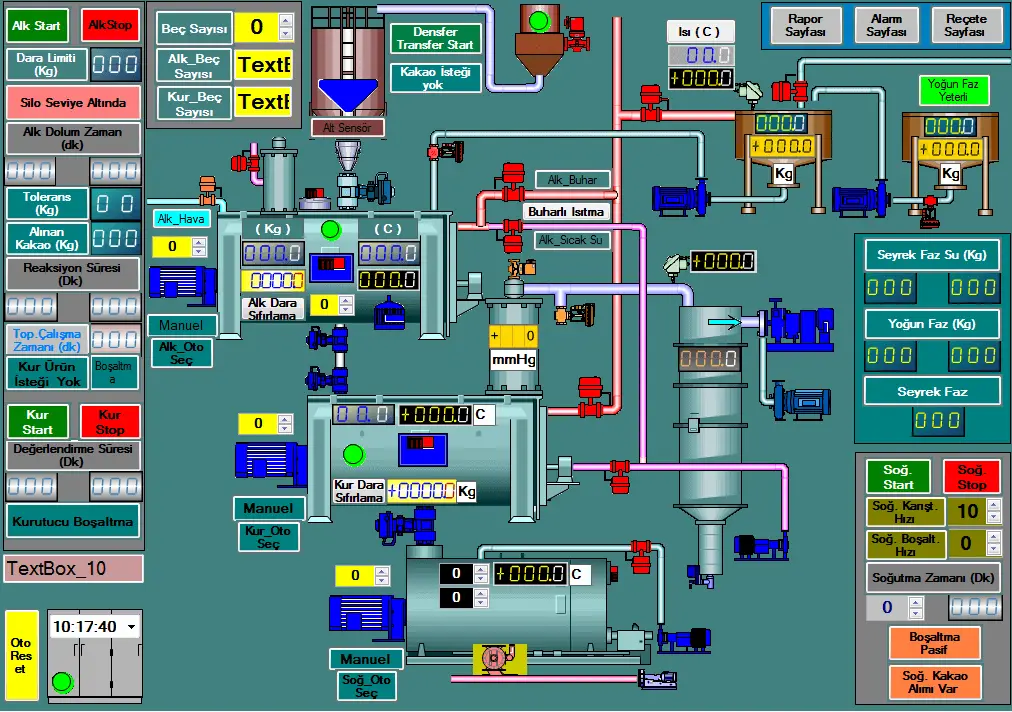
SCADA technology has undergone a dramatic transformation since its inception in the mid-20th century. As computing power has increased and connectivity has expanded, SCADA has moved through several distinct generations.
First Generation: Monolithic Systems
The earliest SCADA systems were “monolithic,” meaning they were standalone entities with no connectivity to other systems. They used proprietary protocols developed by specific vendors and were often housed in massive mainframe rooms. Because they were not networked, they were inherently secure from external cyber threats, but they were also incredibly rigid and difficult to scale.
Second and Third Generations: Distributed and Networked
As minicomputers emerged, the second generation of SCADA became “distributed.” Multiple stations were connected via a local area network (LAN), sharing information in near real-time. The third generation took this further by becoming “networked.” Utilizing open system architecture and standardized protocols like TCP/IP, SCADA systems could communicate across wider networks. This era saw the rise of the modern HMI, which replaced physical buttons and dials with interactive computer screens.
The Fourth Generation: IoT and Cloud Computing
Today, we are in the era of “Internet of Things” (IoT) SCADA. Modern systems are increasingly moving toward cloud-based hosting and web-coded interfaces. This allows for massive data storage and the use of advanced analytics. By integrating with the Industrial Internet of Things (IIoT), SCADA systems can now ingest data from thousands of low-cost wireless sensors, providing a level of granularity in monitoring that was previously impossible.
Cybersecurity Challenges in the SCADA Environment
As SCADA systems have become more interconnected, they have also become more vulnerable. In the past, industrial systems were protected by an “air gap”—they were physically disconnected from the internet. However, the drive for efficiency and remote access has bridged that gap, creating new digital security risks.
Why SCADA Systems Are Prime Targets
Because SCADA systems control critical infrastructure, they are high-value targets for cyber warfare and corporate espionage. A breach in a SCADA network doesn’t just result in stolen data; it can result in physical destruction. History has shown that attacks on power grids or water treatment facilities can have devastating real-world consequences, making the security of these systems a matter of national importance.
Transitioning from “Air-Gapped” to Interconnected
The transition to networked SCADA has forced a shift in how engineers approach security. Modern SCADA administrators must implement “Defense in Depth,” which involves multiple layers of security. This includes firewalls, Intrusion Detection Systems (IDS), and strict access controls. The goal is to ensure that even if one layer is bypassed, the core control functions remain protected.
Best Practices for Digital Security in Industry 4.0
Securing a SCADA system requires specialized knowledge. Standard IT security practices are often insufficient for Operational Technology (OT) environments. Best practices now include the use of encrypted communication protocols (such as Secure DNP3), regular firmware patching of PLCs, and the implementation of multi-factor authentication (MFA) for HMI access. Furthermore, network segmentation is used to isolate the most critical control loops from the general business network.
The Future of SCADA: AI and Edge Computing
The next frontier for SCADA is the integration of Artificial Intelligence (AI) and Edge Computing. As we move further into Industry 4.0, the “Supervisory” part of SCADA is becoming increasingly automated through machine learning.
Predictive Maintenance through Machine Learning
Traditional SCADA systems work on a reactive or scheduled basis—they alert you when something breaks or suggest a check-up every six months. By layering AI over SCADA data, companies can move toward “predictive maintenance.” AI algorithms can analyze vibration patterns or temperature fluctuations to predict a pump failure weeks before it happens, allowing for repairs during planned downtime rather than emergency shutdowns.

Edge Computing: Processing Data at the Source
As the number of sensors increases, sending all that data to a central server can cause latency and bandwidth issues. Edge computing solves this by processing data at the “edge” of the network—right at the PLC or a local gateway. Only the most critical summary data is sent back to the central SCADA station. This ensures that the system remains responsive and can handle the massive data influx required for modern smart factories.
By understanding what SCADA stands for and how it continues to evolve, we gain insight into the sophisticated technological layers that keep our world running. From the simple collection of sensor data to the complex application of AI-driven analytics, SCADA remains the essential framework for the digital transformation of industry.
aViewFromTheCave is a participant in the Amazon Services LLC Associates Program, an affiliate advertising program designed to provide a means for sites to earn advertising fees by advertising and linking to Amazon.com. Amazon, the Amazon logo, AmazonSupply, and the AmazonSupply logo are trademarks of Amazon.com, Inc. or its affiliates. As an Amazon Associate we earn affiliate commissions from qualifying purchases.