
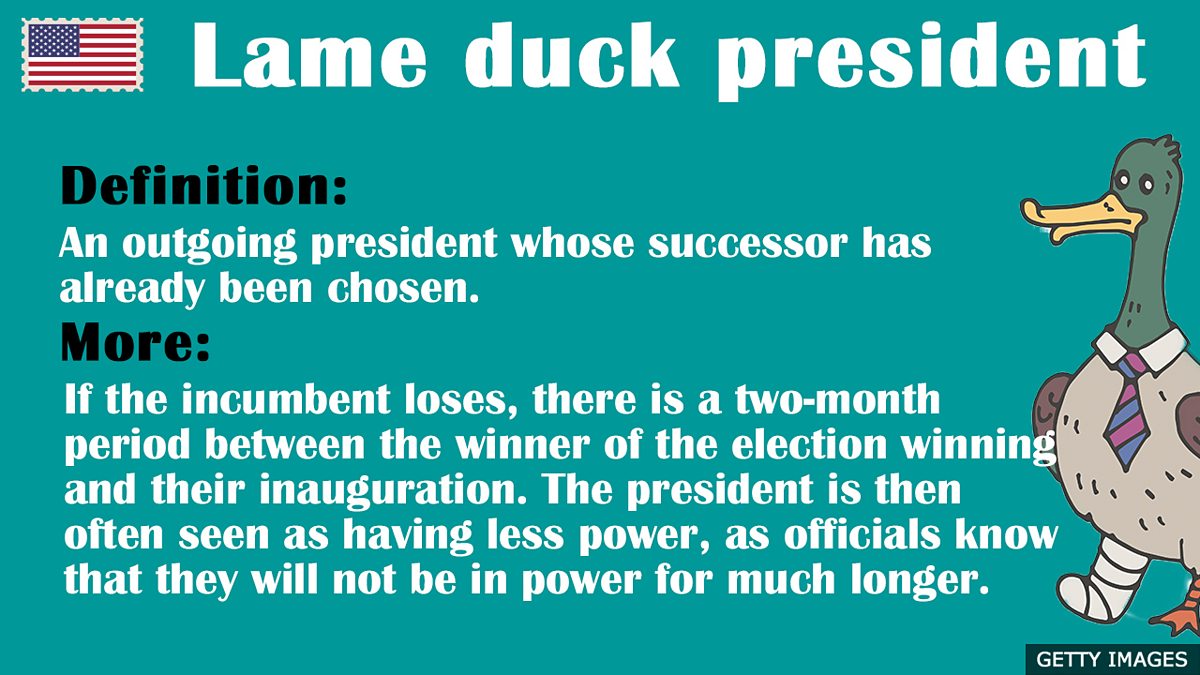
The term “lame duck” is often relegated to the halls of political science, describing an elected official whose successor has already been chosen or one who is serving out the remainder of a term without the possibility of reelection. However, for investors, business owners, and financial planners, the “lame duck” period represents a unique and often volatile phase in the fiscal calendar. When a U.S. President enters this stage, the shift in power dynamics in Washington D.C. creates ripples across global markets, affecting everything from tax policy to interest rate expectations.
Understanding the financial implications of a lame duck presidency is essential for navigating the uncertainty that precedes a change in administration. This article explores how this transitional period influences the economy, shifts investment landscapes, and dictates the strategic financial moves of both institutional and retail investors.
The Economic Psychology of the Lame Duck Period
In the world of finance, certainty is a valuable commodity. Markets tend to price in the known and react sharply to the unknown. A lame duck period is, by definition, an era of transition. It is the bridge between a known administrative style and the speculative promises of an incoming leader.
The Regulatory Standstill and Its Economic Implications
During a lame duck session, the legislative process often grinds to a halt. With a “sitting” president losing political capital and an incoming president preparing their agenda, major new legislation is rare. For the business world, this can be a double-edged sword. On one hand, the lack of new regulations provides a period of “status quo” that allows corporations to plan with a degree of short-term certainty.
On the other hand, the inability to pass critical budget resolutions or address urgent economic shifts can lead to “fiscal cliffs.” If major tax cuts are set to expire during a lame duck period and Congress is deadlocked, the resulting tax hike can shock the economy. Financial analysts look closely at the “efficiency” of the lame duck Congress to determine if the government will meet its basic fiscal obligations, such as raising the debt ceiling or funding federal agencies.
Historical Performance of the S&P 500 During Transitions
Data suggests that the stock market generally views the lame duck period with cautious optimism, though volatility is higher than average. Historically, the period between Election Day in November and the Inauguration in January sees a “relief rally” as the uncertainty of the election outcome is resolved. However, once the reality of the transition sets in, the focus shifts to the lame duck’s final executive actions.
Financial historians note that the market’s performance during this time is often a reflection of whether the incoming administration is perceived as “market-friendly.” If the lame duck president belongs to a party that is losing power, there is often a flurry of “midnight rulemaking”—last-minute executive orders and regulatory changes. Investors must monitor these closely, as they can impact specific sectors like energy, healthcare, and finance before the new administration even takes the oath of office.
Tax Policy and Legislative Inertia
Perhaps the most direct impact a lame duck president has on “money” is found in the tax code. Because tax law is often tied to specific sunset dates, the end of a presidency frequently coincides with the expiration of significant fiscal provisions.
The Expiration of Tax Cuts and Business Planning
When a president enters a lame duck phase, the focus of corporate CFOs shifts toward the tax horizon. For example, if tax incentives for research and development (R&D) or capital expenditures are set to expire, businesses may accelerate their spending into the current tax year to take advantage of the remaining benefits.
Conversely, if an incoming administration has promised to raise corporate tax rates, companies may look to “pull forward” income or realize capital gains during the lame duck period to pay taxes at the current, lower rates. This creates a surge in transaction volume and can lead to anomalous market behavior in the final quarter of the year. For personal finance, this is the time when high-net-worth individuals engage in aggressive tax-loss harvesting and estate planning to lock in favorable gift tax exemptions that might be on the chopping block.
Preparing for “Midnight Rulemaking” in Business Finance
In the final months of a presidency, executive agencies often work at a feverish pace to finalize regulations that do not require Congressional approval. For those in the financial services sector, this could involve changes to fiduciary rules, transparency requirements for private equity, or reporting standards for environmental, social, and governance (ESG) metrics.
From a money management perspective, these “midnight rules” can create sudden shifts in asset valuations. For instance, a last-minute environmental regulation could devalue coal or oil assets overnight, forcing a rebalancing of portfolios. Professionals in the finance space must remain agile, as the lame duck period is often the most active time for administrative changes that bypass the typical legislative gridlock.

Investment Strategies for Political Transition Periods
As the political landscape shifts, the “smart money” often rotates out of sectors that benefited from the outgoing administration and into those poised to thrive under the new leadership. Navigating this rotation is the hallmark of a sophisticated investment strategy during a lame duck period.
Sector Rotations: From Defense to Green Energy (and Back)
The lame duck period is the primary window for “thematic investing.” If the outgoing president was a proponent of heavy defense spending and the incoming president emphasizes infrastructure and climate change, the transition period will see a massive outflow of capital from aerospace and defense ETFs into renewable energy and construction materials.
However, the “lame duck” status can also create a temporary “buying opportunity” in sectors that are being unfairly discounted due to political rhetoric. Experienced investors know that what is said on the campaign trail often differs from what can actually be passed in a divided Congress. Therefore, during the lame duck months, some investors look for “contrarian” plays, betting that the regulatory “bite” of the new administration won’t be as bad as the “bark” of the campaign.
Managing Volatility: Hedging and Diversification
Because the lame duck period is characterized by rumors of cabinet appointments and speculative policy shifts, market volatility (as measured by the VIX) often spikes. For the individual investor, this is not the time for speculative gambling, but for robust risk management.
Strategies such as using “protective puts” on major index holdings or increasing allocations to “safe-haven” assets like gold or short-term Treasuries are common. The goal during a lame duck period isn’t necessarily to maximize gains, but to preserve capital until the new administration’s fiscal path becomes clearer. Financial advisors often recommend a “wait-and-see” approach for major portfolio overhauls, instead focusing on incremental adjustments based on confirmed appointments to key posts like the Secretary of the Treasury or the Chair of the SEC.
The Global Perspective: Currency Markets and International Trade
The influence of a lame duck president extends far beyond the borders of the United States. As the leader of the world’s largest economy and the issuer of the global reserve currency, the president’s transition affects international trade finance and currency valuations.
Strengthening or Weakening of the USD
Currency traders are hyper-sensitive to the lame duck period. The value of the U.S. Dollar (USD) is often a reflection of the world’s confidence in American fiscal stability. If the transition between a lame duck president and their successor is contentious or if there is a threat of a government shutdown due to a budget impasse, the USD may weaken as investors seek stability in the Euro or Swiss Franc.
Furthermore, the lame duck period can affect the “carry trade.” If the incoming administration is expected to pursue inflationary policies, such as massive deficit spending, the bond market may react by pushing yields higher in anticipation of Federal Reserve rate hikes. This, in turn, can cause the dollar to strengthen as foreign capital flows into U.S. debt instruments. For businesses engaged in international trade, this volatility necessitates sophisticated currency hedging to protect profit margins.
Tariff Speculation and Global Supply Chain Finance
In the modern era, trade policy is often executed via executive action rather than treaty. A lame duck president may use their final days to settle old scores or cement a legacy by imposing or lifting tariffs. For companies with complex global supply chains, the lame duck period is a high-stakes game of “what if.”
Financial managers must account for the possibility of sudden cost increases in raw materials or finished goods. If a lame duck president decides to tighten trade restrictions on a specific nation, companies may scramble to front-load imports, which puts a strain on short-term corporate liquidity. Analyzing the trade rhetoric of both the outgoing and incoming administrations is a full-time job for commodities traders and corporate treasurers during these pivotal months.

Conclusion: Navigating the Financial Transition
A lame duck president may be perceived as a “diminished” political figure, but their influence on the world of money remains profound. For the astute investor, the transition period is not a time to disengage, but a time to refine strategies. It is a period defined by the tension between the outgoing administration’s final acts and the market’s anticipation of what is to come.
By focusing on regulatory shifts, tax implications, sector rotations, and currency fluctuations, individuals and businesses can protect their wealth from the inherent uncertainty of political change. In the realm of finance, the lame duck period is a reminder that while politicians may come and go, the cycles of the market demand constant vigilance and strategic adaptability. Whether the transition leads to a “bull” or “bear” market, those who understand the mechanics of the lame duck presidency will be best positioned to capitalize on the new economic reality.
aViewFromTheCave is a participant in the Amazon Services LLC Associates Program, an affiliate advertising program designed to provide a means for sites to earn advertising fees by advertising and linking to Amazon.com. Amazon, the Amazon logo, AmazonSupply, and the AmazonSupply logo are trademarks of Amazon.com, Inc. or its affiliates. As an Amazon Associate we earn affiliate commissions from qualifying purchases.