
In the landscape of modern corporate finance and personal wealth management, few acronyms carry as much weight—or as much potential for long-term financial security—as ESOP. Standing for Employee Stock Ownership Plan, an ESOP is a specialized transition and compensation tool that turns employees into stakeholders. While the concept might sound like a simple HR perk, it is actually a sophisticated financial instrument governed by complex tax laws and fiduciary responsibilities.
For the business owner, an ESOP is a strategic exit strategy and a method of corporate financing. For the employee, it is a powerful retirement vehicle that provides a “piece of the pie” without requiring out-of-pocket investment. In an era where wealth inequality and retirement readiness are at the forefront of financial discussions, understanding the mechanics of an ESOP is essential for anyone navigating the world of business finance.
The Financial Mechanics of an ESOP
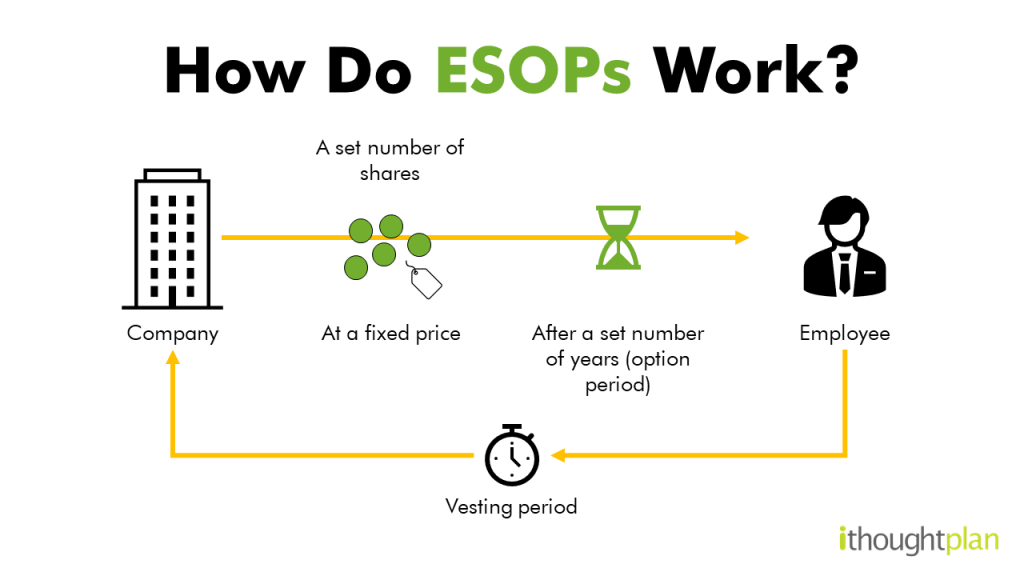
To understand what an ESOP stands for in practice, one must first understand its structure. At its core, an ESOP is a qualified defined-contribution retirement plan, similar in some legal respects to a 401(k), but with a distinct difference: it invests primarily in the stock of the employer’s company.
The Legal Structure and the ESOP Trust
An ESOP operates through a trust. The company establishes an ESOP Trust (ESOT) to hold the shares on behalf of the employees. Unlike a 401(k), where employees often contribute a portion of their salary to buy mutual funds or ETFs, an ESOP is almost always funded entirely by the company. The company either contributes new shares of its own stock or contributes cash to the trust to buy existing shares.
The trust is overseen by a fiduciary—the Trustee—who is legally obligated to act in the best interest of the participants. This structure ensures that the “money” side of the business remains separated from the “management” side, protecting the employees’ financial interests from corporate overreach.
Vesting Schedules and Allocation
Employees do not become owners of their shares overnight. Just like other retirement plans, ESOPs utilize a “vesting schedule.” This is a timeline that determines when an employee earns the right to the shares in their account. Common schedules include “cliff vesting” (where an employee is 100% vested after three years) or “graded vesting” (where ownership increases incrementally over six years).
Allocations are typically based on relative compensation. If an employee earns a higher salary, they generally receive a larger proportion of the annual share contribution. Over time, as the company grows in value and more shares are allocated, the employee’s “Money” bucket grows, often becoming a significant portion of their net worth.
Valuation and the Independent Appraiser
Because most ESOPs are implemented in private companies, there is no public stock market to determine share price. Instead, the “Money” value of the shares is determined annually by an independent, third-party valuation firm. These appraisers look at the company’s earnings, market trends, and comparable transactions to set a fair market value. This annual update is a pivotal moment for employees, as it dictates the growth of their retirement accounts.
The Financial Benefits for Employees: Building Personal Wealth
From a personal finance perspective, an ESOP is one of the most effective tools for wealth accumulation available to the modern workforce. It allows individuals to build equity in a private enterprise—an opportunity usually reserved for venture capitalists or high-net-worth founders.
Wealth Accumulation and Retirement Planning
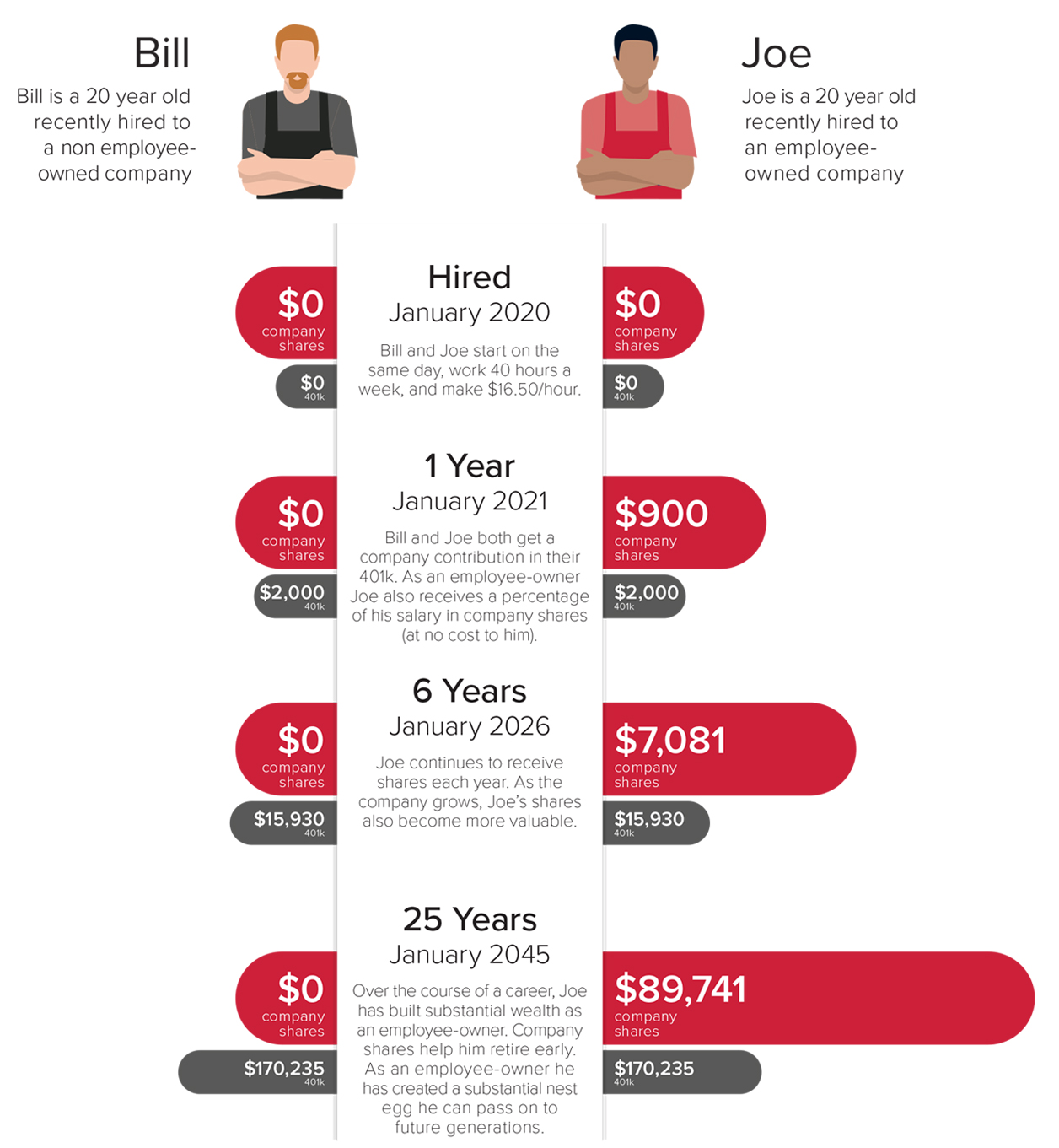
The primary appeal of an ESOP is that it provides a path to wealth without capital outlay. For many workers, the barrier to investing is a lack of disposable income. Because the company funds the ESOP, the employee is essentially receiving a “second check” that is invested directly into their future.
Data from the National Center for Employee Ownership (NCEO) consistently shows that ESOP participants have significantly higher retirement balances than employees at non-ESOP companies. When combined with a traditional 401(k), an ESOP can create a “double-barreled” retirement strategy that provides both diversified market exposure and concentrated equity growth.
Tax Advantages for Participants
The tax treatment of an ESOP is highly favorable for the individual. Contributions to the plan are not taxed as income at the time they are made. The value of the account grows tax-deferred. It is only when the employee leaves the company or retires—and subsequently takes a distribution—that the “Money” becomes taxable.
Furthermore, if the distribution is rolled over into an Individual Retirement Account (IRA), the tax hit can be deferred even further. In some specific cases involving C-corporations, employees may even benefit from “Net Unrealized Appreciation” (NUA) rules, which allow for a portion of the distribution to be taxed at lower capital gains rates rather than higher ordinary income rates.
The Ownership Mentality and Financial Performance
There is a direct psychological and financial link between employee ownership and company performance. When employees know that every dollar of waste reduced or every new client signed increases the value of their own stock, their behavior changes. This “ownership mentality” often leads to higher productivity and lower turnover. From a financial standpoint, this creates a virtuous cycle: better performance leads to a higher share price, which leads to greater retirement wealth for the employees who drove that performance.
The Strategic Advantage for Business Owners and Corporate Finance
For a business owner, “what ESOP stands for” is often synonymous with a “strategic exit.” It is a sophisticated way to manage business finance, handle succession, and optimize the corporate tax profile.
Succession Planning and Liquidity
Many business owners reach retirement age with 90% of their net worth tied up in their company. Selling to a competitor or a private equity firm can be disruptive to the culture and may result in layoffs. An ESOP provides a “friendly” buyer. The owner can sell 30%, 50%, or 100% of the company to the employees. This provides the owner with immediate liquidity (cash) to diversify their personal finances while ensuring the company’s legacy remains intact.
Corporate Tax Deductions
The US government encourages employee ownership through significant tax incentives. For a C-corporation, the owner may be able to defer capital gains taxes on the sale of their stock to an ESOP under Section 1042 of the Internal Revenue Code.
For S-corporations, the benefits are even more dramatic. An ESOP trust is a tax-exempt entity. If an S-corp is 100% owned by an ESOP, the company pays zero federal income tax. This massive influx of cash flow can be used to pay down the debt used to buy out the owner, reinvest in the business, or acquire competitors. In the world of business finance, a 0% tax rate is the ultimate competitive advantage.
Leveraged ESOPs as a Financing Tool
An ESOP can also be used as a vehicle for corporate borrowing. In a “leveraged ESOP,” the trust borrows money to purchase a large block of shares. The company then makes annual tax-deductible contributions to the trust to repay the loan. This allows a company to essentially fund its growth or buy out an owner using pre-tax dollars—a feat that is nearly impossible through traditional financing routes.
Potential Risks and Financial Considerations
While the “Money” story of ESOPs is largely positive, it would be remiss not to address the risks. Financial diversification is a cornerstone of sound investing, and ESOPs, by definition, represent a concentration of assets.
Lack of Diversification
The biggest risk to an employee is that their job and their retirement savings are tied to the same entity. If the company faces a financial downturn, the employee could theoretically lose their income and a portion of their retirement value simultaneously. To mitigate this, federal law requires ESOPs to offer “diversification” options to older employees (typically those over age 55 with 10 years of participation), allowing them to move a portion of their ESOP funds into more diversified investments.
Repurchase Obligations
For the company, the primary financial challenge is the “repurchase obligation.” When an employee leaves or retires, the company is legally required to buy back their shares at the current fair market value. If a large group of long-tenured employees retires at the same time, the company must have the cash on hand to pay them out. Proper financial forecasting and cash flow management are critical to ensure that the “Money” is available when needed without crippling the company’s operations.
Regulatory Compliance and ERISA
ESOPs are governed by the Employee Retirement Income Security Act (ERISA). This means they are subject to intense scrutiny by the Department of Labor (DOL) and the IRS. The costs of maintaining compliance—annual appraisals, specialized TPA (Third Party Administrator) fees, and legal oversight—can be high. A company must be financially robust enough to handle these administrative overheads to make an ESOP viable.

Conclusion: The Bottom Line on ESOPs
So, what does ESOP stand for? Beyond the literal definition, it stands for a unique intersection of corporate finance, tax strategy, and personal wealth creation. It is a mechanism that democratizes capital, allowing the people who generate value for a company to participate in the financial rewards of that value.
For the employee, it represents a path to a more secure financial future. For the owner, it represents a tax-efficient legacy and a way to unlock the value they’ve built over decades. While the complexities of valuation, vesting, and repurchase obligations require careful management, the financial upside of an ESOP often makes it the most attractive option in the modern business toolkit. In the world of money, an ESOP isn’t just a retirement plan; it’s a blueprint for shared prosperity.
aViewFromTheCave is a participant in the Amazon Services LLC Associates Program, an affiliate advertising program designed to provide a means for sites to earn advertising fees by advertising and linking to Amazon.com. Amazon, the Amazon logo, AmazonSupply, and the AmazonSupply logo are trademarks of Amazon.com, Inc. or its affiliates. As an Amazon Associate we earn affiliate commissions from qualifying purchases.