
Tesla, Inc. (TSLA) is arguably the most scrutinized ticker symbol on the Nasdaq. For seasoned institutional investors and retail traders alike, the question of “what is Tesla’s stock price” is rarely just about a numerical value at a specific point in time. Instead, it is a gateway into a complex discussion regarding market valuation, future cash flows, and the evolving landscape of the global energy and automotive economy.
To understand Tesla’s stock price, one must look beyond the ticker tape and dive into the financial metrics, market sentiment, and macroeconomic drivers that cause its notorious volatility. In this guide, we will explore the financial architecture behind Tesla’s valuation, the factors that move the needle, and how investors can navigate the complexities of owning a piece of the world’s most valuable automaker.
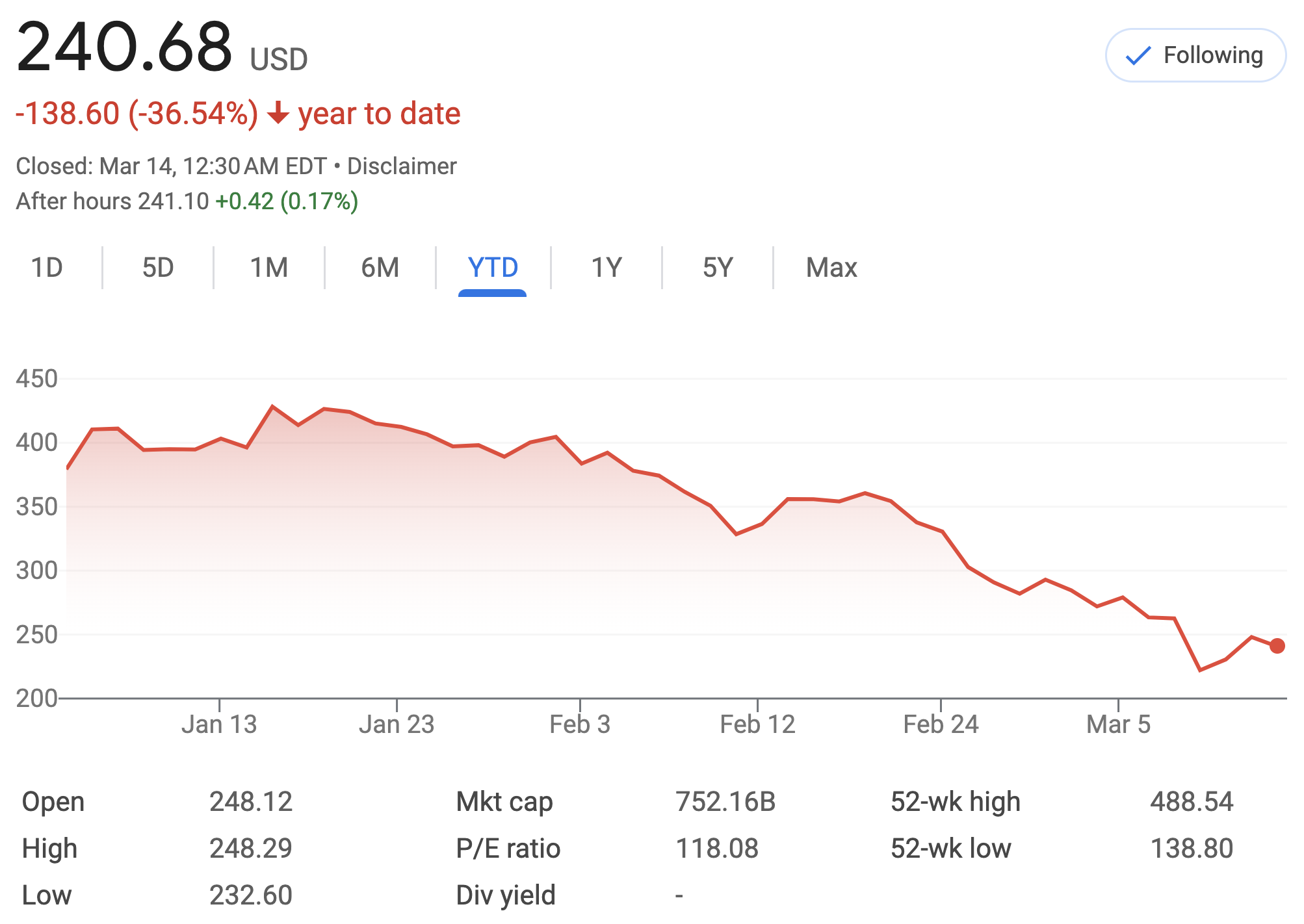
The Mechanics of Tesla’s Market Valuation
When an investor asks about a stock price, they are essentially looking at the market’s current consensus on the value of a single share of ownership. However, in the context of “Money” and “Business Finance,” the share price is only one part of the equation. To truly understand why Tesla trades at its specific levels, we must look at the underlying financial structures.
Market Capitalization vs. Share Price
Tesla’s stock price is often high in comparison to its automotive peers, but the share price itself is relative. For example, if Tesla undergoes a stock split (as it has done multiple times in recent years), the price per share drops, but the total value of the company—the market capitalization—remains the same.
Market capitalization is calculated by multiplying the current stock price by the total number of outstanding shares. Tesla has frequently maintained a market cap that exceeds the combined value of several of its largest competitors, such as Toyota, Volkswagen, and Ford. For investors, this suggests that the stock price isn’t just reflecting current car sales, but rather a “priced-in” expectation of future dominance in multiple sectors.
The Role of P/E Ratios and Forward Guidance
A primary tool used by finance professionals to evaluate Tesla’s price is the Price-to-Earnings (P/E) ratio. Historically, Tesla has traded at a much higher P/E ratio than traditional manufacturing companies. While a standard legacy automaker might trade at a P/E of 6 to 10, Tesla has often seen ratios exceeding 50, 80, or even 100.
This premium suggests that the market views Tesla as a high-growth technology and energy firm rather than a traditional industrial company. When the stock price fluctuates, it is often because the market is adjusting its expectations for future earnings growth. If Tesla’s quarterly earnings reports show a narrowing of profit margins—perhaps due to price cuts—the P/E ratio may appear “too high,” leading to a downward correction in the stock price.
Key Drivers Influencing Tesla’s Stock Volatility
Tesla is known for its price swings, which can be significant even in the absence of major news. For an investor focused on personal finance or portfolio management, understanding what drives these fluctuations is essential for risk mitigation.
Delivery Numbers and Quarterly Earnings
The most immediate catalyst for a change in Tesla’s stock price is the quarterly delivery report. Because Tesla’s valuation is built on the premise of exponential growth, any “miss” in the number of vehicles delivered to customers can lead to a sharp sell-off. Conversely, beating delivery estimates often triggers a bullish rally.
Beyond the raw numbers, the “Money” aspect focuses on the Average Selling Price (ASP) and Gross Margins. If Tesla sells more cars but at significantly lower prices to maintain market share, the stock price may suffer because the total profitability is being squeezed. Investors look for the “sweet spot” where high volume meets sustainable margins.
The “Elon Musk Premium” and Leadership Impact
In corporate finance, the leadership of a company often carries a “key person” risk or premium. Tesla’s stock price is inextricably linked to its CEO, Elon Musk. His public statements, acquisitions (such as X, formerly Twitter), and involvement in other ventures like SpaceX and xAI directly impact investor sentiment.
When Musk is focused on Tesla’s core mission, the market tends to reward the stock with a higher valuation. If the market perceives him as distracted or if his actions outside of Tesla create reputational risks, institutional investors may pull back, causing the stock price to dip. Understanding the “Elon Musk Premium” is a vital part of calculating the intrinsic value of TSLA shares.

Macroeconomic Factors and Interest Rates
As a growth stock, Tesla is highly sensitive to the Federal Reserve’s interest rate policy. In high-interest-rate environments, the “cost of money” increases. This affects Tesla’s stock price in two ways:
- Consumer Financing: Most people buy cars on credit. Higher rates mean higher monthly payments, which can suppress demand for Tesla’s vehicles.
- Discounted Cash Flow (DCF) Models: When analysts value a company based on future profits, they use a “discount rate.” Higher interest rates lead to a higher discount rate, which lowers the present value of those future profits, directly dragging down the stock price.
How to Analyze and Track Tesla’s Stock Performance
For those looking to manage their own investments, tracking Tesla’s price requires a blend of different analytical styles. Whether you are a day trader or a long-term retirement investor, your approach to the “Money” side of Tesla will vary.
Technical Analysis vs. Fundamental Analysis
Fundamental analysis involves looking at the balance sheet, income statement, and cash flow. To determine if Tesla’s price is “fair,” a fundamentalist looks at debt-to-equity ratios, free cash flow, and revenue growth. They are looking for the intrinsic value of the company.
Technical analysis, on the other hand, ignores the “why” and focuses on the “what.” Technical traders look at price charts to identify patterns, such as “support” and “resistance” levels. For a volatile stock like Tesla, technical indicators like the Relative Strength Index (RSI) or Moving Averages (50-day and 200-day) are frequently used to time entries and exits. When Tesla’s stock price breaks above a major resistance level on high volume, it often signals a new bullish trend.
Essential Financial Tools for Real-Time Monitoring
To stay updated on what Tesla’s stock price is doing, investors utilize several financial tools:
- Brokerage Platforms: Tools like Fidelity, Schwab, or Robinhood provide real-time quotes and basic charting.
- Terminal Services: Professional investors use Bloomberg Terminals or FactSet for deep-dive financial data and real-time news sentiment.
- Earnings Call Transcripts: Reviewing the Q&A section of Tesla’s quarterly calls provides insights into the management’s financial outlook, which is often more telling than the price action itself.
Tesla as a Long-Term Investment: Risks and Rewards
When considering the price of Tesla, one must decide if it is a speculative play or a foundational asset for a long-term portfolio. This involves weighing the potential for massive returns against the risk of significant capital loss.
Competitive Pressures in the EV Market
A few years ago, Tesla had a virtual monopoly on the premium EV market. Today, legacy automakers (like Ford, GM, and Hyundai) and Chinese manufacturers (like BYD) are aggressively competing. This competition affects Tesla’s stock price by forcing price wars, which can erode the “premium” valuation Tesla has enjoyed for a decade. An investor must ask: Can Tesla maintain its lead, or will it eventually be valued like a “normal” car company?
Diversification Through Full Self-Driving (FSD) and Energy
The “bull case” for a rising Tesla stock price often relies on the company’s non-automotive segments. Tesla Energy (solar and battery storage) and the development of Full Self-Driving (FSD) technology represent massive untapped revenue streams. Many financial analysts argue that if Tesla successfully launches a “Robotaxi” fleet, the current stock price will look cheap in retrospect. Investing in Tesla at its current price is often a bet on the success of these software-driven, high-margin services.
Strategic Approaches to Investing in TSLA
If you have determined that the current price of Tesla aligns with your financial goals, the next step is execution. In the world of business finance, how you buy is often as important as what you buy.
Dollar-Cost Averaging into Volatility
Because Tesla’s stock price can move 5% or 10% in a single day, “timing the market” is exceptionally difficult for retail investors. A common strategy is Dollar-Cost Averaging (DCA). By investing a fixed amount of money at regular intervals—regardless of the price—investors buy more shares when the price is low and fewer when the price is high. This reduces the emotional stress of watching the daily ticker and lowers the average cost per share over time.

Options Trading and Hedging Strategies
For more advanced investors, Tesla’s high volatility makes it a popular candidate for options trading. Some use “Covered Calls” to generate income from their TSLA holdings, while others use “Puts” to hedge against a potential downturn in the stock price. However, these strategies require a deep understanding of financial derivatives and should be approached with caution, as they can significantly impact an investor’s capital if the stock price moves unexpectedly.
In conclusion, understanding Tesla’s stock price requires more than just looking at a number on a screen. It requires an analysis of market capitalization, an awareness of macroeconomic trends, and a clear-eyed assessment of the company’s competitive landscape. For the modern investor, Tesla remains a cornerstone of the “Money” conversation—a symbol of the high-risk, high-reward nature of the 21st-century financial markets.
aViewFromTheCave is a participant in the Amazon Services LLC Associates Program, an affiliate advertising program designed to provide a means for sites to earn advertising fees by advertising and linking to Amazon.com. Amazon, the Amazon logo, AmazonSupply, and the AmazonSupply logo are trademarks of Amazon.com, Inc. or its affiliates. As an Amazon Associate we earn affiliate commissions from qualifying purchases.