
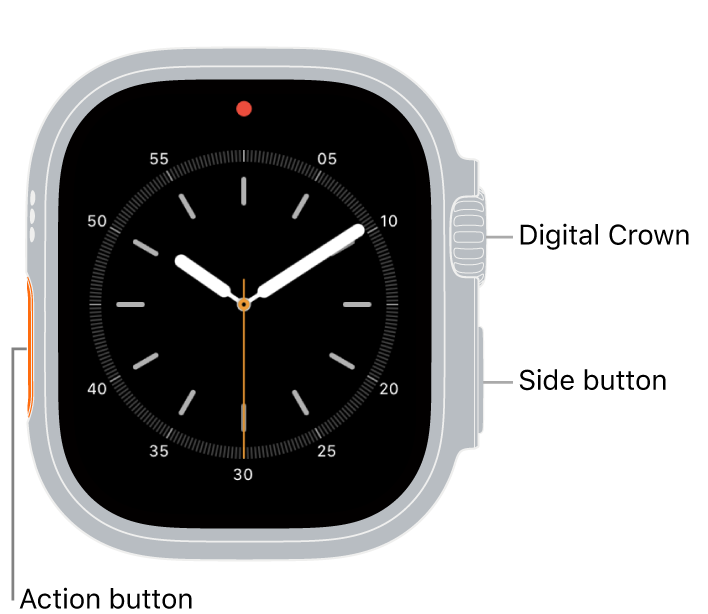
When Apple first unveiled the Apple Watch in 2014, the tech world was skeptical about how users would interact with a screen the size of a postage stamp. The “fat finger” problem—the reality that a human finger obscures most of a small display while interacting with it—posed a significant hurdle for wearable technology. Apple’s solution was an elegant piece of hardware engineering that bridged the gap between 18th-century horology and 21st-century silicon: the Digital Crown.
Far more than just a scrolling wheel, the Digital Crown is a sophisticated input device that combines mechanical precision, optical sensing, and haptic feedback. In this guide, we explore the technical architecture, the functional versatility, and the health-tech innovations housed within this tiny rotary dial.
1. The Engineering Marvel: How the Digital Crown Works
At its core, the Digital Crown is a masterpiece of miniaturized engineering. While it mimics the look and feel of a winding stem on a traditional mechanical timepiece, its internal operations are purely digital and highly complex.
From Mechanical Rotation to Digital Data
Inside the casing of the Apple Watch, the Digital Crown does not connect to gears or springs. Instead, it utilizes an optical sensor. As you rotate the crown, infrared light beams detect the movement of tiny “teeth” or encoded patterns on the interior of the shaft. This allows the watch’s processor to translate physical rotation into precise digital increments. This optical approach is why the scrolling feels so fluid; it can detect even the slightest micro-movement, allowing for high-velocity scrolling through lists or frame-by-frame precision when editing a photo or zooming into a map.
The Role of the Taptic Engine
A significant part of the “Tech” behind the Digital Crown is not what you see, but what you feel. In later models, Apple introduced haptic feedback specifically for the crown. As you rotate it, the Taptic Engine—a linear resonant actuator—delivers microscopic vibrations that mimic the “clicks” of a mechanical gear. This tactile response provides the user with physical confirmation of their digital actions. If you reach the end of a menu, the haptics change to a distinct “thud,” signaling that you cannot scroll further. This synergy between hardware movement and haptic response is a hallmark of Apple’s integrated tech stack.
Durability and Water Resistance
Engineering a rotating part that remains water-resistant is a significant challenge. The Digital Crown is designed with specialized gaskets and seals to prevent ingress. Furthermore, Apple developed a software-hardware solution for water. When a user engages “Water Lock” and subsequently turns the Digital Crown to unlock the device, the watch uses the speaker to emit a specific frequency of sound to physically eject water from the internal cavities—a unique intersection of physics and software.
2. Navigating the Ecosystem: Core Functionalities
The Digital Crown serves as the primary “home” and “navigation” tool for watchOS. By delegating navigation to the crown, Apple ensures that the user’s view of the Retina display remains unobstructed.
Scrolling, Zooming, and the “Smart Stack”
The most intuitive use of the crown is vertical scrolling. Whether you are reading a long email, browsing a playlist, or adjusting the volume in the “Now Playing” app, the crown provides a level of precision that a touch screen cannot match on this scale. With the release of watchOS 10, the crown took on a renewed importance through the “Smart Stack.” By simply turning the crown upward from the watch face, users can scroll through a series of dynamic widgets, making information retrieval faster than ever.
The Multi-Function Button
Beyond rotation, the Digital Crown is a versatile button. A single press acts as the “Home” command, returning you to the watch face or the app grid. A double-press opens the App Switcher, allowing for rapid multitasking between recently used applications. A long press, meanwhile, triggers Siri. This hardware-level integration ensures that even if the screen is wet or the user is wearing gloves, the most essential functions of the operating system remain accessible.
Accessibility and Customization
From a software engineering perspective, the Digital Crown is a vital tool for accessibility. For users with motor challenges who may struggle with precise touch gestures, the crown offers a stable, tactile alternative. Apple’s software allows for “Horizontal Crown” configurations and various sensitivity adjustments, ensuring that the tech is inclusive.
3. Advanced Health Tech: The ECG and Electrical Sensors
Perhaps the most impressive technological leap for the Digital Crown occurred with the Apple Watch Series 4. Apple transformed the crown from a simple input device into a sophisticated medical-grade sensor by integrating electrodes into its surface.

The Electrocardiogram (ECG) Circuit
The Digital Crown features a titanium or stainless steel top (depending on the model) that acts as an electrode. When a user places their finger on the crown while wearing the watch on the opposite wrist, they complete a closed electrical circuit across their chest. The watch then measures the electrical signals produced by the heart’s contraction. This allows the device to generate an ECG (Electrocardiogram) in just 30 seconds, capable of detecting signs of Atrial Fibrillation (AFib).
Signal Processing and Noise Reduction
The tech involved in capturing a clean ECG signal from a fingertip is immense. The body is naturally full of “electrical noise” from muscles and external interference. The Apple Watch uses advanced digital signal processing (DSP) to filter out this noise, isolating the heart’s rhythm. The data is then analyzed by an on-device algorithm that has been cleared by the FDA and other global health authorities. This turned the Digital Crown from a navigation tool into a life-saving piece of health technology.
Synergy with the Heart Rate Sensor
While the optical heart rate sensor on the back of the watch uses photoplethysmography (green LED lights to measure blood flow), the Digital Crown’s electrical sensor provides a much faster and more accurate “instant” heart rate reading. In the Heart Rate app, touching the crown increases the refresh rate of the data, providing a high-fidelity look at the user’s cardiac performance in real-time.
4. Software Integration and UI/UX Innovations
The Digital Crown is not just a piece of hardware; it is a fundamental element of the watchOS User Interface (UI) design philosophy. Apple’s developers have created “Digital Crown-centric” interactions that define the wearable experience.
Time Travel and Complications
In earlier versions of watchOS, a feature called “Time Travel” allowed users to rotate the crown to see future weather forecasts or upcoming calendar events reflected in their watch face complications. While the feature has evolved, the underlying logic remains: the Digital Crown represents the “scrubbing” of time. This temporal navigation is a unique UX (User Experience) paradigm that separates the Apple Watch from traditional smartphones.
Contextual Sensitivity
The software is programmed to be context-aware. In the Camera Remote app, the Digital Crown acts as a zoom dial for the iPhone’s lens. In the Workout app, it can be used to lock the screen to prevent accidental touches during a swim. In the Compass app, rotating the crown reveals different views, including elevation, incline, and coordinates. This level of deep software integration means the crown’s “personality” changes depending on the app being used.
Precision in Design Apps
For developers building third-party apps, Apple provides the “WKInterfacePicker,” a programming interface that allows them to utilize the Digital Crown for custom inputs. This has led to innovative uses in music production apps (adjusting synth parameters), gaming (controlling character movement), and productivity tools (scrubbing through timelines).
5. The Future of Rotary Inputs in Wearable Tech
As we look toward the future of the Apple Watch, the Digital Crown continues to evolve. While some rumors suggest a move toward solid-state buttons (like the Home button on the iPhone 7/8) to improve durability and space-saving, the physical crown remains a beloved fixture for its tactile utility.
From Apple Watch to Vision Pro
The success of the Digital Crown in the “Tech” niche is evidenced by its migration to other Apple products. The AirPods Max utilize a Digital Crown for volume and playback control, and most notably, the Apple Vision Pro (Apple’s spatial computer) uses a Digital Crown to dial in the level of “Immersion.” This shows that Apple views the crown as the definitive solution for navigating three-dimensional or complex digital spaces where traditional touch is impractical.
Potential for New Sensors
Future iterations of the Digital Crown could potentially house even more sensors. Tech patents suggest the possibility of integrating biometric ID (Touch ID) into the crown or adding sensors for blood oxygen or temperature directly into the dial. As miniaturization technology advances, the crown may become the primary hub for all non-invasive biological data collection.
Conclusion
The Digital Crown is a perfect case study in how thoughtful hardware engineering can solve software limitations. By looking back at the history of watches, Apple found the perfect tool to move technology forward. It transformed a mechanical necessity into a digital powerhouse that handles everything from UI navigation to medical-grade heart monitoring.
For the tech enthusiast, the Digital Crown represents the pinnacle of “invisible technology”—a tool so intuitive and responsive that you forget the complex array of optical sensors, haptic engines, and electrodes working beneath your fingertip. As wearables continue to shrink and become more powerful, the lessons learned from the development of the Digital Crown will undoubtedly shape the future of how we interact with the machines we wear.
aViewFromTheCave is a participant in the Amazon Services LLC Associates Program, an affiliate advertising program designed to provide a means for sites to earn advertising fees by advertising and linking to Amazon.com. Amazon, the Amazon logo, AmazonSupply, and the AmazonSupply logo are trademarks of Amazon.com, Inc. or its affiliates. As an Amazon Associate we earn affiliate commissions from qualifying purchases.