
In the traditional sense, comprehension has always been viewed as a uniquely human faculty—the ability to grasp the meaning, nature, or importance of information. However, in the rapidly shifting landscape of modern technology, the definition of comprehension has undergone a radical transformation. Today, when we ask “what is comprehension,” we are increasingly looking at it through the lens of computational linguistics, neural networks, and Artificial Intelligence.
In the tech sector, comprehension is no longer just about a human reading a page of text; it is about Machine Comprehension (MC) and Natural Language Understanding (NLU). It represents the bridge between raw data processing and genuine cognitive-like interpretation. As we move deeper into the era of Large Language Models (LLMs) and autonomous systems, understanding how machines “comprehend” is essential for developers, tech enthusiasts, and digital strategists alike.
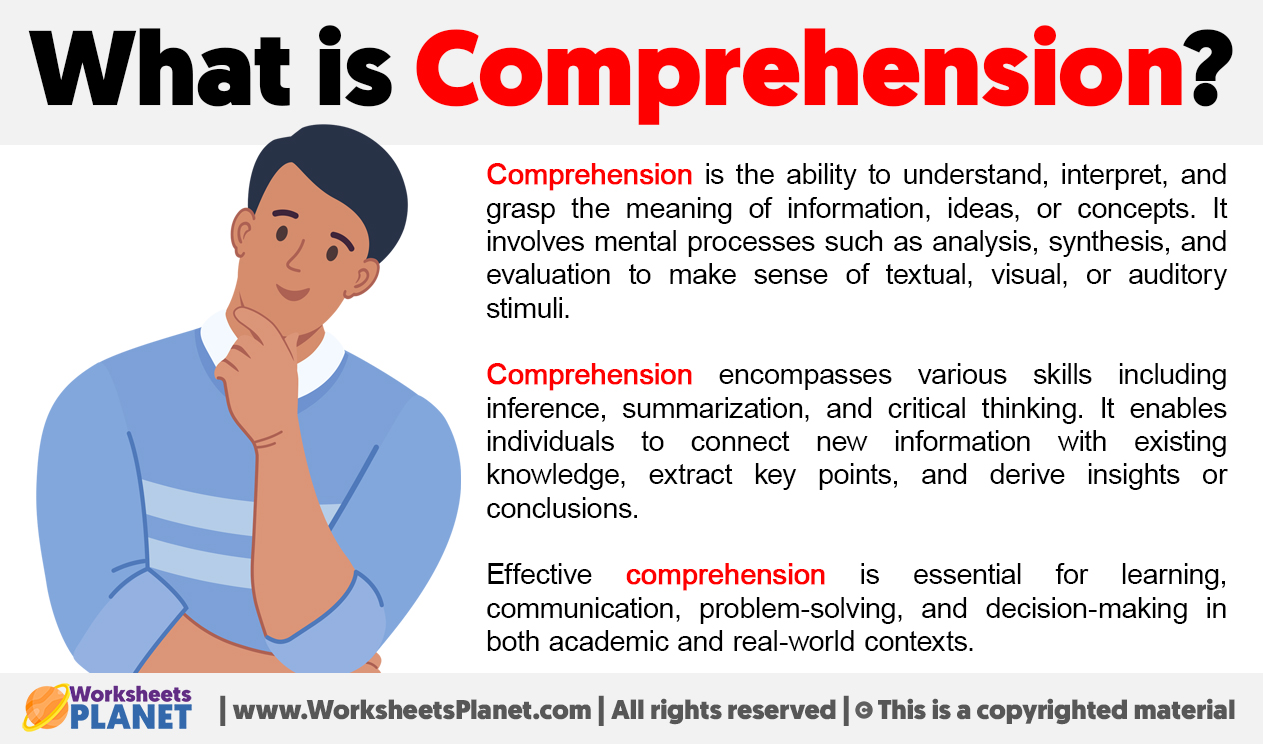
Defining Machine Comprehension in the Age of AI
To understand comprehension in a technical context, we must first distinguish it from simple data ingestion. For decades, computers have been excellent at “reading” data—identifying strings of characters and storing them in databases. However, true comprehension involves the ability to synthesize that information, identify context, and provide logical outputs based on nuanced input.
From Keyword Matching to Contextual Awareness
In the early days of search engines and basic chatbots, “comprehension” was a misnomer. These systems relied on keyword matching. If you searched for “apple,” the system looked for that specific string of text. It didn’t comprehend whether you were looking for a fruit, a multinational tech company, or a record label.
Modern tech comprehension, powered by deep learning, operates on a contextual level. Through vector embeddings, machines now represent words as multi-dimensional coordinates. This allows a system to “comprehend” that the word “bank” in a sentence about a river is fundamentally different from a “bank” in a sentence about interest rates. This transition from syntax (the arrangement of words) to semantics (the meaning of words) defines the modern tech definition of comprehension.
The Role of Natural Language Understanding (NLU)
Natural Language Understanding is a sub-discipline of Artificial Intelligence that specifically focuses on machine comprehension. While Natural Language Processing (NLP) is the broad umbrella covering everything from speech-to-text to translation, NLU is the specific engine that interprets intent.
NLU allows software to perform sentiment analysis, entity recognition, and intent mapping. When an AI comprehends a prompt, it isn’t just looking at the words; it is deconstructing the grammar, identifying the emotional tone, and predicting the most logically sound response. This level of comprehension is what allows digital assistants to manage complex, multi-turn conversations without losing the “thread” of the discussion.
The Architecture of Digital Comprehension
Machine comprehension does not happen in a vacuum. It is the result of sophisticated architectural frameworks designed to mimic the hierarchical way the human brain processes information. To understand what comprehension is in tech, one must look at the “engine room” of these systems.
Large Language Models (LLMs) and Neural Networks
At the heart of modern machine comprehension lie neural networks—mathematical models inspired by the human brain. These networks consist of layers of “neurons” that process data in stages. In the context of comprehension, these models are trained on petabytes of data, allowing them to learn the statistical probability of how concepts relate to one another.
Large Language Models, such as GPT-4 or Claude, represent the current pinnacle of this technology. They achieve comprehension by predicting the “next token” in a sequence, but they do so with such high-dimensional complexity that they exhibit emergent behaviors. They can summarize dense technical papers, debug code, and even explain jokes—tasks that require a profound level of semantic comprehension previously thought impossible for non-biological entities.
Attention Mechanisms and Transformers
The breakthrough that truly redefined technical comprehension was the “Transformer” architecture, introduced in the landmark paper “Attention Is All You Need.” Before Transformers, AI processed text linearly (one word at a time), often “forgetting” the beginning of a sentence by the time it reached the end.
The “Attention” mechanism allows the model to look at every word in a document simultaneously and assign weight (attention) to the most relevant parts. For example, in the sentence “The cat sat on the mat because it was tired,” the mechanism allows the machine to comprehend that “it” refers to the “cat,” not the “mat.” This ability to resolve references and maintain long-range dependencies is the foundation of digital comprehension.
Practical Applications of AI Comprehension in Modern Tech
The shift from simple processing to deep comprehension has unlocked a new generation of software and hardware tools. These applications are transforming how industries operate, making systems more intuitive and proactive.
Conversational AI and Virtual Assistants
We have evolved far beyond the scripted “if-then” logic of early customer service bots. Modern conversational AI uses comprehension to handle ambiguity. If a user tells a travel bot, “I need to get to London but I hate flying,” a system with high comprehension understands the underlying constraint. It won’t suggest airline tickets; it will look for trains or ferries. This ability to comprehend constraints and user preferences is what makes modern tech feel “smart.”
Automated Content Analysis and Summarization
In the enterprise tech world, comprehension is used to manage the “data deluge.” Legal and financial firms use AI comprehension tools to scan thousands of contracts or reports. These systems can comprehend the “essence” of a 50-page document and extract key clauses, risks, or summaries. This isn’t just a search function; it’s an analytical function that requires the software to understand the relationship between different sections of text.
Coding Assistants and Logic Comprehension
One of the most impressive feats of machine comprehension is seen in tools like GitHub Copilot. These tools don’t just “guess” code; they comprehend the logic of the developer’s intent. By analyzing the surrounding code blocks, the AI comprehends the goal of the function and suggests syntactically correct, logically sound completions. This represents a form of “cross-domain comprehension,” where the machine understands the translation between human-language comments and machine-executable logic.
Challenges and the Future of Synthetic Understanding
Despite the incredible leaps in AI, technical comprehension still faces significant hurdles. There is a persistent debate in the tech community about whether machines truly “comprehend” or if they are simply “stochastic parrots” mimicking understanding through massive statistical correlations.
The “Black Box” Problem and Explainability
One of the primary challenges in tech comprehension is the “Black Box” problem. While we can see the input and the output, the internal reasoning of a deep learning model is often opaque. For a machine to truly comprehend in a way that is useful for high-stakes industries (like medicine or cybersecurity), we need “Explainable AI” (XAI). Tech leaders are currently working on methods to force AI to show its “work,” proving that its comprehension is based on sound logic rather than coincidental patterns.
Bridging the Gap Between Pattern Recognition and True Cognition
Current machine comprehension is largely grounded in symbols—words, numbers, and pixels. However, true human comprehension is often grounded in physical reality (embodied cognition). The next frontier in tech is “Multimodal Comprehension.” This involves systems that can comprehend the relationship between a written description, a physical image, and a video sequence.
When an autonomous vehicle “comprehends” a street scene, it isn’t just identifying “objects”; it is comprehending the physics of the world—knowing that a ball rolling into the street might be followed by a child. This level of situational comprehension is the goal for the next generation of AI and robotics.

Conclusion
In the world of technology, “comprehension” is a dynamic and evolving target. It has moved from the simple recognition of characters to the sophisticated interpretation of context, intent, and nuance. As we continue to refine neural architectures and attention mechanisms, the line between human and machine comprehension continues to blur.
While we may still be a long way from Artificial General Intelligence (AGI) that understands the world with the same emotional and physical depth as a human, the current state of Machine Comprehension is already revolutionizing how we interact with the digital world. Comprehension is no longer a static noun; in tech, it is a high-speed, multi-dimensional process that is turning the “ghost in the machine” into a tangible, functional reality. Whether through NLU, LLMs, or multimodal systems, the future of tech lies in its ability to not just see data, but to truly understand it.
aViewFromTheCave is a participant in the Amazon Services LLC Associates Program, an affiliate advertising program designed to provide a means for sites to earn advertising fees by advertising and linking to Amazon.com. Amazon, the Amazon logo, AmazonSupply, and the AmazonSupply logo are trademarks of Amazon.com, Inc. or its affiliates. As an Amazon Associate we earn affiliate commissions from qualifying purchases.