
In the modern landscape of technological advancement, we often speak of Artificial Intelligence, blockchain, and quantum computing as the pillars of our future. However, beneath the polished user interfaces and complex neural networks lies a fundamental architecture that governs everything: Algebra 1. While often dismissed as a secondary school requirement, Algebra 1 is, in reality, the first true “programming language” most humans learn. It is the study of mathematical symbols and the rules for manipulating these symbols to solve problems—a concept that serves as the bedrock of all modern software engineering and digital innovation.
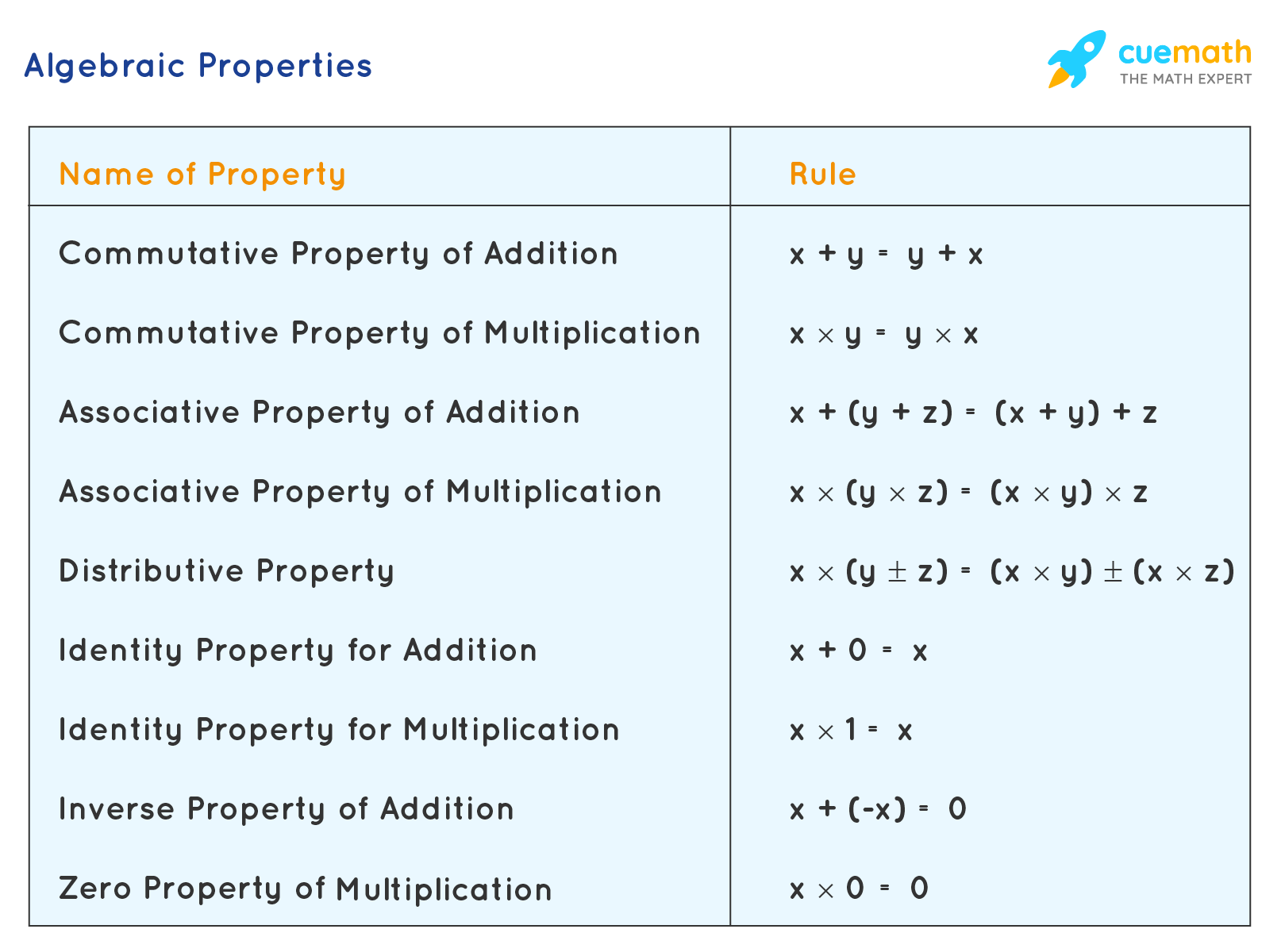
To understand what Algebra 1 is in a contemporary tech context, we must view it not as a collection of dry equations, but as the core logic gate of the information age. It is the bridge between concrete arithmetic and the abstract computational thinking required to build the tools of tomorrow.
The Logical Framework: Algebra 1 as the DNA of Programming
At its core, Algebra 1 introduces the concept of abstraction. In arithmetic, we deal with specific numbers (2 + 3 = 5). In Algebra 1, we introduce variables ($x + y = z$). This shift from the specific to the general is the exact moment a student begins to think like a developer. Every line of code written in Python, Java, or C++ is an application of algebraic principles.
Variables and Data Types
In the world of tech, a variable is a storage location paired with an associated symbolic name, which contains some known or unknown quantity of information. This is exactly what a student learns in Algebra 1. When a programmer defines user_age = 25, they are using the algebraic concept of a placeholder. Understanding how to isolate a variable in an equation is the direct precursor to understanding how data flows through a software application. Without the foundational logic of Algebra 1, the concept of dynamic data—where a single piece of code can process millions of different inputs—would be impossible to grasp.
Functions: The Input-Output Paradigm
Perhaps the most critical takeaway from Algebra 1 for the tech industry is the “Function.” In algebra, a function $f(x)$ takes an input, applies a transformation, and produces an output. This is the fundamental unit of all software. Whether it is a simple mobile app calculating the distance to a destination or a complex AI model processing natural language, the logic remains algebraic. Tech professionals use functions to modularize code, ensuring that processes are repeatable and scalable. Algebra 1 teaches the discipline of defining these relationships clearly, which is essential for back-end architecture and API development.
Algorithms and Problem-Solving: Beyond the Equation
When we ask “what is Algebra 1,” we are really asking “how do we solve problems systematically?” In tech, this systematic approach is known as algorithmic thinking. An algorithm is simply a step-by-step procedure for calculations. Algebra 1 is the first time individuals are required to show their work—to break down a complex problem into smaller, solvable steps.
Linear Equations in Search Algorithms
The study of linear equations—the “bread and butter” of Algebra 1—is surprisingly relevant to how search engines and recommendation systems function. Linear relationships allow tech systems to predict outcomes based on constant rates of change. For instance, basic filtering systems in e-commerce apps often use linear logic to sort products by price, rating, or relevance. The ability to manipulate these equations allows developers to optimize how quickly a system can retrieve and display data to a user.
Inequalities and Conditional Logic
Algebra 1 also introduces inequalities ($x > y$). In technology, this is the basis of “Conditional Logic” or “If-Then” statements. A digital security system might operate on the algebraic inequality: If login_attempts > 3, then lock_account. This simple logical gate is what allows software to make decisions. From the thermostats in smart homes to the high-frequency trading bots on Wall Street, the ability to program a machine to react when a certain threshold is met is a direct application of the inequalities learned in a first-year algebra course.

Data Science and AI: The Scaled Application of Algebraic Foundations
The current tech gold rush is centered around Big Data and Artificial Intelligence. While these fields utilize advanced calculus and linear algebra, they are entirely inaccessible without a mastery of Algebra 1. Data science is essentially the process of finding the “equation” that fits a set of real-world data points.
Linear Regression: Predicting Tech Trends
One of the most powerful tools in a data scientist’s arsenal is linear regression. This is the process of finding the “line of best fit” for a series of data points. If a tech company wants to predict user growth over the next six months, they use the algebraic formula for a line ($y = mx + b$). By identifying the slope ($m$) and the y-intercept ($b$), businesses can make informed decisions about scaling their server infrastructure and hiring needs. Algebra 1 provides the conceptual framework to understand how one variable (time) affects another (number of users).
Optimization in Machine Learning
Machine learning involves training a model to minimize “loss” or error. This optimization process is a massive, iterative algebraic problem. When an AI learns to recognize a face or drive a car, it is essentially solving for variables in a massive multi-dimensional equation. The “weights” and “biases” that data scientists adjust to improve a model are just sophisticated versions of the coefficients students manipulate in Algebra 1. Understanding the relationship between variables is what allows tech pioneers to refine AI until it achieves human-level accuracy.
The Future of Algebra in Advanced Computing
As we move toward the next frontier of technology—including quantum computing and advanced cryptography—the relevance of Algebra 1 only increases. We are moving away from a world of “static” tech into a world of “dynamic” systems that evolve in real-time.
Cybersecurity and Cryptographic Formulas
Digital security is the invisible shield of the modern world, and it is built entirely on the complexity of algebraic structures. Encryption algorithms, such as RSA, rely on the properties of prime numbers and algebraic modular arithmetic to protect everything from personal text messages to global banking transactions. When a student learns to factor polynomials in Algebra 1, they are learning the precursor to the mathematical challenges that keep our digital identities safe. The difficulty of “undoing” certain algebraic operations is exactly what prevents hackers from breaking into secure servers.
Quantum Logic and Algebraic Structures
While classical computers use bits (0s and 1s), quantum computers use qubits, which can exist in multiple states simultaneously. Programming these machines requires a move toward even more abstract algebraic structures. However, the transition to quantum logic still requires the core competency of manipulating unknown variables and understanding the transformation of states—concepts first introduced in Algebra 1. As we prepare for a “post-silicon” era, the logic of algebra remains the universal language that will allow us to communicate with these new, powerful machines.
Conclusion: The Professional Imperative of Algebra 1
In conclusion, “What is Algebra 1?” It is far more than a prerequisite for high school graduation. In the context of the technology industry, it is the fundamental syntax of logic, the precursor to all coding languages, and the essential toolkit for data-driven decision-making.
For the tech professional, algebra is the lens through which the world is quantified and solved. It provides the ability to see patterns where others see chaos, to build scalable systems where others see individual tasks, and to innovate solutions that can be translated into the binary language of machines. As technology continues to evolve at an exponential rate, the foundational principles of Algebra 1 will remain the most stable and vital component of our digital future. Whether you are a software architect, a cybersecurity analyst, or an AI researcher, your work is a living testament to the power of the algebraic equation.
aViewFromTheCave is a participant in the Amazon Services LLC Associates Program, an affiliate advertising program designed to provide a means for sites to earn advertising fees by advertising and linking to Amazon.com. Amazon, the Amazon logo, AmazonSupply, and the AmazonSupply logo are trademarks of Amazon.com, Inc. or its affiliates. As an Amazon Associate we earn affiliate commissions from qualifying purchases.