
In the fast-paced ecosystem of modern technology, efficiency is the gold standard. We are surrounded by tools designed to streamline our lives, yet for a significant portion of the population, these very tools can trigger a state of total cognitive shutdown known as “ADHD paralysis.” Within the tech industry and the broader digital landscape, understanding this phenomenon is no longer just a matter of psychology; it is a critical frontier for software development, user experience (UX) design, and the implementation of artificial intelligence.
ADHD paralysis is not a lack of willpower; it is a complex executive function failure where the brain becomes overwhelmed by input, choices, or the sheer magnitude of a task, leading to an inability to start or complete an action. In an era defined by the “attention economy,” where software is often engineered to be high-stimuli, the tech world is beginning to grapple with how its creations contribute to—and can potentially solve—this paralyzing mental state.
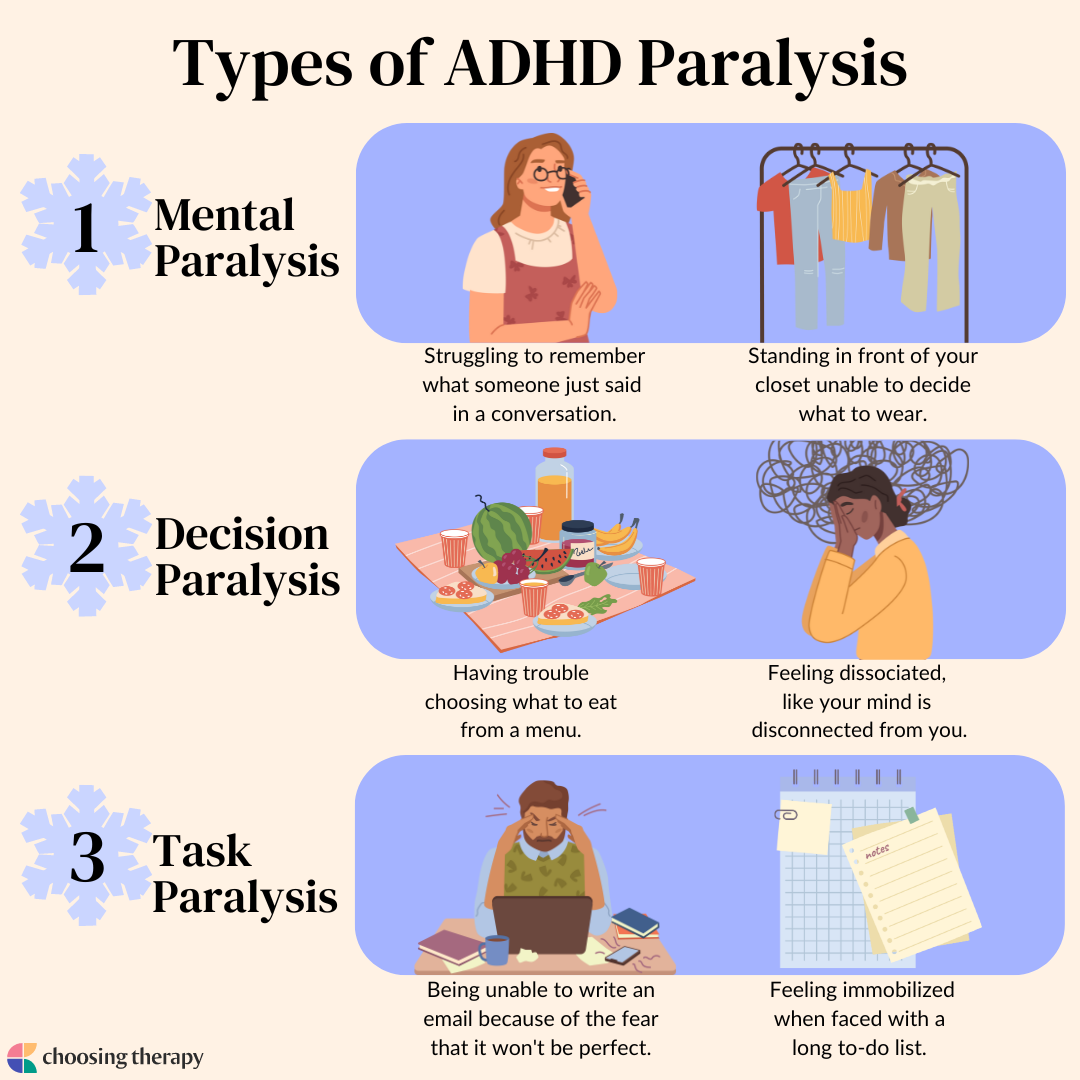
Decoding the Neural Bottleneck: Why Modern Tech Triggers Paralysis
At its core, ADHD paralysis occurs when the brain’s executive functions—responsible for planning, prioritizing, and executing tasks—are flooded. In the context of technology, this is often exacerbated by “information overhead.” For a neurodivergent user, a smartphone isn’t just a tool; it is a portal to infinite distractions and competing demands for attention.
The Paradox of Choice in Software Design
The tech industry has long operated under the “more is more” philosophy. Feature-rich software is often seen as superior, but for those prone to ADHD paralysis, an abundance of features can lead to “choice overload.” When a user opens a project management tool and is met with fifty different ways to categorize a task, the cognitive load required to make a simple decision can trigger a freeze response. This is a failure of UI/UX that prioritizes “power users” over cognitive accessibility.
Notification Fatigue and the Disruption of Hyperfocus
Technology is designed to be intrusive. Push notifications, pings, and haptic alerts are engineered to hijack the dopaminergic pathways. For someone experiencing ADHD paralysis, these interruptions are not merely annoying; they are catastrophic to the “flow state.” Every notification represents a new data point that the brain must process. When these data points accumulate faster than the brain can categorize them, the system crashes, leading to “task paralysis,” where the user sits motionless, unable to decide which “urgent” alert to address first.
AI-Driven Solutions: Building an External Brain
As we move deeper into the age of Artificial Intelligence, the narrative around ADHD paralysis is shifting from one of struggle to one of technological assistance. AI has the potential to act as a “prosthetic executive function,” bridging the gap between intention and action.
Generative AI as a “Body Double”
One of the most effective strategies for overcoming ADHD paralysis is “body doubling”—the act of working alongside someone else to stay focused. Tech is now automating this through Generative AI. LLMs (Large Language Models) like ChatGPT or Claude can act as a digital body double. By asking an AI to “break this massive project into five tiny, actionable steps,” a user can bypass the “initiation paralysis” that comes with a daunting task. The AI handles the high-level organization, allowing the human brain to focus purely on execution.
Automating the Trivial: The Role of Integration Tools
The “ADHD tax”—the cost of forgetting bills or missing deadlines—is being mitigated by automation tech. Tools like Zapier, IFTTT, and Make.com allow users to create “if-this-then-that” workflows that operate in the background. By automating the transition of data between apps (e.g., automatically turning a starred email into a calendar event), technology reduces the number of manual steps a user must take. Fewer steps mean fewer opportunities for the brain to get stuck in the “processing” phase of ADHD paralysis.

The Evolution of Productivity Apps: From Lists to Cognitive Support
The first generation of productivity tech was built for neurotypical brains: linear lists, rigid calendars, and manual input. The next generation is being designed with cognitive diversity in mind, recognizing that “doing” is often harder than “planning.”
Gamification and the Dopamine Incentive
ADHD paralysis is often linked to low dopamine levels, making “boring” tasks physically difficult to start. Tech innovators are solving this through gamification. Apps like Habitica or Fortune City turn task completion into an RPG (Role-Playing Game) experience. By providing immediate digital rewards, these tools provide the dopamine spike necessary to overcome the initial friction of starting a task. This shift in app architecture recognizes that for some users, the “reward” must be integrated into the process, not just the result.
Low-Stimuli Interfaces and Digital Minimalism
Conversely, a growing trend in the developer community is “Digital Minimalism.” Software like Obsidian or Notion (when used with “zen” templates) allows for a distraction-free environment. These tools prioritize markdown and text-heavy interfaces over flashy graphics and complex menus. By reducing the visual noise, these apps lower the “activation energy” required to engage with the software, making it less likely that a user will fall into a state of sensory-induced paralysis.
Future Trends: Neuro-Inclusive UI and the Rise of Assistive Intelligence
The future of technology lies in personalization—not just for marketing, but for cognitive function. We are entering an era where software will adapt its complexity based on the user’s current mental state.
Biometric Feedback and Predictive Task Management
Imagine a workspace that monitors your stress levels via a smartwatch. If the software detects signs of cognitive overload—increased heart rate, rapid switching between tabs—it could automatically trigger a “Focus Mode,” hiding all non-essential apps and breaking your current task into smaller sub-tasks. This predictive technology would intervene before ADHD paralysis fully sets in, acting as a digital safety net.
Setting a New Standard for Digital Accessibility
For years, digital accessibility (A11y) focused primarily on visual and auditory impairments. However, there is a burgeoning movement to include “cognitive accessibility” in global tech standards. This includes designing interfaces that are predictable, reducing the number of clicks to reach a destination, and providing “clear paths” for task completion. Tech giants are beginning to realize that neuro-inclusive design isn’t just a niche requirement; it’s a “curb-cut effect” where making things easier for those with ADHD makes them more efficient for everyone.

Conclusion: Turning Technology into a Catalyst for Action
ADHD paralysis is a significant hurdle in an increasingly digital world, but technology is not the enemy. While poorly designed, high-friction software can exacerbate executive dysfunction, the next wave of technological innovation offers a cure. Through the strategic use of AI, the gamification of mundane tasks, and the adoption of neuro-inclusive design principles, we can transform our digital environments from sources of paralysis into engines of productivity.
The goal for the future of tech is simple: to create a world where software understands the nuances of human cognition. By identifying the triggers of ADHD paralysis and building digital structures to bypass them, the tech industry can unlock the immense potential of neurodivergent minds, turning the “paralysis” of today into the “hyperfocus” of tomorrow. In this intersection of psychology and silicon, we find the next great leap in human-computer interaction—a future where our tools don’t just work for us, but think with us.
aViewFromTheCave is a participant in the Amazon Services LLC Associates Program, an affiliate advertising program designed to provide a means for sites to earn advertising fees by advertising and linking to Amazon.com. Amazon, the Amazon logo, AmazonSupply, and the AmazonSupply logo are trademarks of Amazon.com, Inc. or its affiliates. As an Amazon Associate we earn affiliate commissions from qualifying purchases.