
In the dynamic landscape of digital marketing and online advertising, a crucial metric that dictates the success and efficiency of campaigns is the Click-Through Rate (CTR). This seemingly simple percentage, representing the ratio of users who click on a specific link to the total number of users who view a page, email, or advertisement, holds significant weight in understanding audience engagement and campaign performance. For businesses and marketers alike, understanding what constitutes a “good” CTR is not merely about hitting a number; it’s about optimizing strategies, maximizing return on investment, and ultimately driving desired outcomes.
The concept of CTR is intrinsically linked to the effectiveness of the creative elements and targeting strategies employed. A high CTR suggests that the message is resonating with the intended audience, the ad creative is compelling, and the call to action is clear and persuasive. Conversely, a low CTR can indicate a disconnect between the advertisement and its audience, poor ad placement, or a lack of compelling value proposition. Therefore, consistently analyzing and striving to improve CTR is a fundamental practice for any digital marketing endeavor.
However, the notion of “good” is not a universal constant. It’s a fluid benchmark that is heavily influenced by a multitude of factors, including the industry, the platform, the type of campaign, and even the specific stage of the customer journey being targeted. To truly grasp what a good CTR looks like, it’s essential to delve into these influencing factors and explore the nuanced benchmarks that guide successful digital marketing efforts.
Understanding the Pillars of Click-Through Rate
The effectiveness of any digital marketing campaign is heavily reliant on its ability to capture attention and elicit a desired action, which in this context is a click. The Click-Through Rate (CTR) is the primary metric used to quantify this success. However, what constitutes a “good” CTR isn’t a one-size-fits-all answer. It’s a dynamic figure shaped by various strategic and contextual elements. To truly understand and improve your CTR, it’s crucial to dissect the core components that influence it and to establish benchmarks relevant to your specific endeavors.
Defining Click-Through Rate: The Fundamental Metric
At its core, CTR is calculated by dividing the number of clicks an ad or link receives by the number of impressions it generates, then multiplying by 100 to express it as a percentage.
CTR = (Number of Clicks / Number of Impressions) * 100
This straightforward formula provides a quantitative measure of how often people who see your content decide to interact with it. A higher CTR generally signifies that your content is relevant, appealing, and effectively communicates its value proposition to the target audience. For instance, if an advertisement is shown 1,000 times (impressions) and receives 50 clicks, its CTR would be 5% (50 / 1000 * 100). This means that 5% of the people who saw the ad chose to click on it. This metric is invaluable for assessing the performance of various digital assets, including search engine ads, display ads, email marketing campaigns, and even organic search results.
The Significance of CTR in Digital Marketing Success
The importance of CTR extends far beyond a simple performance indicator. It serves as a direct reflection of audience engagement and the relevance of your marketing message. A strong CTR can lead to several cascading benefits:
- Improved Ad Quality and Relevance Scores: In platforms like Google Ads, a higher CTR often contributes to a better Quality Score. This means your ads are deemed more relevant to users, potentially leading to lower costs per click (CPC) and better ad placements.
- Increased Website Traffic and Lead Generation: A higher CTR directly translates to more visitors arriving at your website or landing page. This increased traffic is the first step in the funnel, leading to potential leads, conversions, and sales.
- Optimized Ad Spend: By identifying and focusing on ads with higher CTRs, marketers can allocate their budget more effectively, ensuring that advertising dollars are spent on campaigns that are demonstrably performing well.
- Enhanced User Experience: When users click on ads that are highly relevant to their search queries or interests, it generally leads to a more positive user experience. This, in turn, can foster brand loyalty and trust.
- Data-Driven Decision Making: CTR provides actionable data that can inform future marketing strategies. Analyzing which ads, keywords, or targeting parameters yield the highest CTRs allows for continuous refinement and optimization of campaigns.
Factors Influencing What Constitutes a “Good” CTR
As mentioned, the definition of a “good” CTR is highly contextual. Several key factors play a significant role in determining appropriate benchmarks:
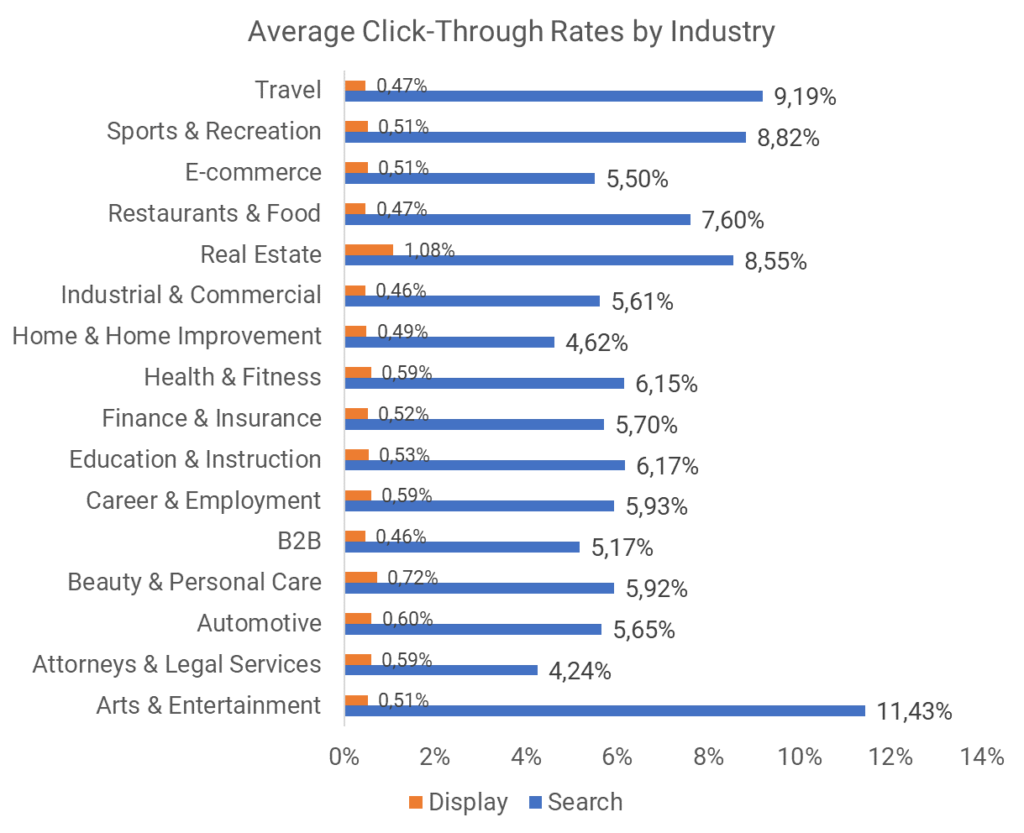
- Industry Benchmarks: Different industries have varying typical CTRs due to inherent user behavior and market competition. For example, the legal or financial services industry might see different average CTRs than the e-commerce or entertainment sectors.
- Platform and Ad Format: The platform where the ad is displayed (e.g., Google Search, Facebook, LinkedIn, email) and the format of the ad (e.g., text ad, banner ad, video ad, carousel ad) significantly impact CTR. Search engine text ads generally have higher CTRs than display banner ads.
- Targeting Precision: The more precisely an ad is targeted to a specific audience that is likely to be interested in the product or service, the higher the CTR is expected to be. Broad targeting often results in lower CTRs.
- Keyword Relevancy (for Search Ads): In search advertising, the relevancy of the ad copy and landing page to the user’s search query is paramount. Highly relevant keywords lead to better CTRs.
- Ad Copy and Creative Quality: Compelling headlines, persuasive ad copy, engaging visuals, and clear calls to action are critical for driving clicks. A well-crafted ad will naturally outperform a poorly designed one.
- Positioning and Visibility: Where an ad appears on a page or screen influences its visibility. Ads in prime positions (e.g., top of search results) tend to receive more clicks.
- Stage of the Marketing Funnel: Ads targeting users at different stages of the customer journey will have different expected CTRs. Awareness-stage campaigns might have lower CTRs than consideration or decision-stage campaigns.
- Device Type: CTRs can vary between desktop, mobile, and tablet devices, often influenced by user behavior and the ease of interaction on each.
Benchmarking Your Click-Through Rate: A Multi-faceted Approach
Establishing a meaningful benchmark for your CTR requires a granular approach, moving beyond generic averages to specific, actionable insights. This involves understanding the nuances of various digital marketing channels and how to interpret performance data within those contexts. Instead of chasing an elusive universal “good,” the focus shifts to continuous improvement and optimization based on what works best for your unique campaigns.
Search Engine Marketing (SEM) CTR Benchmarks
Search engine advertising, particularly platforms like Google Ads, is often characterized by intent-driven searches. Users are actively looking for solutions, products, or information, which can lead to higher CTRs compared to other digital channels.
- Google Search Ads: The average CTR for Google Search Ads can vary widely, but generally, 2-5% is often considered a baseline. However, for highly targeted and well-optimized campaigns, CTRs can reach 10%, 15%, or even higher. This is particularly true for branded keywords or highly specific long-tail searches where the ad’s relevance is undeniable. The position of the ad on the search results page is a significant factor; ads in the top positions typically command much higher CTRs. For instance, an ad in the first position might see CTRs upwards of 5-10%, while ads further down the page will see considerably less. Keyword match type also plays a crucial role; exact match keywords tend to have higher CTRs due to their specificity.
- Display Advertising: In contrast to search ads, display advertising (banner ads on websites) typically has much lower CTRs. This is because users are not actively searching for the advertised product or service; they are often engaged in other online activities. A good CTR for display ads might range from 0.05% to 0.35%. However, highly targeted programmatic display campaigns that leverage rich media or interactive formats can sometimes achieve higher rates. Retargeting campaigns, which target users who have previously interacted with a brand, often see higher CTRs than general display ads, sometimes reaching 0.5% or even 1%.
Social Media Marketing CTR Benchmarks
Social media platforms offer diverse advertising opportunities, each with its own unique user behavior and engagement patterns. The effectiveness of social media ads is often tied to the platform’s inherent nature – users are there for connection and entertainment, making ad relevance and creative appeal paramount.
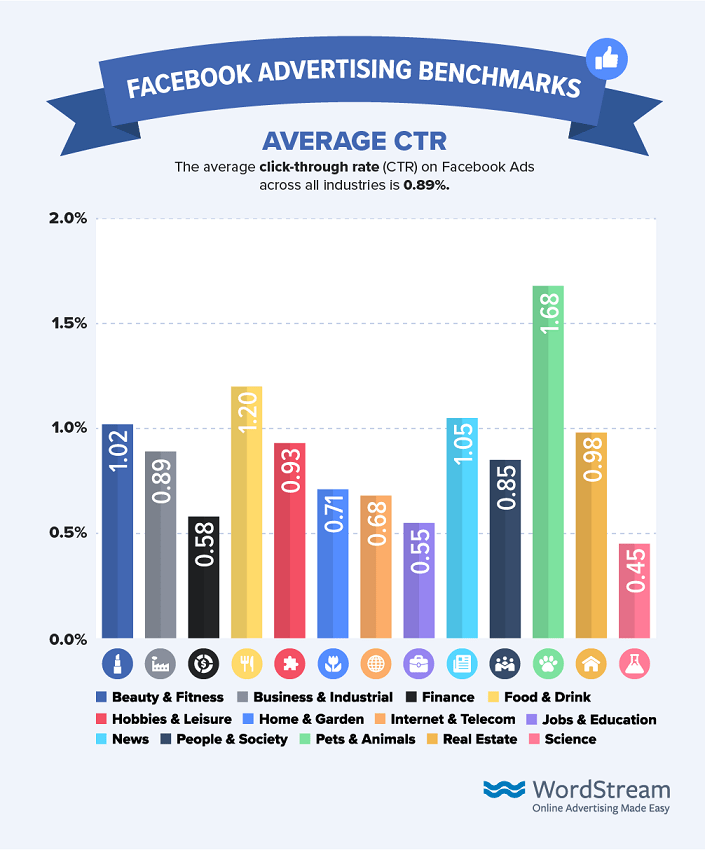
- Facebook and Instagram Ads: CTRs on Facebook and Instagram can vary significantly based on campaign objective, targeting, and ad creative. For a general brand awareness or traffic campaign, a CTR between 0.5% and 1.5% might be considered average. However, campaigns focused on lead generation or direct response, especially those utilizing compelling visuals or interactive ad formats like carousels and video ads, can achieve CTRs of 2% to 5% or even higher. The quality of the creative and the precision of the audience targeting are critical drivers here. For example, a visually stunning ad for a fashion brand targeted at users with specific fashion interests is likely to perform much better than a generic ad for a broad product.
- LinkedIn Ads: Given LinkedIn’s professional focus, CTRs on this platform are often lower than on Facebook or Instagram but can be indicative of highly qualified leads. Average CTRs for LinkedIn ads typically fall in the range of 0.3% to 0.7%. However, for highly niche B2B targeting or specific job title targeting, CTRs can exceed 1%. The cost per click on LinkedIn is generally higher, so a strong CTR is crucial for maximizing ROI. Ads promoting whitepapers, webinars, or other B2B resources to a precisely defined professional audience are more likely to achieve higher CTRs.
- Other Social Platforms (Twitter, TikTok, etc.): CTRs on platforms like Twitter and TikTok can be highly variable, influenced by the platform’s fast-paced nature and specific content formats. For Twitter, average CTRs might range from 0.5% to 1.5%. TikTok, with its video-centric, entertainment-driven environment, can see a wide range, with well-executed, trend-aligned video ads potentially achieving higher engagement.
Email Marketing CTR Benchmarks

Email marketing remains a powerful channel for nurturing customer relationships and driving conversions. The CTR in email campaigns is a direct measure of how compelling your subject lines, preheader text, and email content are to your subscriber list.
- General Email Campaigns: A good CTR for a general email newsletter or promotional campaign typically falls between 2% and 5%. However, this can vary based on the industry and the list’s engagement level.
- Segmented and Personalized Emails: Highly segmented and personalized email campaigns, where content is tailored to specific subscriber interests or behaviors, can achieve significantly higher CTRs, often reaching 5% to 10% or even more. This highlights the importance of data-driven segmentation and message personalization. For example, an email offering a discount on a product category a subscriber has previously browsed will likely have a much higher CTR than a generic promotional email sent to the entire list.
- Welcome Emails and Re-engagement Campaigns: Welcome emails, sent to new subscribers, often have very high CTRs, sometimes exceeding 10%, due to the subscriber’s recent interest. Conversely, re-engagement campaigns aimed at inactive subscribers will typically have lower CTRs, requiring more persuasive offers.
Optimizing Your Click-Through Rate for Maximum Impact
Achieving a “good” CTR isn’t a static goal; it’s a continuous process of testing, analyzing, and refining. The ultimate aim is to create campaigns that not only capture attention but also drive meaningful engagement and conversions. This requires a strategic approach that addresses every element of the advertising process, from initial targeting to post-click experience.
Crafting Compelling Ad Copy and Creative Elements
The foundation of a high CTR lies in the ad itself. It must be clear, concise, and immediately convey value to the viewer.
- Headline Dominance: Your headline is the first and often only opportunity to grab attention. It should be attention-grabbing, benefit-oriented, and clearly indicate what the user can expect. Using strong verbs, numbers, or posing a question can increase its effectiveness. For example, instead of “Learn About Digital Marketing,” consider “Boost Your ROI: 5 Proven Digital Marketing Strategies.”
- Benefit-Driven Copy: Focus on what the user will gain from clicking your ad. Highlight the solutions to their problems or the fulfillment of their desires. Use persuasive language that resonates with your target audience’s needs and pain points.
- Clear Call to Action (CTA): Don’t leave users guessing what to do next. A strong, unambiguous CTA guides them directly to the desired action. Phrases like “Shop Now,” “Learn More,” “Download Your Free Guide,” or “Sign Up Today” are effective. Ensure the CTA is visually prominent and easy to understand.
- Visually Appealing Creatives: For display and social media ads, high-quality images or videos are paramount. They should be relevant to the ad copy, visually striking, and aligned with your brand’s aesthetic. Ensure visuals are optimized for different devices and platforms.
- A/B Testing: Never assume you know what works best. Continuously A/B test different headlines, ad copy variations, images, and CTAs to identify which combinations yield the highest CTRs. This iterative process is key to ongoing optimization.
Strategic Targeting and Audience Segmentation
Reaching the right audience with the right message is fundamental to driving clicks. Broad targeting often results in wasted ad spend and low engagement.
- Detailed Audience Research: Understand your ideal customer’s demographics, psychographics, interests, and online behavior. This deep understanding allows for more precise targeting.
- Leveraging Platform Targeting Options: Utilize the advanced targeting capabilities of advertising platforms (e.g., interest-based targeting, demographic targeting, custom audiences, lookalike audiences). The more specific your targeting, the higher the likelihood of reaching users who are genuinely interested.
- Keyword Research and Selection (for SEM): For search engine advertising, meticulously research keywords that your target audience is actually using. Focus on long-tail keywords that indicate higher intent. Negative keywords are equally important to prevent your ads from showing for irrelevant searches.
- Retargeting Campaigns: Implement retargeting campaigns to re-engage users who have previously interacted with your website or brand. These users are often warmer leads and are more likely to click on ads that remind them of their previous interest.
Enhancing the Post-Click Experience
A high CTR is only the first step; what happens after the click is equally crucial for overall campaign success and can even indirectly influence future CTRs.
- Landing Page Relevance: Ensure that the landing page users arrive at directly corresponds to the promise made in the ad. Mismatched content leads to a poor user experience and high bounce rates, negating the value of the click.
- Optimized Landing Page Design: Landing pages should be designed for conversion. They should load quickly, be mobile-responsive, have a clear and compelling value proposition, and feature a prominent CTA that aligns with the ad.
- User Experience (UX): A smooth and intuitive user journey from the ad click to the desired action on the landing page is critical. Any friction in this process can lead to users abandoning the page.
- Conversion Tracking: Implement robust conversion tracking to understand which campaigns and ad creatives are not only driving clicks but also leading to desired outcomes (e.g., sales, leads, sign-ups). This holistic view is essential for optimizing your overall marketing strategy.
The Evolving Landscape of CTR and Future Considerations
The digital marketing realm is in constant flux, with new technologies, platforms, and user behaviors emerging regularly. Staying ahead of these changes is essential for maintaining and improving your CTR in the long run. What constitutes a “good” CTR today might be different tomorrow, making continuous learning and adaptation paramount.
The Impact of AI and Automation on CTR
Artificial intelligence (AI) and automation are increasingly shaping how digital advertising is created, targeted, and optimized. These technologies offer powerful tools for enhancing CTR and overall campaign performance.
- AI-Powered Ad Creative Generation: AI tools can now assist in generating ad copy and even visual creatives, analyzing vast amounts of data to identify patterns that lead to higher engagement. This can help marketers quickly test multiple creative variations and identify those with the highest CTR potential.
- Predictive Targeting: AI algorithms can analyze user data with unprecedented accuracy to predict which users are most likely to be interested in a specific product or service. This leads to more precise targeting, resulting in higher CTRs and more efficient ad spend.
- Dynamic Creative Optimization (DCO): DCO uses AI to assemble personalized ad variations in real-time based on user data and context. This ensures that each ad presented is as relevant as possible to the individual viewer, thereby boosting CTR. For example, a DCO ad might show a specific product a user previously viewed, or highlight a benefit most relevant to their demographic.
- Automated Bid Management: AI-driven bidding strategies can automatically adjust bids in real-time to maximize CTR or other campaign objectives within a set budget. This takes the guesswork out of bid management and allows for more efficient allocation of resources.
Emerging Platforms and Formats
The digital media landscape is constantly expanding. New platforms and innovative ad formats emerge, each presenting unique opportunities and challenges for CTR optimization.
- Short-Form Video Content: Platforms like TikTok and Instagram Reels have popularized short-form video. Ads embedded within these content streams require a different approach to capture attention quickly and drive engagement. Brands that can create authentic, entertaining, and relevant video ads are likely to see higher CTRs.
- Interactive Ads: Interactive ad formats, such as quizzes, polls, playable ads, and augmented reality (AR) experiences, are gaining traction. These formats inherently encourage user participation, leading to potentially much higher engagement rates and CTRs compared to static ads.
- Voice Search and Conversational Interfaces: As voice assistants become more prevalent, understanding how users search and interact via voice is becoming increasingly important. This might lead to the development of new ad formats or strategies optimized for conversational queries, potentially impacting CTR in unexpected ways.
- Privacy-First Advertising: With increasing privacy regulations and user awareness, the way data is used for targeting is evolving. Marketers will need to adapt to privacy-centric advertising methods, focusing on contextual targeting and first-party data to maintain relevancy and CTRs.
The Future of CTR: Beyond the Click
While CTR remains a vital metric, the focus in digital marketing is increasingly shifting towards a more holistic view of campaign success that goes beyond just the click.
- Viewability and Engagement Metrics: Metrics like viewability (ensuring an ad was actually seen) and engagement time are becoming more important. A high CTR is less valuable if the ad was only briefly viewed or if the user didn’t truly engage with the content.
- Conversion Rate Optimization (CRO): The ultimate goal of most digital marketing efforts is conversion, not just clicks. While a good CTR is a prerequisite for conversions, optimizing the post-click experience to improve conversion rates is paramount.
- Brand Lift and Long-Term Value: For many brands, the goal of advertising is not just immediate sales but also building brand awareness, affinity, and long-term customer loyalty. Metrics that measure brand lift and the lifetime value of a customer are becoming increasingly significant.
In conclusion, understanding what constitutes a “good” click-through rate is a complex but essential aspect of successful digital marketing. It’s a metric that requires continuous monitoring, analysis, and optimization, always considering the specific context of the campaign, platform, and target audience. By focusing on compelling creative, precise targeting, and a seamless post-click experience, marketers can not only improve their CTR but also drive more meaningful engagement and achieve their overarching business objectives in the ever-evolving digital landscape.
aViewFromTheCave is a participant in the Amazon Services LLC Associates Program, an affiliate advertising program designed to provide a means for sites to earn advertising fees by advertising and linking to Amazon.com. Amazon, the Amazon logo, AmazonSupply, and the AmazonSupply logo are trademarks of Amazon.com, Inc. or its affiliates. As an Amazon Associate we earn affiliate commissions from qualifying purchases.