
In the vast lexicon of modern digital communication, few symbols carry as much nuanced weight as the wilted rose emoji ( ). Introduced to the global stage as part of Unicode 9.0 in 2016, this small cluster of pixels—officially designated as U+1F940—has evolved far beyond its literal representation of a dying flower. Within the technology sector, the wilted rose serves as a fascinating case study in how software architecture, algorithmic sentiment analysis, and cross-platform rendering influence human expression.
To understand what the wilted rose emoji means, one must look past the visual of a drooping stem and fallen petals. It represents a intersection of technical standardization and the fluid nature of digital linguistics. As we navigate an era where text is increasingly supplemented by visual metadata, the wilted rose has become a vital tool for expressing complex emotions that words alone often fail to capture in a high-velocity digital environment.

The Technical Architecture of Digital Expression
The existence of the wilted rose emoji is not an accident of artistic whim; it is the result of a rigorous technical standardization process overseen by the Unicode Consortium. This non-profit organization ensures that every character, whether a letter in the Cyrillic alphabet or a drooping flower, maintains a consistent identity across different operating systems and devices.
The Unicode Consortium and the Birth of U+1F940
The journey of the wilted rose from a concept to a keyboard staple began with a proposal to the Unicode Technical Committee. In the tech world, adding a new emoji is akin to updating a universal programming language. The committee must evaluate whether a symbol has “breaking” potential or if it fills a specific communicative void. The wilted rose was approved because it provided a necessary counterpoint to the vibrant, upright red rose ( ).
Technically, the wilted rose is represented by a specific hexadecimal code. When you send this emoji, your device isn’t sending an image; it is sending a string of data that the receiving device interprets. This underlying binary structure is what allows an iPhone user to communicate “sadness” or “the end of a relationship” to a Samsung user seamlessly, despite the devices running entirely different kernels and graphics engines.
Cross-Platform Disparities: Why Rendering Matters
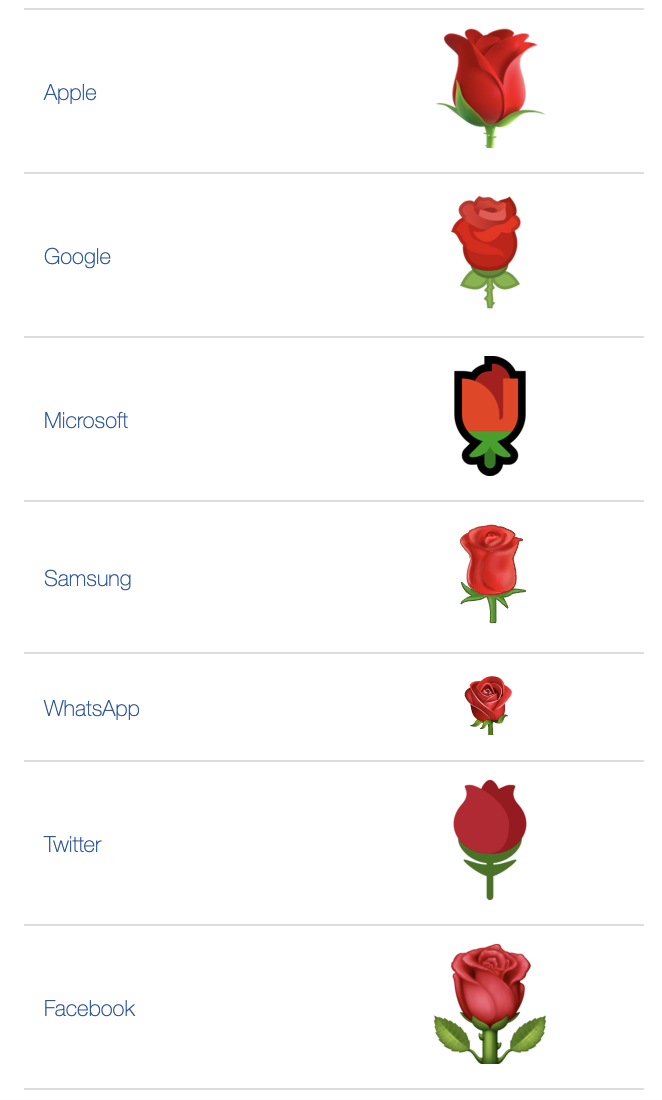
One of the most significant technical challenges in the world of emojis is “fragmentation.” While the Unicode code point (U+1F940) is universal, the graphical representation is left to the discretion of the platform’s designers. This leads to subtle but impactful differences in how the wilted rose is perceived.
On Apple’s iOS, the wilted rose is often depicted with a deep red hue and a significantly bent stem, emphasizing a dramatic sense of loss. On Google’s Android or Microsoft’s Windows platforms, the rendering might appear slightly more brownish or desiccated. For tech developers and UX designers, these variations are critical. A user might intend to send a message of lighthearted disappointment, but if the recipient’s device renders the emoji as a stark symbol of death or absolute decay, the communicative intent is lost. This “cross-platform semantic friction” is a major area of study for researchers focusing on Human-Computer Interaction (HCI).
Algorithmic Sentiment and Data Processing
In the backend of the apps we use daily—from Twitter (X) to Slack—the wilted rose emoji serves as a high-value data point. For software engineers building Natural Language Processing (NLP) models, emojis act as “sentiment markers” that help machines understand the emotional context of a sentence.
NLP and the Wilted Rose in Sentiment Analysis
Modern sentiment analysis algorithms are designed to parse millions of messages per second to determine the collective mood of a user base. The wilted rose is particularly valuable because it is rarely used sarcastically compared to the “crying-laughing” emoji or the “fire” emoji. In the eyes of an algorithm, the presence of U+1F940 usually shifts a message’s sentiment score toward “negative” or “melancholy.”
Tech companies use this data to refine their recommendation engines. For instance, if a user’s social media feed is populated with posts containing the wilted rose, an AI-driven algorithm might prioritize content that is more empathetic or, conversely, avoid showing high-energy advertisements that might feel tone-deaf to the user’s current emotional state. This level of technical nuance allows for a more responsive and “human” user experience.

The Emoji as a Data Point in Social Media Monitoring
For developers working on social listening tools, the wilted rose is a key indicator of “churn” or “brand dissatisfaction.” When a software update goes wrong or a popular digital service experiences downtime, the wilted rose often appears in the comments sections of tech support threads. It symbolizes a “broken promise” or a “faded feature.”
By tracking the frequency of the wilted rose alongside specific keywords (like “update,” “login,” or “bug”), automated monitoring systems can alert engineering teams to a crisis before it escalates. In this context, the emoji isn’t just a symbol; it is a diagnostic tool that triggers a technical response.
The Evolution of Mobile UX and Visual Communication
The way we access the wilted rose emoji is a testament to the advancements in mobile user interface (UI) design. From predictive text to context-aware keyboards, the tech stack involved in suggesting a dying flower is surprisingly complex.
Skeuomorphism vs. Flat Design in Iconography
The design of the wilted rose has mirrored broader trends in software aesthetics. In the early days of emoji integration, designs were highly skeuomorphic—striving to look like real-world objects with shadows and textures. As the industry moved toward “Flat Design” and “Material Design,” the wilted rose became more stylized.
This shift isn’t just about looks; it’s about legibility. On a high-resolution OLED screen, a highly detailed rose might look beautiful, but on a low-end device or a small notification banner, it needs to be recognizable at a glance. Tech designers must balance artistic expression with the functional requirement that a “wilted rose” must look distinctly “wilted” even when reduced to a 16×16 pixel grid.
Context-Aware Keyboards and Predictive Text
When you type the word “sad,” “goodbye,” or “dead” into a modern smartphone, the wilted rose often appears in the predictive text bar. This is powered by on-device machine learning. Keyboards like Gboard or the iOS QuickType keyboard analyze the relationship between words and emojis based on massive datasets of human interaction.
The technology behind this involves “Word Embeddings,” where words and emojis are mapped in a high-dimensional vector space. The wilted rose is “mathematically close” to concepts of heartbreak, mourning, and conclusion. This seamless integration of AI into our typing habits has changed the speed of digital communication, allowing users to inject complex emotional subtext with a single tap, further cementing the wilted rose’s role as a staple of digital dialect.
Security, Ambiguity, and the Future of Digital Symbols
As with any form of digital data, the wilted rose emoji carries implications for security and the future of how we interact with software. As we move toward Web3 and AI-generated content, the way we define and use these symbols is set to undergo another transformation.
Steganography and Coded Communication
In the realm of digital security, emojis have been used in “steganography”—the practice of hiding messages within non-secret data. Because the wilted rose is so common, it can be used as a “trigger” or a “key” in encrypted communications. For example, a group might agree that a wilted rose at the end of a seemingly normal sentence changes the meaning of the entire message or signals that a specific digital action should be taken.
Furthermore, as cybersecurity experts monitor for “bot” activity, the use of emojis like the wilted rose can be a tell-tale sign. Some automated scripts use specific emoji sequences to bypass simple spam filters that only look for keywords. This creates a “cat-and-mouse” game between developers building spam-detection AI and those using emojis to mask automated behavior.
The Future: Dynamic Emojis and AI-Generated Assets
Looking ahead, the static wilted rose may be replaced by dynamic, AI-generated assets. With the rise of “Genmoji” (AI-generated emojis) and Apple’s integration of personalizes digital icons, the “standard” wilted rose might become a relic. We are entering an era where a device might generate a version of the wilted rose that perfectly matches the user’s specific brand of sadness—perhaps a rose that loses its petals in real-time as the recipient reads the message.
This technical evolution will require new protocols and even more sophisticated rendering engines. The meaning of the wilted rose will continue to expand as the technology supporting it becomes more interactive and personalized. It remains a powerful reminder that in the world of tech, even a symbol of decay is a sign of a living, breathing, and constantly evolving digital ecosystem.
aViewFromTheCave is a participant in the Amazon Services LLC Associates Program, an affiliate advertising program designed to provide a means for sites to earn advertising fees by advertising and linking to Amazon.com. Amazon, the Amazon logo, AmazonSupply, and the AmazonSupply logo are trademarks of Amazon.com, Inc. or its affiliates. As an Amazon Associate we earn affiliate commissions from qualifying purchases.