
In the landscape of modern music production and audio engineering, few technical adjustments have had as profound an impact as Dropped D tuning. While traditionally viewed through the lens of music theory or performance, Dropped D tuning is, at its core, a manipulation of acoustic physics that has paved the way for significant advancements in music technology. From the development of specialized digital signal processing (DSP) to the engineering of high-stability hardware, understanding Dropped D tuning is essential for anyone navigating the intersection of music and technology.
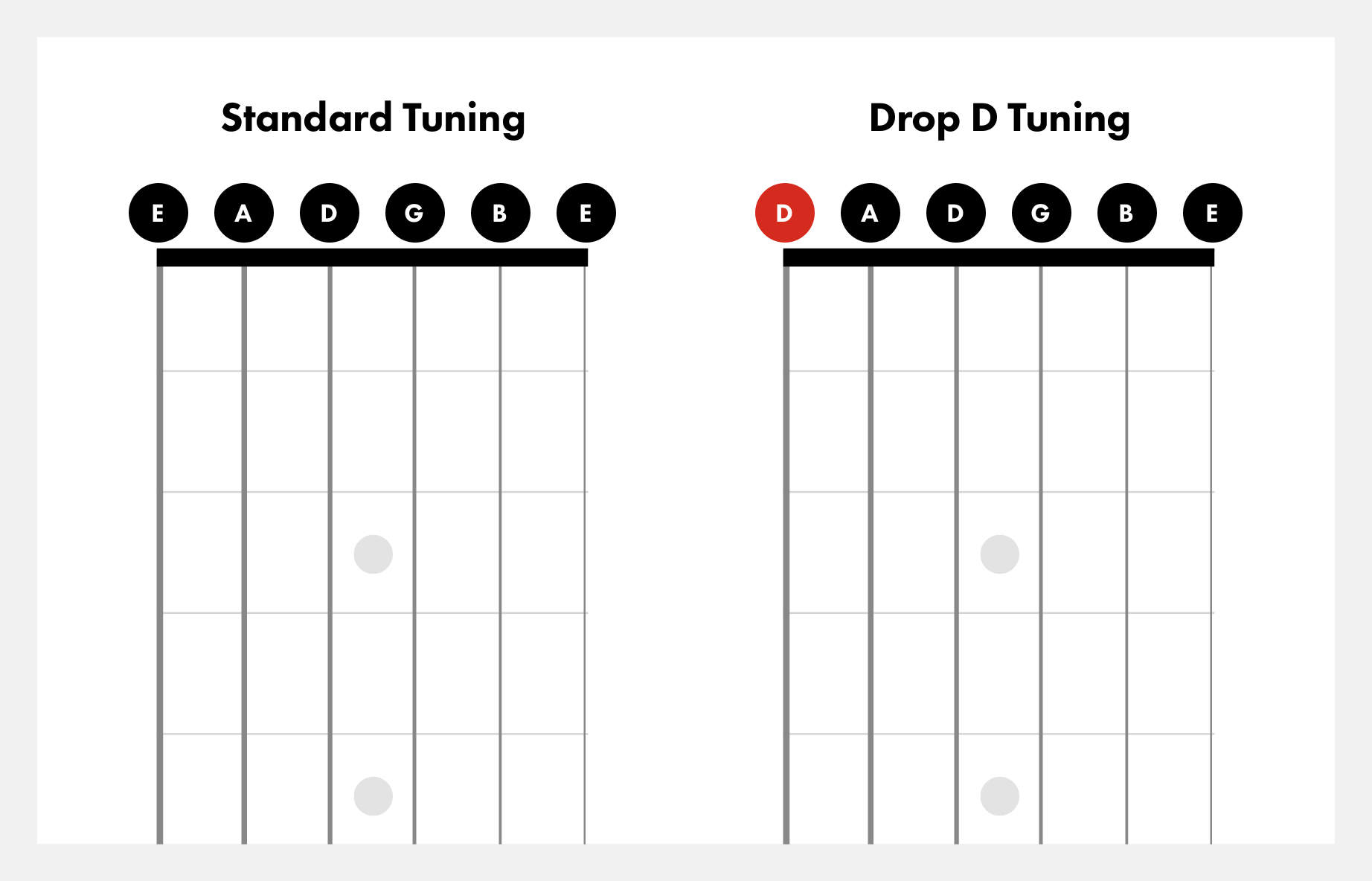
This guide explores the technical foundations of Dropped D tuning, its integration into digital workstations, and how it drives innovation in the hardware and software industries.
The Mechanics of Modern Pitch Manipulation
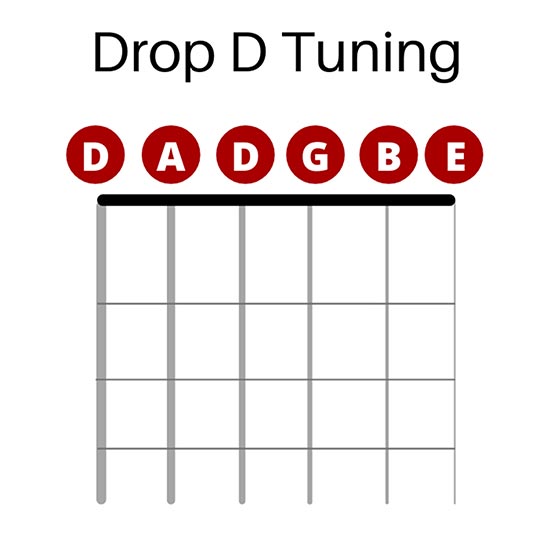
To understand Dropped D tuning from a technical perspective, one must first understand the physics of string tension and frequency. In standard tuning (E-A-D-G-B-E), the lowest string is tuned to E2, approximately 82.41 Hz. Dropped D tuning involves lowering this string by a whole step to D2, which vibrates at approximately 73.42 Hz.
The Fundamental Frequency Shift
Lowering the frequency of the sixth string changes the harmonic profile of the instrument. When the pitch is dropped, the tension on the string decreases. In a technological context, this requires a recalibration of how the instrument interacts with pick-ups and amplifiers. Lower frequencies require more “headroom” in digital circuitry to prevent clipping and distortion, a challenge that has driven the development of high-fidelity preamps and digital audio interfaces.
Digital Tuners and Precision Engineering
The transition to Dropped D has been facilitated by the evolution of digital strobe tuners. Unlike early analog tuners, modern digital tuners utilize sophisticated algorithms to detect pitch based on the zero-crossing rate of the waveform. Because a “dropped” string has less tension, it is prone to “pitch drift”—a phenomenon where the initial attack of the note is sharper than the sustained ring. Technology has solved this through “offset tuning” software that calculates the average pitch over time, ensuring the instrument remains intonated even in lower-tension environments.
Dropped D in the Age of Software and Virtual Instruments
The rise of Digital Audio Workstations (DAWs) has transformed Dropped D from a manual adjustment into a software-driven parameter. Today, producers can achieve the “Dropped D sound” without ever touching a physical guitar tuning peg.
Sample Libraries and MIDI Mapping
High-end virtual instruments, such as those found in Kontakt or EastWest libraries, are meticulously recorded using guitars specifically set to Dropped D. Developers use high-resolution sensors and multi-velocity sampling to capture the unique “growl” of a slackened string. For tech-focused composers, this means MIDI mapping can trigger specific articulations—such as the one-finger power chord—that are characteristic of this tuning. The software must account for the sympathetic resonance of the other strings, requiring complex scripting and significant CPU resources to emulate the acoustic reality.
Pitch-Shifting Algorithms and DSP
Modern DSP plugins, such as those from Neural DSP or Antares, allow for “virtual tuning.” Using polyphonic pitch-shifting technology, these tools can transpose the signal of a guitar in standard tuning down to Dropped D in real-time with near-zero latency. This involves complex Fast Fourier Transform (FFT) analysis, where the incoming audio is broken down into its frequency components, shifted, and resynthesized. This technology is a cornerstone of modern live performances, allowing musicians to switch between tunings at the touch of a button or a MIDI command.

The Evolution of Hardware: From Floyd Rose to Evertune
The technical demands of Dropped D tuning have pushed the boundaries of mechanical engineering in guitar hardware. When a string is tuned down, the decrease in tension affects the entire equilibrium of the instrument, particularly on guitars equipped with tremolo systems.
Mechanical Stability in Lower Tensions
The legendary Floyd Rose tremolo system, while revolutionary, struggled with Dropped D tuning because the loss of tension on one string would cause the others to go sharp. This led to the development of “D-Tuna” hardware—a mechanical device that allows for an instantaneous drop from E to D without affecting the bridge’s balance. This is a prime example of a mechanical “tech fix” for a physical frequency problem.
Intelligent Bridge Systems and Digital Integration
In the last decade, the Evertune bridge has emerged as a pinnacle of hardware technology. It uses a complex system of springs and levers to maintain constant tension on the strings, regardless of temperature changes or how hard the player strikes the string. For Dropped D enthusiasts, this technology ensures that the lower-frequency D2 note remains perfectly in pitch, solving the age-old problem of “low-end flub.” Furthermore, some modern guitars now feature integrated “Robot Tuners”—servo-motorized pegs that receive digital signals and physically turn themselves to reach the desired Dropped D frequency in seconds.
Impact on Sound Engineering and Mixing Tech
In the recording studio, Dropped D tuning presents unique challenges that have necessitated the development of specialized mixing tools and AI-driven plugins.
Managing Low-End Frequencies in the Mix
A guitar tuned to Dropped D occupies a frequency range that often overlaps with the bass guitar and the kick drum (typically the 60 Hz to 100 Hz range). To prevent a “muddy” mix, sound engineers utilize sidechain compression and dynamic EQ. Modern plugins like FabFilter Pro-Q 3 allow engineers to see the frequency spectrum in high definition, identifying where the D2 fundamental might be masking the bass guitar’s harmonics. This technical precision is what allows modern heavy music to sound both massive and clear.
AI-Driven Mastering for Heavier Profiles
Mastering tech has also evolved to handle the extended low-end of Dropped D tuning. AI mastering platforms like LANDR or Ozone use machine learning models trained on thousands of tracks to understand the spectral balance of “heavy” music. These algorithms automatically adjust the multi-band compression to ensure that the low-end energy of a Dropped D riff doesn’t trigger the limiter too early, which would result in a flat, lifeless sound.
The Future of Alternative Tunings in AI-Generated Music
As we look toward the future, the concept of Dropped D tuning is being integrated into the training sets of generative AI models. AI composition tools are no longer limited to standard Western scales; they are beginning to understand the “mood” and “texture” associated with specific tunings.
Neural Networks and Compositional Patterns
Neural networks are being trained to recognize that Dropped D tuning often correlates with specific rhythmic patterns and harmonic structures (such as the prominence of the root-fifth-octave power chord). This allows AI music generators to create more authentic-sounding rock and metal arrangements. For tech developers, the challenge lies in teaching an AI the “human” element of tuning—the slight imperfections in pitch that give Dropped D its aggressive, raw character.
Conclusion
Dropped D tuning is far more than a simple stylistic choice for guitarists; it is a catalyst for technological innovation across the music industry. From the complex physics of string tension to the high-level algorithms of digital pitch shifting and AI mastering, Dropped D has forced the evolution of both hardware and software. As music technology continues to advance, the ability to manipulate pitch and frequency with precision will remain at the forefront of digital sound design, ensuring that the heavy, resonant power of the “Dropped D” continues to be heard with absolute clarity and technical excellence.
aViewFromTheCave is a participant in the Amazon Services LLC Associates Program, an affiliate advertising program designed to provide a means for sites to earn advertising fees by advertising and linking to Amazon.com. Amazon, the Amazon logo, AmazonSupply, and the AmazonSupply logo are trademarks of Amazon.com, Inc. or its affiliates. As an Amazon Associate we earn affiliate commissions from qualifying purchases.