
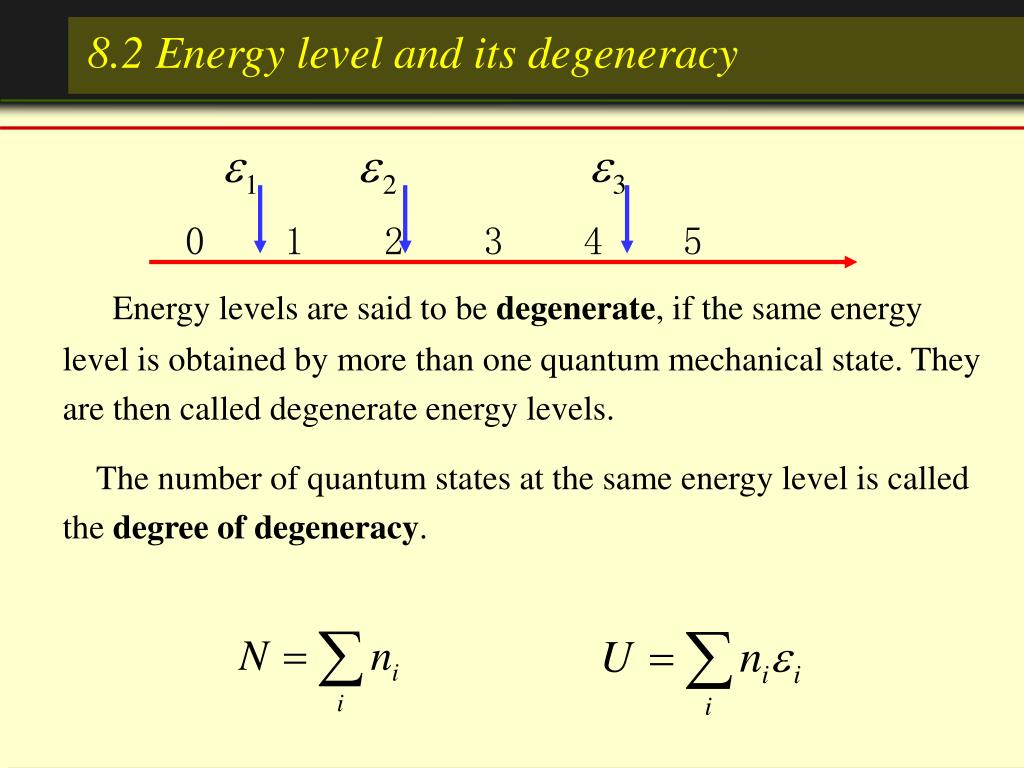
The term “degeneracy” can sound ominous, often conjuring images of decline or decay. However, within the realm of technology, “degeneracy” takes on a far more nuanced and, in many cases, a positive or at least a neutral meaning. It doesn’t imply a failure or breakdown in the traditional sense. Instead, it refers to a specific characteristic within systems, algorithms, or data structures where multiple distinct states or configurations lead to the same observable outcome or representation. This is a fundamental concept that underpins much of how we design, optimize, and understand complex computational systems.
Understanding degeneracy in tech is crucial for anyone involved in software development, data science, machine learning, or even advanced hardware design. It impacts everything from the efficiency of algorithms to the robustness of AI models and the way we interpret and utilize data. While the word itself might carry negative connotations in everyday language, in the tech world, it often signifies elegance, flexibility, and even a form of inherent robustness.
The Spectrum of Degeneracy in Computational Systems
Degeneracy manifests in a variety of ways across different technological domains. It’s not a monolithic concept but rather a spectrum of phenomena that share the common thread of multiple inputs or internal states yielding a single output or effect. Recognizing these distinct forms helps in appreciating its pervasive influence.
Algorithmic Degeneracy: When Paths Converge
In algorithms, degeneracy often arises when there are multiple ways to arrive at the same solution or optimal state. This can be both a blessing and a curse, depending on the context.
Multiple Optimal Solutions in Optimization Problems
Many optimization algorithms, particularly those used in fields like operations research, logistics, and machine learning, aim to find the best possible solution to a problem. In some cases, there might not be a single unique “best” solution, but rather a set of solutions that all achieve the same optimal objective function value. This is algorithmic degeneracy. For instance, in a linear programming problem, multiple vertices of the feasible region might lie on the optimal objective function hyperplane, meaning any of these vertices represents an equally valid optimal solution.
-
Implications for Algorithm Design: When degeneracy is present, algorithms need to be designed to handle it. Some algorithms might simply return the first optimal solution they find, while others might be designed to enumerate all optimal solutions or a representative subset. The choice depends on the specific requirements of the application. For instance, in resource allocation, knowing all optimal solutions can offer valuable flexibility.
-
The “No Free Lunch” Theorem and Degeneracy: The “No Free Lunch” theorem in machine learning suggests that no single algorithm is universally superior for all possible problems. Degeneracy can contribute to this; an algorithm that performs well on a problem with high degeneracy might perform poorly on a problem with unique optima, and vice versa.
Ambiguity in Decision Trees and Rule-Based Systems
In decision trees and other rule-based expert systems, degeneracy can lead to ambiguous decision paths. This means that different sequences of feature evaluations can lead a user or a system to the same final classification or decision.
-
Handling Ambiguity in Classification: For example, a medical diagnosis system might have two different sets of symptoms that both point to the same disease. If the decision tree is constructed in a way that reflects this, it exhibits degeneracy. While it correctly identifies the disease, the reasoning path might appear redundant or less informative if the goal is to pinpoint a unique causal chain.
-
Impact on Model Interpretability: In applications where interpretability is paramount, such as in regulated industries or for critical decision-making, this form of degeneracy can be a challenge. Developers might strive to create decision trees or rule sets with minimal degeneracy to provide clearer, more distinct explanations for their outcomes.
Data Representation and Degeneracy: The Many Faces of the Same Meaning
Degeneracy also plays a significant role in how data is represented and processed, particularly in areas dealing with symbolic representation, natural language processing, and even in the underlying principles of certain mathematical structures used in tech.
Synonyms and Semantic Equivalence in Natural Language Processing (NLP)
In NLP, words and phrases can have multiple synonyms, and different sentence structures can convey the same meaning. This is a form of semantic degeneracy.
-
Challenges in Text Analysis: For example, the phrases “buy a house” and “purchase a dwelling” are semantically equivalent. When analyzing text for sentiment, topic modeling, or information retrieval, systems need to account for this degeneracy to avoid treating semantically identical inputs as distinct. Techniques like word embeddings and semantic similarity measures are employed to bridge these gaps.
-
The Role of Embeddings: Word embeddings, like Word2Vec or GloVe, map words into a high-dimensional vector space. Words with similar meanings are mapped to nearby points in this space, effectively collapsing semantically degenerate representations into a single semantic neighborhood.
Redundancy in Data Structures and Databases
Certain data structures are designed with degeneracy in mind, often for reasons of efficiency or fault tolerance. Redundancy, a common form of degeneracy, allows for multiple ways to access or represent the same piece of information.
-
Database Indexing: In database systems, indexes are created to speed up data retrieval. A single data record might be referenced by multiple indexes, creating a degenerate relationship where one piece of data can be reached through several different pathways. This allows for faster queries but also introduces overhead in maintaining index consistency.
-
Fault Tolerance and Redundancy: In distributed systems, data is often replicated across multiple nodes. This redundancy, a form of structural degeneracy, ensures that the system can continue to operate even if some nodes fail. Multiple copies of the same data exist, allowing for graceful degradation of service rather than complete failure.
Degeneracy in Machine Learning Models: Flexibility and Robustness
Machine learning models, especially neural networks, exhibit degeneracy in ways that are fundamental to their learning capabilities and their robustness.
Multiple Weight Configurations in Neural Networks
Neural networks are highly capable of learning complex patterns. A key aspect of their learning process is that different sets of weights and biases can lead to the same predictive output for a given input. This is a profound form of degeneracy within the model’s internal parameters.
-
Generalization and Overfitting: This degeneracy is directly linked to a model’s ability to generalize. If a network has too few parameters or is trained on insufficient data, it may lack this degeneracy, leading to overfitting (memorizing the training data rather than learning underlying patterns). Conversely, sufficient degeneracy allows the network to find different internal representations that achieve the same goal, improving its ability to handle unseen data.
-
The Optimization Landscape: The “loss landscape” of a neural network, which plots the error as a function of the model’s weights, is often riddled with plateaus and multiple minima. Each of these minima can represent a configuration of weights that achieves a low error. The existence of many such configurations is a manifestation of degeneracy. Optimization algorithms navigate this landscape, and their ability to find a good minimum is influenced by the landscape’s degenerate features.
Feature Importance and Redundancy
In feature selection and analysis, degeneracy can appear as feature redundancy. This means that multiple features might provide similar or overlapping information about the target variable.
-
Multicollinearity in Regression: In statistical modeling and regression analysis, multicollinearity occurs when independent variables are highly correlated, meaning one can be linearly predicted from the others. This is a form of degeneracy where information is redundantly encoded across features. While it can inflate variance estimates for regression coefficients, it might not necessarily degrade the model’s overall predictive power.
-
Impact on Model Interpretability: Just as with decision trees, redundant features can make it difficult to determine the unique contribution of each feature to the model’s prediction, impacting interpretability. Techniques like Principal Component Analysis (PCA) are often used to address this by transforming redundant features into a new set of uncorrelated components.
Harnessing Degeneracy for Technological Advancement
While degeneracy can present challenges in terms of interpretability and algorithmic design, it is far from a negative trait in the tech landscape. In fact, understanding and actively leveraging degeneracy can lead to more robust, efficient, and adaptable technological solutions.
Building More Resilient Systems
Degeneracy often contributes to resilience. When a system has multiple pathways to achieve a desired outcome or store critical information, it becomes less susceptible to single points of failure.
-
Fault Tolerance in Hardware and Software: As mentioned with data replication, redundancy is a direct application of degeneracy for fault tolerance. In distributed computing, algorithms are designed with degenerate paths to ensure that if one processing unit fails, another can pick up the slack without disrupting the overall operation. This is akin to having backup systems that can seamlessly take over.
-
Adaptive Systems: Degenerate systems can be inherently more adaptive. If a certain configuration is no longer optimal due to changing environmental conditions or new data, the system can leverage its degenerate nature to find alternative configurations that are still effective. This is particularly valuable in AI systems operating in dynamic environments.
Enhancing Efficiency and Computational Power
In certain contexts, degeneracy can unlock new levels of efficiency. By recognizing that multiple states lead to the same outcome, we can simplify processes or find more computationally tractable solutions.
-
Compressed Sensing and Signal Processing: Fields like compressed sensing leverage degeneracy in signal representation. The idea is that many natural signals are sparse or have specific structures, meaning they can be represented using far fewer measurements than traditional sampling theory would suggest. This relies on the principle that a signal can be reconstructed from a subset of its components due to inherent redundancies or regularities in its underlying structure – a form of degeneracy.
-
Quantum Computing: While still a nascent field, quantum computing exploits principles that could be seen as highly complex forms of degeneracy. Qubits, unlike classical bits, can exist in superpositions of states. Entanglement allows for complex correlations between qubits. The ability to explore vast computational spaces simultaneously hints at a deep underlying degeneracy that offers the potential for solving problems intractable for classical computers.
Driving Innovation Through Alternative Representations
The concept of degeneracy encourages us to think beyond single, rigid solutions. It prompts the development of technologies that can represent and process information in multiple, flexible ways.
-
Generative Models in AI: Generative AI models, such as those that create images or text, often work by mapping latent (internal) representations to observable outputs. The same output can often be generated from slightly different latent codes, indicating a degenerate mapping. This flexibility is key to their creative capabilities, allowing them to produce a wide variety of outputs from a limited set of learned patterns.
-
Biologically Inspired Computing: Nature is replete with examples of degeneracy. The human brain, for instance, exhibits significant degeneracy, with different neural pathways capable of performing similar functions. This biological resilience and adaptability has inspired new approaches in computational neuroscience and the design of more robust artificial intelligence systems.
Navigating the Challenges of Degeneracy
While the benefits of degeneracy are numerous, its presence also introduces complexities that must be addressed by technologists.
The Specter of Ambiguity and Misinterpretation
One of the primary challenges posed by degeneracy is ambiguity. When multiple inputs or internal states lead to the same output, it can be difficult to precisely understand why that output was reached.
-
Debugging and Troubleshooting: In software development, a degenerate code path can make debugging a nightmare. If several different sequences of operations lead to a bug, identifying the root cause becomes significantly harder. Tools and techniques that can trace execution paths and highlight potential degeneracies are invaluable.
-
Model Explainability (XAI): As artificial intelligence becomes more integrated into critical decision-making, the need for explainable AI (XAI) grows. Degeneracy in complex models like deep neural networks can make it challenging to provide clear, human-understandable explanations for their predictions. Researchers are developing methods to identify and mitigate this opacity.
Algorithmic Complexity and Design Trade-offs
Designing algorithms that effectively handle or exploit degeneracy requires careful consideration of computational complexity and potential trade-offs.
-
Computational Cost of Enumeration: If the goal is to enumerate all degenerate solutions, the computational cost can become prohibitively high, especially for large-scale problems. Algorithms must balance the desire for completeness with practical feasibility.
-
The Curse of Dimensionality: In high-dimensional spaces, degeneracy can exacerbate the “curse of dimensionality.” The sheer number of possible states or configurations can become overwhelming, making it difficult to efficiently search for optimal or desired outcomes.
Ensuring Data Integrity and Consistency
When data structures or representations are degenerate, maintaining data integrity and consistency becomes a more intricate task.
-
Data Deduplication and Normalization: In databases and data lakes, identifying and managing degenerate representations of the same entity (e.g., different spellings of a name, variations in addresses) is crucial for data quality. Techniques like data deduplication and normalization are employed to resolve these degeneracies and ensure a single, authoritative record.
-
Version Control and History: In systems with degenerate data representations, maintaining a clear history and understanding how different versions relate can be complex. Robust version control systems are essential to track changes and manage the evolution of data.

Conclusion: Embracing the Power of Multiple Paths
The concept of “degeneracy” in technology is a testament to the fact that complexity often breeds elegance and resilience. It is a fundamental property that, when understood and managed, can unlock significant advancements in artificial intelligence, data science, algorithm design, and system architecture. Far from being a sign of decay, degeneracy in tech often signifies flexibility, robustness, and the potential for multiple valid pathways to success.
As we continue to build increasingly complex digital systems, a deep appreciation for degeneracy will become not just beneficial, but essential. It allows us to move beyond rigid, singular solutions and embrace a more dynamic, adaptable, and ultimately, more powerful technological future. By understanding what degeneracy is, we can better design systems that are not only functional but also resilient, efficient, and capable of navigating the multifaceted challenges of the digital age.
aViewFromTheCave is a participant in the Amazon Services LLC Associates Program, an affiliate advertising program designed to provide a means for sites to earn advertising fees by advertising and linking to Amazon.com. Amazon, the Amazon logo, AmazonSupply, and the AmazonSupply logo are trademarks of Amazon.com, Inc. or its affiliates. As an Amazon Associate we earn affiliate commissions from qualifying purchases.