
In the ever-evolving landscape of technology, the foundational knowledge acquired through higher education plays a crucial role in shaping a successful career. When embarking on the journey of selecting a university program, prospective students often encounter two primary bachelor’s degree designations: the Bachelor of Arts (BA) and the Bachelor of Science (BS). While both represent undergraduate academic achievements, their distinct focuses and curricula equip individuals with different skill sets, particularly relevant to the tech industry. Understanding the nuances between a BA and a BS is paramount for aspiring tech professionals to align their educational path with their career aspirations and the specific demands of the digital realm.

This article will delve into the core differences between BA and BS degrees, exploring their typical structures, the types of skills they cultivate, and how each can serve as a valuable launchpad into the diverse sectors of technology. Whether you’re considering a career in software development, data science, cybersecurity, or IT management, grasping the implications of your degree choice is an essential first step.
Understanding the Core Distinctions: Arts vs. Science
The fundamental divergence between a Bachelor of Arts and a Bachelor of Science lies in their pedagogical philosophies and the emphasis placed on different academic disciplines. While both degrees require a broad general education, the specialization paths diverge significantly, impacting the types of coursework undertaken and the intellectual frameworks developed.
The Bachelor of Arts (BA): Broadening Perspectives and Cultivating Communication
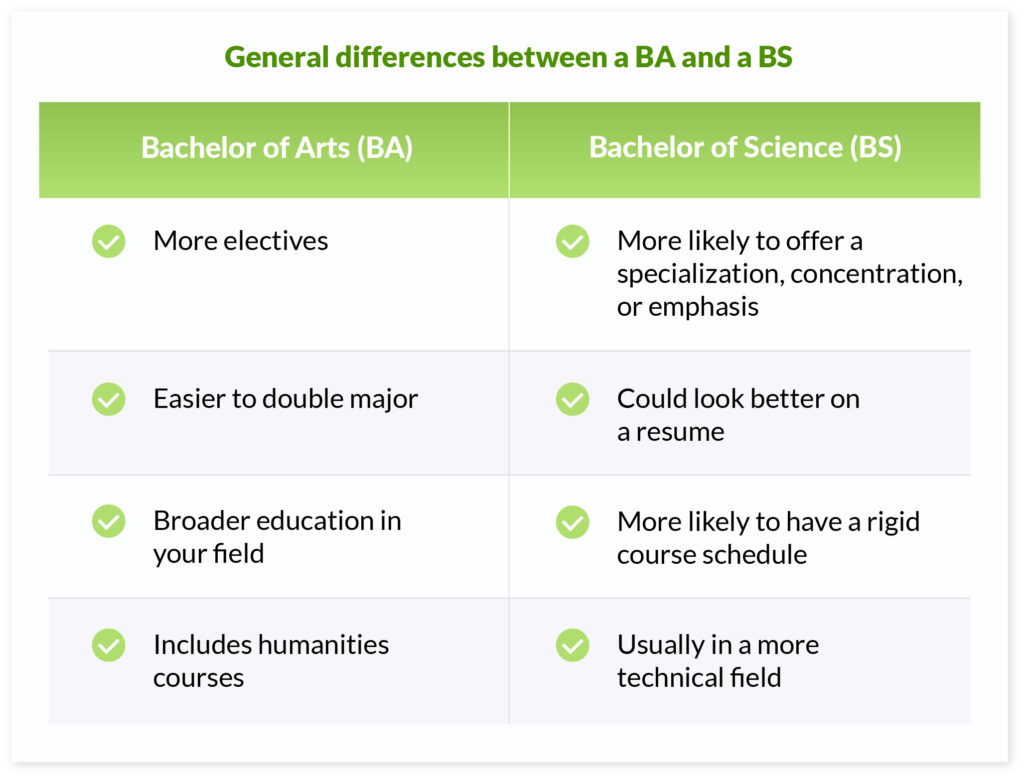
A Bachelor of Arts degree traditionally emphasizes a broader, more liberal arts-focused education. While a BA can be pursued in a technical field, it generally incorporates a wider range of humanities, social sciences, and arts subjects. The curriculum often prioritizes critical thinking, analytical reasoning, written and oral communication, and a deep understanding of human culture and societal structures.
Key Characteristics of a BA:
- Emphasis on Humanities and Social Sciences: BA programs typically require a substantial number of credit hours in subjects like literature, history, philosophy, sociology, psychology, and foreign languages. This exposure fosters a holistic understanding of the world and the people within it.
- Flexibility and Interdisciplinary Exploration: BA degrees often offer greater flexibility in choosing electives and minors, allowing students to explore interdisciplinary connections. This can be highly advantageous in the tech sector, where innovation often arises from the intersection of different fields.
- Strong Communication and Critical Thinking Skills: The coursework in a BA program rigorously trains students in articulating complex ideas, constructing persuasive arguments, and analyzing information from multiple perspectives. These soft skills are increasingly vital for roles that involve client interaction, team collaboration, and strategic decision-making in technology.
- Foundation for Human-Centric Tech Roles: For those interested in areas of technology that directly interact with people, such as user experience (UX) design, technical writing, product management requiring strong user empathy, or even ethical AI development, a BA can provide a robust foundation. It helps in understanding user needs, market dynamics, and the societal impact of technological advancements.
For individuals pursuing a BA with a tech focus, the degree doesn’t necessarily imply a lack of technical rigor. Instead, it suggests a curriculum that integrates technical subjects with a strong emphasis on their broader implications and human interface. For instance, a BA in Computer Science might include more courses on the philosophy of computing, the societal impact of technology, or even creative coding that blends technical skills with artistic expression.
The Bachelor of Science (BS): Deep Dive into Scientific Principles and Quantitative Analysis
In contrast, a Bachelor of Science degree is inherently rooted in the scientific method and quantitative analysis. These programs are designed to provide a more in-depth and specialized education in fields grounded in mathematics, natural sciences, and applied sciences. The curriculum is typically more focused on technical subjects, laboratory work, and problem-solving through empirical observation and data-driven approaches.
Key Characteristics of a BS:
- Focus on STEM Disciplines: BS programs are heavily concentrated in Science, Technology, Engineering, and Mathematics (STEM) fields. This includes subjects like physics, chemistry, biology, mathematics, computer science, engineering disciplines, and data science.
- Rigorous Scientific and Mathematical Training: A BS degree demands a strong foundation in calculus, linear algebra, statistics, and core scientific principles relevant to the chosen major. This equips graduates with the analytical tools necessary to tackle complex technical challenges.
- Emphasis on Problem-Solving and Empirical Methods: The coursework often involves extensive problem sets, laboratory experiments, and research projects that require students to apply theoretical knowledge to practical scenarios and derive solutions based on evidence.
- Direct Pathway to Technical Specialization: For careers that require a deep understanding of algorithms, data structures, programming paradigms, hardware architecture, or statistical modeling, a BS is often the preferred or even mandatory educational background. This is true for roles like software engineers, data scientists, cybersecurity analysts, network administrators, and AI researchers.
A BS degree in a technology-related field, such as Computer Science or Information Technology, will typically feature a more comprehensive array of programming languages, software development methodologies, database management systems, and theoretical computer science concepts. The emphasis is on building robust technical expertise and the capacity to innovate and solve intricate technical problems.
Navigating the Tech Landscape with a BA or BS
The choice between a BA and a BS degree in the context of a technology career is not a matter of one being definitively “better” than the other. Instead, it’s about understanding which degree path best aligns with your innate aptitudes, learning style, and long-term career objectives within the vast expanse of the tech industry. Both degrees offer valid and valuable pathways to successful and impactful careers.
BA in Tech: Cultivating Human-Centric Innovation and Strategic Thinking
While the stereotype might lean towards BS degrees for tech roles, a Bachelor of Arts with a concentration in a technology-related field can be an incredibly powerful asset. Graduates with a BA in areas like Computer Science, Information Systems, or Digital Media often possess a unique blend of technical literacy and exceptional soft skills.
Roles and Opportunities for BA Graduates in Tech:
- User Experience (UX) and User Interface (UI) Design: A BA in a related field can provide a strong foundation in understanding human behavior, psychology, and design principles, crucial for creating intuitive and engaging digital products. These roles require empathy, communication, and a deep understanding of user needs, all areas a BA often excels in.
- Product Management: Product managers bridge the gap between technical teams, marketing, and customers. A BA equips individuals with the communication, strategic thinking, and market understanding necessary to define product roadmaps, prioritize features, and ensure products meet user and business objectives.
- Technical Writing and Documentation: Clear, concise, and accurate technical documentation is vital for any software or hardware product. BA graduates with strong writing skills can excel in creating user manuals, API documentation, and knowledge base articles, making complex technical information accessible.
- Project Management in IT: Managing the lifecycle of technology projects requires strong organizational, communication, and leadership skills. A BA can foster these abilities, allowing graduates to effectively coordinate teams, manage resources, and ensure timely delivery of tech solutions.
- Ethical AI and Technology Policy: As artificial intelligence and other advanced technologies become more integrated into society, understanding their ethical implications and societal impact is paramount. BA graduates can contribute to developing responsible AI frameworks, technology policy, and digital ethics initiatives.
- Digital Marketing and Content Strategy: For tech companies, effectively communicating their value proposition to the market is crucial. BA graduates can leverage their understanding of communication, audience, and creative thinking to develop compelling marketing campaigns and content strategies.
The key takeaway for BA graduates entering the tech field is to highlight their transferable skills – critical thinking, problem-solving, communication, and adaptability – alongside any technical coursework or projects they’ve undertaken. Internships and portfolio development that showcase practical application of their knowledge are also essential.
BS in Tech: Engineering Solutions and Driving Technical Advancement
A Bachelor of Science degree is the traditional and often expected path for individuals aiming for highly technical roles in the technology sector. The rigorous scientific and mathematical training provides graduates with the deep theoretical knowledge and practical skills required to build, maintain, and innovate in technology.
Roles and Opportunities for BS Graduates in Tech:
- Software Development and Engineering: This is perhaps the most direct career path for BS graduates in Computer Science or Software Engineering. They are equipped to design, code, test, and deploy software applications, from mobile apps to complex enterprise systems.
- Data Science and Analytics: With the explosion of data, the demand for data scientists and analysts is at an all-time high. A BS in Data Science, Statistics, or Computer Science with a data focus provides the quantitative skills necessary to analyze large datasets, build predictive models, and extract actionable insights.
- Cybersecurity: Protecting digital assets and systems from threats is a critical function. BS graduates in Cybersecurity or Computer Science with a specialization in security are trained in network security, cryptography, vulnerability assessment, and incident response.
- Artificial Intelligence (AI) and Machine Learning (ML): The cutting edge of technology is driven by AI and ML. A BS with a strong mathematical and computational background is essential for developing and implementing AI algorithms, neural networks, and sophisticated machine learning models.
- Network Administration and Engineering: Maintaining and optimizing the infrastructure that powers our digital world falls to network professionals. A BS in Information Technology or Computer Engineering provides the knowledge of network protocols, hardware, and system architecture.
- Cloud Computing and DevOps: As businesses increasingly rely on cloud infrastructure, expertise in cloud platforms (AWS, Azure, GCP) and DevOps methodologies is in high demand. BS graduates can specialize in building and managing scalable, reliable cloud environments.
- Hardware Engineering and Embedded Systems: For those interested in the physical components of technology, a BS in Electrical Engineering or Computer Engineering is often the pathway to designing microprocessors, embedded systems, and other hardware.
BS graduates are generally expected to demonstrate proficiency in specific programming languages, technical methodologies, and the ability to solve complex technical puzzles. Their academic journey focuses on building a deep understanding of the underlying principles that govern technological systems.
Choosing Your Path: Aligning Degree with Aspirations
The decision between pursuing a BA or a BS degree in a technology-focused field is a significant one that warrants careful consideration. It’s a process of self-reflection, research into specific programs, and an honest assessment of your personal strengths and career ambitions.
Assessing Your Aptitudes and Interests
The first step in making an informed decision is to understand yourself. Are you drawn to the intricate logic of algorithms and the elegance of code, or are you more captivated by understanding human behavior and the societal implications of technology?
- If you thrive on logical problem-solving, abstract thinking, and enjoy mathematics and scientific inquiry, a BS program might be a natural fit. You likely enjoy dissecting complex systems, understanding cause-and-effect relationships, and finding empirical solutions.
- If you possess strong analytical and critical thinking skills, enjoy persuasive communication, have a keen interest in human behavior, and are adept at understanding complex social or cultural contexts, a BA program could be exceptionally rewarding. You may find yourself drawn to understanding why technology is developed and how it impacts people and society.
Consider the types of courses that genuinely excite you. Do you find yourself engrossed in discussions about ethics, philosophy, and human interaction, or are you more engaged by calculus, physics, and the intricacies of programming? Your genuine intellectual curiosity is a powerful indicator of the degree path that will lead to greater satisfaction and success.

Researching Program Curricula and University Offerings
It is crucial to move beyond general definitions and delve into the specifics of university programs. The titles “Bachelor of Arts” and “Bachelor of Science” can sometimes be misleading, and the actual coursework can vary significantly between institutions.
- Examine Course Requirements: Look closely at the required courses for each degree within a specific department. Does the BA program in Computer Science offer a strong theoretical foundation with opportunities for interdisciplinary exploration, while the BS program is intensely focused on advanced programming, algorithms, and systems design?
- Consider Specializations and Tracks: Many universities offer specialized tracks within their BA and BS programs. A BA in Information Technology might have a track in Digital Forensics, while a BS in Computer Science might offer a specialization in Robotics. These specializations can bridge the perceived gap between the two degree types.
- Look at Faculty Research: The research interests of faculty members often reflect the strengths and focus of a department. If faculty are heavily involved in areas like AI ethics, human-computer interaction, or the sociology of technology, a BA program might be more aligned. If they are focused on theoretical computer science, advanced algorithms, or high-performance computing, a BS program might be more suitable.
- Explore Internship and Co-op Opportunities: Investigate the types of internships and co-op programs that are typically available to graduates of each degree path. Do employers in your desired tech niche actively recruit from both BA and BS programs?
Some universities also offer hybrid degrees or allow for significant overlap, providing a blend of both scientific rigor and liberal arts perspectives. It is also worth noting that many successful tech professionals hold degrees in fields seemingly unrelated to technology, demonstrating that a specific degree title is not the sole determinant of career success. What truly matters is the development of core competencies, continuous learning, and the ability to adapt to the dynamic tech landscape.
In conclusion, both the Bachelor of Arts and the Bachelor of Science are respected undergraduate degrees that can serve as excellent springboards into the technology industry. The BA cultivates critical thinking, communication, and a deep understanding of human and societal contexts, making its graduates invaluable in human-centric tech roles. The BS, conversely, provides a rigorous scientific and quantitative foundation, preparing individuals for specialized technical roles and deep dives into technological innovation. By understanding their core differences and carefully aligning their choice with their individual strengths, interests, and career aspirations, prospective tech professionals can chart a course for a fulfilling and impactful journey in the ever-evolving world of technology.
aViewFromTheCave is a participant in the Amazon Services LLC Associates Program, an affiliate advertising program designed to provide a means for sites to earn advertising fees by advertising and linking to Amazon.com. Amazon, the Amazon logo, AmazonSupply, and the AmazonSupply logo are trademarks of Amazon.com, Inc. or its affiliates. As an Amazon Associate we earn affiliate commissions from qualifying purchases.