
In the modern digital era, the internet has transitioned from a luxury to an essential utility, comparable to electricity or water. Whether you are streaming high-definition content, conducting a remote business meeting, or managing a fleet of IoT devices, your gateway to this global network is the Internet Service Provider, or ISP. At its simplest level, an ISP is a company that provides individuals and organizations access to the internet and other related services. However, beneath this simple definition lies a complex web of infrastructure, protocols, and technical logistics that keep the world connected.

Understanding the mechanics of an ISP is crucial for navigating today’s technology landscape. As we move toward a more interconnected future defined by 5G, fiber-optic expansion, and satellite constellations, the role of the ISP is evolving. This article explores the technical foundations of ISPs, the different types of connections available, and the critical role they play in digital security and performance.
How ISPs Work: The Infrastructure of Connectivity
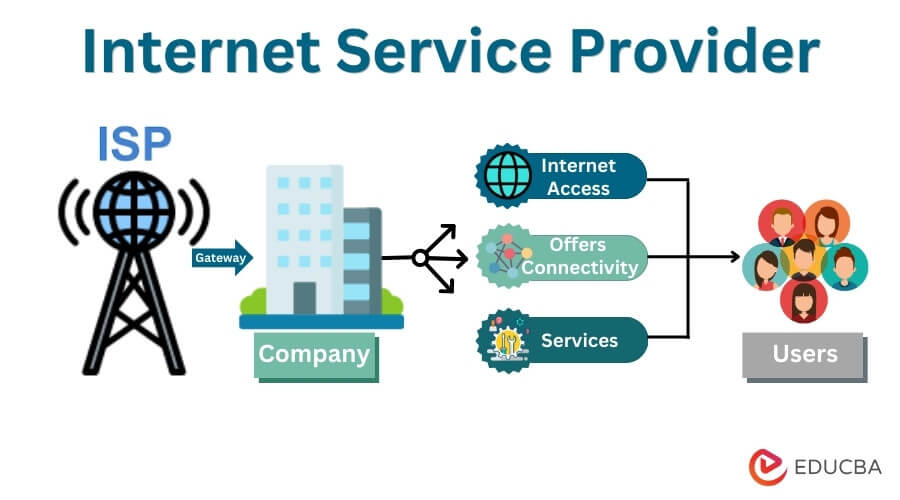
To understand what an ISP does, one must first understand that the “internet” is not a single entity but a massive network of networks. An ISP acts as the bridge between your local area network (LAN)—the devices in your home or office—and the global wide area network (WAN).
The Tiered Hierarchy of the Internet
The global internet infrastructure is organized into a three-tier hierarchy. At the top are Tier 1 ISPs. These are the “backbone” providers that own and operate massive networks of fiber-optic cables spanning continents and oceans. They do not pay for traffic exchange with each other; instead, they engage in “peering.”
Tier 2 ISPs are regional providers that connect Tier 1 networks to more localized areas. Finally, Tier 3 ISPs—the ones most consumers interact with—purchase bandwidth from Tier 2 providers to deliver “last-mile” connectivity to homes and small businesses. When you sign a contract for home internet, you are essentially paying for a seat on this global data highway.
Points of Presence (PoPs) and the Last Mile
The physical connection to your home begins at a Point of Presence (PoP). This is a localized access point where an ISP houses servers, routers, and switches. The connection from the PoP to your specific residence is known as the “last mile.” This is often the most expensive and complex part of the infrastructure to maintain, as it requires physical cabling (copper, coaxial, or fiber) to be laid to every individual building in a service area.
Types of ISP Connections: From Copper to Light
Not all internet connections are created equal. The technology used to deliver data to your doorstep determines your maximum speed, latency, and reliability. As technology has advanced, we have seen a shift from analog signals to high-speed digital transmissions.
DSL and Cable Broadband
Digital Subscriber Line (DSL) was the first major leap beyond dial-up. It uses existing copper telephone lines to transmit digital data. While more reliable than dial-up, DSL speeds are limited by the distance between the home and the ISP’s central office.
Cable Internet utilizes the same coaxial cables used for television. Because coaxial cables have a higher bandwidth capacity than telephone wires, cable internet offers significantly higher speeds. However, cable is a shared medium; during peak usage hours, your neighborhood’s collective data usage can lead to localized congestion and slower speeds.
Fiber-Optic Technology (FTTH)
The current gold standard for internet connectivity is Fiber-to-the-Home (FTTH). Instead of electrical signals over copper, fiber optics use pulses of light transmitted through glass strands. Fiber offers “symmetrical” speeds, meaning your upload speed is just as fast as your download speed—a critical feature for cloud computing and video conferencing. Furthermore, fiber is immune to electromagnetic interference, making it the most stable technology available today.
Satellite and Fixed Wireless
In rural or remote areas where laying cable is economically unfeasible, ISPs utilize wireless technologies. Satellite Internet (such as Starlink or HughesNet) involves beaming data from a ground station to a satellite in orbit, which then relays it to a dish at the user’s location. While revolutionary for remote access, satellite internet often suffers from high latency due to the immense distance the signal must travel.
Fixed Wireless, on the other hand, uses radio waves transmitted from local towers to a receiver on the customer’s roof. It provides a more stable, lower-latency alternative to satellite for those within line-of-sight of a provider’s tower.

The Essential Technical Roles of an ISP
An ISP provides much more than just a raw data pipe. They manage the complex protocols that allow your devices to communicate with billions of others across the globe.
IP Address Management
Every device on the internet needs a unique identifier, known as an Internet Protocol (IP) address. ISPs manage a pool of these addresses and assign them to customers. Most residential users are assigned a Dynamic IP, which may change periodically. Businesses often opt for a Static IP, which remains constant, allowing them to host servers or maintain secure VPN connections more reliably. Without the ISP’s automated Dynamic Host Configuration Protocol (DHCP) systems, the manual configuration of network addresses would be an impossible task for the average user.
DNS Hosting: The Internet’s Directory
When you type a URL like www.google.com into your browser, your computer doesn’t inherently know where that server is located. It needs to translate that human-readable name into a numerical IP address. ISPs provide Domain Name System (DNS) servers to handle these requests. While users can choose to use third-party DNS providers like Cloudflare or Google, the ISP’s default DNS is the primary mechanism that allows most users to navigate the web seamlessly.
Network Security and Filtering
In an era of increasing cyber threats, many ISPs have integrated security layers directly into their service. This includes firewalls at the network level, spam filtering for ISP-provided email accounts, and even DNS-level blocking of known malicious websites. While these are not a replacement for local antivirus software, they provide a “first line of defense” for the consumer.
Navigating Performance: Speed, Latency, and Bandwidth
When choosing or evaluating an ISP, consumers are often bombarded with marketing terms. To truly understand what you are paying for, you must distinguish between the various metrics of network performance.
Bandwidth vs. Speed
While often used interchangeably, these terms mean different things. Bandwidth is the maximum capacity of your connection—how much data can be sent at once (measured in Megabits per second, or Mbps). Speed is the actual rate at which data is transferred at a given moment. If you have a “1 Gigabit” plan but your internal Wi-Fi router is outdated, your bandwidth is high, but your perceived speed will be low.
The Critical Role of Latency
For many modern applications, latency (or “ping”) is more important than raw bandwidth. Latency is the delay between sending a request and receiving a response. In online gaming, stock trading, or VoIP calls, high latency causes “lag,” even if you have a high-bandwidth connection. Fiber-optic ISPs typically offer the lowest latency, while satellite providers offer the highest.
Data Caps and Throttling
To manage network congestion, some ISPs implement Data Caps, limiting the amount of data a user can consume in a month. If a user exceeds this limit, the ISP may charge overage fees or engage in Throttling—intentionally slowing down the connection speed. Tech-savvy consumers often look for “Unlimited” plans to avoid these constraints, especially in households with multiple 4K streaming devices.
The Future of ISPs: Privacy, Neutrality, and Innovation
As the internet becomes more integrated into our physical reality through the Internet of Things (IoT), the relationship between the user and the ISP is coming under greater scrutiny.
Net Neutrality and Traffic Shaping
One of the most debated topics in tech is Net Neutrality. This is the principle that ISPs should treat all data on the internet equally, without discriminating or charging differently based on user, content, website, or application. Without these protections, an ISP could theoretically “throttle” a competitor’s streaming service while prioritizing their own. Understanding your ISP’s stance on traffic shaping is vital for ensuring an open and fair digital experience.
Privacy and Data Collection
Because your ISP acts as the gateway for all your traffic, they have the technical ability to see which websites you visit (via DNS requests) and how much time you spend on them. In many jurisdictions, ISPs are permitted to sell anonymized metadata to advertisers. This has led to the rise of Virtual Private Networks (VPNs) and encrypted DNS protocols (DoH), which shield this information from the provider, adding a layer of privacy to the connection.
The Emergence of 5G and Decentralized Networks
The next frontier for ISPs involves the convergence of mobile and home internet. 5G Home Internet is already challenging traditional cable providers by offering high-speed broadband via cellular towers. Looking even further ahead, “Decentralized ISPs” are beginning to emerge. These use blockchain technology and mesh networking to allow individuals to share their own bandwidth with neighbors, potentially disrupting the traditional corporate ISP model.
In conclusion, an Internet Service Provider is far more than a monthly bill; it is the technical backbone of your digital life. From the physical glass fibers in the ground to the complex IP routing in the data center, the ISP facilitates every click, stream, and download. As technology continues to advance, the distinction between “being online” and “being offline” will continue to blur, making the ISP’s role in speed, security, and accessibility more critical than ever before.
aViewFromTheCave is a participant in the Amazon Services LLC Associates Program, an affiliate advertising program designed to provide a means for sites to earn advertising fees by advertising and linking to Amazon.com. Amazon, the Amazon logo, AmazonSupply, and the AmazonSupply logo are trademarks of Amazon.com, Inc. or its affiliates. As an Amazon Associate we earn affiliate commissions from qualifying purchases.