
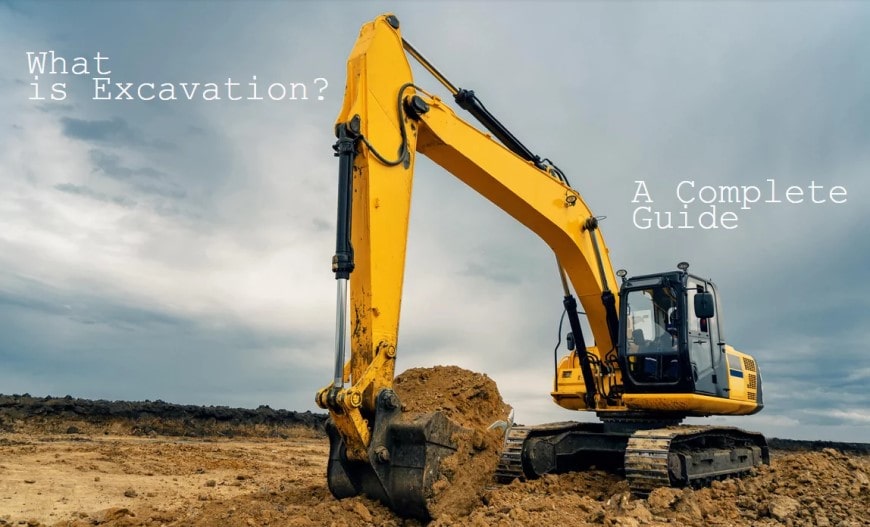
In the traditional sense, an excavation involves the physical removal of earth to uncover artifacts or create foundations. However, in the rapidly evolving landscape of information technology, the term has taken on a profound new meaning. A “digital excavation” is the systematic process of probing, extracting, and analyzing data buried within complex storage systems, legacy hardware, and encrypted environments.
Whether it is a cybersecurity team investigating a breach, a forensic analyst recovering “deleted” evidence for a legal case, or a data scientist mining deep-layered datasets for hidden insights, digital excavation is a cornerstone of modern tech operations. This article explores the methodologies, tools, and technological trends that define excavation in the digital age.

The Architecture of Digital Excavation: Understanding Data Stratigraphy
To understand how a digital excavation works, one must first view storage media through the lens of stratigraphy—the study of layers. In a physical dig, archaeologists look at soil strata; in tech, we look at file systems, metadata, and slack space.
The Virtual Layers: From Active Files to Unallocated Space
When a user “deletes” a file, the operating system rarely erases the actual bits of data. Instead, it simply marks the space as “unallocated,” telling the system it is free to be overwritten. A digital excavation focuses heavily on this unallocated space. By using low-level scanning techniques, technicians can bypass the operating system’s file manager to interact directly with the binary data on the disk. This allows for the recovery of “ghost” files that have been hidden for months or even years.
Metadata as Digital Stratigraphy
Metadata—data about data—acts as the chronological marker for any digital dig. Every file contains a history: when it was created, who modified it, and what devices it traveled through. Excavating this metadata allows tech professionals to reconstruct a timeline of events. In digital security, this is vital for “Root Cause Analysis,” enabling teams to see exactly how a piece of malware entered a system and what “soil” (directories) it disturbed along the way.
The Role of File Carving
File carving is perhaps the most literal form of digital excavation. When a file system’s directory entries are corrupted or missing, analysts use “signatures” or “magic numbers” (specific hex values at the start of files) to “carve” data out of a raw stream of bytes. This technique is essential when dealing with damaged hard drives or sophisticated anti-forensic measures that attempt to hide data by destroying the file table.
Essential Tools for the Modern Digital Archaeologist
Just as a field archaeologist requires specialized brushes and shovels, a digital excavator relies on a sophisticated tech stack. These tools are designed to interact with hardware at a level that standard consumer software cannot reach.
Forensic Imaging and Hardware Write-Blockers
The first rule of any excavation is “do no harm.” In tech, this means ensuring that the act of investigating a drive doesn’t change the data on it. Professionals use hardware write-blockers—physical devices that sit between the subject drive and the analysis computer. These devices allow data to flow out but prevent any signals from moving in. Once secured, tools like EnCase or FTK (Forensic Toolkit) create a bit-for-bit “image” or clone of the drive, ensuring the excavation happens on a perfect digital replica while the original remains pristine.
Open-Source Excavation: The Sleuth Kit and Autopsy
Not all high-level excavation requires expensive enterprise software. The Sleuth Kit (TSK) is a collection of command-line tools that allow for deep-dive analysis of volume and file systems. Its graphical interface, Autopsy, has become an industry standard for digital investigators. These tools allow users to search for keywords, extract web artifacts (like browser history and cookies), and visualize communication patterns across a network—all essential components of a thorough data excavation.
Hex Editors and Low-Level Analyzers
For the most granular digs, tech professionals turn to hex editors like HxD or 010 Editor. These tools allow an analyst to see the raw hexadecimal code of a file. When a piece of software is behaving like a “black box,” or when a file is partially corrupted, a hex editor allows the excavator to manually reconstruct the data or identify hidden “payloads” buried within benign-looking code.

The Lifecycle of a Data Excavation Project
A digital excavation is not a random search; it is a disciplined, multi-stage process that ensures the integrity and usability of the discovered information.
Phase 1: Preservation and Seizure
Before the dig begins, the environment must be stabilized. In a corporate tech setting, this might involve isolating a server from the network to prevent remote wiping commands. In a mobile forensic setting, it involves placing a smartphone in a Faraday bag to block all incoming signals. Preservation ensures that the digital “site” remains exactly as it was at the moment of discovery.
Phase 2: Reconstruction and Sifting
Once the data is imaged, the reconstruction begins. This involves reassembling fragmented files and decrypting protected volumes. Much like piecing together a broken vase, analysts use software to find the “edges” of data fragments and link them back together. During the sifting process, automated filters are used to remove “known-good” files (like standard Windows system files) so the excavator can focus exclusively on unique, user-created data.
Phase 3: Analysis and Reporting
The final stage of the excavation is turning raw data into an insightful narrative. This requires a deep understanding of digital behavior. Why was this specific folder encrypted? Why did the user attempt to overwrite this sector of the drive? Professional excavators produce reports that translate complex binary findings into actionable tech intelligence, whether for a boardroom presentation or a courtroom testimony.
Emerging Trends: AI and the Future of Deep Data Recovery
The volume of data created globally is expanding exponentially, making traditional manual excavation nearly impossible. The future of this field lies in automation and intelligence.
AI-Driven Pattern Recognition
Modern excavations often involve petabytes of data. Artificial Intelligence and Machine Learning (ML) are now being used to recognize patterns that a human eye would miss. For example, AI can scan millions of images to find specific objects or use Natural Language Processing (NLP) to identify “sentiment shifts” in thousands of leaked emails. This “Automated Excavation” allows tech teams to find the “needle in the haystack” in minutes rather than months.
Cloud-Native Excavation and Virtual Environments
As businesses move away from physical hardware, excavation is moving to the cloud. “Cloud Forensics” involves excavating data from virtual machines (VMs) and containers (like Docker or Kubernetes). This presents a unique challenge: the data is no longer on a physical disk but is spread across multiple servers in a data center. Tech professionals are developing new protocols for “Live Excavation,” where data is captured from a running system’s RAM before it vanishes when the instance is shut down.
The Challenge of Modern Encryption
While excavation technology improves, so does the “rock” we have to dig through. Modern end-to-end encryption (E2EE) and hardware-backed security (like Apple’s Secure Enclave) make traditional data recovery increasingly difficult. The next generation of digital excavation will likely focus on “side-channel analysis” and advanced decryption algorithms, as the tech community continues the perpetual arms race between data privacy and data discovery.
Conclusion: The Value of Digging Deeper
In the world of technology, an excavation is far more than a simple recovery mission. It is a vital methodology for maintaining security, ensuring legal accountability, and unlocking the hidden potential of big data. By understanding the layers of digital storage, utilizing professional-grade tools, and following a disciplined process, tech experts can uncover truths that were meant to stay buried.
As we move further into a data-centric future, the ability to perform a precise, ethical, and thorough digital excavation will remain one of the most highly-valued skills in the tech industry. Whether it’s protecting a brand from a cyber threat or recovering lost intellectual property, knowing how to dig into the bits and bytes is the key to mastering the digital landscape.
aViewFromTheCave is a participant in the Amazon Services LLC Associates Program, an affiliate advertising program designed to provide a means for sites to earn advertising fees by advertising and linking to Amazon.com. Amazon, the Amazon logo, AmazonSupply, and the AmazonSupply logo are trademarks of Amazon.com, Inc. or its affiliates. As an Amazon Associate we earn affiliate commissions from qualifying purchases.