
The modern automobile is a marvel of engineering, a complex symphony of mechanical and electronic components working in harmony to deliver performance, efficiency, and safety. At the heart of this intricate system lies a crucial, yet often invisible, component: the Electronic Control Unit, commonly known as the ECU. While the term might sound esoteric to the average driver, understanding what an ECU is and what it does is fundamental to grasping the technological advancements that have transformed vehicles into sophisticated, data-driven machines. Far from being a single entity, an ECU is, in fact, a broad term encompassing a network of specialized computers, each tasked with managing a specific function or set of functions within the car.
The ECU: The Brains Behind the Operation
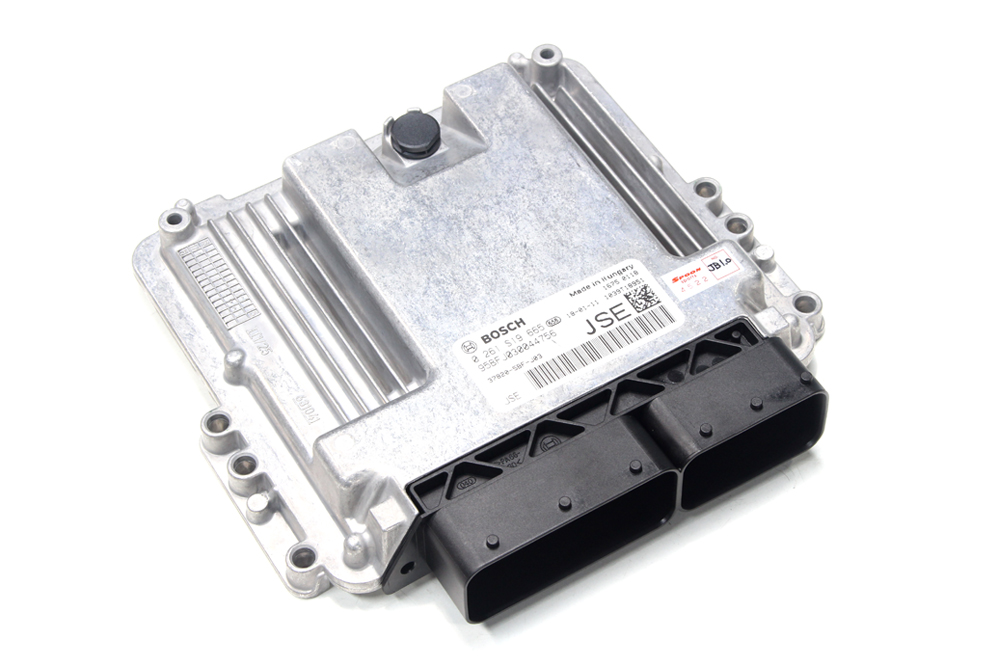
At its core, an ECU is a small, powerful computer responsible for controlling a specific subsystem in a vehicle. Think of it as a dedicated mini-processor, much like the processors in your home computer or smartphone, but specifically programmed and optimized for its automotive role. These units are the unseen conductors of your car’s orchestra, receiving data from a multitude of sensors, processing that information according to pre-programmed algorithms, and then sending commands to actuators to adjust various vehicle functions. The proliferation of ECUs has been a key driver of automotive innovation, enabling features that were once the stuff of science fiction, from sophisticated fuel injection systems and anti-lock brakes to advanced driver-assistance systems (ADAS) and autonomous driving capabilities.
The Evolution from Carburetors to Computer Control
The journey of the ECU is intrinsically linked to the evolution of the automobile itself. In the early days of motoring, vehicles relied on purely mechanical systems. Carburetors, for example, were responsible for mixing fuel and air, a process that was often imprecise and highly dependent on environmental conditions. Ignition systems were also mechanical, relying on points and condensers that required regular adjustment. The introduction of electronic fuel injection (EFI) in the mid-20th century marked a significant turning point. EFI systems, controlled by early forms of ECUs, offered vastly improved fuel efficiency and reduced emissions compared to their carburetor predecessors. This was a paradigm shift, moving away from purely mechanical regulation to electronically controlled precision.
The Growing Complexity: A Network of Specialized Computers
The term “ECU” is often used as an umbrella term, but a modern vehicle typically contains not one, but many ECUs, each specializing in a particular area. This distributed approach allows for more efficient processing and specialized control. Here are some of the most common types of ECUs you’ll find in a car:
Engine Control Module (ECM)
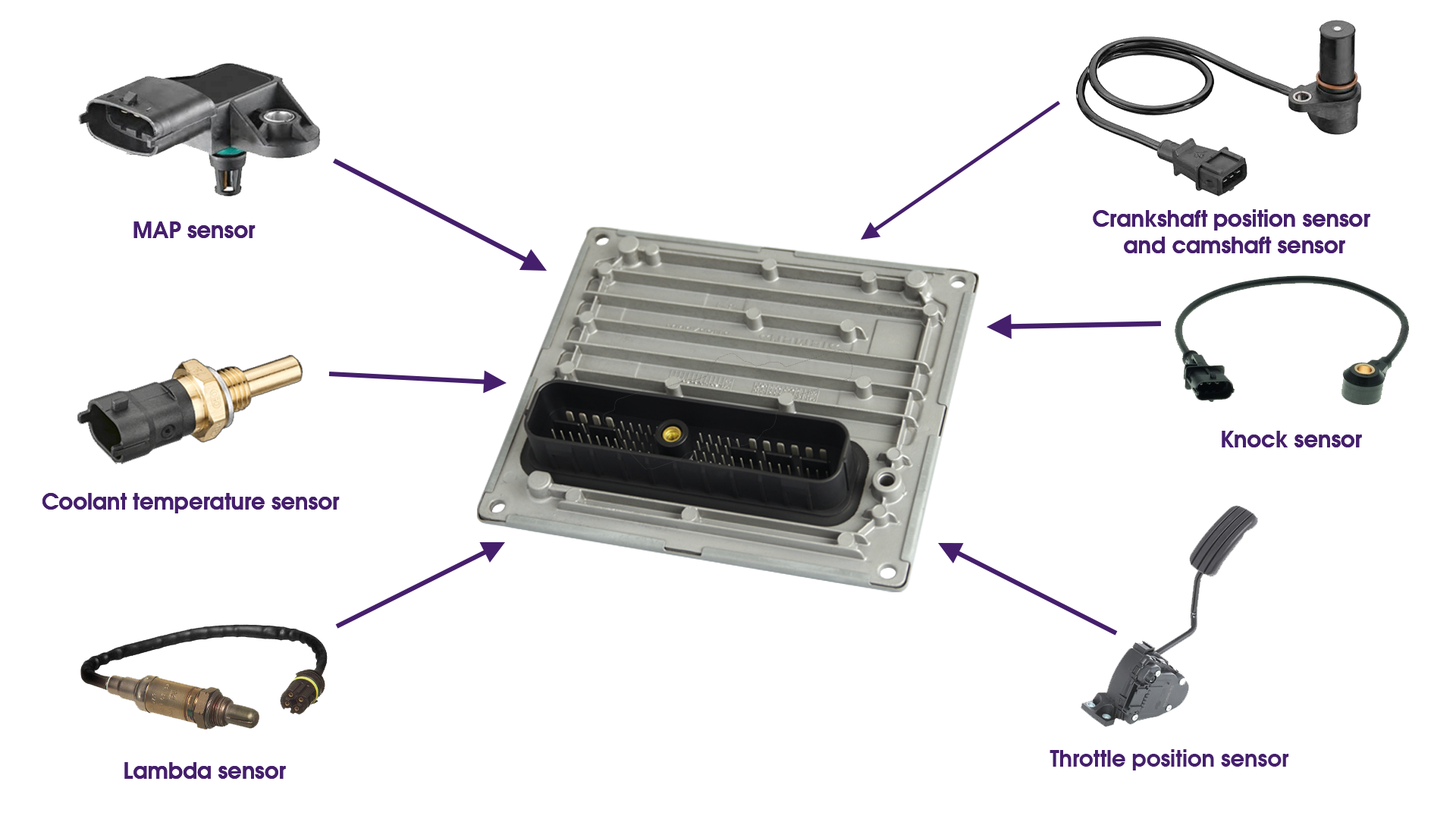
Often considered the most prominent ECU, the Engine Control Module (ECM) is dedicated to managing the engine’s operation. It receives data from numerous sensors, including those that measure engine speed (crankshaft position sensor), engine temperature (coolant temperature sensor), manifold air pressure (MAP sensor), airflow (mass airflow sensor or MAF), and oxygen levels in the exhaust (oxygen sensor or O2 sensor). Based on this data, the ECM precisely controls fuel injection, ignition timing, and idle speed to optimize power, fuel economy, and emissions. It’s the primary guardian of your engine’s health and performance.
Transmission Control Module (TCM)
For vehicles equipped with automatic transmissions, the Transmission Control Module (TCM) plays a vital role. It monitors factors like vehicle speed, engine load, throttle position, and gear selection to determine the optimal time to shift gears. The TCM ensures smooth gear changes, maximizes fuel efficiency, and prevents damage to the transmission by controlling hydraulic pressure within the gearbox. In some modern vehicles, the TCM might be integrated with the ECM into a single Powertrain Control Module (PCM), which manages both the engine and transmission for even greater optimization.
Body Control Module (BCM)
The Body Control Module (BCM) oversees a wide array of non-powertrain related functions, often referred to as “comfort and convenience” features. This includes controlling interior and exterior lighting, power windows, power locks, windshield wipers, sunroof operation, alarm systems, and keyless entry. The BCM acts as a central hub for these diverse systems, managing their interactions and ensuring they operate as intended. Its role is crucial in providing the user-friendly experience that drivers expect from modern vehicles.
Anti-lock Braking System (ABS) Module
Safety is paramount, and the Anti-lock Braking System (ABS) module is a critical safety component. It monitors wheel speed sensors to detect when a wheel is about to lock up during braking. If lock-up is imminent, the ABS module rapidly modulates the brake pressure to individual wheels, preventing skidding and allowing the driver to maintain steering control. This technology has significantly improved vehicle safety, especially in emergency braking situations.
Other Specialized ECUs
The list of specialized ECUs extends far beyond these common examples. Vehicles today can feature:
- Airbag Control Module (ACM): Manages the deployment of airbags in a collision.
- Power Steering Control Module: Regulates the assistance provided by the power steering system.
- Instrument Cluster Module: Controls the display of information on the dashboard, such as speed, fuel level, and warning lights.
- Infotainment System Module: Manages the car’s audio, navigation, and communication systems.
- Advanced Driver-Assistance Systems (ADAS) Modules: These are increasingly common and can include modules for adaptive cruise control, lane keeping assist, automatic emergency braking, and blind-spot monitoring. As vehicles move towards greater automation, the complexity and number of these ADAS ECUs will only continue to grow.
How ECUs Communicate and Process Information
The sophisticated functionality of modern vehicles relies heavily on the seamless communication between these various ECUs. This communication isn’t a random affair; it’s orchestrated through a dedicated in-vehicle network.
The CAN Bus: The Backbone of Automotive Communication
The most prevalent communication protocol used by ECUs is the Controller Area Network (CAN) bus. Developed by Bosch in the 1980s, the CAN bus is a robust and efficient serial communication protocol that allows multiple microcontrollers and devices to communicate with each other without a host computer. In a car, the CAN bus acts like a digital nervous system, enabling ECUs to exchange information rapidly and reliably. This allows, for example, the ABS module to communicate wheel speed data to the ECM, which might use that information to adjust engine power during braking events, or for the instrument cluster to receive speed data from the ECM or ABS module. The CAN bus is crucial for synchronizing the actions of different systems and enabling complex, integrated functionalities.
Sensors: The Eyes and Ears of the ECUs
For an ECU to make informed decisions, it needs data. This data is gathered by a vast array of sensors strategically placed throughout the vehicle. These sensors are the “eyes and ears” of the ECUs, constantly monitoring various physical parameters and converting them into electrical signals that the ECUs can understand.
Types of Automotive Sensors
The diversity of sensors is astounding. Some of the most critical include:
- Temperature Sensors: Measure coolant temperature, intake air temperature, and oil temperature.
- Pressure Sensors: Detect oil pressure, fuel pressure, and manifold absolute pressure.
- Position Sensors: Monitor the position of throttle plates, camshafts, and crankshafts.
- Speed Sensors: Measure wheel speed and vehicle speed.
- Flow Sensors: Determine the rate of airflow into the engine (MAF sensor) or the volume of fuel injected.
- Oxygen Sensors (O2 Sensors): Analyze the oxygen content in exhaust gases to fine-tune the air-fuel mixture.
- Knock Sensors: Detect engine knocking or pinging, allowing the ECU to adjust ignition timing to prevent damage.
- Impact Sensors: Detect collisions for airbag deployment.
The data from these sensors is the raw material from which ECUs derive their operational intelligence. The accuracy and reliability of these sensors are paramount to the proper functioning of the entire vehicle.
Actuators: The Hands of the ECUs
Once an ECU processes the sensor data and determines the necessary action, it sends commands to actuators. Actuators are the “hands” of the ECUs, translating the electronic commands into physical actions that control various vehicle components.
Examples of Actuators
- Fuel Injectors: Precisely spray fuel into the engine cylinders.
- Ignition Coils: Generate the spark that ignites the fuel-air mixture.
- Throttle Body Actuator: Controls the amount of air entering the engine, regulating engine speed.
- Solenoid Valves: Used in transmissions and braking systems to control fluid flow and pressure.
- Electric Motors: Power windows, seats, and other motorized components.
- Brake Caliper Actuators: In advanced braking systems, these can precisely control brake pressure.
The intricate dance between sensors, ECUs, and actuators is what allows a car to perform its myriad functions with precision and efficiency.
Diagnosing and Maintaining ECUs
The advanced nature of ECUs, while bringing immense benefits, also introduces new complexities when it comes to troubleshooting and repair. Unlike purely mechanical systems, diagnosing issues within an ECU often requires specialized knowledge and equipment.
The Role of On-Board Diagnostics (OBD)
To address this, automotive manufacturers have developed On-Board Diagnostics (OBD) systems. OBD is a standardized system that allows for self-diagnosis and reporting of vehicle malfunctions. The OBD system consists of a diagnostic port (typically found under the dashboard), various sensors that monitor system performance, and a set of standardized diagnostic trouble codes (DTCs).
Understanding Diagnostic Trouble Codes (DTCs)
When an ECU detects a problem, it stores a corresponding DTC. These codes are alphanumeric identifiers that point to the specific area of the vehicle experiencing an issue. Mechanics use an OBD-II scanner (the current standard) to connect to the diagnostic port and retrieve these DTCs. The scanner then displays the codes, which can be cross-referenced in a database to identify the faulty component or system. For example, a P0300 code might indicate a “random/multiple cylinder misfire detected,” prompting further investigation into spark plugs, fuel injectors, or ignition coils.
The Importance of Specialized Tools and Expertise
While OBD systems provide valuable diagnostic information, diagnosing and repairing ECU-related issues often go beyond simply reading codes. Complex problems might require:
- Advanced Diagnostic Scanners: These can provide more in-depth data streams, perform actuator tests, and even reprogram ECUs.
- Oscilloscopes: Used to analyze electrical signals from sensors and actuators in detail.
- Wiring Diagrams: Essential for tracing electrical connections and identifying faults in the vehicle’s wiring harness.
- Software Updates and Reprogramming: ECUs often receive software updates from manufacturers to improve performance, fix bugs, or introduce new features. Sometimes, a faulty ECU might need to be reprogrammed or even replaced.
- Expert Knowledge: Technicians with specialized training in automotive electronics are crucial for correctly diagnosing and repairing ECU issues. Incorrect diagnosis or repair can lead to further damage and costly repairs.
The Future of ECUs: Towards Integrated and Intelligent Systems
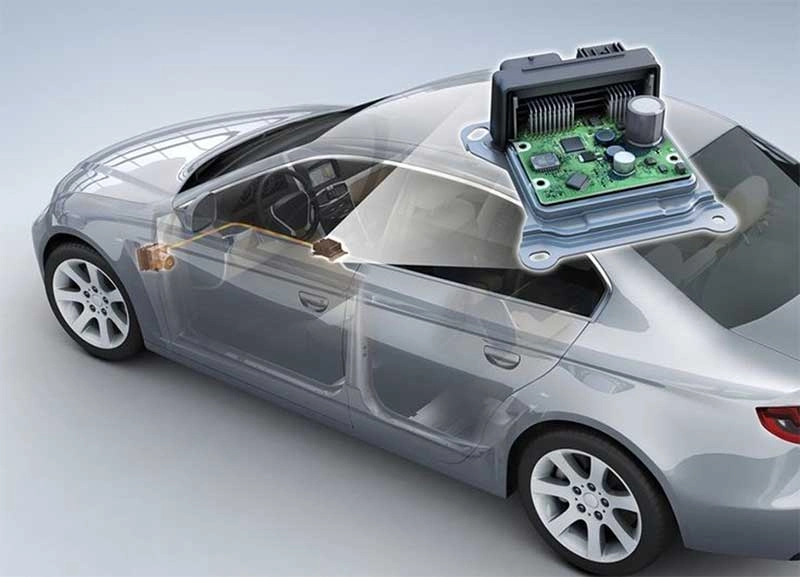
The evolution of the ECU is far from over. As vehicles become more sophisticated, with increasing levels of autonomy and connectivity, the role and complexity of ECUs will continue to expand. We are witnessing a trend towards:
- Centralized Computing Architectures: Moving away from the multitude of distributed ECUs towards more powerful, centralized computing platforms that can handle a wider range of tasks. This can lead to more efficient data processing and simplified vehicle architectures.
- Artificial Intelligence and Machine Learning: ECUs are increasingly incorporating AI and machine learning algorithms to enhance predictive maintenance, optimize driving behavior, and improve the responsiveness of advanced features.
- Over-the-Air (OTA) Updates: Similar to smartphones, vehicles are beginning to receive software updates wirelessly, allowing manufacturers to improve performance, fix bugs, and add new features without requiring a visit to a dealership.
- Increased Interconnectivity: ECUs will play a vital role in enabling vehicle-to-vehicle (V2V) and vehicle-to-infrastructure (V2I) communication, paving the way for smarter traffic management and enhanced safety.
In conclusion, the ECU, in its many forms, is the silent workhorse of the modern automobile. It’s the technological backbone that enables everything from basic engine function to the most advanced driver-assistance systems. Understanding the fundamental role of these electronic brains is not just about comprehending car technology; it’s about appreciating the incredible engineering that makes our daily commutes safer, more efficient, and more enjoyable. As technology continues its relentless march forward, the ECU will undoubtedly remain at the forefront of automotive innovation, shaping the future of transportation in ways we are only just beginning to imagine.
aViewFromTheCave is a participant in the Amazon Services LLC Associates Program, an affiliate advertising program designed to provide a means for sites to earn advertising fees by advertising and linking to Amazon.com. Amazon, the Amazon logo, AmazonSupply, and the AmazonSupply logo are trademarks of Amazon.com, Inc. or its affiliates. As an Amazon Associate we earn affiliate commissions from qualifying purchases.