
An Advance Parole (AP) document is a crucial document for certain non-citizens present in the United States who wish to travel abroad and re-enter the U.S. without jeopardizing their pending immigration applications. It serves as a pre-approved authorization for reentry, allowing individuals to leave the U.S. and return to continue their adjustment of status process or other immigration benefits. Understanding the intricacies of Advance Parole is vital for eligible individuals to navigate international travel and maintain their immigration journey effectively.
Understanding the Purpose and Eligibility for Advance Parole
Advance Parole is not a discretionary travel document in the traditional sense; rather, it is a permission slip from U.S. Citizenship and Immigration Services (USCIS) that allows a foreign national to leave the United States and return while a specific immigration benefit application is pending. Its primary purpose is to enable individuals to attend to personal emergencies, business needs, or educational opportunities abroad without abandoning their pending applications.
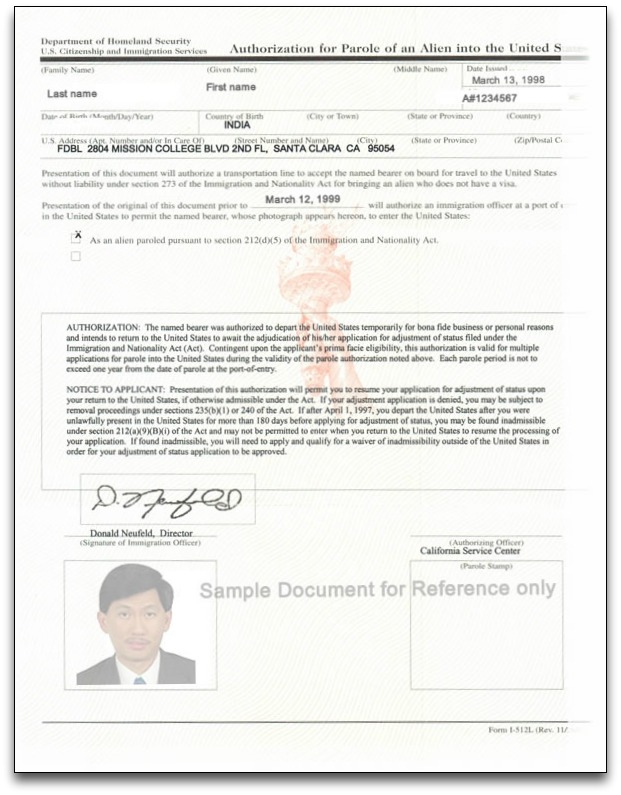
The Core Functionality of Advance Parole
At its heart, Advance Parole prevents the abandonment of a pending immigration application. For many individuals in the U.S. on a temporary visa, leaving the country without authorization would be considered an “unlawful departure” and would automatically terminate their ability to adjust their status within the U.S. if they were seeking to do so. An Advance Parole document circumvents this issue. It essentially signals to U.S. Customs and Border Protection (CBP) officers at the port of entry that the individual has permission to re-enter the U.S. and that their pending application remains active.
Who is Eligible to Apply for Advance Parole?
Eligibility for Advance Parole is not universal and is tied to specific immigration statuses and pending applications. The most common scenarios where Advance Parole is sought include:
-
Individuals with Pending Adjustment of Status (AOS) Applications: This is perhaps the most frequent use case for Advance Parole. If a foreign national has filed Form I-485, Application to Register Permanent Residence or Adjust Status, and their application is pending, they can apply for Advance Parole to travel abroad. This is particularly important if they need to travel for family emergencies, critical medical treatments, or important business engagements. Without AP, travel would likely result in the termination of their AOS application.
-
Refugees and Asylees: Individuals who have been granted refugee or asylum status in the U.S. and wish to travel abroad may need Advance Parole to re-enter. This allows them to visit their home countries or other destinations without relinquishing their protected status.
-
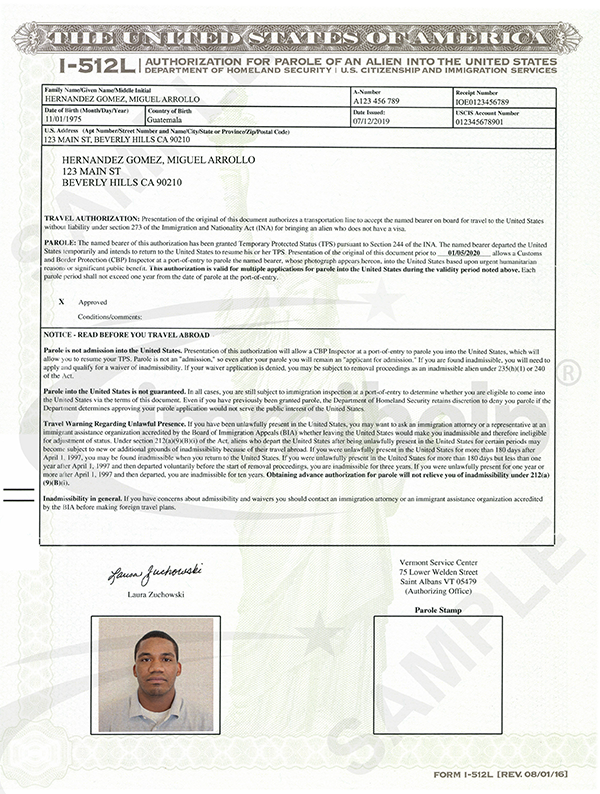
Temporary Protected Status (TPS) Holders: While TPS holders often have separate travel authorization documents, in some cases, Advance Parole might be applicable for specific travel needs not covered by their TPS authorization.
-
Certain Other Humanitarian or Urgent Humanitarian Reasons: USCIS may, at its discretion, grant Advance Parole for compelling humanitarian reasons, even if not directly tied to a pending AOS application, though these are less common.
It is crucial to note that simply being in the U.S. with a valid visa does not automatically grant eligibility for Advance Parole. The eligibility is contingent upon the specific immigration benefit being sought and its current processing stage.
The Application Process for an Advance Parole Document
Applying for an Advance Parole document involves submitting a specific form to USCIS and waiting for their approval. The process requires careful attention to detail to ensure a smooth experience.
Filing Form I-131, Application for Travel Document
The primary form used to apply for an Advance Parole document is Form I-131, Application for Travel Document. This form is used for various travel documents, including Re-entry Permits, Refugee Travel Documents, and Advance Parole. When filing for Advance Parole, applicants must indicate this on the form and provide specific information related to their pending immigration application.
Required Supporting Documentation
Alongside Form I-131, applicants must submit several supporting documents to USCIS. These typically include:
- Proof of Identity: A copy of the applicant’s passport bio-page.
- Proof of Status: Documentation related to the pending immigration application (e.g., receipt notice for Form I-485, copy of EAD if applicable).
- Photographs: Two recent passport-style photographs.
- Fee: The required filing fee for Form I-131, which can vary, so checking the latest USCIS fee schedule is essential.
- Statement of Need (in some cases): While not always mandatory for every AOS applicant, providing a brief explanation of the need for travel can sometimes be beneficial, especially if the travel is for a specific urgent purpose. However, for most AOS applicants, the mere fact of having a pending I-485 is sufficient justification.
Processing Times and Approval
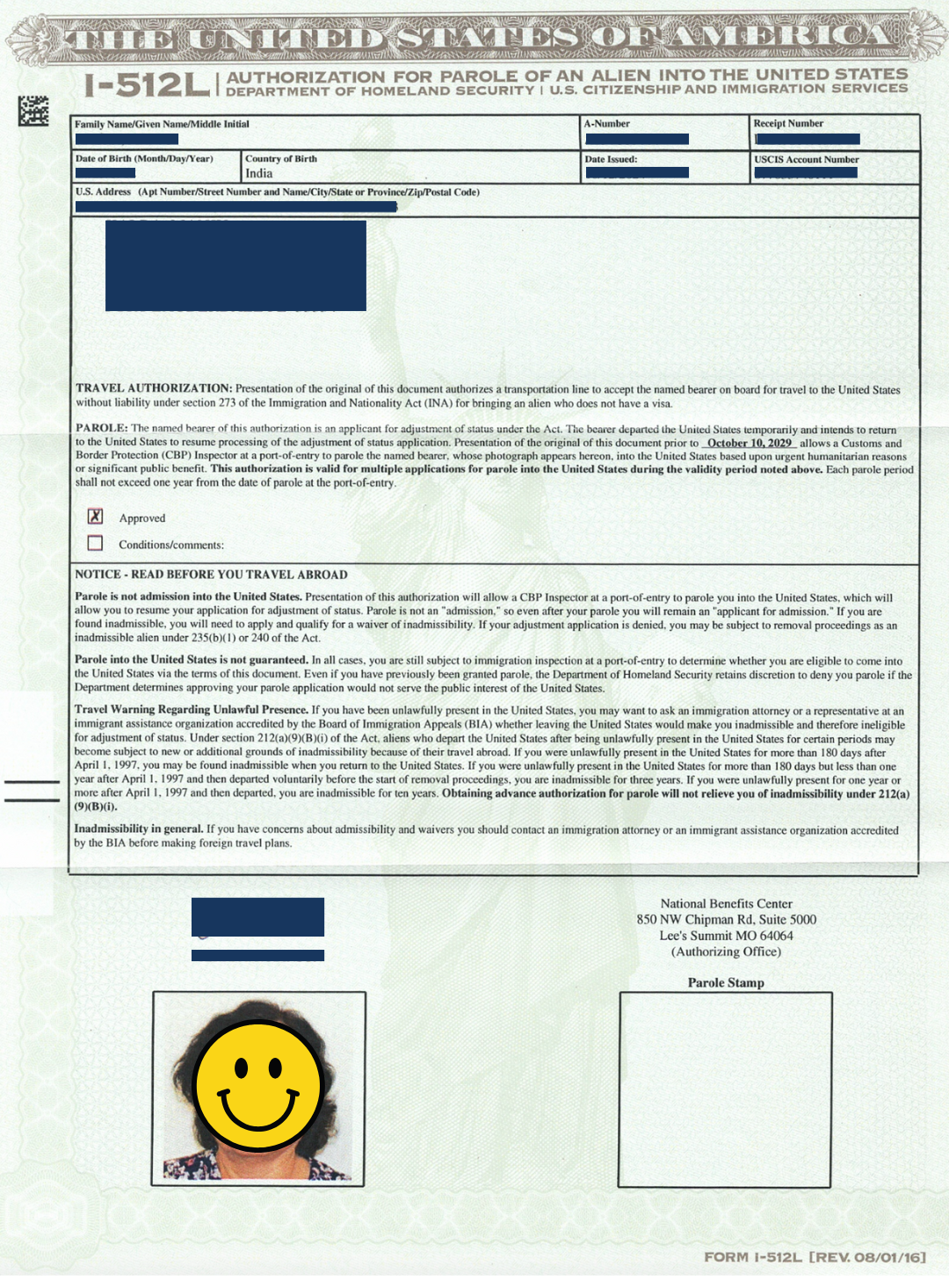
USCIS processing times for Advance Parole can vary significantly depending on the service center, current workload, and any specific complexities of the application. Applicants can check the estimated processing times on the USCIS website. Once approved, USCIS will issue an Advance Parole document, typically a card or a printed document attached to the applicant’s passport, which must be presented to CBP upon re-entry into the United States. It is important to note that the approval of an Advance Parole document does not guarantee admission to the U.S.; the final decision rests with the CBP officer at the port of entry.
Navigating International Travel with an Advance Parole Document
Once an Advance Parole document is obtained, individuals can plan their international travel with a degree of certainty. However, understanding how to use the document and the potential implications of travel is crucial.
When to Travel: Timing is Key
The optimal time to travel with an Advance Parole document is after it has been approved and received. Traveling before approval will likely lead to being denied re-entry. It’s also important to be aware of the validity period of the Advance Parole document. Typically, it is issued for a specific period, often one year, and can be renewed if the underlying immigration application remains pending.
Furthermore, individuals should be mindful of their pending immigration applications. For example, if an individual is applying for adjustment of status and has received their Advance Parole, traveling abroad is generally permissible. However, if the underlying application for adjustment of status is denied while the individual is abroad, they may not be able to re-enter the U.S.
What to Expect at the Port of Entry
Upon returning to the United States, the individual must present their valid Advance Parole document and their passport to the CBP officer at the port of entry. The CBP officer will review the documents, verify the applicant’s identity, and confirm their admissibility. They may ask questions about the purpose of the trip, the length of stay abroad, and the applicant’s current immigration status and pending applications.
It is imperative to be truthful and cooperative during this process. The CBP officer has the ultimate authority to admit or deny entry. While Advance Parole is a strong indicator of permission to re-enter, it is not an absolute guarantee. Factors such as changes in the applicant’s immigration status or any new derogatory information discovered could impact the CBP officer’s decision.
Potential Risks and Considerations
While Advance Parole offers significant flexibility, there are potential risks and considerations:
-
Abandonment of Application: As mentioned, if the underlying immigration application that justified the Advance Parole is denied while the individual is outside the U.S., re-entry can be problematic, and the application will be considered abandoned.
-
Entry Refusal: Although rare for those with valid AP and no significant issues, CBP officers have the discretion to deny entry if they have concerns about inadmissibility or security.
-
Length of Travel: While not explicitly limited by the AP document itself, excessively long absences from the U.S. while an AOS application is pending could, in some rare instances, raise questions about the applicant’s intent to reside in the U.S. permanently.
-
Re-entry Permits vs. Advance Parole: For individuals who anticipate being outside the U.S. for an extended period (e.g., more than one year), a Re-entry Permit might be a more suitable travel document than Advance Parole. Re-entry permits are typically valid for up to two years and are specifically designed for longer absences without abandoning pending applications.
-
Impact on Future Applications: While generally not an issue, it’s always prudent to maintain a clean record. Any negative interactions with law enforcement or immigration authorities while abroad could potentially affect future immigration applications.
Specific Scenarios and Nuances of Advance Parole
Advance Parole can be particularly critical in specific situations, highlighting its importance in the U.S. immigration system.
Advance Parole for Family Emergencies
One of the most common and compelling reasons for seeking Advance Parole is to attend to family emergencies abroad. This could include the serious illness or death of a parent, spouse, child, or sibling. The ability to travel to be with loved ones during difficult times is a significant benefit of having an Advance Parole document. However, it’s important to apply for and receive the AP before making travel arrangements, as emergencies can be unpredictable.
Advance Parole for Educational or Business Opportunities
In some instances, individuals with pending immigration applications may have opportunities for short-term educational programs or critical business meetings abroad. If these opportunities are deemed beneficial or necessary and do not interfere with the immigration process, Advance Parole can facilitate such travel. However, applicants should carefully consider the duration and nature of such trips to ensure they do not inadvertently create issues with their pending applications. For instance, enrolling in a full-time degree program abroad while an AOS is pending might be viewed as a lack of intent to reside permanently in the U.S.
Advance Parole for Humanitarian Reasons
USCIS may grant Advance Parole on humanitarian grounds for individuals needing to seek medical treatment outside the U.S. or to assist others in dire humanitarian situations. These applications are often reviewed on a case-by-case basis and require substantial evidence to support the humanitarian claim.
Advance Parole for Asylum Applicants
Asylum applicants in the U.S. who are awaiting a decision on their case may also be eligible for Advance Parole, allowing them to travel abroad. This can be particularly important if they need to attend to matters in their home country or if they have urgent reasons to leave the U.S. temporarily. However, the rules and implications for asylum applicants can be more complex, and seeking legal counsel is highly recommended.
In conclusion, an Advance Parole document is a vital tool for many non-citizens present in the United States who have pending immigration applications. It provides the necessary authorization to travel abroad and re-enter the U.S. without abandoning their pursuit of permanent residency or other immigration benefits. Understanding the eligibility criteria, the application process, and the rules for international travel is paramount to effectively utilizing this document and maintaining one’s immigration journey. Careful planning and adherence to USCIS guidelines will ensure a smoother experience for those who rely on Advance Parole.
aViewFromTheCave is a participant in the Amazon Services LLC Associates Program, an affiliate advertising program designed to provide a means for sites to earn advertising fees by advertising and linking to Amazon.com. Amazon, the Amazon logo, AmazonSupply, and the AmazonSupply logo are trademarks of Amazon.com, Inc. or its affiliates. As an Amazon Associate we earn affiliate commissions from qualifying purchases.