
The term “tenterhook” might conjure images of old workshops or a bygone era of textile production. While its origins are indeed rooted in history, the principles and applications of the tenterhook, and the broader concept of tentering, have surprisingly persistent relevance, even as we navigate the complexities of modern manufacturing and technology. To understand what a tenterhook is, we must delve into its function, its historical context, and how its underlying principles inform various technological advancements we see today.
The Tenterhook: A Tool for Precision and Control
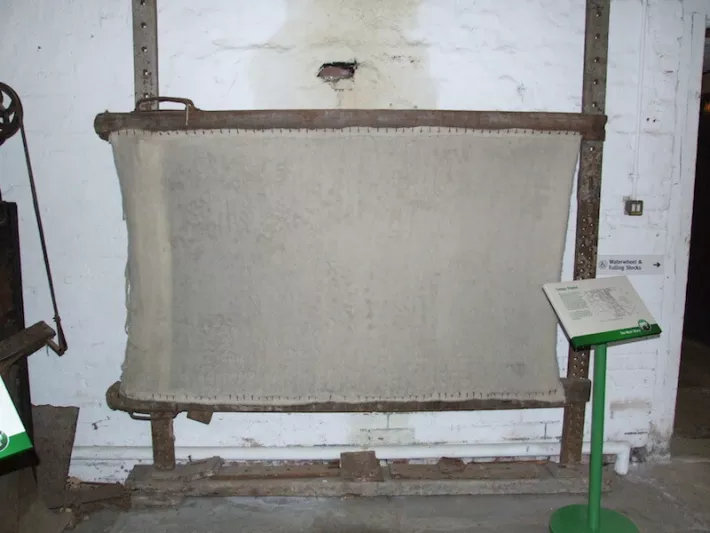
At its core, a tenterhook is a sharp, hooked metal pin, typically attached to a tenter frame. Its primary function is to hold fabric taut and evenly stretched during the drying, finishing, or stretching processes. Imagine a piece of damp cloth that, as it dries, would naturally shrink and distort. The tenterhook’s purpose is to prevent this undesirable shrinkage and ensure the fabric maintains its intended dimensions and integrity.
Historical Significance and Textile Manufacturing
Historically, tenterhooks were an integral part of the textile industry. Large frames, known as tenters, were erected outdoors or in specialized workshops. These frames were lined with rows of tenterhooks. Wet or newly woven fabrics would be carefully hooked onto these pins along their edges. The fabric would then remain stretched on the tenter frame until it dried completely. This process was crucial for achieving consistent fabric width, preventing uneven shrinkage, and ensuring a smooth, finished product ready for garment making or other applications.
The “tenter” itself refers to the frame, and the “hook” is the individual component that grips the fabric. The practice of tentering was a labor-intensive but essential step. The quality of the finished textile was directly influenced by the effectiveness of the tentering process. A poorly tentered fabric could result in garments that were misshapen, ill-fitting, or prone to stretching unevenly once worn. Therefore, skilled artisans and manufacturers paid great attention to the precise spacing and angle of the tenterhooks, as well as the tension applied to the fabric.
The Mechanics of Tension and Stability
The effectiveness of a tenterhook lies in its ability to apply consistent tension across the width of the fabric. This tension counteracts the natural forces of contraction that occur as fibers dry and settle. By holding the fabric in a stretched state, the tenterhook ensures that the fibers realign and set in a stable configuration. This process is analogous to how certain materials behave under stress; when released, they retain their stretched form to a degree.
The sharpness and design of the tenterhook were also important considerations. They needed to be sharp enough to penetrate the fabric without causing excessive damage or creating large holes that would compromise the integrity of the material. The angle of the hook was designed to hold the fabric securely without it slipping off during the drying or stretching process. In essence, the tenterhook acted as a mechanical anchor, providing the necessary stability to manipulate the fabric’s properties during its most vulnerable stages.
From Tenterhooks to Modern Manufacturing: The Evolution of Tension Control
While the manual application of tenterhooks on large frames is largely a relic of the past, the fundamental principle of controlled tension and stretching has not only survived but has been significantly refined and automated in modern manufacturing. The concept of using targeted forces to manipulate materials into precise shapes and dimensions is a cornerstone of contemporary industrial processes. This evolution can be seen across various sectors, extending far beyond textiles.
Automated Fabric Handling and Finishing

In the textile industry today, the laborious process of manually hooking fabric onto tenter frames has been replaced by sophisticated automated machinery. Modern textile finishing plants utilize clip tenters and pin tenters that operate continuously. Clip tenters use a series of clips that grip the fabric edge, while pin tenters, which are more directly descended from the traditional tenterhook, employ rotating pins to hold the material. These machines can handle massive rolls of fabric at high speeds, maintaining precise tension and width control. The underlying goal remains the same: to prevent shrinkage, ensure uniform drying, and achieve desired fabric properties. The tenterhook, in its evolved form, has become an essential component in these high-tech systems, allowing for mass production with exceptional quality control.
Precision Engineering and Material Science
The idea of applying controlled force to achieve specific material properties is not limited to fabrics. In material science and precision engineering, similar concepts are applied to a wide range of materials. For instance, in the manufacturing of certain plastics, films, and composite materials, stretching and holding techniques are employed to enhance strength, improve optical properties, or create specific surface textures. While not using literal tenterhooks, the principles of applying uniform tension to control the final structure and performance of the material are directly analogous. Think of the manufacturing of certain types of plastic sheeting or optical films where precise stretching during formation is critical for their functionality. The tenterhook’s historical role in fabric manipulation laid the groundwork for understanding how to precisely control material behavior through tension.
Digital Design and Simulation of Material Properties
The principles of how materials respond to tension and stress, once empirically determined through processes like tentering, are now deeply integrated into digital design and simulation. Computer-aided design (CAD) and computer-aided engineering (CAE) software allow engineers and designers to simulate how materials will behave under various conditions, including stretching and drying. This means that the desired outcomes achieved through manual tentering centuries ago can now be predicted and optimized virtually before any physical production begins. This digital approach to understanding material behavior, which is rooted in the historical understanding of physical processes like tentering, allows for greater efficiency, reduced waste, and the development of entirely new materials with tailored properties. The concept of maintaining precise dimensions under stress, as achieved by the humble tenterhook, is a fundamental input in these sophisticated simulations.
The Enduring Principle: Control and Stability in Production
The term “tenterhook” and the process of tentering represent a foundational understanding of how to control and stabilize materials during their formative stages. This principle of applying consistent force to achieve desired dimensions and properties is remarkably adaptable and continues to be relevant in diverse technological applications. From the historical weaving sheds to the advanced laboratories of material science and the digital design suites of modern engineers, the essence of the tenterhook—holding firm, maintaining tension, and ensuring stability—persists.
From Physical Anchors to Digital Frameworks
The transition from physical tenterhooks to sophisticated digital frameworks highlights the progression of human ingenuity. While the tangible metal pin has been largely superseded by advanced machinery and computational algorithms, the underlying need for precise control over material behavior remains constant. The historical practice of tentering provided early insights into the relationship between tension, material structure, and final product quality. These insights have been extrapolated, refined, and amplified through technological advancements. Today, instead of a physical hook, we have digital algorithms that dictate the precise application of force, temperature, and pressure to achieve desired material outcomes.
The “Tenterhooks” of Modern Innovation
In a metaphorical sense, the concept of “tenterhooks” can even be applied to the cutting edge of technological innovation. Projects and breakthroughs often exist in a state of delicate balance, requiring careful management of resources, attention to detail, and a steadfast commitment to quality to achieve their full potential. Companies and researchers might be described as being “on tenterhooks” when awaiting crucial results or facing significant developmental challenges. This linguistic echo suggests that the core idea of being held in a precise, often challenging, state of readiness and control remains a powerful metaphor for progress and development.

Conclusion: A Legacy of Precision
In conclusion, what is a tenterhook? It is a simple yet ingenious tool that, for centuries, was vital to the textile industry. More importantly, it represents a fundamental principle of applying controlled tension to achieve precise dimensions and stable material properties. While the literal tenterhook may be a historical artifact, its legacy lives on in the automated machinery of modern manufacturing, the advanced principles of material science, and the sophisticated simulations that drive innovation today. The enduring relevance of the tenterhook underscores how fundamental physical processes, when understood and refined, can continue to inform and shape even the most advanced technological landscapes. The seemingly simple act of holding fabric taut has evolved into a sophisticated understanding of material manipulation that underpins much of our modern industrial and technological world.
aViewFromTheCave is a participant in the Amazon Services LLC Associates Program, an affiliate advertising program designed to provide a means for sites to earn advertising fees by advertising and linking to Amazon.com. Amazon, the Amazon logo, AmazonSupply, and the AmazonSupply logo are trademarks of Amazon.com, Inc. or its affiliates. As an Amazon Associate we earn affiliate commissions from qualifying purchases.