
In the realm of technology, the name “Shannon” is far more than just a surname. It signifies a foundational principle, a unit of measurement, and a legacy that underpins much of our digital world. When we ask “what is a Shannon?”, we’re not just inquiring about a person, but about a concept that revolutionized information theory and, consequently, the very way we communicate, store, and process data. At its core, a Shannon represents a fundamental unit of information, a measure of uncertainty or surprise, and a testament to the groundbreaking work of Claude Shannon, the “father of information theory.” Understanding the Shannon is crucial for anyone delving into the intricacies of digital communication, data compression, and the fundamental limits of information transmission.

The Genesis of Information Theory: Claude Shannon’s Vision
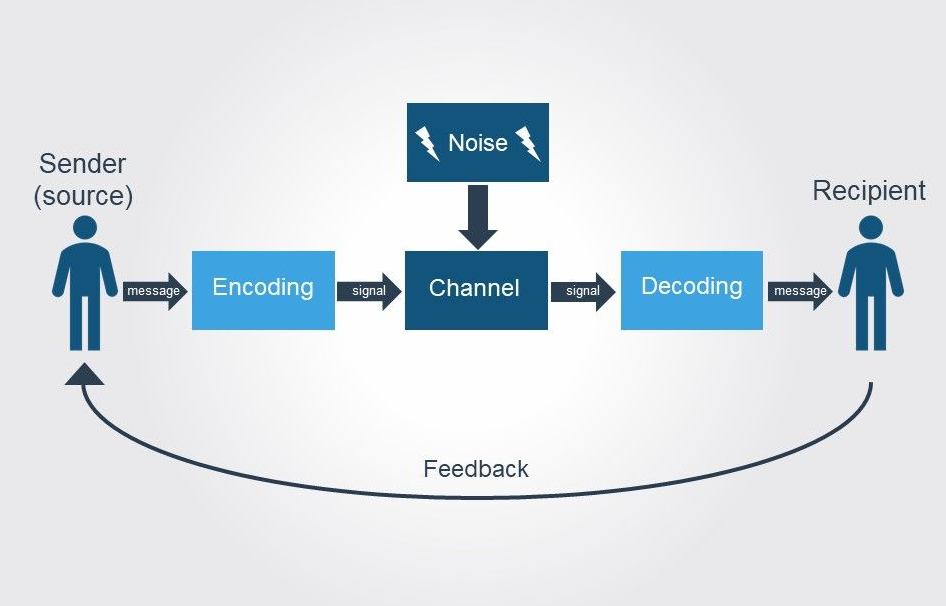
The concept of the Shannon is inextricably linked to the life and work of Claude Elwood Shannon, an American mathematician and electrical engineer. His seminal 1948 paper, “A Mathematical Theory of Communication,” laid the groundwork for information theory, a field that quantifies information, its storage, and its communication. Before Shannon, the study of communication was largely qualitative. Shannon, however, introduced a rigorous mathematical framework, allowing us to treat information as a quantifiable entity. This paved the way for understanding the maximum rate at which information could be transmitted over a noisy channel and the fundamental principles of data compression. His work was inspired by the practical challenges of transmitting information reliably over telephone lines and the nascent field of digital computing.
From Telephone Switching to Digital Revolution
Claude Shannon’s early career was deeply rooted in practical engineering problems. After graduating from the University of Michigan and later earning his master’s and doctorate from MIT, he worked at Bell Laboratories. It was here, while analyzing the design of telephone switching systems, that he had a profound insight: the logical operations of Boolean algebra could be applied to electric circuits. This realization, detailed in his master’s thesis, “A Symbolic Analysis of Relay and Switching Circuits,” is considered a cornerstone of modern digital computer design. He demonstrated that these complex switching networks could be built using simple on-off switches, directly correlating to the binary digits (bits) of 0 and 1. This conceptual leap transformed electrical engineering and provided the theoretical underpinnings for the digital revolution.
The Birth of the “Bit” and the Shannon Unit
Shannon’s 1948 paper took this foundational understanding of discrete states and applied it to the broader concept of information. He proposed that the fundamental unit of information should be the “bit,” representing a choice between two equally likely possibilities. He also introduced the “hartley,” named after another pioneer, Ralph Hartley, as a unit of information. However, as his theory progressed and he incorporated the concept of probability into information measurement, he eventually adopted and popularized the “shannon” as the standard unit for measuring information. A shannon is formally defined as the amount of information contained in an event that has two equally likely outcomes. For instance, flipping a fair coin has one shannon of information associated with it. This simple yet powerful concept allowed for the objective measurement of information, regardless of its meaning or content.
Defining the Shannon: Quantifying Uncertainty and Information
The Shannon unit quantifies information by measuring the reduction in uncertainty. In essence, information is gained when an uncertain situation becomes less uncertain. The more unlikely an event, the more information we gain when it occurs. This is a crucial distinction from how we might intuitively think about information as simply “facts” or “knowledge.” In information theory, information is directly related to surprise.
Information as Surprise and Uncertainty Reduction
Consider a scenario where you are about to receive a message. If the message contains only two possibilities, say “yes” or “no,” and they are equally likely, then the message carries one shannon of information. If, however, you know that “yes” is overwhelmingly probable (e.g., 99% of the time) and “no” is rare, then receiving a “yes” carries very little information because it was expected. Conversely, receiving a “no” would be highly surprising and therefore carry a significant amount of information. This is why Shannon defined the information content (or entropy) of an event X with possible outcomes xᵢ and probabilities P(xᵢ) as:
$H(X) = -sum{i=1}^{n} P(xi) log2(P(xi))$
The unit of this measure is the shannon. When all $P(xi)$ are equal and there are two outcomes, $P(x1) = P(x_2) = 1/2$, the formula simplifies to:
$H(X) = – (1/2 log2(1/2) + 1/2 log2(1/2)) = – (1/2 times -1 + 1/2 times -1) = -(-1) = 1$ shannon.
This definition elegantly captures the essence of information as a reduction in uncertainty.
Entropy: The Average Amount of Information
The concept of entropy, a term borrowed from thermodynamics, plays a central role in Shannon’s theory. In information theory, entropy quantifies the average level of uncertainty or “surprise” in a random variable or a message source. A source with high entropy is unpredictable and generates more information on average. Conversely, a source with low entropy is predictable and generates less information. For example, a language with a very large vocabulary and complex grammar might have higher entropy per word than a language with a limited vocabulary and simple structure. Understanding the entropy of a source is critical for designing efficient communication systems.
Applications of the Shannon in the Digital Age
The implications of the Shannon unit and the broader principles of information theory are far-reaching, permeating virtually every aspect of our digital lives. From how we store our photos to how we stream videos, Shannon’s work is an invisible, yet indispensable, force.
Data Compression: Making More with Less
One of the most direct and impactful applications of the Shannon is in data compression. Shannon’s theory established the theoretical limits of how much data can be compressed. He proved that for a given information source, there exists a minimum number of bits per symbol required to represent that information without loss. Algorithms like Huffman coding and Lempel-Ziv are direct descendants of this principle, seeking to represent frequently occurring patterns in data with shorter codes and less frequent patterns with longer codes. This allows us to store more data on our devices, transmit it faster over networks, and reduce the bandwidth required for communication. Without the concept of the shannon and information entropy, the vast digital libraries of music, movies, and documents we enjoy today would be unmanageable.
Channel Capacity: The Limits of Communication
Another monumental contribution is the concept of channel capacity, which defines the maximum rate at which information can be transmitted reliably over a noisy communication channel. Shannon’s Noisy-Channel Coding Theorem states that it is possible to transmit information at any rate below the channel capacity with an arbitrarily small probability of error, provided sufficient redundancy (error-correction codes) is employed. This theorem is fundamental to the design of all modern communication systems, including Wi-Fi, cellular networks, and satellite communication. It tells engineers the theoretical upper limit of what they can achieve with a given communication medium, guiding the development of more robust and efficient transmission techniques. The shannon is the unit used to measure this capacity, typically expressed as shannons per second.
Cryptography and Digital Security
While Shannon’s work is often associated with efficient communication, it also has profound implications for cryptography and digital security. Shannon’s “perfect secrecy” concept, achievable with a one-time pad, relies on ensuring that the ciphertext provides absolutely no information about the plaintext. This is directly related to maximizing the entropy of the ciphertext, making it indistinguishable from random noise. Understanding information entropy also helps in analyzing the strength of cryptographic systems. A well-designed encryption algorithm should produce an output that is as close to maximum entropy as possible, making it extremely difficult for an attacker to glean any meaningful information.
The Enduring Legacy of the Shannon
The “what is a shannon?” question ultimately leads us to a profound understanding of the fundamental building blocks of our digital universe. The shannon is not merely an abstract unit; it is a tangible measure of the effectiveness of our communication systems, the efficiency of our data storage, and the security of our digital information. Claude Shannon’s foresight and mathematical rigor provided the language and the tools to analyze and manipulate information in ways that were previously unimaginable.
From Theory to Ubiquitous Technology
The journey from Claude Shannon’s theoretical insights to the ubiquitous technologies we use daily is a testament to the power of fundamental research. The shannon, as the unit of information, has become an integral part of how we engineer, design, and understand the digital world. Every time we send an email, download a file, or stream a video, we are benefiting from the principles laid down by Shannon, principles that are quantified and understood through the lens of the shannon. His work continues to inspire new advancements in fields like quantum information theory and artificial intelligence, ensuring that the legacy of the shannon will continue to shape the future of technology for generations to come.
The Continuing Evolution of Information Measurement
While the shannon remains the cornerstone of information theory, the field itself continues to evolve. As our understanding of complex systems deepens and the nature of information itself becomes more nuanced, so too do the ways we measure and analyze it. However, the fundamental principles established by Claude Shannon and embodied by the shannon unit provide an enduring framework. They remind us that at the heart of all our digital interactions lies a quantifiable measure of uncertainty, surprise, and ultimately, information. The shannon is, and will likely remain, the fundamental currency of the digital age.
aViewFromTheCave is a participant in the Amazon Services LLC Associates Program, an affiliate advertising program designed to provide a means for sites to earn advertising fees by advertising and linking to Amazon.com. Amazon, the Amazon logo, AmazonSupply, and the AmazonSupply logo are trademarks of Amazon.com, Inc. or its affiliates. As an Amazon Associate we earn affiliate commissions from qualifying purchases.