
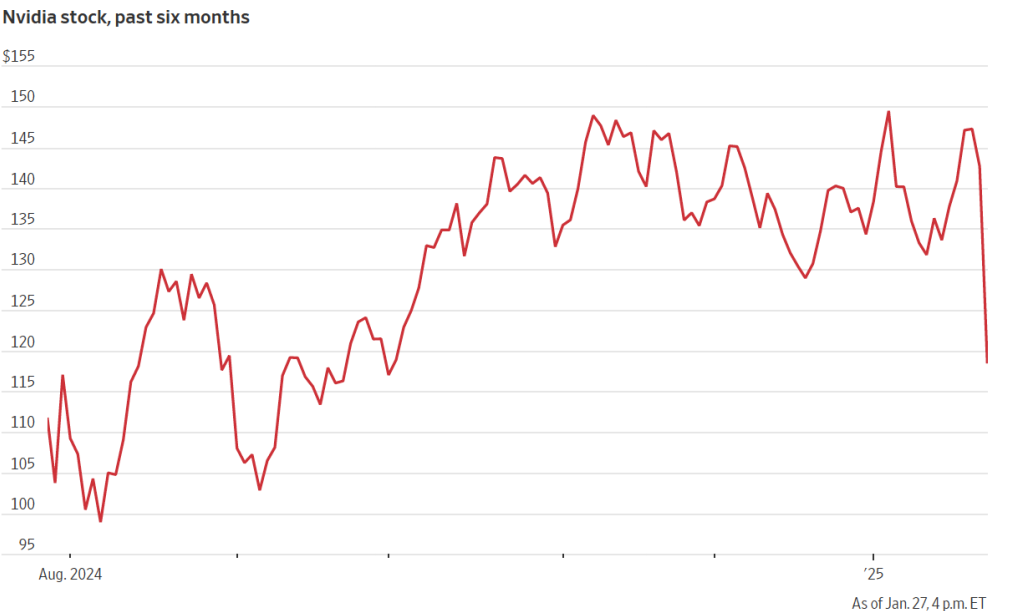
In the contemporary financial landscape, few tickers command as much attention as NVDA. As the undisputed poster child for the artificial intelligence revolution, Nvidia has transformed from a niche graphics card manufacturer into a global powerhouse that dictates the pulse of the S&P 500 and the Nasdaq 100. However, even the most meteoric rises are punctuated by periods of turbulence. When Nvidia’s stock experiences a sudden decline, it sends ripples through the portfolios of retail and institutional investors alike. Understanding the mechanics behind such a drop requires a deep dive into market psychology, macroeconomic indicators, and the fundamental valuation of the semiconductor industry.
The Catalyst of Market Sentiment and Macroeconomic Shifts
The stock market does not operate in a vacuum, and Nvidia, despite its massive market capitalization, is highly sensitive to the broader economic environment. Often, a drop in Nvidia’s share price is less about the company’s internal operations and more about the external forces shaping the global economy.
Interest Rates and the “Higher for Longer” Narrative
One of the primary drivers of volatility for high-growth tech stocks is the trajectory of interest rates set by the Federal Reserve. Nvidia’s valuation is largely based on its future cash flows. When interest rates rise—or when the market perceives that they will remain “higher for longer”—the “discount rate” applied to those future earnings increases. This mathematically lowers the current value of the stock. For investors, a hawkish tone from central banks often triggers a sell-off in growth sectors as they seek safer yields in the bond market or more defensive equity positions.
Sector Rotation: Moving from Growth to Value
Financial markets often move in cycles characterized by “sector rotation.” After a prolonged period of dominance by the “Magnificent Seven” and the broader tech sector, institutional fund managers may decide to rebalance their portfolios. This involves taking profits from high-flying stocks like Nvidia and reallocating that capital into “value” sectors such as energy, industrials, or consumer staples. When a significant volume of institutional capital moves simultaneously, it creates downward pressure on Nvidia’s price, regardless of the company’s specific performance.
Fundamental Pressure: The Burden of Perfection
For a company that has consistently exceeded analyst expectations, the “burden of perfection” becomes a significant risk factor. Nvidia is no longer judged simply by whether it is profitable, but by the magnitude of its growth and the sustainability of its margins.
High Expectations and the “Whisper Numbers”
In the world of investing, meeting official analyst estimates is often not enough to sustain a rally. Traders often look at “whisper numbers”—unofficial, higher expectations circulating among institutional desks. If Nvidia reports stellar earnings that only meet the official consensus rather than crushing the whisper numbers, the stock may drop as investors “sell the news.” This phenomenon reflects a market that has already priced in an extraordinary level of success, leaving little room for anything less than a flawless execution.
Gross Margin Sustainability in a Competitive Landscape
Investors keep a microscopic eye on Nvidia’s gross margins. As the leader in AI chips (H100, B200), Nvidia enjoys premium pricing power. However, any hint that margins are peaking or beginning to contract can trigger a sell-off. Concerns regarding increased competition from rivals like AMD or Intel, as well as internal silicon development from major customers like Amazon, Google, and Microsoft, often lead to fears that Nvidia’s “moat” might be narrowing. A drop in the stock often reflects the market’s attempt to recalibrate the long-term profitability of the company in a more crowded marketplace.
Geopolitical and Regulatory Headwinds
Nvidia operates at the intersection of technology and global politics. Because its products are considered strategic assets for national security and economic dominance, the company is frequently caught in the crosshairs of geopolitical tensions.
Export Restrictions and the China Market Gap
The ongoing trade friction between the United States and China remains a persistent thorn in Nvidia’s side. The U.S. Department of Commerce has implemented various export controls to limit China’s access to advanced AI chips. China has historically represented a significant portion of Nvidia’s revenue. Whenever there is news of tighter restrictions or a breakdown in diplomatic talks, investors price in the potential loss of billions of dollars in future sales. The uncertainty surrounding Nvidia’s ability to navigate these regulations—and whether they can successfully sell “downgraded” versions of their chips to remain compliant—contributes heavily to intraday price drops.
Increased Scrutiny from Global Regulators
As Nvidia’s dominance grows, so does the attention from antitrust regulators in the US, EU, and UK. Investors are wary of any investigation that could limit Nvidia’s ability to bundle its software (like the CUDA platform) with its hardware, or any move to block future acquisitions. Regulatory uncertainty is a “risk premium” that can weigh heavily on a stock. If a news report breaks regarding a new probe or a potential fine, the market tends to sell first and ask questions later, leading to the sharp declines we see on the ticker.
Technical Indicators and Investor Psychology
Beyond fundamentals and macroeconomics, the movement of Nvidia’s stock is often influenced by the technical patterns of the market and the psychological behavior of its participants.
Profit Taking After Exponential Gains
It is important to remember that many investors are sitting on massive gains from Nvidia’s multi-year run. When the stock reaches a psychological milestone (such as a round number) or hits an “overbought” level on technical indicators like the Relative Strength Index (RSI), it often triggers a wave of profit-taking. Automated trading algorithms often have “sell” orders set at these levels. This isn’t necessarily a sign that anything is wrong with the company; rather, it is a healthy part of market mechanics where capital is recycled.
Understanding Support Levels and Volatility
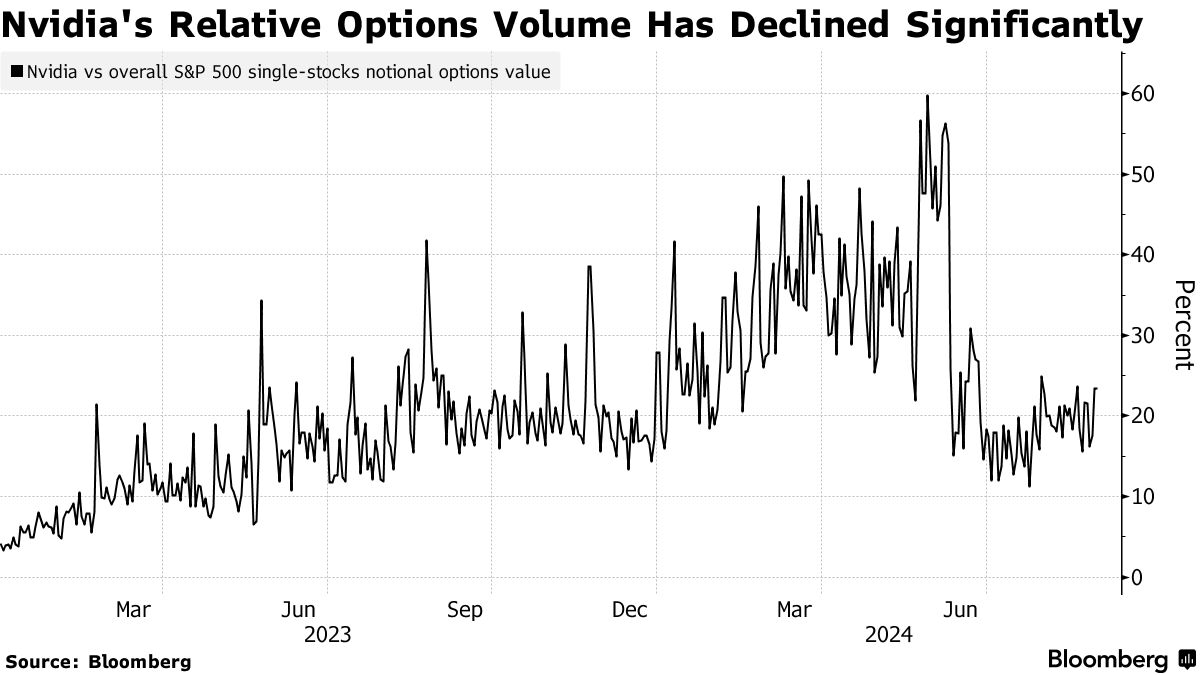
Nvidia is a high-beta stock, meaning it is generally more volatile than the broader market. In a downward move, traders look for “support levels”—prices where the stock has historically found buyers. If Nvidia breaks below a key moving average, such as the 50-day or 200-day simple moving average, it can trigger “stop-loss” orders, accelerating the drop. For the average investor, these technical dips can be frightening, but they are often viewed by professional traders as opportunities to re-enter the position at a more favorable valuation.
The Long-Term Outlook for Investors
When Nvidia stock drops, the most critical question for an investor is whether the decline represents a temporary fluctuation or a structural shift in the company’s investment thesis.
Is This a Buying Opportunity or a Structural Shift?
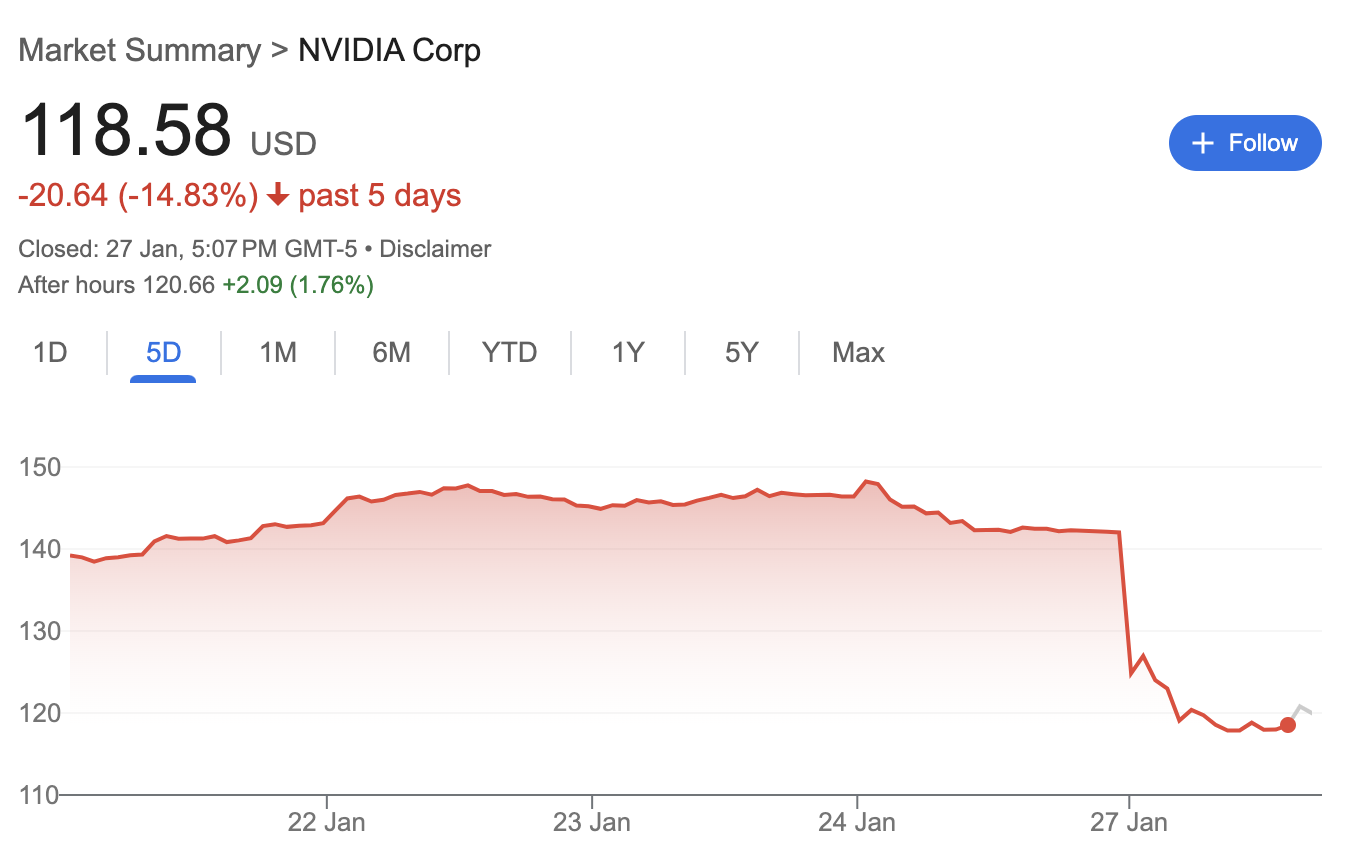
Discerning the difference between a “correction” and a “crash” is the hallmark of a sophisticated investor. A correction (usually a 10% drop) is often seen as a healthy cooling-off period for a stock that has moved too far, too fast. If the underlying demand for AI infrastructure remains robust and Nvidia’s roadmap for new architecture (like the Blackwell platform) remains on track, many financial advisors view these drops as “buying the dip.” However, if the drop is accompanied by a fundamental shift—such as a major customer canceling orders or a breakthrough in a competitor’s technology—the investment thesis must be re-evaluated.
Diversification Strategies in a Tech-Heavy Portfolio
For those concerned about Nvidia’s volatility, the drop serves as a reminder of the importance of diversification. Concentration risk—having too much of one’s net worth tied up in a single stock—can lead to emotional decision-making during market pullbacks. Investors often use these moments to evaluate their “asset allocation.” This might involve utilizing exchange-traded funds (ETFs) that hold Nvidia as a top position but provide exposure to other sectors, or using options strategies like covered calls to generate income and mitigate some of the downside risk.
In conclusion, a drop in Nvidia’s stock is rarely the result of a single factor. It is usually a complex interplay of macroeconomic data, high-stakes earnings expectations, geopolitical maneuvers, and technical market cycles. By looking past the immediate headline and analyzing these underlying financial drivers, investors can maintain a professional and objective perspective on one of the most significant companies of the 21st century. While the volatility may be jarring, it is the price of admission for participating in the growth of the cutting-edge technology that is currently reshaping the global economy.
aViewFromTheCave is a participant in the Amazon Services LLC Associates Program, an affiliate advertising program designed to provide a means for sites to earn advertising fees by advertising and linking to Amazon.com. Amazon, the Amazon logo, AmazonSupply, and the AmazonSupply logo are trademarks of Amazon.com, Inc. or its affiliates. As an Amazon Associate we earn affiliate commissions from qualifying purchases.