
The concept of a “memory palace,” also known as the Method of Loci, has captivated minds for centuries, offering a powerful and surprisingly accessible technique for enhancing memory recall. Far from being a mystical art, it’s a structured mental exercise deeply rooted in how our brains naturally process and store information. In an era increasingly reliant on external digital aids, the memory palace stands as a testament to the untapped potential of our own cognitive architecture. This article delves into the essence of the memory palace, exploring its historical origins, the scientific principles that underpin its effectiveness, and practical strategies for its implementation within the realm of technology.
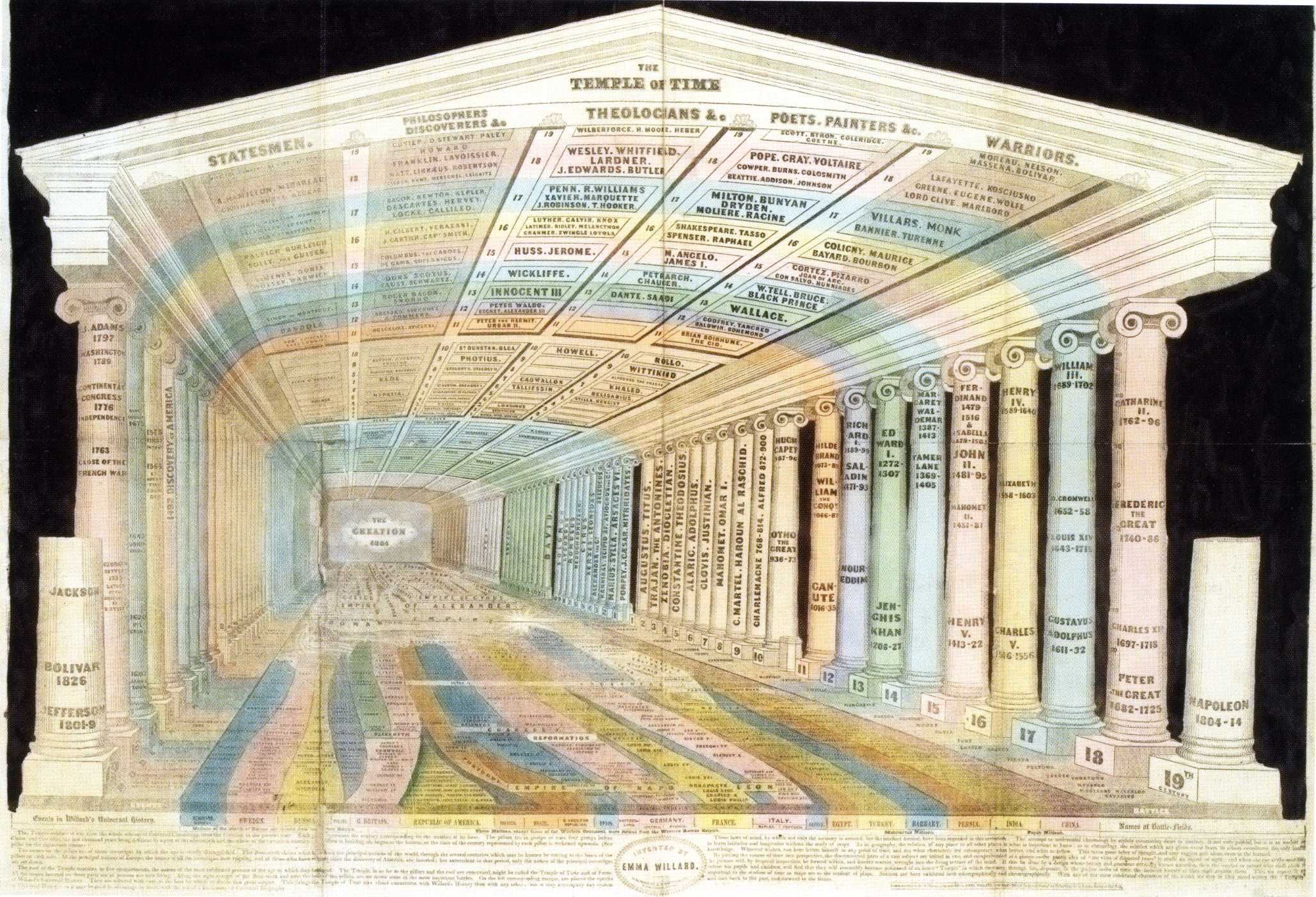
The Ancient Roots and Modern Relevance of the Memory Palace
The memory palace is not a new invention; its origins stretch back to ancient Greece and Rome. The legend often cited is that of the Greek poet Simonides of Ceos, who, after a banquet hall collapsed, was able to identify the deceased guests by mentally revisiting the precise locations where each person had been seated. This ability to link specific individuals to specific physical spaces sparked the development of a mnemonic system that has endured through millennia.
From Orators to Information Overload
Historically, the memory palace was an indispensable tool for orators, philosophers, and scholars who needed to memorize vast amounts of information without the benefit of written records or digital storage. Lawyers could recall legal precedents, merchants could remember complex inventories, and scholars could recite lengthy texts, all by navigating their internal mental landscapes.
In the modern context, as information continues to proliferate at an unprecedented rate, the memory palace offers a compelling counterpoint to our reliance on external digital tools. While smartphones, cloud storage, and search engines are invaluable, they also contribute to a passive consumption of information, potentially diminishing our natural memory capabilities. The memory palace, conversely, actively engages the brain, fostering deeper encoding and retrieval of information. It’s a skill that complements, rather than competes with, our digital lives, providing a robust internal backup and a more profound understanding of the data we encounter.
The Cognitive Science Behind the Method of Loci
The effectiveness of the memory palace is not magic; it’s grounded in well-established principles of cognitive psychology. Our brains are inherently wired for spatial memory. We are remarkably adept at remembering locations and the relationships between them. The memory palace leverages this inherent strength by transforming abstract information into vivid, spatial experiences.
Spatial Cognition and Vivid Imagery
The core mechanism involves associating pieces of information with specific locations within a familiar mental environment. This could be your childhood home, your route to work, or any place you know intimately. The more detailed and distinct these locations are, the more robust the memory association. The process encourages the creation of vivid, often bizarre or exaggerated, mental images for each item you wish to remember. The more unusual and emotionally charged the image, the more likely it is to stick. This is because novelty and emotional salience are powerful triggers for memory formation. Our brains are designed to pay attention to things that stand out, and the more unusual the association, the more it stands out in our mental landscape.
The Role of Storytelling and Association
Beyond simple placement, the memory palace encourages the creation of a narrative. As you mentally walk through your chosen location, you link the items you want to remember in a sequence, often weaving them into a story or a chain of interactions. This narrative structure provides a logical flow for retrieval, allowing you to follow the thread of your mental journey to access the information in order. The act of storytelling itself is a powerful mnemonic device, as it imposes order and meaning onto otherwise disconnected pieces of data. By actively constructing these mental narratives, you are not just storing information; you are actively processing and understanding it.
Building Your Own Digital Memory Palace
While traditional memory palaces are built in familiar physical spaces, the principles can be powerfully applied to our digital lives. This opens up a new frontier for memory enhancement, allowing us to navigate the ever-expanding digital landscape with greater confidence and recall.

Choosing Your Digital Loci
The first step in constructing a digital memory palace is selecting your “loci” – the virtual spaces where you will store your information. Unlike a physical home, your digital loci can be more abstract or organized according to your needs. Consider the following options:
- Familiar Websites and Applications: Think of platforms you use regularly, such as your email inbox, a specific social media feed, your cloud storage service, or even the structure of your operating system’s file explorer. Each of these has distinct visual elements and functional pathways that can serve as anchors. For instance, the “compose” button in your email client could be a locus for a new idea, or the “recent files” section of your cloud storage could hold recent projects.
- Conceptual Spaces: You can also create more conceptual digital palaces. Imagine a virtual library where each “shelf” represents a different topic or project. Within each shelf, the “books” could be individual documents or concepts. Or, envision a digital city where different “buildings” represent different domains of your digital life – a “communication hub” for emails and messages, a “knowledge repository” for research papers, or a “creation studio” for ongoing projects.
- Personalized Digital Environments: If you have a highly customized digital workspace, such as a specific desktop wallpaper, a unique folder structure, or a favorite set of digital tools, these can serve as excellent loci. The key is to choose environments that you know intimately and can visualize clearly.
Encoding Digital Information into Vivid Mental Images
Once you have identified your digital loci, the next crucial step is to encode the digital information you want to remember into vivid, memorable images. This is where creativity and imagination come into play.
- Transforming Data into Tangible Representations: Digital information is often abstract – lines of code, email threads, spreadsheet cells, or hyperlinks. To make them memorable, you need to translate them into something concrete and sensory. For example, if you need to remember a complex password, instead of trying to memorize the string of characters, create a bizarre image associated with the password’s meaning or a visual representation of its components. Imagine the letters and numbers morphing into objects or characters that interact in an unusual way.
- Leveraging Digital Metaphors: Our digital world is already rich with metaphors (e.g., “folders,” “trash,” “cloud”). You can use these as springboards for creating your memory images. If you’re saving a critical document in your cloud storage, visualize it being placed into a luminous, floating cloud, perhaps being guarded by a digital dragon. If you need to recall a specific email, associate it with a vividly colored envelope or a talking pigeon delivering a message to a specific digital location.
- Emotional and Sensory Augmentation: The more emotionally charged and sensory the image, the stronger the memory. If you’re trying to remember a piece of code, don’t just associate it with a line on a screen. Imagine the code coming to life, perhaps as a tiny robot performing a specific task, and imbue this image with a feeling – excitement, urgency, or humor. Use as many senses as possible in your mental visualization: what does it look, sound, smell, taste, or feel like?
Practical Applications and Advanced Techniques
The memory palace is a versatile tool with applications extending far beyond simple memorization of lists. When applied to technological contexts, it can revolutionize how we manage and interact with digital information.
Enhancing Digital Workflow and Productivity
In a professional or academic setting, the memory palace can significantly boost productivity by streamlining information retrieval and task management within digital environments.
- Recalling Complex Passwords and Login Credentials: This is perhaps the most immediate and practical application. Instead of relying on password managers (which themselves require memorization of a master password!), you can create vivid, story-driven images linked to specific websites or services. For instance, a password for a banking site might involve a majestic lion (the bank’s logo) guarding a vault filled with golden coins, where the specific characters of the password are represented by unique symbols interacting with the lion or the vault.
- Memorizing URLs and Digital Addresses: For frequently visited or important websites, you can associate them with memorable images within your chosen loci. Imagine a URL as a street address within your digital city, and the website itself as a distinct building with unique features.
- Streamlining File and Document Retrieval: Instead of relying solely on folder structures and search functions, you can create mental “maps” of your digital archives. Imagine your cloud storage as a vast library, where each document is an item on a shelf, categorized by its content and then further enhanced by a unique, memorable image. If you need to find a specific report, you mentally navigate to the “reports” section, then to the relevant shelf, and then recall the unique visual associated with that particular report.
- Remembering Software Commands and Shortcuts: For complex software or programming languages, associating commands with vivid actions or characters within your mental space can drastically improve recall. Imagine a specific coding command as a tiny, animated tool performing a task, or a software shortcut as a swift, decisive gesture.
Developing Advanced Memory Palace Strategies
As you become more proficient with the memory palace technique, you can explore more advanced strategies to further enhance its power and applicability to the digital realm.
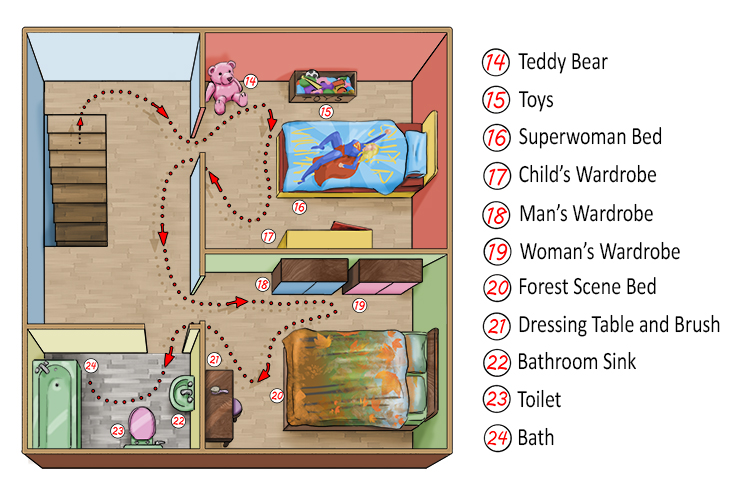
- The Journey Method: This is a more elaborate form of the memory palace, where you create a detailed, sequential journey through a well-known space. Each point along the journey is a locus where you place an item of information. This is particularly useful for memorizing ordered lists or sequences of events. In a digital context, this could be a mental walkthrough of a website’s navigation, a step-by-step process in a software application, or the chronological order of a historical event.
- Linking and Chaining: For longer sequences of information, you can link items together in a chain. The image at one locus can interact with the image at the next locus, creating a dynamic narrative that aids recall. This can be applied to memorizing series of code snippets, a sequence of marketing campaign steps, or the different phases of a complex project.
- Interacting with Abstract Data: The true challenge and potential of the digital memory palace lie in encoding abstract data, such as statistical figures, dates, or complex concepts. Here, creativity is key. For statistical data, you might represent numbers as quantities of tangible objects or visualize them as shapes changing size or color. For concepts, you might personify them or create allegorical scenarios that encapsulate their essence.
In conclusion, the memory palace is a powerful cognitive tool with enduring relevance in our technologically saturated world. By understanding its historical roots, the scientific principles that drive its efficacy, and by creatively applying its methods to our digital lives, we can unlock a profound capacity for enhanced recall, improved productivity, and a more engaged relationship with the vast amounts of information we encounter daily. It’s a reminder that our greatest technological asset resides not in our devices, but within our own minds.
aViewFromTheCave is a participant in the Amazon Services LLC Associates Program, an affiliate advertising program designed to provide a means for sites to earn advertising fees by advertising and linking to Amazon.com. Amazon, the Amazon logo, AmazonSupply, and the AmazonSupply logo are trademarks of Amazon.com, Inc. or its affiliates. As an Amazon Associate we earn affiliate commissions from qualifying purchases.