
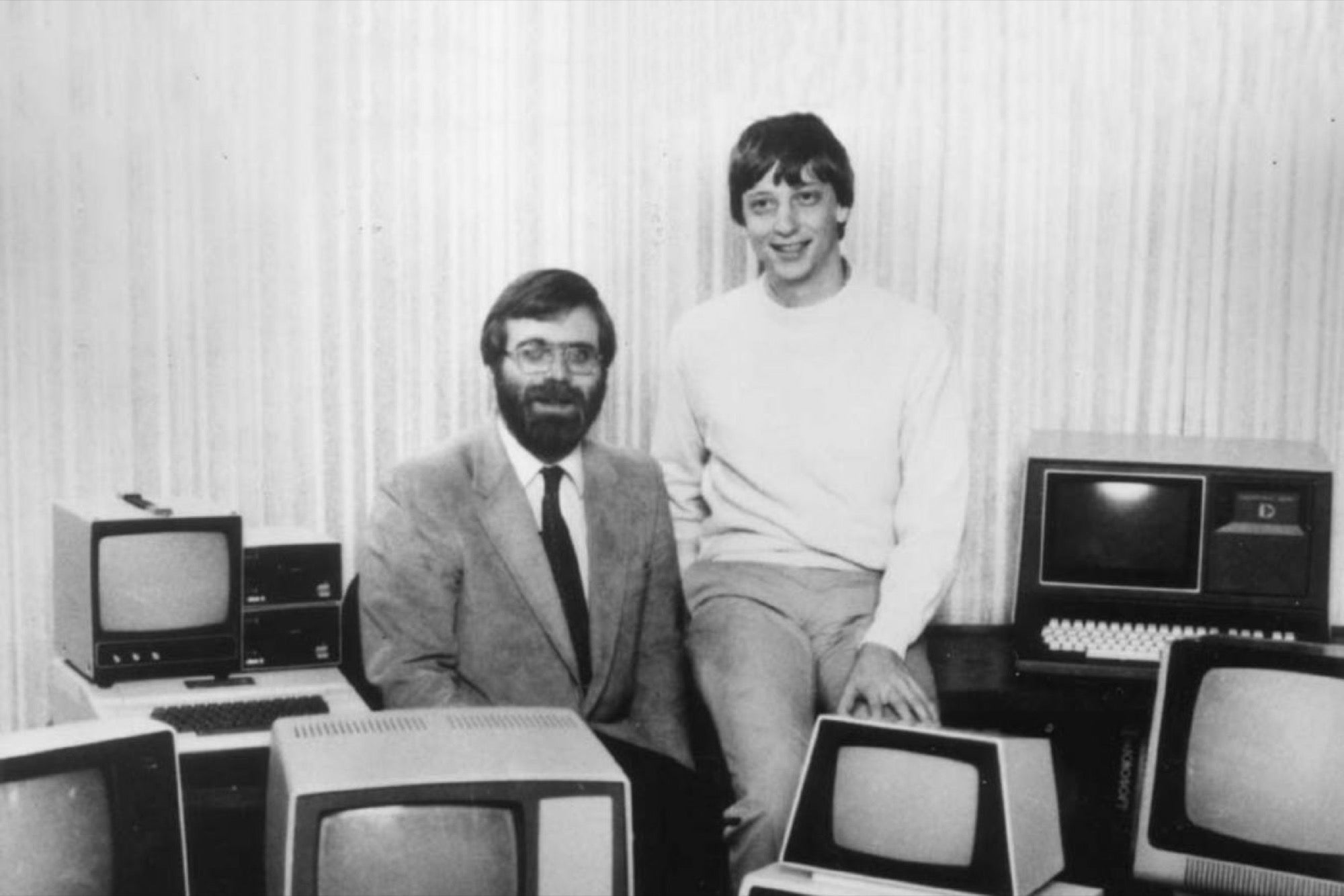
The history of modern computing is often divided into two eras: before and after the emergence of the software-first philosophy. To understand the current state of global technology, one must look back to a specific moment in the mid-1970s. Microsoft was officially created on April 4, 1975, in Albuquerque, New Mexico. Founded by childhood friends Bill Gates and Paul Allen, the company was born at the intersection of a hobbyist revolution and the birth of the microprocessor.
While the date marks the legal beginning of the corporation, the technical implications of that moment would go on to shape every facet of the digital world—from the operating system on your laptop to the cloud infrastructure powering today’s most advanced Artificial Intelligence.
April 4, 1975: The Dawn of the Microprocessor Era
The creation of Microsoft was not an isolated event; it was a response to the “MITS Altair 8800,” a microcomputer kit that appeared on the cover of Popular Electronics in January 1975. At the time, computers were massive mainframes confined to climate-controlled rooms in universities and large corporations. Gates and Allen realized that the Altair represented a shift: computers were becoming small enough for individuals.
The Albuquerque Origins and the “Micro-Soft” Vision
Initially styled as “Micro-Soft” (a portmanteau of microcomputer and software), the company set up its first headquarters in Albuquerque to be near MITS (Micro Instrumentation and Telemetry Systems), the creators of the Altair. The founders’ technical insight was profound: they believed that while hardware would eventually become a commodity, the software—the logic that told the machine what to do—would become the most valuable component of the ecosystem.
Their first product was a version of the BASIC programming language for the Altair 8800. This was a pivotal moment in software history because it allowed hobbyists to write their own programs, effectively turning a box of lights and switches into a functional tool. By creating a high-level language for a microcomputer, Microsoft laid the groundwork for the democratization of coding.
From Altair BASIC to the Personal Computer Revolution
As the late 1970s progressed, Microsoft moved its operations to Bellevue, Washington, and dropped the hyphen from its name. During this period, the company focused on expanding its programming language offerings, including Fortran and COBOL. However, the true technical leap occurred when they pivoted from being a language provider to an operating system architect.
The transition from 8-bit to 16-bit computing in the early 1980s required a more robust way to manage hardware resources. When IBM approached Microsoft to provide an operating system for their upcoming Personal Computer (PC), Microsoft didn’t just write a program; they defined the standard for how software and hardware communicate.
Architectural Milestones: The Software that Built the Empire
The creation of Microsoft led to a series of technical milestones that standardized the computing experience. Before Microsoft’s dominance, software was often proprietary and tied strictly to specific hardware. Microsoft pioneered the concept of a “horizontal” software model, where one operating system could run on machines built by dozens of different manufacturers.
MS-DOS and the IBM Partnership
The launch of MS-DOS (Microsoft Disk Operating System) in 1981 was the first major pillar of the company’s tech legacy. It was a command-line interface that required users to type specific instructions to navigate the file system. While primitive by today’s standards, its underlying architecture—handling BIOS calls, memory management, and file allocation tables (FAT)—provided the stability needed for the PC market to explode.
Because Microsoft retained the right to license MS-DOS to other manufacturers (the “PC clones”), they ensured that their software became the universal language of business computing. This move effectively decoupled the software industry from the hardware industry, a trend that continues to define tech today.
The Graphical Interface Leap: From Windows 1.0 to Windows 11
In the mid-1980s, the tech landscape shifted toward Graphical User Interfaces (GUIs). Microsoft’s creation of Windows (first released in 1985) was not just a cosmetic upgrade; it was a fundamental shift in software engineering. Windows introduced the “WIMP” paradigm (Windows, Icons, Menus, Pointer), which abstracted the complexity of the computer, making it accessible to non-technical users.
Over the decades, the Windows NT (New Technology) kernel became the backbone of the ecosystem. Unlike the consumer-grade Windows 95/98, the NT kernel offered preemptive multitasking and memory protection, features essential for server-grade stability. Today, Windows 11 represents the culmination of this evolution, integrating advanced security features like TPM 2.0 (Trusted Platform Module) and virtualization-based security to combat modern cyber threats.

Productivity and the Cloud: Transforming Workflows
If the operating system was the foundation, Microsoft’s productivity software was the structure built upon it. The company recognized early on that software should not just manage a computer; it should empower the user to create. This led to the development of the Microsoft Office suite, which transformed the office environment globally.
The Evolution of Microsoft Office and SaaS
When Microsoft Office was first released in 1989 (for the Mac) and 1990 (for Windows), it bundled Word, Excel, and PowerPoint. Technically, this was a masterpiece of integration. The ability to embed an Excel chart directly into a Word document via OLE (Object Linking and Embedding) was a breakthrough in interoperability.
However, the most significant tech trend in recent years has been the shift from “boxed software” to Software as a Service (SaaS). With the launch of Office 365 (now Microsoft 365), the company moved its core logic to the cloud. This allowed for real-time collaboration, versioning, and cross-platform synchronization, proving that the tools created in 1975 could successfully adapt to a mobile-first, always-connected world.
Azure and the Shift to Cloud Computing
Under the leadership of Satya Nadella, Microsoft underwent a “mobile-first, cloud-first” transformation. Microsoft Azure, launched in 2010, is arguably the most important technical achievement for the company since the original Windows. Azure is not just a hosting platform; it is a global distributed computer.
Azure provides the infrastructure for Infrastructure as a Service (IaaS), Platform as a Service (PaaS), and Software as a Service (SaaS). It utilizes hypervisors and sophisticated virtualization to allow millions of businesses to run their digital operations on Microsoft’s hardware. This shift moved the “computer” from the desk to the data center, enabling the massive scale required for big data analytics and modern web applications.
The Future of Microsoft: AI and the Next Technical Frontier
Nearly five decades after its creation, Microsoft is no longer just a “software company.” It is an AI and infrastructure powerhouse. The technical DNA established by Gates and Allen—the belief that software can solve complex problems—is now being applied to Artificial General Intelligence (AGI).
Integrating Generative AI into the Ecosystem
Microsoft’s partnership with OpenAI and the subsequent development of “Copilot” represents the next major version of the human-computer interface. In the 1970s, the interface was BASIC; in the 1990s, it was the Mouse; in the 2020s, it is Natural Language. By integrating Large Language Models (LLMs) into Windows, Office, and Azure, Microsoft is changing how code is written and how data is analyzed.
The technical feat here involves “Vector Databases” and massive GPU clusters that process trillions of parameters. Microsoft’s ability to scale these AI models through its Azure supercomputing infrastructure is currently driving the next wave of tech innovation, influencing everything from automated software testing to complex data modeling.
Quantum Computing and Beyond
Looking toward the future, Microsoft is heavily invested in the development of topological qubits for quantum computing. Unlike classical bits that are 0 or 1, qubits can exist in multiple states, potentially solving calculations that would take today’s fastest supercomputers thousands of years.
The pursuit of quantum advantage is the logical extension of the 1975 mission. While the Altair 8800 was the “micro” of its day, the quantum computer represents the next leap in processing power. Microsoft’s development of the “Q#” programming language and the Azure Quantum platform ensures that they remain at the forefront of this technical frontier.
Conclusion
When Microsoft was created on April 4, 1975, the founders could hardly have envisioned a world where their software would reside in the pockets of billions and in the vast server farms of the cloud. However, their fundamental realization—that software is the most powerful tool ever created by humanity—remains the driving force of the company.
From the initial lines of BASIC code in Albuquerque to the sophisticated neural networks of today, Microsoft has consistently defined the “state of the art” in technology. By transitioning from a local software provider to a global cloud and AI leader, the company has not only survived the evolution of the tech landscape but has actively engineered it. As we look toward the next fifty years, the legacy of that small 1975 startup continues to be written in every line of code that powers our modern world.
aViewFromTheCave is a participant in the Amazon Services LLC Associates Program, an affiliate advertising program designed to provide a means for sites to earn advertising fees by advertising and linking to Amazon.com. Amazon, the Amazon logo, AmazonSupply, and the AmazonSupply logo are trademarks of Amazon.com, Inc. or its affiliates. As an Amazon Associate we earn affiliate commissions from qualifying purchases.