
In the realm of macroeconomics and global finance, few forces are as powerful or as predictable as a demographic transition. This phenomenon describes the long-term shift in a population’s birth and death rates as a country moves from a pre-industrial to a highly developed economic system. While it may sound like a topic reserved for sociologists, understanding demographic transitions is essential for any serious investor, financial planner, or business leader.
The way a population grows, ages, and eventually shrinks dictates the flow of capital, the performance of stock markets, and the stability of national pension systems. As we move further into the 21st century, we are witnessing a global demographic shift unlike anything in human history. To protect and grow wealth in this changing landscape, one must understand how these biological shifts translate into financial realities.

Understanding the Demographic Transition Model (DTM) through a Financial Lens
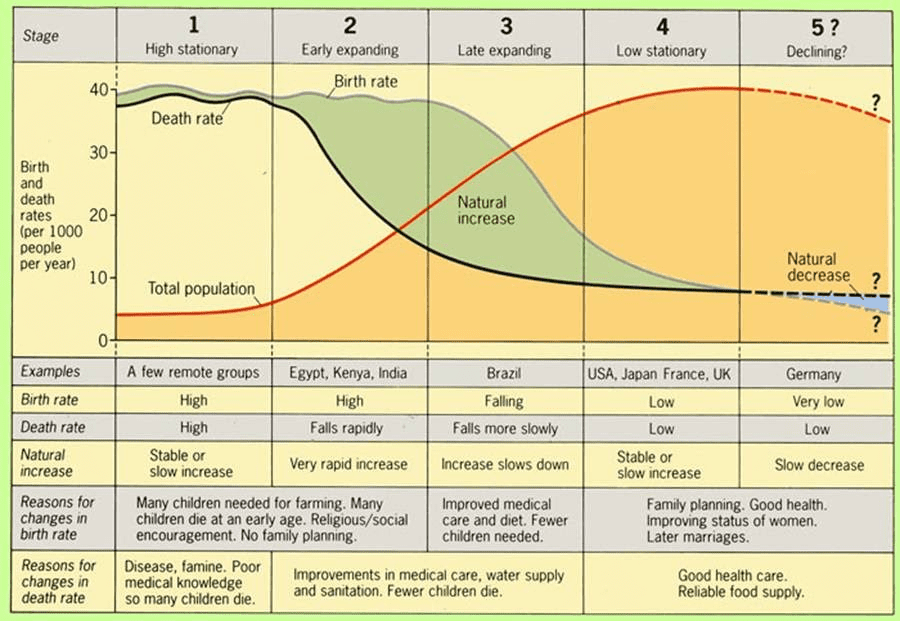
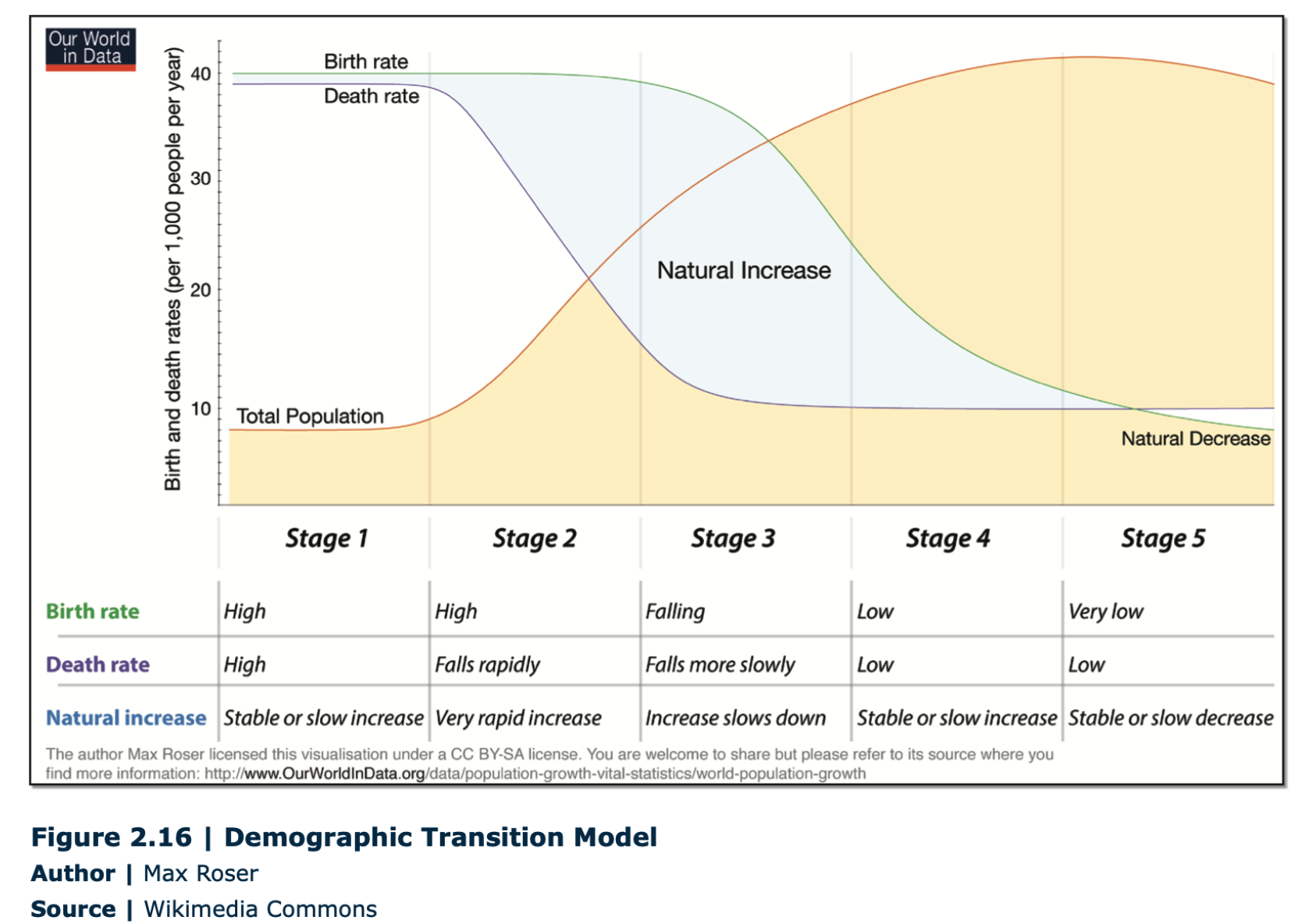
The Demographic Transition Model (DTM) is typically divided into four or five stages. For the financial professional, these stages represent the lifecycle of a market’s growth potential and risk profile. By identifying where a nation sits on this spectrum, investors can better allocate resources to capture growth or hedge against stagnation.
The Four Key Stages of Growth
In Stage 1, characterized by high birth and high death rates, economic growth is often stagnant as population growth remains flat. However, as medical and nutritional standards improve, nations enter Stage 2, where death rates plummet while birth rates remain high. This leads to a population explosion. From a money perspective, Stage 2 represents a massive increase in future labor supply and consumer demand.
Stage 3 occurs when birth rates begin to fall, aligning more closely with low death rates. This is often the “sweet spot” for economic development—a period known as the demographic dividend. Finally, Stage 4 (and the emerging Stage 5) sees low birth and death rates, often leading to a plateau or decline in population. In these final stages, the financial focus shifts from expansion to preservation, as the “silver economy” begins to dominate.
Why Demographic Transitions Matter for Global Markets
Capital moves toward productivity. In the middle stages of a demographic transition, a country usually experiences a surge in its working-age population relative to its dependents (the young and the old). This creates a surplus of labor and a high rate of household savings, which fuels domestic investment and attracts foreign direct investment (FDI).
Conversely, countries in the late stages of transition face “demographic drag.” As the workforce shrinks, labor costs rise, and the tax base diminishes. For investors, this means the high-growth “easy wins” of the past few decades in markets like Japan or parts of Europe are becoming harder to find. Understanding these cycles allows for a more nuanced approach to global asset allocation.
The Economic Consequences of Shifting Population Pyramids
A population pyramid is a visual representation of age and sex distribution. When the base is wide (many children), the economy is geared toward future growth and consumption. When the top is heavy (many retirees), the economy faces deflationary pressures and rising social costs. These shifts have profound implications for national debt and the value of currency.
The “Demographic Dividend” and Emerging Markets
The demographic dividend occurs when a country’s birth rates fall rapidly enough that the proportion of working-age adults increases significantly. This provides a temporary window of opportunity for rapid economic growth. Countries like India, Vietnam, and parts of Africa are currently entering or navigating this phase.
From an “Online Income” or “Business Finance” perspective, these regions represent the next frontier for digital services and consumer brands. Companies that can tap into these burgeoning middle classes stand to reap significant rewards. However, the dividend is not guaranteed; it requires financial infrastructure and political stability to turn a large workforce into a productive economic engine.
The Burden of Aging Societies on National Debt
On the flip side of the dividend is the “Demographic Tax.” As countries like Japan, Italy, and increasingly China move into Stage 5 of the transition, their populations are aging rapidly. This places an immense strain on public finances. With fewer workers paying into social security and healthcare systems, governments are often forced to increase borrowing.
High levels of national debt can lead to currency devaluation and lower long-term interest rates, which complicates the landscape for bond investors. For those focused on personal finance, this highlights the danger of over-relying on government-sponsored retirement schemes. In a post-transition world, self-funded retirement and private investment become non-negotiable.
Investing for a Changing World: Sector Analysis
Demographic shifts do not affect all sectors equally. As the “median age” of a population moves, so does the direction of consumer spending. Sophisticated investors can “follow the age” to identify which industries will provide the best returns over a 10-to-20-year horizon.
Healthcare and the Silver Economy
As the massive “Baby Boomer” generation and its global equivalents age, the demand for healthcare services, pharmaceuticals, and senior living facilities is poised for exponential growth. This is the “Silver Economy”—a market segment focused on the needs and desires of older adults who often hold a significant portion of a nation’s accumulated wealth.
Investing in biotechnology, medical devices, and specialized REITs (Real Estate Investment Trusts) that focus on senior housing is a strategic response to the demographic transition. Unlike discretionary spending, healthcare is a “must-have” service, providing a defensive layer to a portfolio during economic downturns.
Real Estate and Urbanization Trends
The demographic transition is closely tied to urbanization. As societies move from Stage 1 to Stage 3, people migrate from rural farms to urban centers in search of industrial and service-sector jobs. This drives immense value in urban real estate and infrastructure development.
However, in late-stage transition countries, the real estate market undergoes a structural change. Demand for large suburban family homes may dwindle as birth rates fall, while demand for smaller, accessible urban apartments for singles and retirees may rise. For the real estate investor, the mantra “location, location, location” is increasingly being replaced by “demographics, demographics, demographics.”
Personal Finance Strategies in a Low-Growth Demographic Era
When the overall population growth slows, the “tide that lifts all boats” begins to recede. In this environment, personal financial planning must become more proactive and diversified. We can no longer assume that the stock market will return 7–10% annually based on sheer population expansion and rising consumption.
Rethinking Retirement and Longevity Risk
One of the greatest financial risks in a post-transition world is “longevity risk”—the risk of outliving your money. As medical technology advances and death rates continue to fall, retirements that used to last 15 years may now last 30 or 40 years.
This requires a fundamental shift in side hustles and income generation. The concept of “working until 65 and then stopping” is becoming obsolete. Building passive income streams—through dividend-growth stocks, digital assets, or rental properties—is essential to provide a financial cushion that can withstand a multi-decade retirement in a low-inflation, low-growth environment.
Diversification Across Borders
Domestic bias is a common mistake in personal finance. Many investors keep the majority of their assets in their home country. However, if your home country is in Stage 4 or 5 of a demographic transition, your local market may face long-term stagnation.
True financial resilience comes from geographic diversification. By investing in ETFs or mutual funds that target countries in Stage 2 or 3 of the transition, you can capture the “growth” phase of the global population cycle while maintaining the “stability” of your assets in developed markets. Balancing your portfolio between aging, wealthy nations and young, growing nations is the ultimate demographic hedge.
Future-Proofing Wealth in the Face of Depopulation
The final stage of the demographic transition—outright population decline—is a territory humanity has rarely explored in a modern economic context. As labor becomes scarce, the relationship between capital and labor changes, forcing a shift in how businesses operate and how wealth is generated.
The Role of Productivity and Automation
In a world with fewer workers, productivity per worker must increase to maintain the same standard of living. This is where business finance meets innovation. Companies that invest heavily in automation, AI, and robotics are essentially buying “digital labor” to replace the shrinking human workforce.
For the investor, this means prioritizing companies with high capital efficiency and technological advantages. If a company depends on an endless supply of cheap, low-skilled labor, it is likely to struggle as the demographic transition reaches its conclusion. Conversely, firms that can do more with less will see their margins expand as their competitors’ labor costs spiral.
Final Thoughts on Demographic Resilience
The demographic transition is not a crisis, but a structural shift. It represents the successful application of medicine, education, and economic development. However, for those who manage money—whether for themselves or for others—it is a signal that the old rules of “growth-at-all-costs” are changing.
By understanding the transition from high-growth youth to stable maturity and eventually to an aging society, you can position your finances to benefit from these inevitable waves. Whether it is through targeting the healthcare needs of the elderly, capturing the dividends of emerging markets, or investing in the productivity of the future, demographics provide the most reliable map we have for the financial journey ahead. In the world of money, demography is truly destiny.
aViewFromTheCave is a participant in the Amazon Services LLC Associates Program, an affiliate advertising program designed to provide a means for sites to earn advertising fees by advertising and linking to Amazon.com. Amazon, the Amazon logo, AmazonSupply, and the AmazonSupply logo are trademarks of Amazon.com, Inc. or its affiliates. As an Amazon Associate we earn affiliate commissions from qualifying purchases.