
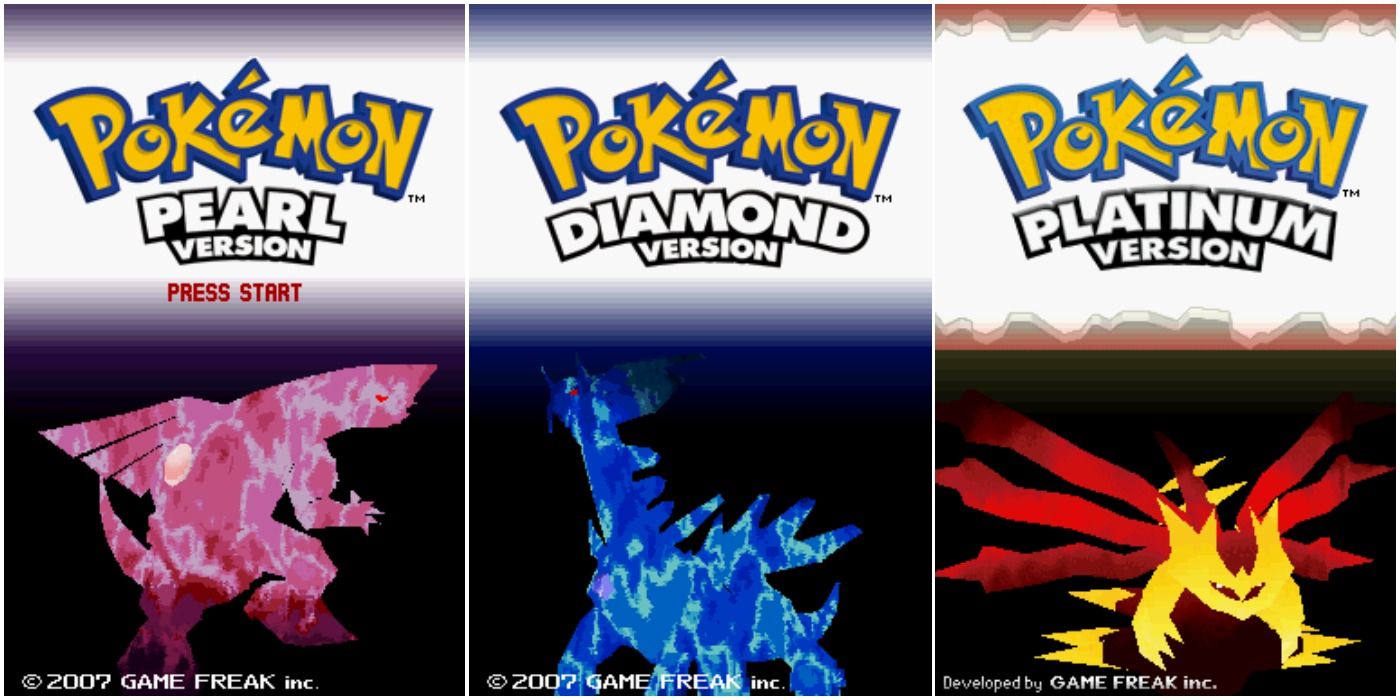
When discussing the history of handheld gaming and the evolution of software architecture within the Pokémon franchise, the question “What generation is Pokémon Platinum?” serves as the starting point for a broader conversation about technological transitions. To answer the question directly: Pokémon Platinum is a core series title belonging to Generation IV (Generation 4).
Released for the Nintendo DS in late 2008 (Japan) and early 2009 (internationally), Pokémon Platinum arrived as the definitive “third version” to Pokémon Diamond and Pearl. However, from a technology perspective, Platinum was more than just an expansion; it was a masterclass in software optimization, UI refinement, and the successful integration of global networking features that set the standard for the mobile gaming experiences we see today.
The Architectural Foundation of Generation IV
Generation IV marked one of the most significant hardware shifts in the history of the Pokémon franchise. Transitioning from the Game Boy Advance (GBA) to the Nintendo DS required Game Freak to completely overhaul their engine to support dual-screen functionality, touch-screen input, and enhanced 3D rendering.
The Jump to the Nintendo DS Dual-Screen Hardware
The Nintendo DS hardware featured two separate ARM processors—the ARM9 and ARM7—which allowed for significantly more complex data processing than the single-core GBA. Pokémon Platinum utilized this dual-screen architecture to segregate the user interface (UI) from the primary game world. While the top screen focused on rendering the 3D-overworld and 2D-sprite battles, the bottom screen was dedicated to the “Pokétch” (Pokémon Watch) and battle menus. This separation was a technical milestone, reducing screen clutter and allowing the software to maintain a constant stream of information to the player without interrupting the visual flow of the game.
Engine Optimization and Frame Rate Enhancements
One of the primary technical criticisms of the initial Generation IV titles (Diamond and Pearl) was the sluggishness of the software. Players noted slow movement speeds, delayed battle transitions, and “heavy” menu navigation. In developing Pokémon Platinum, the technical team focused heavily on code optimization.
The developers refined the game’s internal clock cycles and improved the rendering engine’s efficiency. As a result, Platinum featured a significantly faster walking and surfing speed, snappier battle text transitions, and reduced loading times between map segments. For tech enthusiasts, Platinum represents the “refined build” of a software generation—a version where the code was finally polished enough to fully leverage the DS’s processing power.
Integrating Global Connectivity: The Wi-Fi Revolution
While previous generations relied on physical Link Cables or short-range wireless adapters, Pokémon Platinum and its Gen IV peers were the pioneers of the Nintendo Wi-Fi Connection. This shift turned a localized handheld game into a global digital platform.
The Nintendo Wi-Fi Connection and the Global Trade Station (GTS)
The technical infrastructure of Pokémon Platinum was built to handle asynchronous online interactions. The Global Trade Station (GTS) was a central server-based system that allowed players to upload their data to a worldwide database. This required sophisticated data packet management to ensure that “cloned” or corrupted Pokémon data did not destabilize the server.
In Platinum, the GTS was expanded with the “Wi-Fi Club” and the “Global Terminal.” These features allowed for the recording and sharing of “Battle Videos”—small files containing the metadata of a battle that could be replayed by other users. This was an early precursor to the social sharing features common in modern mobile apps, requiring the game to save and upload specific button-input sequences rather than large video files, a clever workaround for the limited bandwidth of the 2008 era.
Local Wireless and the “Union Room” Technology
Beyond the internet, Platinum maximized the DS’s local wireless capabilities. The “Union Room” functioned as a local ad-hoc network, allowing up to eight DS units to communicate simultaneously within a specific frequency range. Managing these connections without interference was a feat of local networking for the time. This technology facilitated not just trading and battling, but also “Record Mixing,” where game worlds would sync data points such as television broadcasts and NPC locations, creating a proto-social-network experience.
Mechanics and Data Structure: The Physical/Special Split
From a software logic perspective, Generation IV (and specifically the refined version in Platinum) introduced the most impactful change to the series’ battle engine: the Physical/Special Move Split. This was a fundamental rewrite of the game’s combat mathematics.
Re-coding the Battle Logic
In Generations I through III, whether a move dealt damage based on a Pokémon’s “Attack” or “Special Attack” stat was determined entirely by the move’s elemental type. For example, all Fire-type moves were “Special,” regardless of whether the move involved a physical punch or a blast of flame.
In Generation IV, the developers decoupled move types from damage categories. This required a massive overhaul of the move database and the damage calculation subroutines. Every single move in the game’s code had to be assigned a new “Category” flag. This logic change added layers of depth to the gameplay and forced a re-evaluation of the data values assigned to every Pokémon in the Pokédex. For developers, this represents a classic case of refactoring legacy code to provide a more intuitive and balanced user experience.
Managing Complex Save Data on DS Cartridges
Pokémon Platinum utilized a 1-gigabit (128 MB) mask ROM cartridge, which was significantly larger than the cartridges used for Diamond and Pearl. The increased storage capacity was necessary to house the expanded “Distortion World”—a 3D environment with gravity-defying geometry and real-time shadows.
Managing the save data on these cartridges also became more complex. Platinum utilized a sophisticated flash memory system within the cartridge to store not only the player’s progress but also complex decorative data (like the Secret Base) and the extensive “Journal” which tracked the player’s last few actions. Ensuring data integrity across these varying save states was a primary focus of the Gen IV technical suite.
User Interface and Touch-Screen Innovation
The Nintendo DS was defined by its stylus and touch-sensitive lower screen. Pokémon Platinum took the experimental UI of its predecessors and polished it into a highly functional “app-based” experience.
The Pokétch: A Multi-Functional Digital Widget
The Pokétch was arguably the first “smartwatch” in the Pokémon universe. Technically, it was a series of mini-applications (applets) that ran on the bottom screen. Players could cycle through over 20 different apps, including a calculator, a pedometer, a digital clock, and a “Dowsing Machine” (a radar for hidden items).
From a UI/UX standpoint, the Pokétch was revolutionary because it allowed players to interact with the game’s secondary systems without pausing the main adventure. It utilized the DS’s real-time clock (RTC) to provide time-sensitive data, a feature that required the game to constantly poll the hardware’s internal clock even when the software was ostensibly in a “sleep” or “idle” state.
Streamlining Menu Navigation for Touch Input
Platinum refined the touch-screen interface for battles and PC storage management. The developers optimized the “hit boxes” for menu buttons on the bottom screen, making them more responsive to finger taps rather than just the stylus. This move toward “finger-friendly” UI was a predictive step toward the capacitive touch screens that would eventually dominate the smartphone market. In the Pokémon Storage System, players could drag and drop Pokémon sprites across boxes, a significant improvement in data management over the button-only navigation of previous generations.

The Technological Legacy of Pokémon Platinum
Understanding that Pokémon Platinum is a Generation IV title allows us to appreciate it as a bridge between the analog past and the digital future of gaming. It was the era where the franchise moved from being a series of isolated experiences to a globally connected ecosystem.
The technical innovations found in Platinum—the global trade infrastructure, the refined dual-screen UI, and the massive refactoring of battle logic—laid the groundwork for every Pokémon game that followed. It proved that handheld devices could support complex, data-heavy software that rivaled home consoles in depth and connectivity.
For the tech-minded player, Pokémon Platinum isn’t just a game about capturing creatures; it is a high-water mark of the DS era, representing a moment when software design perfectly met the potential of the hardware. Whether it is the optimized frame rates or the robust implementation of Wi-Fi protocols, Platinum remains a definitive example of how iterative software development can take a solid concept and turn it into a technical masterpiece.
aViewFromTheCave is a participant in the Amazon Services LLC Associates Program, an affiliate advertising program designed to provide a means for sites to earn advertising fees by advertising and linking to Amazon.com. Amazon, the Amazon logo, AmazonSupply, and the AmazonSupply logo are trademarks of Amazon.com, Inc. or its affiliates. As an Amazon Associate we earn affiliate commissions from qualifying purchases.