
The AR-15 platform, a name synonymous with modern semi-automatic rifles, evokes strong imagery and often passionate debate. While its presence in popular culture and its role in the firearms industry are undeniable, a fundamental question for many remains: what exactly does the “AR” in AR-15 stand for? This inquiry, seemingly simple, delves into the technological lineage and innovative spirit that birthed one of the most influential firearm designs of the 20th century. It’s a story not of marketing buzzwords or corporate branding, but of engineering prowess and a revolutionary approach to firearm design. To understand the “AR,” we must journey back to its inception, exploring the technological advancements and the individuals who shaped this iconic weapon.

The Genesis of the AR: ArmaLite’s Innovative Spirit
The AR-15’s story begins not with the ubiquitous rifles seen today, but with a forward-thinking aerospace company. ArmaLite, a division of the Fairchild Engine and Airplane Corporation, was at the forefront of aviation technology in the mid-1950s. Their expertise in lightweight, high-strength materials like aluminum alloys, a staple in aircraft construction, naturally bled into their forays into firearm design. The company’s vision was to create a rifle that was significantly lighter, more modular, and easier to operate than the traditional wooden-stocked firearms of the era.
From Aviation Materials to Firearm Functionality
ArmaLite’s engineers, led by the visionary Eugene Stoner, were not constrained by conventional firearms manufacturing norms. They approached the AR-15 project with a fresh perspective, leveraging their knowledge of aerospace engineering principles. This meant employing advanced manufacturing techniques and materials that were not typically associated with firearms. The use of polymers and lightweight metals was a radical departure from the prevailing steel and wood construction.
The primary objective was to develop a rifle that would be suitable for the soldier of the future. This involved not only reducing weight but also incorporating features that enhanced controllability and ease of maintenance. Stoner and his team meticulously analyzed the stresses and dynamics of firearm operation, applying principles of fluid dynamics and material science to optimize the rifle’s performance. The result was a design that was inherently innovative, moving away from brute force and towards a more elegant, system-based approach to firearm engineering.
The AR-10 Precursor: Laying the Technological Foundation
Before the AR-15, there was the AR-10. Developed by ArmaLite in the early 1950s, the AR-10 was the direct technological ancestor of the AR-15. It was a selective-fire battle rifle chambered in the powerful 7.62x51mm NATO round. While the AR-10 itself didn’t achieve widespread military adoption in the United States, it served as a crucial proving ground for the design principles that would define the AR-15.
The AR-10 was groundbreaking for its innovative use of a direct impingement gas operating system. In this system, hot gas from the fired cartridge is routed directly back into the bolt carrier group, unlocking and cycling the action. This was a significant departure from the prevailing piston-driven systems of the time, which often added weight and complexity. The AR-10 also showcased ArmaLite’s commitment to modularity, with a design that allowed for easier disassembly and maintenance. These fundamental technological innovations of the AR-10 were meticulously refined and scaled down for the AR-15.
The “AR” Designation: A Testament to ArmaLite’s Innovation
The “AR” in AR-15 is not an acronym in the traditional sense, representing a specific feature or a military designation. Instead, it is a direct and proud declaration of its origin: ArmaLite Rifle. This designation is a clear testament to the company that conceived, designed, and initially manufactured this revolutionary firearm. It signifies a departure from the common practice of naming firearms after calibers, manufacturers, or historical figures. The “AR” is intrinsically linked to the brand and the technological advancements that ArmaLite brought to the table.
The Direct Impingement Gas System: A Core Technological Advancement
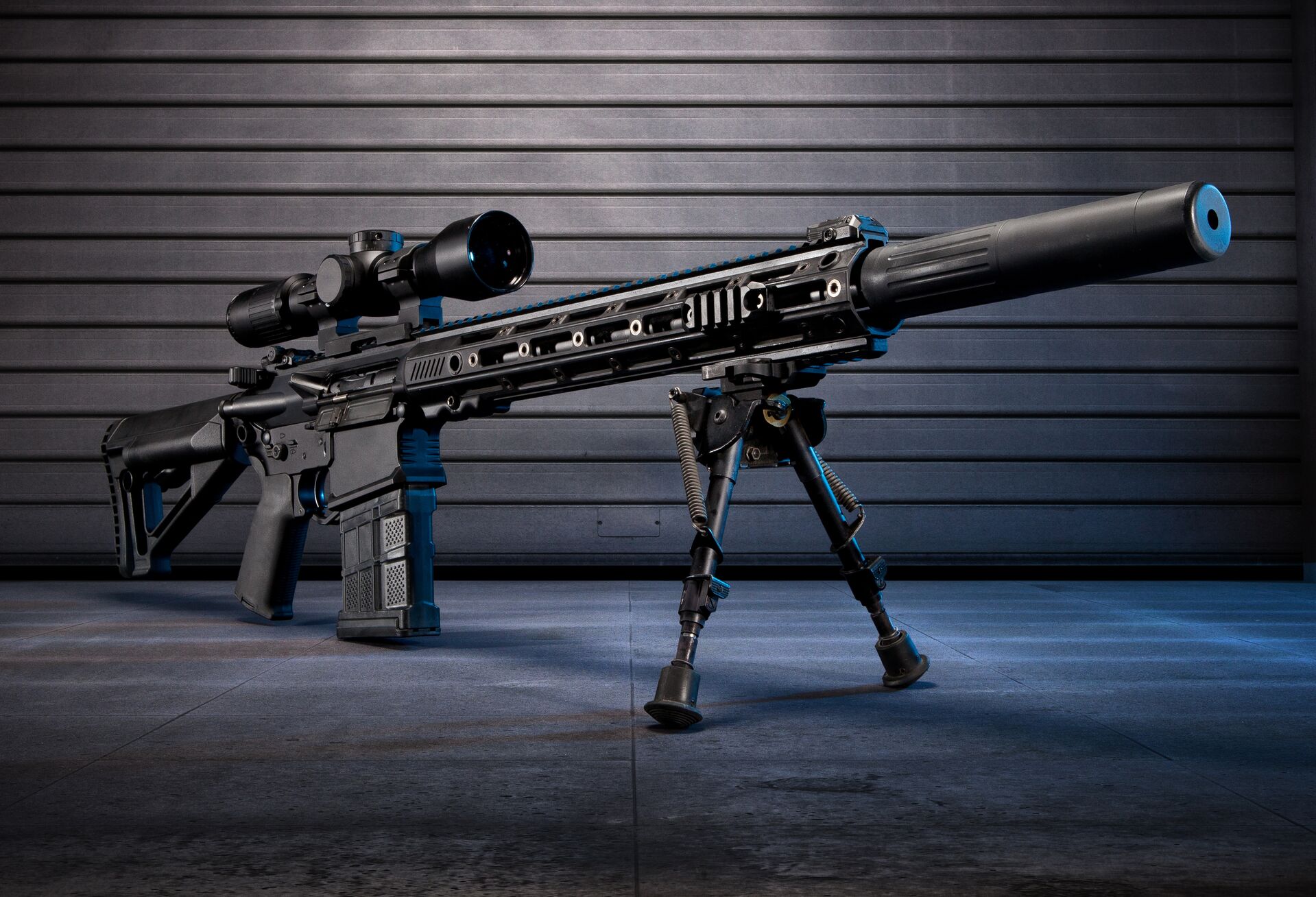
The direct impingement (DI) gas system is arguably the most significant technological innovation embodied by the AR-15, inherited directly from the AR-10. This system is fundamental to the AR-15’s operational characteristics and its enduring appeal. In a DI system, a portion of the propellant gases generated when a round is fired is channeled through a gas tube from the barrel’s gas port directly into the bolt carrier group. These gases act on a small piston integrated within the bolt carrier, pushing it rearward. This action unlocks the rotating bolt, extracts the spent cartridge case, and cocks the hammer, all in one fluid motion.
The advantages of the DI system are numerous and directly contribute to the AR-15’s reputation for reliability and ease of use. By eliminating the need for a separate operating rod and associated components found in piston-driven systems, the DI design results in a lighter and more streamlined firearm. This reduction in reciprocating mass contributes to a smoother shooting experience and less felt recoil, allowing for faster follow-up shots. Furthermore, the direct impingement system is highly efficient, extracting maximum energy from the propellant gases. While it does vent hot gas and carbon fouling into the receiver, which can necessitate more frequent cleaning, this is a trade-off often considered worthwhile for the system’s inherent advantages in terms of weight and simplicity.
Modular Design Principles: A Foundation for Adaptability
Beyond the gas system, the AR-15’s modular design principles are another critical aspect of its technological significance, and this too stems from ArmaLite’s initial vision. The rifle was conceived from the ground up to be adaptable and easily configurable. This modularity allows for a high degree of customization, enabling users to tailor the firearm to specific needs and preferences.
The upper and lower receiver separation is a cornerstone of this modularity. The lower receiver houses the fire control group, the magazine well, and the stock, while the upper receiver contains the barrel, the bolt carrier group, and the handguard. This separation allows for quick and easy swapping of barrels of different lengths and calibers, as well as the effortless replacement of the bolt carrier group. The standardized nature of the AR-15 platform, often referred to as the “AR-15 pattern,” has fostered an aftermarket industry dedicated to producing a vast array of compatible components. This includes different handguards, stocks, sights, optics, pistol grips, and muzzle devices. This inherent adaptability has made the AR-15 platform incredibly versatile, suitable for a wide range of applications, from sport shooting and hunting to law enforcement and military use. ArmaLite’s foresight in creating a platform built for such extensive modification has been a key factor in its sustained popularity and evolution.
The Evolution Beyond ArmaLite: Preserving the Technological Legacy
While ArmaLite pioneered the AR-15, the company’s subsequent financial troubles led to the sale of the design rights. Colt’s Manufacturing Company acquired the rights to produce the AR-15 and played a pivotal role in its widespread adoption, particularly by the U.S. military as the M16 rifle. Despite the change in manufacturer, the core technological principles established by ArmaLite and Eugene Stoner remained the foundation of the rifle.
Colt’s Role in Military Adoption and Standardization
Colt’s acquisition of the AR-15 design in the late 1950s was a critical turning point for the platform. Recognizing the rifle’s potential, Colt heavily promoted it to the U.S. military. After a series of trials and modifications, the AR-15 was officially adopted by the U.S. Air Force in 1962 as the M16. Subsequent adoption by the Army and other branches solidified the M16 (and its civilian counterpart, the AR-15) as a dominant force in small arms technology.
Colt’s involvement was instrumental not only in the military adoption but also in the standardization of the platform. Their manufacturing expertise and focus on quality control ensured that the AR-15 was produced to rigorous specifications. This standardization was crucial for interoperability and maintenance within military units. While the military version, the M16, has undergone numerous upgrades and variations over the decades (such as the M16A1, M16A2, M4 carbine), the fundamental operational principles and the direct impingement gas system designed by ArmaLite and Eugene Stoner have remained largely consistent. This enduring technological core is a testament to the original design’s efficacy and robustness.

The AR-15 as a Commercial Success and Open Platform
Following its military success, the AR-15 platform was eventually released for civilian sales as a semi-automatic rifle. This transition marked the beginning of its unparalleled commercial success and its transformation into a cultural icon. The inherent modularity and ease of customization, which were technological imperatives for ArmaLite, proved to be massive selling points for the civilian market.
The AR-15 platform became an “open platform,” meaning that its design was relatively accessible for other manufacturers to produce compatible components and even complete firearms. This fostered intense competition and innovation within the firearms industry. Companies began producing a vast array of AR-15 variants, chambered in different calibers and configured for various purposes. This open-source approach to firearm design, driven by the modularity and interchangeability of parts, has allowed the AR-15 to remain at the forefront of firearm technology for decades. The “AR” designation, therefore, represents not just the origin of the rifle but the enduring legacy of an innovative technological design that continues to be a benchmark in the firearms industry. It stands for ArmaLite Rifle, a name that encapsulates a revolutionary step forward in firearm engineering.
aViewFromTheCave is a participant in the Amazon Services LLC Associates Program, an affiliate advertising program designed to provide a means for sites to earn advertising fees by advertising and linking to Amazon.com. Amazon, the Amazon logo, AmazonSupply, and the AmazonSupply logo are trademarks of Amazon.com, Inc. or its affiliates. As an Amazon Associate we earn affiliate commissions from qualifying purchases.