
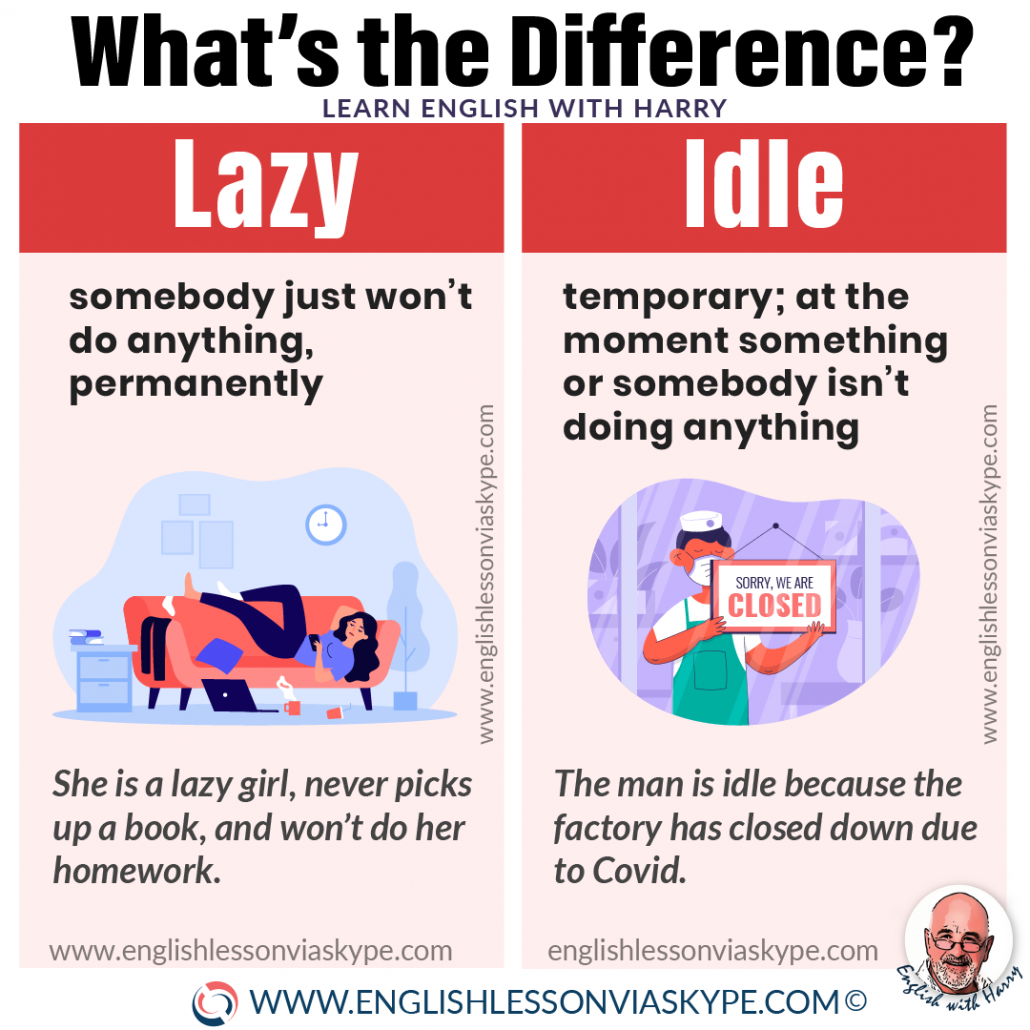
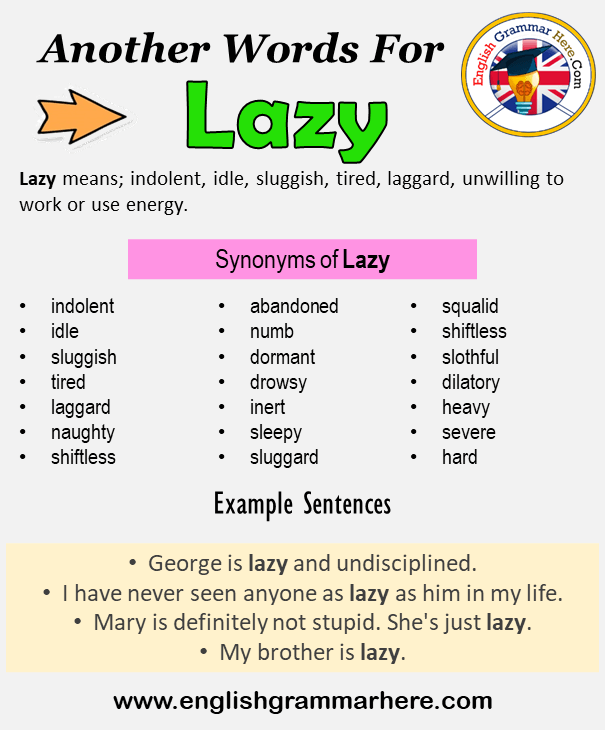
In the lexicon of everyday English, the word “lazily” often carries a negative connotation, suggesting a lack of effort, procrastination, or apathy. However, in the world of technology—specifically within software engineering, web development, and computer science—being “lazy” is considered a sophisticated and highly desirable design pattern. When a system operates lazily, it isn’t being idle out of neglect; rather, it is practicing a strategy of extreme efficiency.
In a technical context, to do something “lazily” means to defer the execution of a task or the computation of a value until the exact moment it is needed. This is the antithesis of “eager” execution, where tasks are completed as soon as they are defined. By adopting a lazy approach, developers can significantly optimize resource usage, improve application performance, and handle massive datasets that would otherwise crash a system.
The Foundations of Lazy Evaluation
At the heart of modern programming languages lies the concept of lazy evaluation. This is a strategy where the evaluation of an expression is delayed until its value is actually required by another part of the program. It is a cornerstone of functional programming, but its influence has permeated nearly every modern language, from Python and JavaScript to C# and Java.
What is Lazy Evaluation?
Lazy evaluation ensures that the computer does not waste cycles calculating results that might never be used. Imagine a program that calculates a complex mathematical sequence but only ever displays the first five results to the user. An eager system would calculate every possible result in the sequence before showing anything. A lazy system, conversely, waits for the user’s request and calculates only those first five results, leaving the rest of the sequence uncomputed. This “call-by-need” mechanism allows for much faster initial startup times and lower CPU overhead.
Eager vs. Lazy: A Comparative Analysis
To understand the value of the lazy approach, one must look at its opposite: eager evaluation. Eager evaluation is straightforward; when you assign a value to a variable, the computer calculates that value immediately. While this is intuitive, it can be incredibly inefficient when dealing with large-scale data or complex branching logic.
For instance, in a conditional “If-Then” statement, eager evaluation might pre-calculate the results of both the “True” and “False” branches. Lazy evaluation, however, will only evaluate the branch that is actually triggered. This difference becomes critical when the branch not taken involves a heavy database query or a memory-intensive calculation. By choosing the lazy path, developers ensure that the system’s “energy” is spent only on the paths the user actually travels.
Lazy Loading in Web Development and Performance
Perhaps the most common encounter a general user has with the concept of “lazily” is through “lazy loading.” As web pages have become increasingly heavy with high-resolution images, videos, and complex scripts, the need for deferred loading has become a standard for performance optimization and Search Engine Optimization (SEO).
Optimizing the User Experience with Deferred Assets
Lazy loading is a technique that prioritizes the loading of content that is currently within the user’s “viewport”—the part of the screen they are actually looking at. If a long-form article contains twenty high-definition images, an eager browser would attempt to download all twenty images as soon as the page begins to load. This creates a bottleneck, slowing down the time it takes for the text to become readable.
When images are loaded lazily, the browser only downloads the images near the top of the page. As the user scrolls down, the browser dynamically fetches the remaining images just before they come into view. This creates a seamless experience for the user, who perceives a fast-loading site, while the server benefits from reduced initial bandwidth consumption.
Implementing Image and Video Lazy Loading
Modern web standards have made implementing lazy loading easier than ever. With the introduction of the loading="lazy" attribute in HTML, developers can instruct browsers to handle the deferral automatically without the need for complex JavaScript libraries. Furthermore, the Intersection Observer API allows developers to have fine-grained control over when an element is considered “active” and ready to be loaded.
This technical shift has profound implications for mobile users. On a limited data plan or a slow 4G connection, eagerly loading an entire page’s worth of media can be costly and frustrating. By loading assets lazily, developers respect the user’s hardware constraints and data limits, leading to higher retention rates and better overall digital accessibility.
Functional Programming and Lazy Sequences
In the realm of data science and backend engineering, the “lazy” approach is utilized to handle data structures that are theoretically infinite. This is achieved through lazy sequences, often implemented as “generators” or “iterators.”
Working with Infinite Data Streams
One of the most powerful features of languages like Python or Haskell is the ability to define a sequence that never ends—such as a list of all prime numbers. In an eager system, attempting to create such a list would immediately result in a “Memory Error” or a system crash, as the computer would attempt to fill its RAM with an infinite amount of data.
In a lazy system, an infinite sequence is merely a set of instructions. The system knows how to generate the next number, but it doesn’t do so until the program asks for it. This allows developers to map, filter, and reduce data streams of any size. You can ask a lazy sequence for the “1,000,000th prime number,” and it will compute only what is necessary to reach that specific point, rather than trying to store every prime number leading up to it in a static array.
Memory Efficiency and Resource Management
Lazy sequences are essential for processing large files, such as multi-gigabyte server logs. Instead of reading the entire file into memory (the eager way), a developer can lazily iterate through the file line by line. Each line is processed and then discarded, meaning the memory footprint of the program remains tiny regardless of whether the log file is ten megabytes or ten terabytes. This efficiency is what allows modern cloud infrastructure to scale effectively, processing massive amounts of “Big Data” without requiring an infinite amount of physical hardware.
Modern Frameworks and Lazy Routing
As web applications have transitioned into complex Single Page Applications (SPAs) using frameworks like React, Angular, and Vue, the concept of “lazily” has moved into the architecture of the code itself. This is often referred to as “Lazy Routing” or “Code Splitting.”
Enhancing Single Page Applications (SPAs)
In a traditional SPA, the entire application’s logic is often bundled into a single JavaScript file. As the application grows to include dashboards, user profiles, settings pages, and administrative tools, this bundle becomes massive. A user who only wants to see the login page shouldn’t be forced to download the code for the entire administrative dashboard.
Lazy routing solves this by splitting the application into smaller chunks. When a user visits the homepage, only the code for the homepage is loaded. If the user never clicks on the “Settings” tab, the code for the settings page is never downloaded. This modular approach ensures that the “Time to Interactive” (TTI) remains low, even as the application’s feature set grows.
Code Splitting and Bundle Optimization
Code splitting is the technical realization of lazy loading applied to scripts. By using dynamic import() statements, developers can tell the build tool (like Webpack or Vite) to isolate specific components. This doesn’t just improve load times; it also assists in “cache invalidation.” If a developer updates the code for the “Payments” module, users only need to redownload that specific chunk, rather than the entire application bundle. This “lazy” management of code delivery is a hallmark of high-performance modern software architecture.
The Trade-offs: When “Lazy” Isn’t Better
Despite its many advantages, doing things lazily is not a silver bullet. There are specific scenarios where eagerness is actually preferred, and being “lazy” can introduce hidden costs.
Overhead and Latency Issues
The primary drawback of laziness is the “latency spike.” While lazy loading makes the initial page load faster, it can introduce small delays later on. For example, if a user scrolls very quickly through a lazily loaded gallery, they might see blank placeholders for a split second while the images are fetched. In high-frequency trading or real-time gaming, where every millisecond counts, the overhead of checking whether a value has been computed yet can be too high. In these cases, pre-calculating everything (eager evaluation) ensures that the data is ready exactly when it is needed, without the delay of a “just-in-time” computation.
Debugging and Complexity Challenges
Lazy evaluation can also make debugging more difficult. Because code isn’t executed when it is defined, an error might not appear until much later in the program’s execution. This can lead to “Heisenbugs”—bugs that seem to disappear or change behavior when you try to observe them. Furthermore, if a developer isn’t careful, they can create “memory leaks” where a lazy expression (often called a “thunk”) holds onto references to large objects in memory, waiting to be evaluated, even when those objects are no longer needed.
Conclusion: The Strategic Use of Laziness
In the tech industry, “lazily” is a term of respect. It describes a system that is smart enough to wait, efficient enough to conserve resources, and robust enough to handle infinite possibilities. Whether it is a browser deferring an image download, a Python generator processing a massive dataset, or a React app splitting its code into manageable chunks, laziness is the key to building scalable, high-performance technology.
By understanding when to be lazy and when to be eager, developers can create software that feels instantaneous to the user while remaining light on the hardware. In the digital age, being lazy isn’t about doing less; it’s about doing exactly what is necessary, at exactly the right time.
aViewFromTheCave is a participant in the Amazon Services LLC Associates Program, an affiliate advertising program designed to provide a means for sites to earn advertising fees by advertising and linking to Amazon.com. Amazon, the Amazon logo, AmazonSupply, and the AmazonSupply logo are trademarks of Amazon.com, Inc. or its affiliates. As an Amazon Associate we earn affiliate commissions from qualifying purchases.