
The elusive nature of bobcats, their nocturnal habits, and their wide-ranging territories have historically made understanding their dietary habits a significant challenge for wildlife biologists. However, the advent and continuous evolution of sophisticated technological tools have revolutionized our ability to peer into the lives of these adaptable predators and meticulously document their feeding patterns. Far from being a simple question of biology, understanding “what bobcats eat” has become a compelling case study in how technological advancements are transforming ecological research, conservation efforts, and our broader comprehension of the natural world. From cutting-edge GPS tracking and remote sensing to advanced genetic analysis and AI-powered observation, technology is providing unprecedented insights into the dietary ecology of Lynx rufus.
This exploration delves into the technological frontiers that are illuminating the bobcat’s menu. We will examine how these tools are not only answering fundamental questions about their prey but also informing critical conservation strategies and highlighting the intricate relationships within the ecosystems they inhabit. By bridging the gap between traditional fieldwork and high-tech innovation, we gain a more nuanced and comprehensive understanding of these fascinating felines.
Tracking and Observation: Pinpointing the Prey
The ability to locate and observe bobcats in their natural habitats, even when they are most active, has been dramatically enhanced by technological advancements. These tools allow researchers to move beyond opportunistic sightings and scat analysis to gather continuous, detailed data on their movements and, by extension, their prey.
GPS Collars and Telemetry: A Digital Trail of Consumption
Historically, understanding bobcat diets relied on direct observation or the analysis of stomach contents from harvested animals, both of which offered limited data points. The introduction of GPS collars has been a watershed moment. These lightweight devices, attached to the bobcat, transmit precise location data at regular intervals. By mapping these movements, researchers can infer hunting behaviors. For instance, periods of prolonged stillness in specific microhabitats can suggest a successful kill.
More advanced telemetry systems, such as Argos satellite tags and even newer, more miniaturized GPS units, provide even greater accuracy and longer battery life, allowing for extended study periods. The data collected is then processed and analyzed using Geographic Information Systems (GIS). GIS software allows scientists to overlay bobcat movement data with detailed environmental maps, including vegetation types, topography, and the known distribution of potential prey species. This integration helps to pinpoint likely hunting grounds and correlate bobcat presence with specific prey availability. The analysis of stopover points and travel corridors can reveal patterns in how bobcats select hunting areas based on prey density and accessibility.
Camera Traps and Remote Sensing: Unobtrusive Wildlife Surveillance
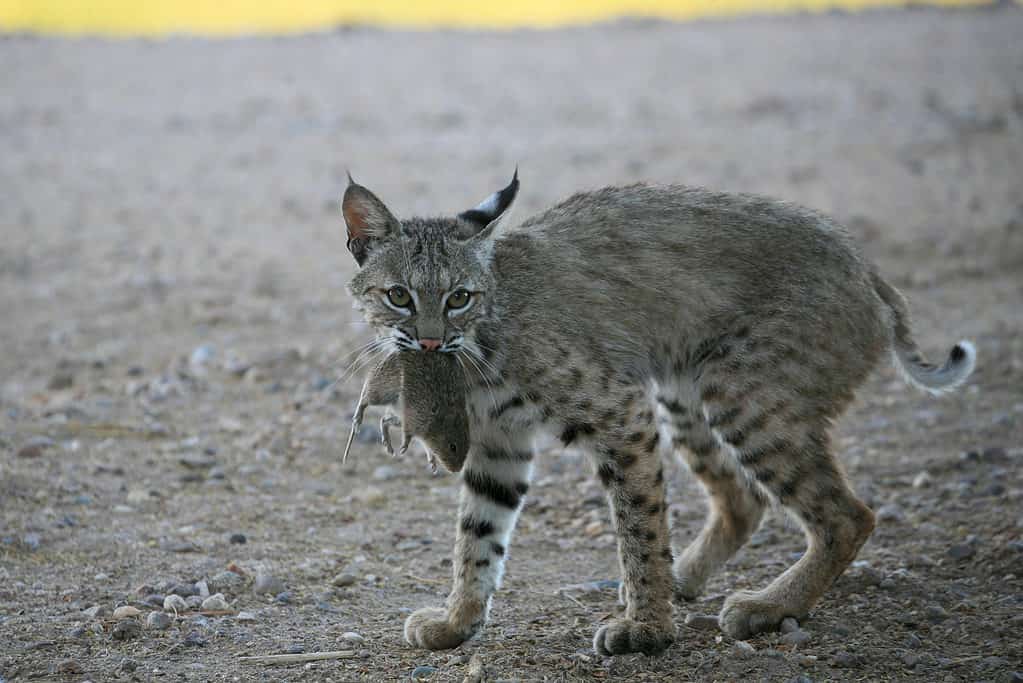
Camera traps, equipped with motion and heat sensors, have become indispensable tools for non-invasive wildlife monitoring. Placed strategically along game trails, near water sources, or in areas frequented by bobcats, these devices capture still images and video footage of animals passing by. When a bobcat is captured on a camera trap, especially if it is carrying prey or engaging in feeding behavior, it provides direct visual evidence of its diet.
The sheer volume of data generated by camera traps necessitates sophisticated data management and analysis. Machine learning algorithms are increasingly being employed to automatically identify bobcat images, distinguish between individuals, and even detect the presence of prey in the captured frames. Furthermore, remote sensing technologies, such as satellite imagery, can provide broad-scale data on habitat characteristics that influence bobcat prey populations. By analyzing changes in vegetation cover, water availability, and land use over time, researchers can gain insights into how environmental shifts might impact the availability of prey for bobcats and, consequently, their diet.
Decoding the Diet: Genetic and Chemical Analysis
Beyond observation, modern technology offers powerful methods to analyze the actual composition of a bobcat’s meal, even long after the hunt. These techniques provide precise identification of prey species and can reveal dietary trends over time.
DNA Analysis of Scat and Prey Remains: A Microscopic Feast
The analysis of bobcat scat (feces) has been a cornerstone of dietary studies for decades. However, traditional methods relied on identifying identifiable hair, bone fragments, or feathers, which are often degraded or absent. The advent of molecular techniques, particularly DNA metabarcoding, has revolutionized scat analysis.
Researchers can now extract DNA from scat samples and amplify specific gene regions (barcodes) that are unique to different species. By comparing these amplified DNA sequences to comprehensive genetic databases, scientists can identify even the smallest traces of prey consumed, often down to the species level. This technique is incredibly powerful as it can detect prey that would be completely unrecognizable through visual inspection. It allows for a much more comprehensive and accurate assessment of dietary composition, revealing the full spectrum of a bobcat’s diet, including small rodents, birds, insects, and even occasional reptiles.
Similarly, DNA analysis can be applied to prey remains found at kill sites, such as bone fragments or carcasses. This helps confirm the prey species and can even provide information about the age or sex of the prey, offering deeper insights into hunting selectivity.
Stable Isotope Analysis: Tracing Trophic Levels
Stable isotope analysis is another sophisticated technological application that provides a long-term perspective on an animal’s diet. By analyzing the ratios of stable isotopes (such as carbon and nitrogen) in the tissues of a bobcat – typically its fur, whiskers, or bone – researchers can infer the trophic level and general composition of its diet over the period in which those tissues were formed.
Different prey species have distinct isotopic signatures based on their own diets. When a bobcat consumes these prey, these isotopic signatures are incorporated into its tissues. By comparing the bobcat’s isotopic ratios to those of known prey species in the local ecosystem, scientists can reconstruct its diet over months or even years. This technique is particularly valuable for understanding long-term dietary trends and how they might change in response to environmental fluctuations or prey availability. It offers a complementary perspective to the snapshot provided by scat analysis, giving a more holistic view of the bobcat’s place in the food web.
AI and Predictive Modeling: Understanding Ecological Niches
The increasing availability of vast datasets generated by the aforementioned technological tools has paved the way for the application of artificial intelligence (AI) and advanced predictive modeling in bobcat dietary research. These technologies help us not only to understand what bobcats eat but also to predict how their diets might change and what implications this has for the broader ecosystem.
Machine Learning for Pattern Recognition in Movement Data
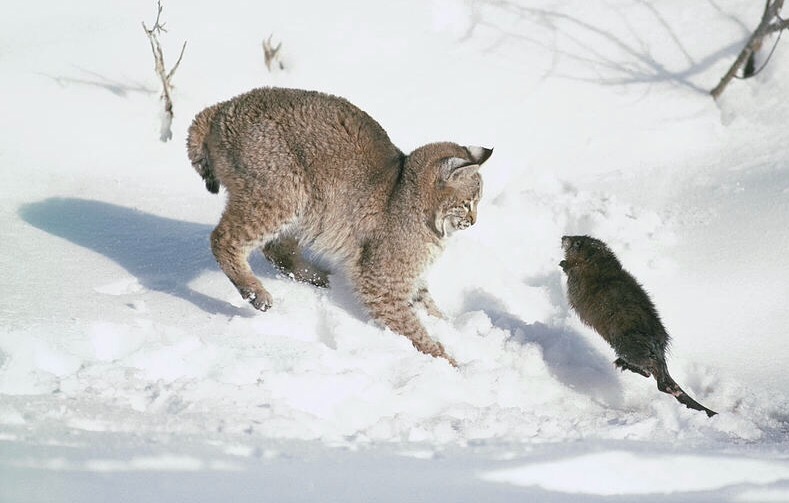
Machine learning algorithms are proving to be invaluable in analyzing the complex patterns embedded within GPS tracking data. These algorithms can identify subtle behavioral shifts associated with hunting, resting, or traveling, and correlate these with environmental variables. For example, AI can be trained to recognize the characteristic movement patterns of a bobcat stalking prey, differentiate it from general locomotion, and then identify the types of habitats where these hunting behaviors are most prevalent.
Furthermore, AI can process and analyze the immense volumes of image data from camera traps, automatically classifying species, counting individuals, and even recognizing behaviors. This significantly reduces the manual labor involved in data analysis, allowing researchers to draw conclusions from larger datasets more efficiently. The ability to quickly sift through thousands of images to find instances of bobcats with prey or specific prey species allows for rapid validation of hypotheses generated by other technological methods.
Predictive Models of Diet and Prey Availability
By integrating data from GPS tracking, camera traps, DNA analysis, and environmental datasets, researchers can build sophisticated predictive models. These models use AI to forecast how changes in climate, habitat, or prey populations might impact bobcat diets. For instance, a model could predict how increased urbanization or the decline of a primary prey species might force bobcats to adapt their hunting strategies and broaden their diet to include different types of animals.
These predictive capabilities are crucial for conservation planning. By understanding the potential future dietary shifts, conservationists can better manage habitats, protect key prey species, and mitigate potential human-wildlife conflicts. The ability to anticipate how bobcats will respond to environmental pressures allows for proactive rather than reactive conservation strategies, ensuring the long-term survival of bobcat populations and the health of the ecosystems they inhabit. Ultimately, technology is transforming our understanding of what bobcats eat from a simple biological curiosity into a powerful lens through which to view and manage complex ecological systems.
aViewFromTheCave is a participant in the Amazon Services LLC Associates Program, an affiliate advertising program designed to provide a means for sites to earn advertising fees by advertising and linking to Amazon.com. Amazon, the Amazon logo, AmazonSupply, and the AmazonSupply logo are trademarks of Amazon.com, Inc. or its affiliates. As an Amazon Associate we earn affiliate commissions from qualifying purchases.