
The image of a sailor has undergone a radical transformation over the last century. While the core mission of protecting international waters remains constant, the “what” of daily naval operations has shifted from manual labor and analog navigation to some of the most sophisticated technological applications on the planet. To ask “What do you do in the Navy?” today is to inquire about the state of global tech innovation. The modern Navy functions less like a traditional maritime force and more like a floating, high-tech city integrated into a global digital grid.
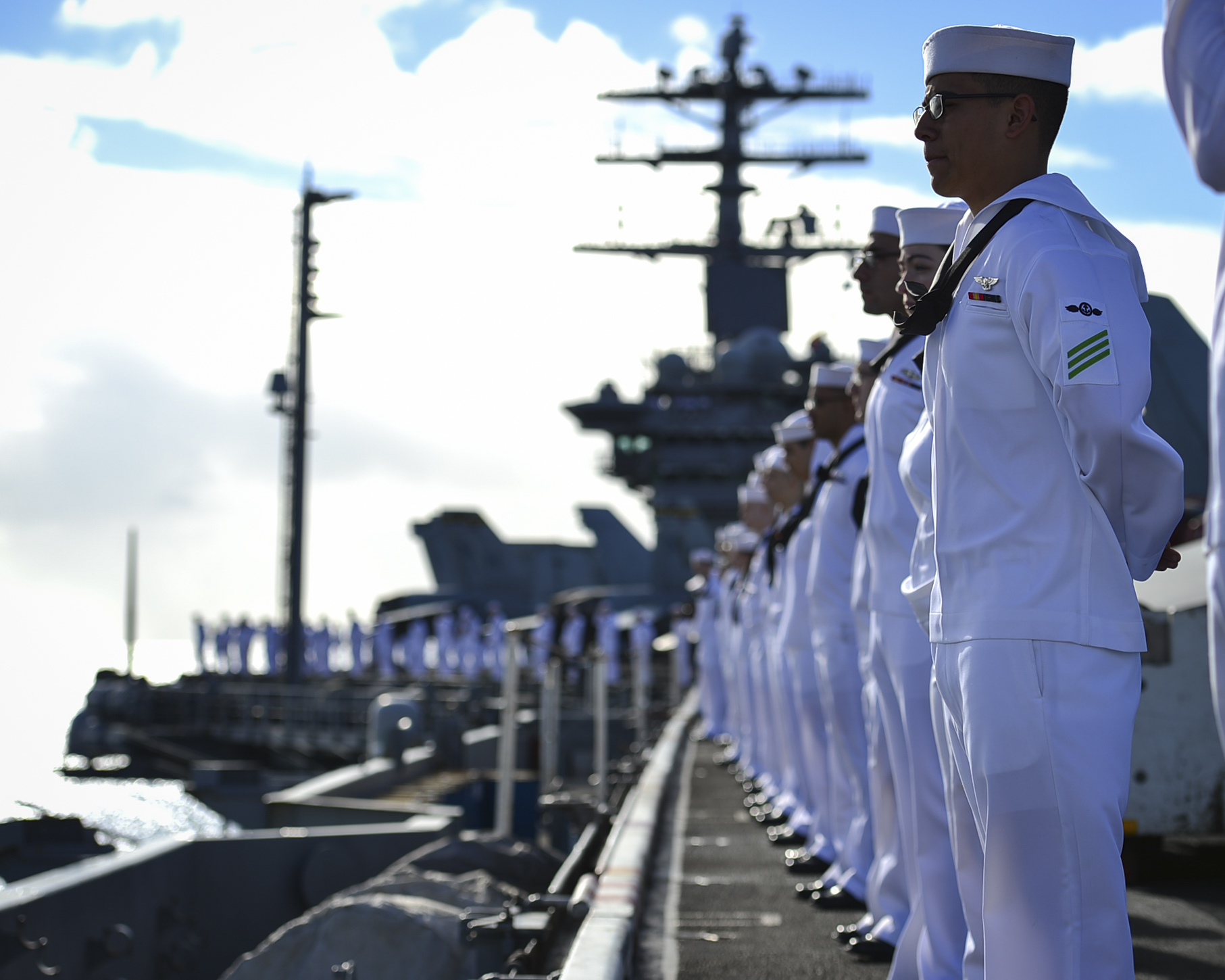
In this exploration, we delve into the technical infrastructure of the Navy, examining how the role of a sailor has evolved into that of a high-level technologist, data analyst, and systems engineer.
The Digital Fleet: From Traditional Seafaring to High-Tech Operations
The backbone of modern naval operations is no longer just steel and diesel; it is data and connectivity. When someone enters a technical role in the Navy today, they are stepping into an ecosystem defined by the Internet of Things (IoT), real-time analytics, and advanced telecommunications.
Integrated Bridge Systems and Automated Navigation
In the past, navigation was a manual process involving sextants, paper charts, and physical lookouts. Today, a navigator’s primary duty involves managing Integrated Bridge Systems (IBS). These systems synthesize data from GPS, radar, and Electronic Chart Display and Information Systems (ECDIS) to provide a comprehensive, real-time picture of the maritime environment. Sailors in these roles are essentially systems managers who must interpret complex data streams to ensure the safety and efficiency of a multi-billion-dollar vessel.
SATCOM and Global Connectivity
A ship at sea is a remote node in a massive global network. What do IT specialists do in the Navy? They maintain the high-bandwidth satellite communications (SATCOM) that allow for seamless data transfer between the fleet and land-based command centers. This involves managing secure VoIP networks, troubleshooting hardware in high-corrosion environments, and ensuring that the “digital umbilical cord” remains unbroken even in the most remote corners of the world’s oceans.
Cyber Defense and Information Warfare: Protecting the Global Network
As the Navy becomes more digitized, the battlefield has expanded into the fifth domain: cyberspace. A significant portion of naval personnel now focuses on the “invisible” work of protecting information assets. If you are involved in Information Warfare, your daily tasks are indistinguishable from those of a top-tier cybersecurity firm.
Cryptology and Signals Intelligence
The role of a Cryptologic Technician is a cornerstone of modern naval operations. These individuals do not just “listen” to radio waves; they engage in sophisticated signals intelligence (SIGINT). They analyze electronic emissions to identify potential threats, decrypt adversary communications, and manage the electromagnetic spectrum. This is a high-stakes tech role that requires deep knowledge of digital signal processing and network architecture.
Defensive Cyberspace Operations (DCO)
The Navy’s infrastructure—from its logistics databases to its weapons systems—is a target for persistent cyber threats. Sailors in the DCO field are tasked with threat hunting, vulnerability assessment, and incident response. They operate within Security Operations Centers (SOCs) located both on land and at sea, using advanced AI-driven tools to detect anomalies and neutralize malware. In this capacity, “what you do” is act as the front-line defense against state-sponsored hackers and digital disruptions.
Engineering the Future: Advanced Propulsion and Robotics at Sea
The mechanical heart of the Navy has also been revolutionized by technology. The transition from steam and basic internal combustion to nuclear power and integrated electric drive systems has created a demand for specialized technical expertise.
Nuclear Power and Advanced Energy Systems
The Navy is one of the world’s leaders in mobile nuclear power. Personnel in the nuclear field are not just “mechanics”; they are highly trained nuclear engineers responsible for the operation and maintenance of pressurized water reactors. This work involves complex physics, rigorous safety protocols, and the management of high-tech control systems that regulate the power for an entire aircraft carrier. The technical training provided in this niche is often considered equivalent to years of graduate-level engineering education.
Maintenance 4.0 and Predictive Analytics
One of the most significant shifts in naval engineering is the move toward “Maintenance 4.0.” Instead of fixing things when they break, naval technicians use acoustic sensors, thermal imaging, and vibration analysis to predict failures before they happen. Sailors use handheld tablets and augmented reality (AR) interfaces to diagnose engine issues, pulling up 3D schematics in real-time. This data-driven approach to maintenance maximizes the operational life of naval assets and represents a peak of industrial tech integration.
AI and Autonomous Systems: The New Horizon of Naval Strategy
Perhaps the most exciting answer to “What do you do in the Navy?” lies in the burgeoning field of unmanned systems and artificial intelligence. The Navy is rapidly moving toward a “hybrid fleet” model where manned ships operate alongside autonomous vessels and aerial drones.
Unmanned Underwater Vehicles (UUVs) and Drones
Sailors are increasingly becoming “operators” rather than “drivers.” Those working with Unmanned Underwater Vehicles (UUVs) manage sophisticated robotics designed for mine countermeasures, oceanographic mapping, and surveillance. These systems utilize advanced sonar and machine learning algorithms to navigate the deep ocean autonomously. Managing these assets requires a blend of traditional seamanship and cutting-edge robotics proficiency.
AI-Driven Decision Support Systems
In the heat of tactical operations, the sheer volume of data can overwhelm a human operator. The Navy is integrating AI decision-support systems that can process thousands of data points—from weather patterns to radar signatures—to suggest the best course of action. Technical personnel are responsible for training these models, ensuring data integrity, and supervising the “human-in-the-loop” interface. This intersection of human intuition and machine processing power is the future of naval leadership.
The Human-Machine Interface: Training for the High-Tech Environment
To support this massive technological overhead, the Navy has had to reinvent its approach to training and human capital. The “what” of naval life now includes a continuous cycle of technical education and certification.
Virtual and Augmented Reality Training
Before a sailor ever sets foot on a ship, they may have spent hundreds of hours in a high-fidelity virtual environment. The Navy utilizes VR simulators to train pilots, bridge teams, and even specialized technicians. This use of “Digital Twins”—virtual replicas of physical ships—allows sailors to practice complex repairs or combat maneuvers in a risk-free environment. This commitment to EdTech (Educational Technology) ensures that the force is always ready for the next iteration of naval hardware.
Continuous Upskilling in a Rapidly Changing Landscape
Because technology evolves faster than traditional military procurement cycles, naval personnel must be lifelong learners. A sailor who starts their career managing a specific software suite may see three or four major upgrades during their tenure. The Navy provides access to top-tier technical certifications (such as CompTIA, Cisco, and Microsoft) as a standard part of its career development. This focus on “upskilling” makes the Navy one of the largest technical incubators in the world.

Conclusion: The Navy as a Technological Leader
When we look beyond the horizon of the ocean, it becomes clear that “what you do in the Navy” is synonymous with “what you do at the leading edge of technology.” Whether it is managing a nuclear reactor, defending a network against a cyberattack, or piloting an autonomous drone, the modern sailor is a technologist first and foremost.
The Navy is no longer defined solely by its physical presence on the water, but by its digital presence in the cloud, its analytical presence in the data center, and its innovative presence in the laboratory. For those looking to work with the technologies of tomorrow—AI, robotics, cybersecurity, and advanced engineering—the Navy provides a unique, high-stakes environment where these tools are not just explored, but are essential to the mission of global security. In the 21st century, the sea remains a vast frontier, but the tools we use to navigate it are built of silicon, code, and boundless technical ingenuity.
aViewFromTheCave is a participant in the Amazon Services LLC Associates Program, an affiliate advertising program designed to provide a means for sites to earn advertising fees by advertising and linking to Amazon.com. Amazon, the Amazon logo, AmazonSupply, and the AmazonSupply logo are trademarks of Amazon.com, Inc. or its affiliates. As an Amazon Associate we earn affiliate commissions from qualifying purchases.