
In the world of alternative investments, few assets combine aesthetic beauty with the sheer mathematical certainty of depletion quite like tanzanite. While gold, silver, and even diamonds can be found across multiple continents, tanzanite is a geological anomaly. Found only in a small four-square-kilometer strip near the base of Mount Kilimanjaro in Tanzania, this trichroic gemstone has evolved from a 1960s discovery into one of the most sought-after vehicles for wealth preservation and speculative growth in the gemstone market.
To understand what tanzanite is from a financial perspective, one must look beyond its mesmerizing blue-violet hue. It is an asset defined by “geological scarcity,” a term that signals to investors that the window for primary-market acquisition is rapidly closing. This article explores tanzanite as a strategic financial tool, analyzing its market dynamics, its role in portfolio diversification, and the economic factors that drive its valuation.
The Economics of Rarity: Why Tanzanite is a Finite Asset
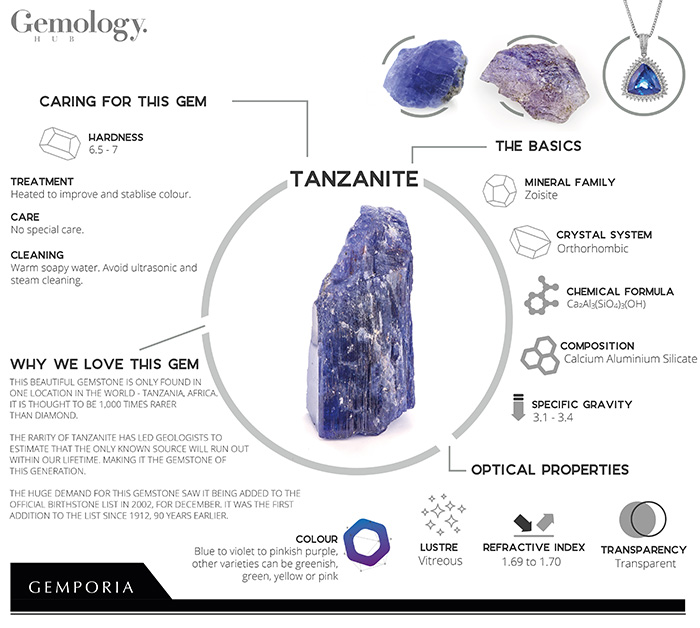
The primary driver of any investment’s value is the relationship between supply and demand. In the case of tanzanite, the supply side of the equation is uniquely constrained. Unlike most commodities, tanzanite cannot be synthesized effectively in a lab to match its natural crystal structure, nor can it be mined elsewhere on the planet.
The Single-Source Phenomenon
Tanzanite is a variety of the mineral zoisite, and its formation required a unique tectonic event involving massive heat and pressure that occurred roughly 585 million years ago. Geologists have noted that the probability of finding tanzanite elsewhere is less than one in a million. For an investor, this “single-source” status creates a monopoly of nature. When the mines in the Merelani Hills are exhausted, the supply of “new” tanzanite will effectively drop to zero, shifting the market entirely to secondary trades and auctions. This is a stark contrast to diamonds, which are found in abundance across Russia, Africa, and Canada.
The “Generation Gem” Timeline
Market analysts often refer to tanzanite as the “Generation Gem.” Based on current mining rates and the depth of the existing shafts, it is estimated that the viable supply of high-grade tanzanite will be depleted within the next 20 to 25 years. We are currently living in the era of primary extraction. For the strategic investor, this creates a “buy and hold” scenario where the exit strategy is timed with the eventual closure of the mines. As the transition from an active mining commodity to a legacy gemstone occurs, historical data suggests a significant upward pressure on price-per-carat valuations.
Understanding Market Value and the 4Cs of Investment Quality
In the realm of business finance and high-end collectibles, not all tanzanite is created equal. To treat tanzanite as a financial asset, one must apply a rigorous framework to determine “Investment Grade” versus “Commercial Grade” specimens.
Color Saturation and Price Premiums
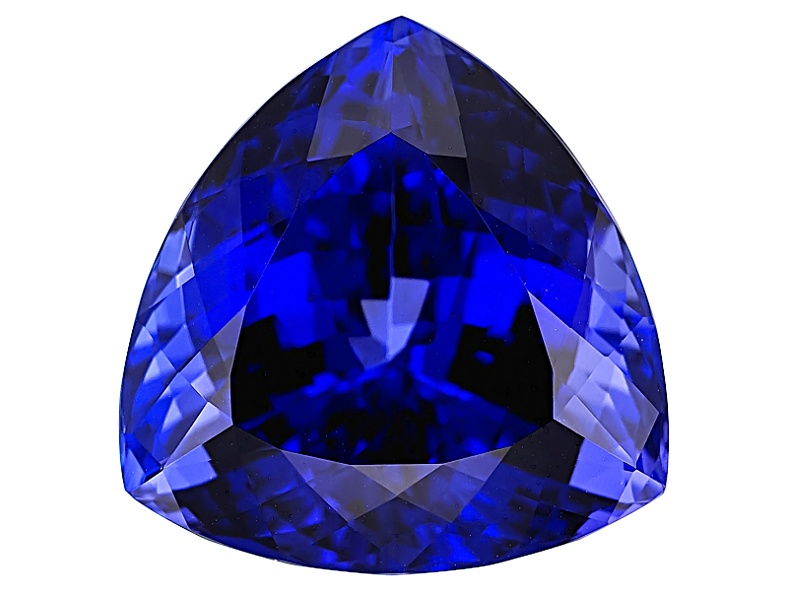
While diamonds are valued for their lack of color, tanzanite’s value is almost entirely predicated on the depth and richness of its blue and violet tones. The most valuable stones are those that exhibit a “vivid” or “deep” saturation. In the industry, these are often categorized as “vAAA” or “Exceptional.”
The investment premium for color is exponential rather than linear. For instance, a pale blue tanzanite may retail for a few hundred dollars per carat, whereas a deep, royal velvet blue stone of the same size can command thousands. From a capital appreciation standpoint, the deepest colors have historically shown the most resilience during market downturns, as they remain the most desirable for high-net-worth collectors.
Clarity and Cut as Value Drivers
For a gemstone to hold its value as a liquid asset, it must be “eye-clean,” meaning it contains no visible inclusions. In the financial evaluation of tanzanite, clarity is a non-negotiable barrier to entry. A stone with internal fractures is a liability; it is more prone to damage and significantly harder to resell.
Furthermore, the “cut” of the tanzanite determines how it manages light. An investment-grade cut maximizes the stone’s pleochroism—its ability to show different colors from different angles. Professional investors look for “precision cuts” that avoid “windows” (pale areas in the center of the stone). A well-cut stone ensures that the maximum amount of “face-up” weight is visible, ensuring the investor isn’t paying for “dead weight” hidden at the bottom of the gemstone.
Tanzanite vs. Traditional Assets: Diversifying Your Portfolio
Modern portfolio theory suggests that diversifying into non-correlated assets can reduce overall risk. Tanzanite serves this role effectively because its price movements are not directly tied to the S&P 500, the bond market, or even the price of gold.
Tangible Assets in Volatile Markets
In periods of high inflation or currency devaluation, tangible assets often serve as a “safe haven.” Tanzanite represents a high concentration of wealth in a very small physical form. Unlike real estate, which is stationary and subject to property taxes, or gold bullion, which is heavy and difficult to transport in large quantities, a high-value tanzanite can represent six figures of wealth while being small enough to fit in a pocket. This portability and high value-to-weight ratio make it an attractive “emergency” asset for diversifying a global portfolio.
Liquidity and Resale Considerations
One of the most critical aspects of gemstone investment is understanding liquidity. Unlike stocks, which can be sold at the click of a button, gemstones require a more nuanced exit strategy. The liquidity of tanzanite is highest in the 5-to-10-carat range, as this size is highly sought after by both custom jewelers and private collectors.
Investors should view tanzanite as a medium-to-long-term hold (5–15 years). The profit margin is realized by purchasing at “source-level” or wholesale prices and selling at the prevailing market rate once the supply-demand gap has widened. Establishing relationships with reputable auction houses or certified gem exchanges is essential for ensuring an efficient exit when it comes time to liquidate the asset.
Navigating the Supply Chain and Ethical Investing
From a business ethics and corporate social responsibility (CSR) perspective, the tanzanite market has undergone a massive transformation. For the modern investor, the “pedigree” of a stone is as important as its physical characteristics.
Government Regulation and Mining Controls
In recent years, the Tanzanian government has taken significant steps to formalize the tanzanite trade. The construction of a 24-kilometer perimeter wall around the Merelani mining site was a landmark move designed to prevent smuggling and ensure that all stones are processed through official channels.
For the investor, this regulation is a positive development. It stabilizes the market by controlling the flow of goods and ensures that “blood tanzanite” or illegally mined stones do not dilute the value of legitimate holdings. When a market is regulated, it gains institutional credibility, which in turn attracts larger tranches of investment capital.
Ensuring Authenticity through Certification
The single greatest risk in the gemstone market is the lack of proper documentation. A tanzanite without a certificate from a recognized gemological laboratory (such as the GIA – Gemological Institute of America) is a speculative gamble, not an investment.
A professional lab report provides an objective “blueprint” of the stone, verifying its origin, dimensions, and whether it has undergone any treatments. Most tanzanite is mildly heat-treated to bring out its blue color—a practice that is universally accepted in the industry and does not negatively impact its investment value. However, any other form of treatment (such as coating or filling) would be a “red flag” that destroys the stone’s resale potential. For the serious investor, the certificate is the “deed” to the asset.

Conclusion: The Strategic Value of Tanzanite
What is tanzanite? In the context of 21st-century finance, it is a finite resource masquerading as a beautiful luxury item. It is an asset class that benefits from a unique set of circumstances: a single geographic source, a looming depletion date, and an increasing global demand for rare, tangible wealth.
As traditional markets become increasingly digital and volatile, the appeal of a physical asset that is “1,000 times rarer than a diamond” becomes clear. By focusing on high-saturation, eye-clean specimens with internationally recognized certification, an investor can secure a piece of geological history that is likely to appreciate as its source of origin fades into memory. Tanzanite is not just a gemstone; it is a calculated play on the mathematics of scarcity.
aViewFromTheCave is a participant in the Amazon Services LLC Associates Program, an affiliate advertising program designed to provide a means for sites to earn advertising fees by advertising and linking to Amazon.com. Amazon, the Amazon logo, AmazonSupply, and the AmazonSupply logo are trademarks of Amazon.com, Inc. or its affiliates. As an Amazon Associate we earn affiliate commissions from qualifying purchases.