
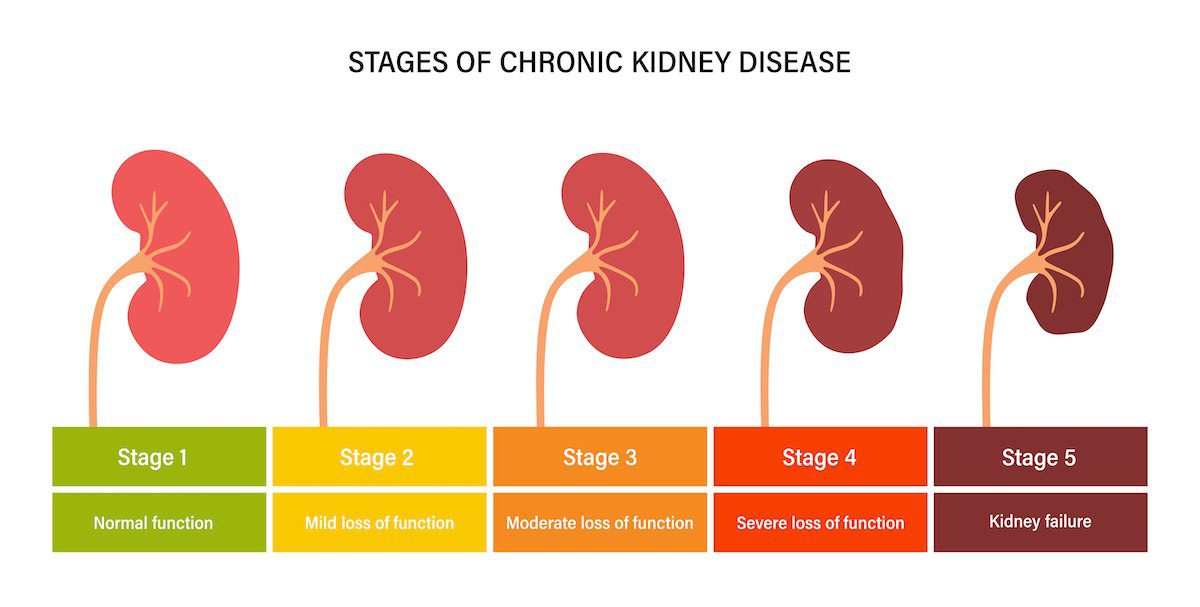
The journey through chronic kidney disease (CKD) is a complex and often challenging one, marked by distinct stages that reflect the progressive loss of kidney function. While the medical understanding of these stages is crucial for diagnosis and treatment, the role of technology in illuminating, managing, and even innovating solutions for conditions like Stage Four Kidney Disease (also known as severe kidney disease) is increasingly significant. From advanced diagnostic imaging and genomic sequencing to sophisticated monitoring devices and AI-driven predictive analytics, technology is reshaping our approach to understanding and confronting this debilitating illness. This article will delve into Stage Four Kidney Disease through a technological lens, exploring how cutting-edge innovations are providing deeper insights, enabling more personalized care, and paving the way for future advancements.

Understanding the Technological Landscape of Kidney Health
The progression of kidney disease is not a monolithic entity. Instead, it is a nuanced biological process that modern technology is uniquely positioned to dissect and understand at an unprecedented level. From the earliest detection of cellular changes to the long-term monitoring of organ function, a spectrum of technological tools is employed to paint a comprehensive picture of a patient’s kidney health.
Advanced Imaging and Diagnostic Modalities
The initial identification and staging of kidney disease heavily rely on sophisticated imaging techniques. These tools allow clinicians to visualize the structure and function of the kidneys, identifying damage and assessing the extent of impairment.
Magnetic Resonance Imaging (MRI) and Computed Tomography (CT) Scans
While traditional methods like ultrasound provide a foundational view, MRI and CT scans offer much greater detail. MRI, for instance, can reveal subtle changes in kidney tissue, inflammation, and even early signs of cancerous growths with high resolution, without exposing the patient to ionizing radiation. CT scans, particularly those utilizing contrast agents, can provide excellent visualization of the renal vasculature, crucial for identifying blockages or abnormalities that might be contributing to kidney damage. These technologies are instrumental in differentiating various causes of kidney disease and assessing the severity of structural changes that characterize different stages.
Positron Emission Tomography (PET) Scans
In more complex cases, PET scans can offer insights into the metabolic activity of kidney cells. By tracking radioactive tracers, PET can help identify areas of inflammation or reduced function that might not be apparent with other imaging methods. This can be particularly useful in diagnosing and monitoring specific types of kidney diseases, such as certain autoimmune conditions that affect the kidneys.
Genomic Sequencing and Biomarker Discovery
The genetic underpinnings of kidney disease are a rapidly expanding area of research, with technological advancements in genomics playing a pivotal role. Understanding an individual’s genetic predisposition or identifying specific genetic mutations associated with kidney damage can lead to earlier diagnosis and more targeted therapies.
Whole Genome Sequencing (WGS) and Exome Sequencing (WES)
These powerful sequencing technologies allow researchers and clinicians to analyze an individual’s entire DNA (WGS) or the protein-coding regions of the genome (WES). By comparing an individual’s genetic code to vast databases, scientists can identify variations linked to inherited kidney disorders or increased susceptibility to acquired forms of CKD. This opens doors for personalized risk assessment and the development of gene-specific treatments in the future.
Proteomics and Metabolomics
Beyond DNA, the study of proteins (proteomics) and metabolites (metabolomics) offers a dynamic snapshot of kidney function and the biochemical processes occurring within the kidneys. Advanced mass spectrometry and other analytical techniques allow for the identification and quantification of thousands of proteins and metabolites in biological samples. These “omics” approaches can reveal subtle biochemical imbalances indicative of early kidney damage, potentially serving as novel biomarkers for disease detection and progression.
Navigating Stage Four Kidney Disease: Technological Interventions and Monitoring
Stage Four Kidney Disease represents a significant decline in kidney function, where the kidneys are severely damaged and can no longer filter waste products effectively. At this critical juncture, technology transitions from primarily diagnostic to actively supportive, offering tools for diligent monitoring, personalized treatment adjustments, and improving the quality of life for affected individuals.
Continuous and Remote Patient Monitoring
The management of Stage Four Kidney Disease requires close observation of various physiological parameters. Technological advancements have made it possible to monitor these parameters continuously and remotely, empowering patients and their healthcare teams.
Wearable Biosensors and Implantable Devices
The proliferation of wearable technology has extended into the medical realm. Smartwatches and specialized biosensors are increasingly capable of tracking vital signs such as blood pressure, heart rate, and even certain blood chemistry levels. For kidney disease patients, these devices can provide continuous data streams, alerting healthcare providers to critical changes or potential complications. In more advanced stages, implantable devices are being developed to monitor intra-body conditions with even greater precision, offering a more integrated approach to patient care.
Smart Home Health Systems and Telemedicine Platforms
Beyond personal devices, integrated smart home health systems can automate the collection of health data, such as daily weight (to monitor fluid retention), blood glucose levels, and medication adherence. These systems often integrate with telemedicine platforms, allowing for secure video consultations and remote data sharing between patients and their nephrologists. This reduces the need for frequent in-person visits, which can be particularly burdensome for individuals with advanced CKD, and ensures timely intervention when necessary.
Artificial Intelligence (AI) in Diagnosis and Treatment Planning
Artificial intelligence is revolutionizing healthcare, and its application in nephrology is particularly promising for managing complex conditions like Stage Four Kidney Disease. AI algorithms can analyze vast datasets to identify patterns, predict outcomes, and personalize treatment strategies.

Predictive Analytics for Disease Progression
AI models trained on large cohorts of kidney disease patients can predict the likelihood of disease progression, the risk of acute kidney injury, or the potential for cardiovascular complications. By analyzing a patient’s unique data – including medical history, lab results, genetic information, and lifestyle factors – AI can provide clinicians with invaluable foresight, enabling proactive interventions to slow down disease advancement.
Personalized Treatment Optimization
Each patient with Stage Four Kidney Disease presents a unique clinical picture. AI can help personalize treatment plans by identifying the most effective medication dosages, fluid management strategies, and dietary recommendations based on individual responses and predicted outcomes. This moves beyond a one-size-fits-all approach to a highly tailored therapeutic strategy, maximizing efficacy and minimizing adverse effects.
AI-Assisted Diagnostic Imaging Analysis
AI algorithms are also being developed to analyze medical images with remarkable accuracy. These tools can assist radiologists and nephrologists in identifying subtle abnormalities in kidney scans, quantifying damage, and differentiating between various types of kidney lesions, thereby aiding in more precise staging and diagnosis.
Technological Innovations on the Horizon for Kidney Disease Management
While current technologies offer substantial improvements in understanding and managing Stage Four Kidney Disease, the future holds even more transformative possibilities. Research and development are actively exploring new frontiers in regenerative medicine, advanced diagnostics, and personalized therapeutic delivery systems.
Regenerative Medicine and Bioengineering
The ultimate goal for many with advanced kidney disease is restoration of function. Regenerative medicine and bioengineering are at the forefront of this endeavor, leveraging cutting-edge technologies to repair or replace damaged kidney tissue.
3D Bioprinting of Kidney Tissues and Organs
Researchers are making significant strides in 3D bioprinting, a process that uses bio-ink containing living cells to construct functional biological tissues. The long-term vision is to print entire kidneys or functional kidney tissue scaffolds that can be implanted into patients. This technology holds the promise of eliminating the need for organ transplantation and the associated risks of rejection.
Stem Cell Therapies
Stem cells possess the remarkable ability to differentiate into various cell types. Therapeutic approaches involving the transplantation of specific types of stem cells are being investigated for their potential to regenerate damaged kidney cells, reduce inflammation, and improve overall kidney function. Early-stage clinical trials are exploring the safety and efficacy of these innovative therapies.
Advanced Drug Delivery Systems
Delivering medications effectively and precisely to the damaged kidney tissues is crucial for optimizing treatment and minimizing systemic side effects, especially for patients with impaired kidney function.
Nanotechnology-Based Drug Delivery
Nanomaterials, such as nanoparticles and liposomes, can be engineered to encapsulate therapeutic agents. These nano-carriers can be designed to target specific cells within the kidney, releasing their payload only where needed. This targeted delivery can enhance drug efficacy, reduce the required dosage, and minimize exposure of healthy organs to toxic compounds.
Smart Drug Delivery Devices
Beyond nanotechnology, “smart” drug delivery devices are being developed that can respond to specific physiological cues. For example, a device might be programmed to release medication when certain inflammatory markers in the blood reach a particular threshold, ensuring that treatment is administered precisely when it is most beneficial.
The Role of Big Data and Cloud Computing in Global Kidney Health Research
The sheer volume of data generated by advanced diagnostics, continuous monitoring, and genomic sequencing necessitates powerful computational infrastructure. Big data analytics and cloud computing are indispensable for processing, storing, and analyzing this information on a global scale.
Facilitating Large-Scale Research Collaborations
Cloud platforms enable researchers from different institutions and countries to securely share and analyze anonymized patient data. This pooling of resources and expertise accelerates the pace of discovery, allowing for the identification of novel disease mechanisms, the validation of new biomarkers, and the development of more effective treatments.
Real-time Data Analysis and Public Health Insights
The aggregation and analysis of big data can also provide real-time insights into kidney disease trends at a population level. This information can inform public health initiatives, guide resource allocation, and help identify populations at higher risk, ultimately contributing to a more proactive and effective approach to managing kidney disease on a broader scale.
In conclusion, while Stage Four Kidney Disease presents a significant medical challenge, the relentless march of technological innovation is providing unprecedented tools for understanding, managing, and ultimately transforming the outlook for affected individuals. From sophisticated imaging that illuminates the intricate workings of the kidneys to AI that predicts future health trajectories and regenerative medicine that offers the promise of repair, technology is not merely an adjunct but an integral part of the evolving landscape of kidney disease care. As these technologies mature and become more accessible, they hold the potential to move beyond managing decline to actively restoring health, offering hope and a brighter future for those living with severe kidney disease.
aViewFromTheCave is a participant in the Amazon Services LLC Associates Program, an affiliate advertising program designed to provide a means for sites to earn advertising fees by advertising and linking to Amazon.com. Amazon, the Amazon logo, AmazonSupply, and the AmazonSupply logo are trademarks of Amazon.com, Inc. or its affiliates. As an Amazon Associate we earn affiliate commissions from qualifying purchases.