
The term “Rumspringa,” often depicted in popular culture, refers to a period in the lives of some Amish adolescents where they are granted a degree of freedom from the strict rules of their community. While the popular imagination often conjures images of wild abandon, a deeper understanding reveals a more nuanced and significant rite of passage with profound implications for both individuals and the Amish community as a whole. This period, rather than being a free-for-all, serves as a critical juncture for young Amish individuals to explore the world outside their insular society, weigh the merits of their traditional way of life, and ultimately make an informed decision about their future within the church.
The Genesis and Purpose of Rumspringa
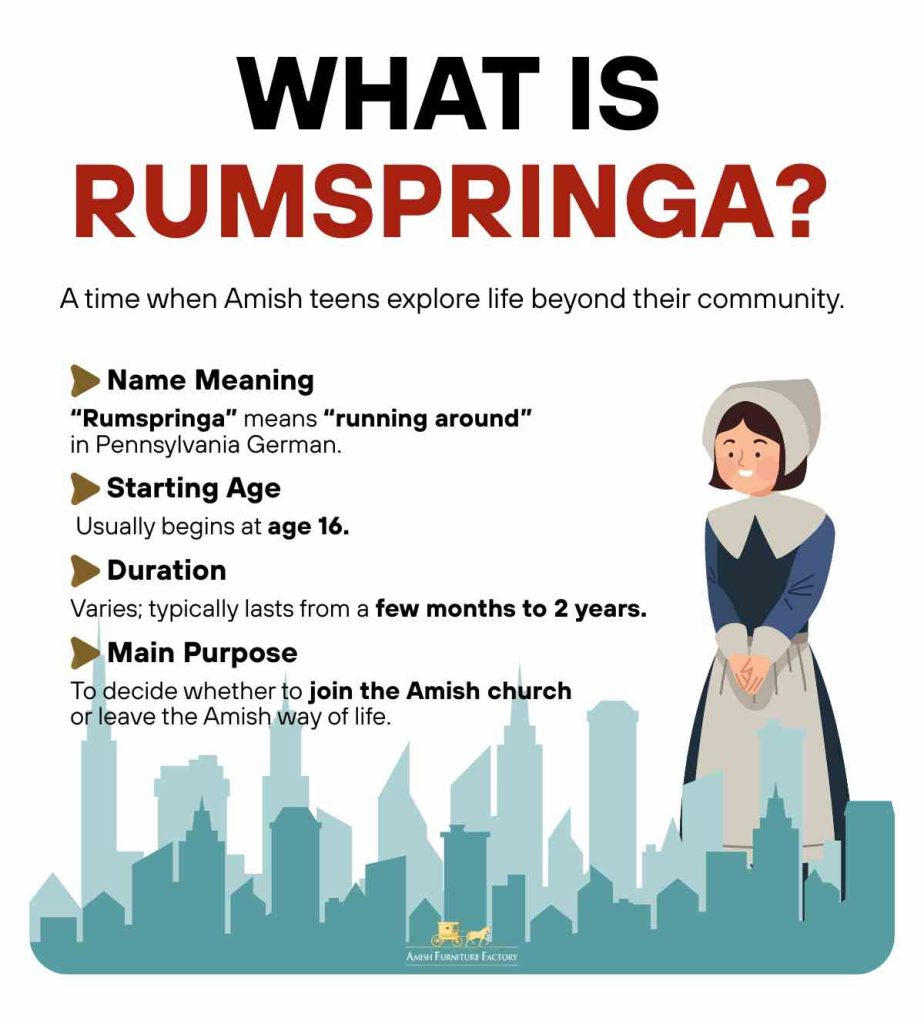
Rumspringa, a German word meaning “jumping around,” is not an officially sanctioned or rigidly defined period within all Amish communities. Its existence and manifestation can vary significantly depending on the specific Ordnung (church rules) and customs of a particular Amish group. However, the underlying principle remains consistent: to allow adolescents a supervised period of exploration and decision-making before they are expected to make a lifelong commitment to the Amish church.
Unveiling the Amish Way of Life
To understand Rumspringa, it’s essential to grasp the fundamental tenets of Amish life. The Amish are a group of traditionalist Christian church fellowships with Swiss Anabaptist origins. They are known for their simple living, plain dress, and reluctance to adopt many conveniences of modern technology. Their faith emphasizes humility, community, obedience, and a strong reliance on God. The church plays an integral role in every aspect of daily life, dictating social norms, economic activities, and familial structures. Children are raised within this framework, learning the values and practices of their faith from birth.
The Transition to Adulthood
Rumspringa typically begins in the mid-to-late teenage years, often around the age of 16, and can last until a young person is baptized into the church, usually in their early twenties. Baptism is a solemn commitment to live by the Amish faith and its rules for the rest of one’s life. Until this point, adolescents are considered members of the community but are not yet bound by the adult covenant of baptism. This provides a unique window of opportunity for them to experience life beyond the familiar boundaries of their settlement.
A Guided Exploration, Not Unfettered License
Contrary to popular portrayals in media, Rumspringa is not an officially sanctioned period of “party time” or a license for rampant rebellion. While adolescents may experience more freedom than they have before, this freedom is often within certain parameters, and there is an underlying expectation that they will eventually return to the church. Many young people continue to live at home, work within the community, and maintain relationships with their families. Their “jumping around” often involves visiting neighboring Amish communities, attending social gatherings where younger people might interact, and for some, working temporarily outside the Amish community to earn money or gain experience.
Navigating the World Outside the Ordnung
The primary function of Rumspringa is to expose adolescents to the world beyond the Amish way of life. This exposure is crucial for them to make an informed decision about whether they truly wish to commit to the Amish church for the remainder of their lives. The experience allows them to contrast their community’s values and practices with those of the “English” (the term Amish use for non-Amish people), and to evaluate the perceived benefits and drawbacks of both.
Experiencing Modern Conveniences

One of the most significant aspects of Rumspringa is the opportunity for young Amish to experience and engage with modern technologies and conveniences that are typically forbidden within the Amish community. This can include riding in cars, using telephones, watching television, listening to music, and even venturing into cities and towns with a wider array of consumer goods and entertainment options. This exposure is not necessarily encouraged for outright adoption but rather for comparative understanding. Seeing how the “English” live can highlight aspects of their own culture that they may take for granted or, conversely, find lacking.
Social Interactions and Relationships
Rumspringa also provides opportunities for increased social interaction with peers, both within and outside the Amish community. While courtship and marriage are serious matters within the Amish faith, this period might involve more casual social gatherings and a broader range of potential relationships. Some young people might engage in dating practices that are more in line with mainstream society, or they may simply have more freedom to socialize with friends without the constant oversight of elders. These experiences can shape their understanding of relationships, personal desires, and societal expectations.
The “English” World: Temptation and Revelation
The world outside the Amish community presents a different set of values and temptations. Young people may encounter behaviors and lifestyles that are starkly different from what they have grown up with. This can range from exposure to different forms of entertainment and social norms to experiencing the allure of material possessions and individualistic pursuits. This exposure is a double-edged sword; it can be a source of temptation that leads some away from the faith, but it can also serve as a catalyst for appreciating the strengths and values of their own community.
The Crossroads of Commitment: Baptism and the Choice
The culmination of Rumspringa is the decision to be baptized into the Amish church. This is a deeply personal and spiritual decision, influenced by the experiences and reflections of the preceding years. The church does not force baptism; it is a voluntary commitment. However, the expectation is that most young people will choose to be baptized and remain within the fold.
The Weight of Baptismal Vows
Upon baptism, an individual makes a solemn promise to uphold the teachings and rules of the church, to live a life of humility and obedience, and to be separated from the world. This commitment is not taken lightly. It signifies a profound integration into the Amish community and a lifelong dedication to its principles. For those who choose baptism, Rumspringa has served its purpose in solidifying their understanding and acceptance of this path.
The Path of the “Returnees” and the “Defectors”
Not all young people choose baptism. Some, after experiencing the world outside, decide that the Amish way of life is not for them. These individuals, often referred to as “returnees” if they eventually rejoin the church later in life or “defectors” if they permanently leave, are allowed to depart. The Amish community generally accepts these decisions, although it can be a source of sadness and concern for families. The church’s stance is that forced commitment is not genuine faith. Those who leave are typically not shunned in the same way as those who are excommunicated for violating church rules after baptism, but relationships can become strained.

The Impact on Community and Tradition
Rumspringa plays a vital role in the continuity and evolution of the Amish community. By allowing this period of exploration, the church ensures that those who choose baptism are doing so with full understanding and commitment, rather than out of blind obedience. This strengthens the collective resolve and dedication of the community. While some individuals may leave, the majority who stay contribute to the preservation of Amish traditions and values, ensuring their survival for future generations. The experience of Rumspringa, for those who remain, often imbues them with a deeper appreciation for the peace, simplicity, and strong community bonds that define their unique culture.
aViewFromTheCave is a participant in the Amazon Services LLC Associates Program, an affiliate advertising program designed to provide a means for sites to earn advertising fees by advertising and linking to Amazon.com. Amazon, the Amazon logo, AmazonSupply, and the AmazonSupply logo are trademarks of Amazon.com, Inc. or its affiliates. As an Amazon Associate we earn affiliate commissions from qualifying purchases.