
In the modern era of fintech, the transition from physical plastic to digital wallets has been nearly seamless for the end-user. However, behind every “tap-to-pay” transaction lies a sophisticated web of software protocols designed to keep financial data secure. One term that frequently surfaces—often causing confusion or alarm when it appears on a bank statement—is the “Visa Provisioning Service.”
Far from being a hidden fee or a sign of fraud, the Visa Provisioning Service is a fundamental component of the global digital payment infrastructure. It is a technical bridge that allows mobile devices, such as smartphones and smartwatches, to communicate securely with financial institutions. This article explores the technical nuances of this service, the mechanics of tokenization, and why it is a cornerstone of modern digital security.
The Technical Mechanics of Digital Tokenization
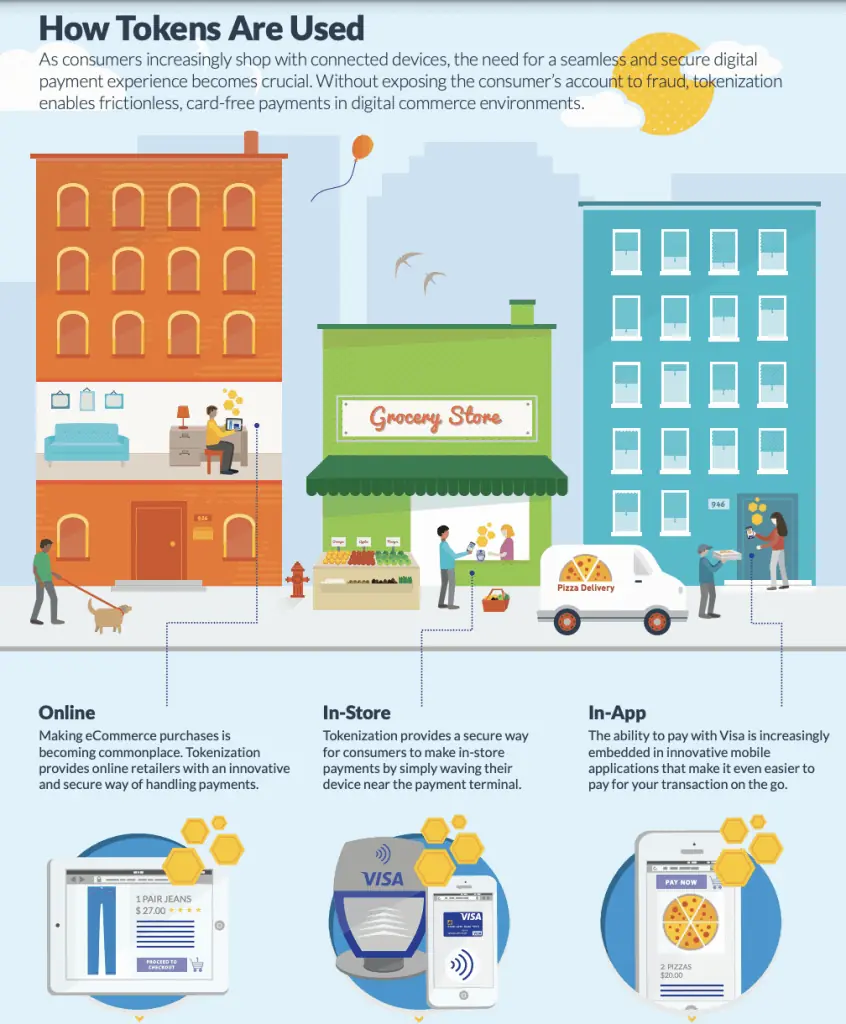
At its core, the Visa Provisioning Service is the engine behind “tokenization.” To understand the service, one must first understand why we no longer want to share actual credit card numbers across the internet or at point-of-sale terminals.
How Provisioning Replaces Sensitive Data
In the traditional payment model, your 16-digit Primary Account Number (PAN) was the “key” to your funds. If a hacker intercepted this number, they could replicate your card. The Visa Provisioning Service solves this by replacing the PAN with a “token.”
When you add a card to a digital wallet like Apple Pay, Google Pay, or Samsung Pay, the provisioning service initiates a handshake. Instead of storing your actual card number on your phone, the service generates a unique, device-specific digital identifier. This token acts as a surrogate. If a merchant’s database is breached, the hackers only find tokens that are useless outside of the specific device and transaction context for which they were created.
The Role of the Token Service Provider (TSP)
The Visa Provisioning Service acts as the Token Service Provider. Its job is to manage the lifecycle of these tokens. This includes the initial generation of the token, the mapping of that token back to the original account when a purchase is made, and the decommissioning of the token if a device is reported lost or stolen.
This technical layer ensures that the merchant never actually “sees” your real financial details. The software handles the translation in the background, ensuring that the sensitive data remains siloed within the secure servers of the payment network and the issuing bank.
Why You See a $0.00 or $1.00 Charge on Your Statement
One of the most common reasons users search for the “Visa Provisioning Service” is because they notice a pending transaction of $0.00 or $1.00 on their banking app. In the tech world, this is known as a “zero-dollar verification” or a “heartbeat” check.
The Verification Request Process
When you register a card with a new service—be it a subscription, an app store, or a mobile wallet—the backend system needs to verify that the account is active and the credentials provided are valid. The Visa Provisioning Service sends a request to the issuing bank to “ping” the account.
This is not an actual charge but a technical test of the communication pipeline. The $0.00 entry is the software’s way of asking the bank, “Is this account valid, and is it authorized for digital provisioning?” Once the bank confirms, the “charge” usually disappears within a few business days. It is a vital security step that prevents unauthorized “brute force” attempts to link stolen card data to new digital devices.
Identifying Unauthorized Provisioning Attempts
While the service itself is a security feature, seeing a “Visa Provisioning Service” line item when you haven’t recently added a card to a device can be a technical red flag. It implies that someone, somewhere, is attempting to “provision” your card into a digital wallet.
Because the provisioning process often requires Multi-Factor Authentication (MFA)—such as a code sent to your phone or email—the appearance of this $0.00 charge without your input means the first layer of your security (your card number and CVV) has been compromised. In this scenario, the tech has done its job by alerting you to the breach before a high-value fraudulent transaction could occur.
Security Protocols Behind the Service

The Visa Provisioning Service does not operate in a vacuum; it is part of a broader suite of digital security protocols designed to create an “invisible” layer of protection.
End-to-End Encryption in Mobile Wallets
When a card is provisioned, the data is encrypted using high-level standards (typically AES-256) before it ever leaves the device. The Visa Provisioning Service facilitates the exchange of these encryption keys between the device’s Secure Element (a dedicated chip in your phone) and the bank’s authorization server.
This ensures that even if the data packet is intercepted during transmission via Wi-Fi or cellular networks, it remains unreadable. The “service” part of the name refers to the continuous management of these encrypted tunnels.
Multi-Factor Authentication and Device Binding
A critical technical aspect of the provisioning service is “device binding.” The service links a specific token not just to an account, but to a specific piece of hardware. This is why you cannot simply copy a “provisioned” card from one phone to another.
During the setup, the Visa Provisioning Service works with the hardware’s biometric systems (like FaceID or fingerprint scanners). It ensures that the “intent to pay” is verified by a human biometric signature, which is then cryptographically tied to the token release. This multi-layered approach makes digital wallets significantly more secure than physical plastic cards, which lack inherent biometric locking.
Troubleshooting Visa Provisioning Failures
Like any sophisticated software ecosystem, the provisioning process can occasionally fail. Understanding the technical reasons for these failures can help users navigate digital banking more effectively.
Common Connectivity and Server Errors
Sometimes, a user may receive an error message stating “Could Not Add Card” or “Provisioning Failed.” Often, this is a result of a timeout in the API (Application Programming Interface) call between the wallet provider and the Visa Provisioning Service.
If the bank’s servers are undergoing maintenance or if the Visa network is experiencing high latency, the “handshake” cannot be completed. Because the security requirements for provisioning are so stringent, even a minor delay in data packet transmission can cause the system to abort the process to prevent a potential “man-in-the-middle” attack.
Bank Authorization and Verification Methods
Another technical hurdle involves the “Yellow Path” or “Orange Path” in provisioning logic.
- Green Path: The card is added instantly because the risk engine identifies the device and user as low-risk.
- Yellow/Orange Path: The Visa Provisioning Service requires additional verification.
This usually happens if the user is in a foreign country, using a new device, or if the bank’s internal logic flags the setup as suspicious. In these cases, the provisioning service stays in a “pending” state until the user provides an OOB (Out-of-Band) authentication code. If the software cannot verify the user’s identity through these secondary channels, the provisioning request is revoked, protecting the account from unauthorized digital duplication.

The Future of “Invisible” Security
The Visa Provisioning Service represents a shift in how we think about digital security. In the past, security was “clunky”—it required manual entry, physical signatures, and constant friction. Today, security is a background service.
As we move toward a “cashless” and “cardless” society, services like these will become even more integrated into our daily lives. We are seeing the expansion of provisioning into “Internet of Things” (IoT) devices, such as connected cars that can provision a payment token to pay for gas or tolls automatically.
The complexity of these systems is immense, involving real-time risk scoring, global data centers, and advanced cryptography. Yet, for the average user, all of this tech is distilled into a simple $0.00 notification or a haptic buzz on a smartwatch. The Visa Provisioning Service is a testament to how far payment technology has come, turning a vulnerable 16-digit number into a dynamic, encrypted, and highly secure digital asset.
In summary, the next time you see “Visa Provisioning Service” on your digital statement, recognize it as the silent work of a sophisticated security engine. It is the software equivalent of a high-tech vault, ensuring that your financial identity remains yours alone, even as it travels through the invisible airwaves of the digital world.
aViewFromTheCave is a participant in the Amazon Services LLC Associates Program, an affiliate advertising program designed to provide a means for sites to earn advertising fees by advertising and linking to Amazon.com. Amazon, the Amazon logo, AmazonSupply, and the AmazonSupply logo are trademarks of Amazon.com, Inc. or its affiliates. As an Amazon Associate we earn affiliate commissions from qualifying purchases.