
In the realm of automotive technology, the pursuit of enhanced traction, stability, and performance has led to the development of sophisticated all-wheel drive (AWD) systems. Among these, Mercedes-Benz’s 4MATIC stands out as a pioneering and highly regarded technology, synonymous with the brand’s commitment to engineering excellence and driver confidence. But what exactly is 4MATIC, and how does it elevate the driving experience? This article delves into the intricacies of Mercedes-Benz’s advanced all-wheel drive system, exploring its evolution, operational principles, and the tangible benefits it offers to drivers.
The Genesis and Evolution of 4MATIC
Mercedes-Benz has a long-standing history of innovation in vehicle dynamics, and the concept of all-wheel drive was an early focal point. The initial iterations of their AWD systems were designed to provide improved grip in challenging conditions, a crucial factor for safety and performance, particularly in regions with adverse weather.
Early Forays into All-Wheel Drive
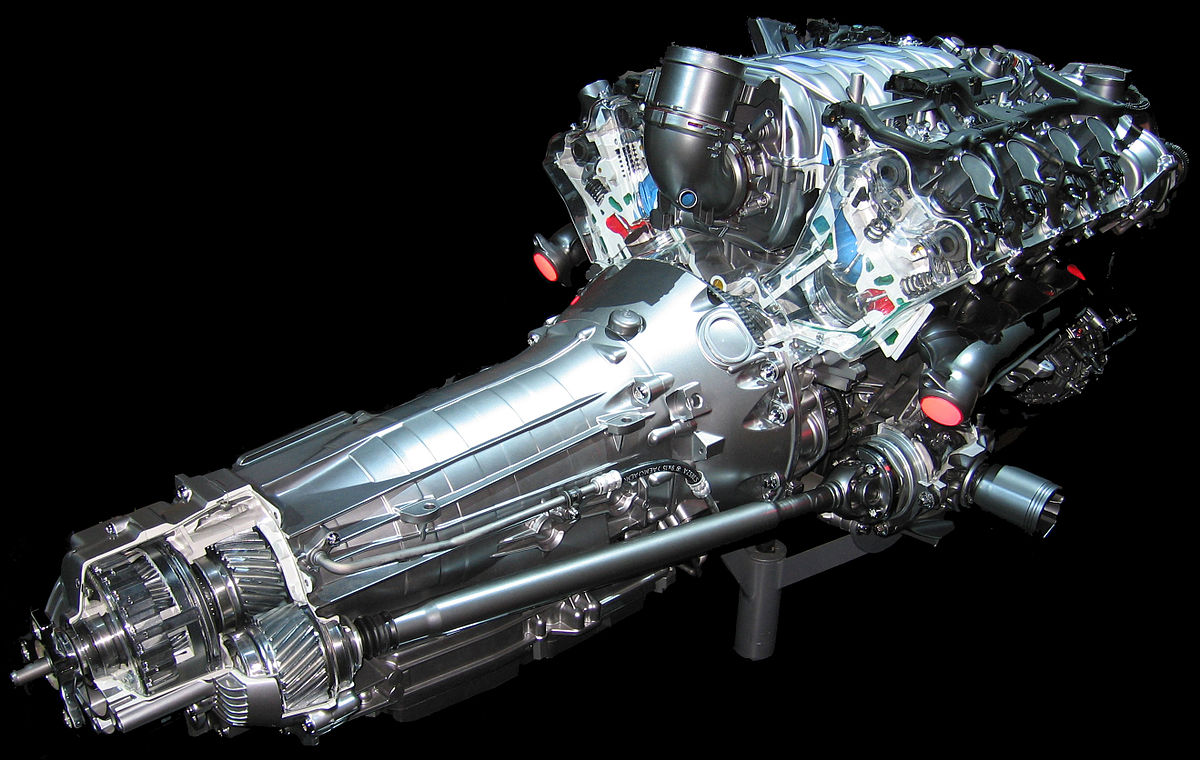
The seeds of 4MATIC were sown long before its official branding. Mercedes-Benz vehicles in the late 20th century began to incorporate AWD capabilities, often as optional or specialized variants. These early systems, while functional, were typically heavier and more mechanically complex, often relying on fixed torque splits between the front and rear axles. The primary objective was to distribute power to all wheels, thereby maximizing traction when encountering slippery surfaces such as snow, ice, or rain. This was a significant step forward from traditional rear-wheel-drive configurations, which could be prone to wheel spin and loss of control in low-traction scenarios.
The Birth and Refinement of the 4MATIC Brand
The official introduction of the “4MATIC” name marked a new era for Mercedes-Benz’s AWD technology. This branding allowed the company to consolidate its efforts and highlight the advanced nature of its all-wheel drive offerings. Over the years, 4MATIC has undergone continuous development, evolving from purely mechanical systems to highly intelligent, electronically controlled powertrains. This evolution has been driven by advancements in sensor technology, computing power, and sophisticated control algorithms.
The progression saw the introduction of variable torque distribution, allowing the system to dynamically adjust the power sent to the front and rear axles based on real-time driving conditions. This adaptability is a hallmark of modern 4MATIC systems, enabling them to optimize traction and handling not just in adverse weather, but also during spirited driving or when encountering uneven terrain. The focus shifted from merely providing grip to enhancing the overall driving dynamics, making the vehicle more agile and responsive.
How 4MATIC Works: The Technology Behind the Traction
At its core, 4MATIC is an intelligent all-wheel drive system that continuously monitors driving conditions and driver inputs to optimize power distribution to all four wheels. The specific implementation and capabilities can vary slightly across different Mercedes-Benz models and generations, but the fundamental principles remain consistent: enhanced traction and stability through intelligent torque management.
The Core Components and Principles
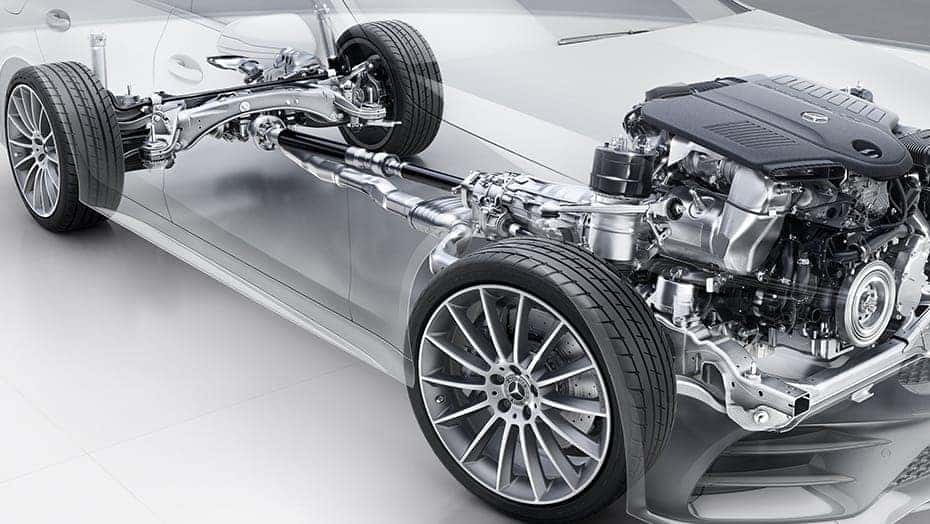
Modern 4MATIC systems typically employ a planetary gear center differential. This innovative design allows for fully variable torque distribution between the front and rear axles, a significant departure from older, more rudimentary AWD systems that often used a fixed 50:50 split or a limited-slip center differential. The planetary gear set acts as the heart of the system, enabling it to seamlessly shift power where it’s needed most.
The system relies on a sophisticated network of sensors that constantly gather data about various vehicle parameters. These include wheel speed sensors (monitoring the rotational speed of each wheel), steering angle sensors (indicating the driver’s intended direction), accelerator pedal position sensors (gauging the driver’s acceleration input), and yaw rate sensors (measuring the vehicle’s rotation around its vertical axis).
This wealth of data is fed into a dedicated control unit, often integrated with the Electronic Stability Program (ESP) and Anti-lock Braking System (ABS). The control unit processes this information in milliseconds, analyzing the current driving situation. If it detects a tendency for wheels to slip, such as during acceleration on a slick surface or when cornering aggressively, it instantaneously adjusts the torque distribution. For instance, if the rear wheels begin to lose traction, more power can be automatically directed to the front wheels to regain grip. Conversely, if the front wheels are struggling for traction, power can be biased towards the rear. This dynamic and responsive power management is what differentiates advanced AWD systems like 4MATIC.
The Role of Electronic Control and Sensors
The sophistication of 4MATIC lies in its advanced electronic control. Unlike purely mechanical AWD systems, which operate based on physical limitations and differential locks, 4MATIC leverages electronic intelligence to achieve superior performance. The control unit acts as the brain, constantly communicating with the engine management system, transmission control unit, and chassis control systems.
This integration allows for highly precise adjustments. For example, if the ESP system detects incipient oversteer or understeer, it can work in conjunction with 4MATIC to counteract these tendencies by manipulating brake pressure on individual wheels and altering torque distribution. This seamless interplay between systems creates a cohesive and stable driving experience, even in challenging situations. The system is designed to be largely imperceptible to the driver, operating smoothly and instantaneously to provide optimal traction and control without the need for manual intervention. The goal is to enhance safety and driver confidence by proactively managing grip, rather than reactively compensating for loss of control.
Benefits of 4MATIC: More Than Just Traction
The advantages of 4MATIC extend far beyond simply providing better grip in bad weather. While that remains a primary benefit, the system’s intelligent design contributes to a more refined, secure, and engaging driving experience in a variety of conditions.
Enhanced Safety and Stability
The most apparent benefit of 4MATIC is its contribution to enhanced safety. By ensuring that power is always delivered to the wheels with the most available traction, the system significantly reduces the risk of wheel spin, skids, and loss of control. This is particularly crucial in adverse weather conditions such as rain, snow, and ice, where the contact patch between the tires and the road is compromised.
In such scenarios, 4MATIC proactively distributes torque to prevent situations that could lead to a loss of stability. For instance, during emergency maneuvers or sudden braking on a slippery surface, the system works in harmony with ESP and ABS to maintain directional control and minimize stopping distances. The ability to maintain confident traction allows drivers to navigate challenging conditions with greater assurance, reducing anxiety and improving overall road safety. This proactive approach to stability is a hallmark of Mercedes-Benz’s commitment to passenger safety.
Improved Driving Dynamics and Performance
Beyond safety, 4MATIC also plays a significant role in enhancing driving dynamics and performance. During spirited driving, the system can optimize torque distribution to improve cornering ability and acceleration. By precisely managing power to each wheel, it can help to minimize understeer and oversteer, allowing the vehicle to feel more planted and responsive through corners.
In situations where optimal traction is required for spirited driving, such as accelerating out of a tight bend, 4MATIC can bias power to the wheels that have the most grip, ensuring maximum forward propulsion. This intelligent torque vectoring capability not only improves lap times on a track but also translates to a more enjoyable and confident driving experience on winding country roads. The ability to put power down effectively, even when the vehicle is not perfectly aligned with the direction of travel, contributes to a more dynamic and engaging drive. This enhanced performance is achieved without sacrificing the comfort and refinement that are characteristic of a Mercedes-Benz vehicle.
Versatility Across Driving Conditions
The true strength of 4MATIC lies in its versatility. While it excels in inclement weather, its benefits are not confined to those situations. The system continuously adapts to a wide range of driving conditions, providing optimized traction and stability whether you’re navigating city streets, cruising on the highway, or venturing off the beaten path.
On dry pavement, 4MATIC can still offer advantages. During aggressive acceleration or hard cornering, the system can ensure that power is efficiently transferred to maintain optimal grip and responsiveness. For drivers who live in areas with unpredictable weather patterns, or who frequently encounter varied road surfaces, 4MATIC provides a consistent and reassuring level of confidence. Furthermore, in some Mercedes-Benz models, specific “off-road” driving modes can be engaged, which further optimize the 4MATIC system’s behavior for light off-road excursions, providing enhanced traction on unpaved surfaces. This all-encompassing approach makes 4MATIC a valuable feature for drivers seeking a superior and more adaptable driving experience year-round.
4MATIC Variants and Model Integration
Mercedes-Benz offers various implementations of its 4MATIC all-wheel drive system, tailored to the specific needs and performance characteristics of different vehicle lines. Understanding these variants helps to appreciate the breadth of this technology and its application across the brand’s diverse lineup.
Tailored Systems for Different Models
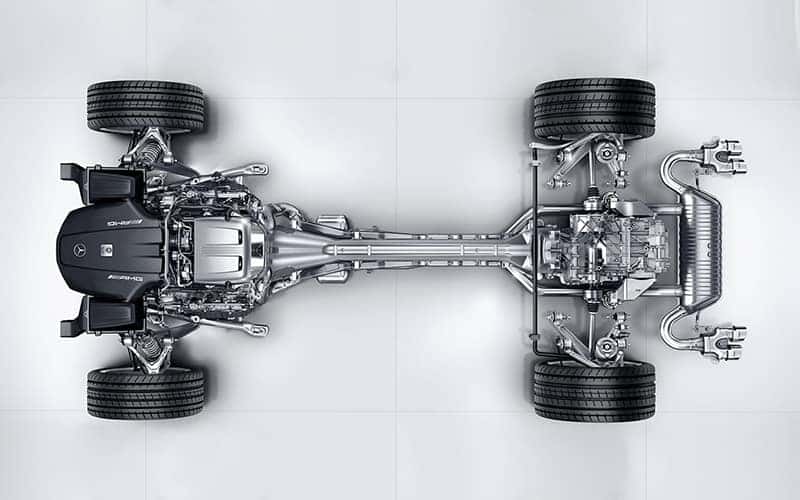
Not all 4MATIC systems are created equal. Mercedes-Benz engineers have developed specific configurations to best suit the driving dynamics and intended purpose of each model. For instance, performance-oriented AMG models often feature sport-tuned 4MATIC systems that prioritize rear-wheel bias for a more dynamic, rear-driven feel, while still providing the safety net of front-wheel drive when needed. These systems might employ a more aggressive torque split or even incorporate advanced torque vectoring technologies to further enhance agility.
In contrast, models focused on comfort and efficiency, such as certain sedans and SUVs, may feature 4MATIC systems optimized for smooth power delivery and maximum traction with minimal impact on fuel consumption. These systems might utilize a more rear-biased, permanent all-wheel drive setup that engages the front axle only when traction is lost, or a more sophisticated variable system that continuously adjusts power distribution for optimal balance between performance and economy. The goal is always to enhance the inherent driving characteristics of the specific Mercedes-Benz model, ensuring that the 4MATIC system complements, rather than compromises, its overall design philosophy.
The Future of 4MATIC: Electrification and Beyond
As the automotive industry moves towards electrification, 4MATIC is also evolving to integrate with hybrid and fully electric powertrains. This integration presents new opportunities for intelligent torque management and enhanced performance. In hybrid vehicles, 4MATIC can be used to distribute power from both the internal combustion engine and the electric motor(s) to all four wheels, optimizing traction and efficiency.
For electric vehicles (EVs), 4MATIC can take on new forms. Many electric vehicles already utilize dual-motor setups (one motor per axle), effectively providing all-wheel drive. However, advanced 4MATIC integration in EVs can involve even more sophisticated control strategies, allowing for precise torque vectoring between individual wheels. This can lead to unprecedented levels of agility, stability, and performance, pushing the boundaries of what’s possible with electric mobility. The future of 4MATIC is intrinsically linked to the future of automotive propulsion, promising even more intelligent, efficient, and exhilarating driving experiences.
Conclusion: A Hallmark of Mercedes-Benz Engineering
4MATIC is more than just an all-wheel drive system; it is a testament to Mercedes-Benz’s unwavering commitment to innovation, safety, and driving pleasure. From its early origins to its sophisticated modern implementations, 4MATIC has consistently pushed the boundaries of automotive technology, providing drivers with enhanced traction, stability, and confidence in a wide array of driving conditions. Whether navigating treacherous winter roads, tackling challenging terrain, or simply enjoying a spirited drive on an open road, the intelligent and adaptable nature of 4MATIC ensures a secure and exhilarating experience. As Mercedes-Benz continues to pioneer the future of mobility, 4MATIC will undoubtedly remain a cornerstone of its engineering prowess, evolving to meet the demands of new powertrains and the ever-increasing expectations of discerning drivers.
aViewFromTheCave is a participant in the Amazon Services LLC Associates Program, an affiliate advertising program designed to provide a means for sites to earn advertising fees by advertising and linking to Amazon.com. Amazon, the Amazon logo, AmazonSupply, and the AmazonSupply logo are trademarks of Amazon.com, Inc. or its affiliates. As an Amazon Associate we earn affiliate commissions from qualifying purchases.