
The internal combustion engine, a marvel of engineering that has powered our transportation for over a century, operates on a fundamental principle: controlled explosions. These explosions, which occur thousands of times per minute, generate immense heat. While this heat is the driving force behind a car’s propulsion, unchecked, it can quickly lead to catastrophic engine failure. This is where the unsung hero of the automotive cooling system, the radiator, steps in. More than just a simple component, the radiator is a sophisticated heat exchanger, a vital piece of technology that prevents our vehicles from succumbing to their own operational inferno. Its function is not merely about preventing overheating; it’s about maintaining optimal operating temperatures, ensuring efficiency, longevity, and ultimately, the reliable performance of the engine.
The complexity of modern vehicles often overshadows the elegance and critical role of foundational technologies like the cooling system. Understanding what the radiator does is not just for mechanics or engineering enthusiasts; it’s for any car owner who wishes to appreciate the intricate interplay of components that keep their machine running smoothly. This exploration will delve into the technological principles behind the radiator’s operation, its integral role within the broader cooling system, and the implications of its function for vehicle performance and longevity.
The Core Function: Heat Dissipation Through Thermodynamics
At its heart, the radiator’s purpose is simple: to dissipate excess heat generated by the engine into the surrounding environment. This seemingly straightforward task is accomplished through a clever application of thermodynamic principles, specifically convection and radiation. The engine’s combustion process generates temperatures that can easily exceed 1000 degrees Celsius (1832 degrees Fahrenheit). Without an effective cooling mechanism, these extreme temperatures would rapidly warp metal, degrade lubricants, and cause irreparable damage.
The Engine’s Heat Generation Cycle
The combustion of fuel and air within the engine cylinders creates a rapid expansion of gases, forcing the pistons downwards and generating mechanical power. This process is inherently inefficient, with a significant portion of the energy released as heat rather than usable work. This waste heat is absorbed by the engine block and cylinder head, components designed to withstand these high temperatures but not indefinitely without intervention. As the engine operates, this heat is transferred to the circulating coolant.
Coolant: The Heat Transfer Medium
The lifeblood of the cooling system is the coolant, a mixture of water and antifreeze. Water possesses excellent heat absorption properties, but its tendency to boil at relatively low temperatures and freeze in colder climates necessitates the addition of antifreeze. Antifreeze not only lowers the freezing point and raises the boiling point of the water but also contains additives that prevent corrosion and lubricate the water pump. This specialized fluid circulates through passages within the engine block and cylinder head, absorbing the heat generated by combustion.
The Radiator’s Role in Heat Exchange
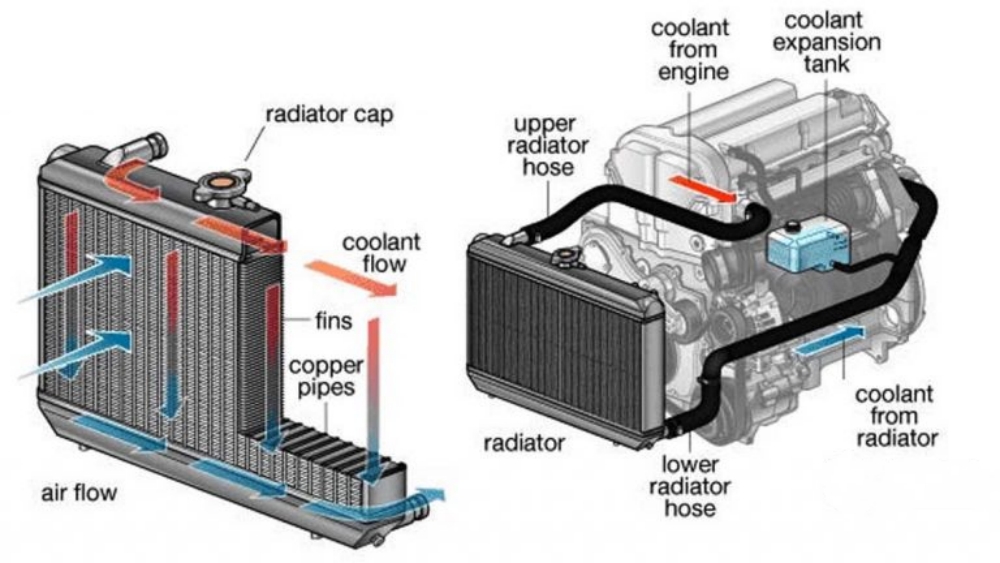
Once the heated coolant leaves the engine, it flows to the radiator. The radiator is a complex network of thin tubes and fins, typically made of aluminum or copper, materials known for their excellent thermal conductivity. The hot coolant flows through these tubes. As it does so, the heat energy it carries is transferred through the tube walls to the surrounding fins. These fins are designed to maximize the surface area exposed to the air, significantly enhancing the rate of heat transfer. As the car moves, or when the fan is engaged, air flows over these fins, carrying the heat away from the radiator and into the atmosphere. This process is known as convective heat transfer. A small amount of heat is also dissipated through radiation, but convection is the primary mechanism.
The Radiator’s Integration within the Cooling System Architecture
The radiator does not operate in isolation. It is a crucial component within a larger, interconnected system designed to meticulously manage engine temperature. This system includes the thermostat, water pump, cooling fan, hoses, and reservoir, all working in concert to ensure the engine operates within its ideal temperature range. The efficiency and effectiveness of the entire system depend on the proper functioning of each individual part, with the radiator playing a central role in the final stage of heat removal.
The Thermostat: Regulating Coolant Flow

The thermostat acts as a gatekeeper for the coolant. When the engine is cold, the thermostat remains closed, preventing coolant from flowing to the radiator. This allows the engine to reach its optimal operating temperature more quickly, which is crucial for efficient combustion, reduced emissions, and proper lubrication. Once the coolant reaches a predetermined temperature, the thermostat opens, allowing hot coolant to circulate through the radiator for cooling. This regulation is vital; if coolant were to flow to the radiator immediately upon startup, the engine would struggle to reach its operating temperature, leading to inefficient operation and increased wear.
The Water Pump: Circulating the Lifeblood
The water pump is the heart of the cooling system, responsible for continuously circulating the coolant throughout the engine and radiator. Driven by the engine’s serpentine belt or timing belt, the water pump creates pressure that pushes the coolant through the intricate network of passages within the engine block, cylinder head, heater core (for cabin heating), and ultimately, to the radiator. Without the water pump, the coolant would stagnate, and heat would not be effectively transferred away from the engine.
The Cooling Fan: Enhancing Airflow
While the radiator relies on natural airflow from the vehicle’s movement, this may not be sufficient, especially at low speeds or when idling. This is where the cooling fan comes into play. Modern vehicles often utilize electric cooling fans, controlled by the engine’s computer. These fans can be engaged as needed to draw air through the radiator, ensuring adequate cooling even when the vehicle is stationary or moving slowly. Older vehicles might have belt-driven fans with a clutch that engages based on temperature. The fan’s ability to increase airflow is critical for maintaining optimal temperatures under demanding conditions.
Hoses and Reservoir: The Connective Tissue and Buffer
Hoses are the arteries and veins of the cooling system, carrying the coolant between the engine, radiator, and other components. They are typically made of reinforced rubber to withstand the high temperatures and pressures of the system. The reservoir, also known as the expansion tank, serves a dual purpose. It acts as a buffer for coolant expansion and contraction due to temperature changes, preventing pressure buildup within the system. It also provides a convenient point for checking coolant levels and topping up the system.
The Radiator’s Impact on Engine Performance and Longevity
The radiator’s primary function of maintaining optimal engine temperature has profound implications for how a car performs, its fuel efficiency, and how long its engine will last. A properly functioning cooling system, with an efficient radiator at its core, contributes directly to a smoother, more reliable, and ultimately, more economical driving experience.
Optimal Operating Temperature and Efficiency
Internal combustion engines are designed to operate most efficiently within a specific temperature range. When an engine is too cold, combustion is incomplete, leading to increased fuel consumption and higher emissions. Lubricants also don’t flow as effectively, increasing wear. Conversely, an engine that overheats can experience a range of detrimental effects. The radiator’s role in maintaining the engine within its ideal temperature window ensures that combustion is complete and efficient, maximizing fuel economy and minimizing wasted energy. This precise temperature management also contributes to reduced wear on engine components.
Preventing Engine Damage and Component Failure
The most obvious and critical impact of a functional radiator is the prevention of catastrophic engine damage. Overheating can cause the engine block and cylinder head to warp, leading to leaks and severe internal damage. It can also cause the oil to break down, losing its lubricating properties and leading to increased friction and wear between moving parts. Blown head gaskets, cracked engine blocks, and seized pistons are all potential consequences of an inadequate cooling system and a malfunctioning radiator. Beyond these major failures, prolonged operation at elevated temperatures can also accelerate the wear of seals, gaskets, and other rubber components within the engine bay.

Extending Engine Lifespan and Reliability
By consistently keeping the engine within its optimal operating temperature, the radiator plays a direct role in extending the overall lifespan of the engine. Reduced thermal stress on engine components translates to less wear and tear over time. This means fewer premature failures, less need for costly repairs, and a more reliable vehicle for the owner. A well-maintained cooling system, with a healthy radiator, is a cornerstone of a vehicle’s long-term durability and the owner’s peace of mind. The technology within the radiator, though seemingly simple, is a critical safeguard against the destructive forces of uncontrolled heat, ensuring that the marvel of the internal combustion engine continues to perform its duty reliably for years to come.
aViewFromTheCave is a participant in the Amazon Services LLC Associates Program, an affiliate advertising program designed to provide a means for sites to earn advertising fees by advertising and linking to Amazon.com. Amazon, the Amazon logo, AmazonSupply, and the AmazonSupply logo are trademarks of Amazon.com, Inc. or its affiliates. As an Amazon Associate we earn affiliate commissions from qualifying purchases.