
In the modern digital landscape, we often take for granted the seamless flow of data that powers our lives. Whether you are streaming a high-definition video, participating in a global video conference, or simply sending an email, your data is navigating a complex web of hardware. While routers and Wi-Fi access points often get the spotlight, there is a silent hero operating behind the scenes in almost every office, data center, and smart home: the network switch.
To understand what switches do, one must look past the simple box with blinking lights. In the world of Information Technology, a switch is a fundamental piece of networking hardware that connects devices on a computer network by using packet switching to receive and forward data to the destination device. Unlike a hub, which broadcasts data to every port, a switch is “intelligent”—it learns which device is connected to which port and ensures that data reaches exactly where it needs to go.

The Fundamental Role of a Network Switch
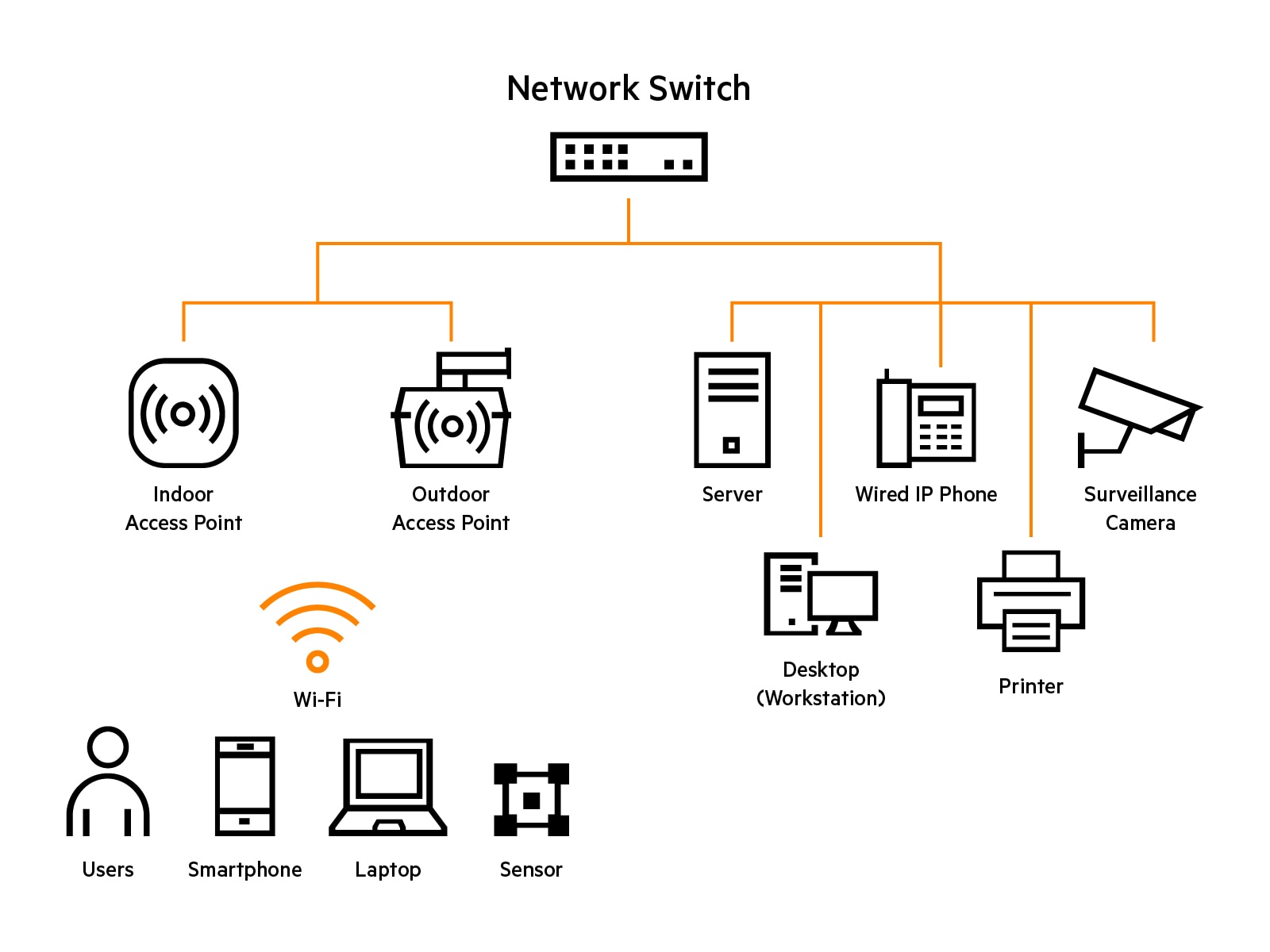
At its core, a network switch serves as a controller, allowing networked devices to talk to each other efficiently. By connecting computers, printers, servers, and wireless access points, the switch creates a network of shared resources.
How Packet Switching Works
The primary function of a switch is “packet switching.” When data is sent across a network, it is broken down into small units called packets. Each packet contains a header with the destination’s MAC (Media Access Control) address.
When a packet enters a switch port, the switch inspects this header. It maintains an internal table, known as a MAC address table or Content Addressable Memory (CAM) table. This table keeps track of which MAC address is associated with which physical port. By looking at the table, the switch identifies the specific port the destination device is plugged into and forwards the packet only to that port. This targeted delivery is what makes switches significantly more efficient than the “hubs” used in the early days of networking.
Bridges vs. Switches: The Evolution of Connectivity
To appreciate what modern switches do, it is helpful to understand their ancestry. Before switches, we had bridges and hubs. Hubs were “dumb” devices; any data entering one port was broadcast to every other port, leading to massive data collisions and network congestion. Bridges were a step up, connecting two network segments, but they were slow and software-based.
Modern switches are essentially “multi-port bridges” that operate at hardware speeds. They use Application-Specific Integrated Circuits (ASICs) to process data at “wire speed,” meaning they can handle data as fast as the physical cable can carry it. This evolution has allowed for the creation of high-speed local area networks (LANs) that can support thousands of simultaneous users without performance degradation.
Different Types of Switches and Their Applications
Not all switches are created equal. Depending on the size of the organization and the complexity of the technical requirements, different “flavors” of switches are deployed to manage traffic.
Unmanaged Switches for Simple Plug-and-Play
Unmanaged switches are the most basic type. They are frequently used in home networks or small offices where the primary goal is simply to add more Ethernet ports to a router. These devices have no configuration interface and require no setup; you simply plug them in and they start working. While they lack advanced features, they are cost-effective and reliable for basic connectivity needs.
Managed Switches for Granular Control
In enterprise environments, managed switches are the standard. These devices provide network administrators with a suite of tools to monitor and configure the network. Through a command-line interface (CLI) or a web-based management console, IT professionals can adjust port speeds, set up redundancy protocols, and monitor traffic patterns. Managed switches are essential for troubleshooting network issues and ensuring that critical applications receive the bandwidth they require.
PoE (Power over Ethernet) Switches
A specialized type of switch that has gained immense popularity in the “Internet of Things” (IoT) era is the PoE switch. These switches transmit both data and electrical power over a single Ethernet cable. This is incredibly useful for powering devices like IP security cameras, VoIP phones, and wireless access points in locations where a traditional power outlet is unavailable. By consolidating power and data, organizations can significantly reduce installation costs and simplify their infrastructure.
Layer 2 vs. Layer 3 Switching

In the technical hierarchy of the Open Systems Interconnection (OSI) model, switches can operate at different “layers,” which dictates how much intelligence they apply to data routing.
The Data Link Layer (Layer 2)
Most standard switches operate at Layer 2, the Data Link Layer. At this level, the switch moves data based strictly on MAC addresses. It doesn’t care about IP addresses or the “big picture” of the internet; it only cares about moving data between physical devices within the same local network. Layer 2 switches are the workhorses of the office LAN, providing the high-speed connectivity required for daily operations.
Routing Capabilities in Modern Switches (Layer 3)
As networks have grown more complex, the line between a switch and a router has blurred. Layer 3 switches operate at the Network Layer. Unlike Layer 2 switches, they can recognize IP addresses and perform routing functions.
The advantage of a Layer 3 switch is that it can route data between different subnets within a large building or campus much faster than a traditional router. While a router is still needed to connect the entire network to the outside internet (the Wide Area Network), Layer 3 switches handle the “internal” routing, offloading the burden from the main router and reducing latency for internal data transfers.
Why Switches are Essential for Digital Security and Performance
Beyond just moving data, switches play a critical role in the health and security of a digital environment. They act as the first line of defense and the primary optimizer for network resources.
Reducing Network Congestion and Collisions
In an environment without switches (such as one using old-fashioned hubs), devices frequently try to send data at the same time, leading to “collisions.” When a collision occurs, the data is corrupted and must be resent, slowing down the entire network.
Switches solve this by creating “micro-segmentation.” Each port on a switch is its own collision domain. This allows for full-duplex communication, where a device can send and receive data simultaneously without interference. This optimization is why modern networks feel so much faster and more responsive than those of twenty years ago.
Implementing VLANs for Enhanced Security
One of the most powerful features of a managed switch is the ability to create Virtual Local Area Networks (VLANs). A VLAN allows an administrator to logically group devices together, even if they are plugged into the same physical switch.
For example, a company might place its accounting department on one VLAN and its guest Wi-Fi on another. Because the switch keeps these VLANs isolated, a guest user cannot access the sensitive financial data of the accounting team. This logical isolation is a cornerstone of modern cybersecurity, preventing “lateral movement” by hackers who might gain access to one part of a network but find themselves blocked from more sensitive areas.
The Future of Switching: AI and Software-Defined Networking (SDN)
As we look toward the future of technology, switches are becoming even more sophisticated. The rise of Software-Defined Networking (SDN) is changing the way we think about hardware.
In a traditional setup, the “brain” of the switch (the control plane) and the “arms” of the switch (the data plane) are housed in the same box. With SDN, the control plane is centralized in a software controller. This allows IT teams to manage hundreds of switches from a single dashboard, pushing out updates and security policies instantly across an entire global infrastructure.
Furthermore, Artificial Intelligence (AI) is being integrated into high-end switches. These AI-driven switches can analyze traffic patterns in real-time, automatically identifying and mitigating security threats or re-routing traffic to prevent bottlenecks before they occur. This “intent-based networking” represents the next frontier, where the network switch is no longer just a passive conduit for data, but an active, self-healing component of a smart digital ecosystem.
In conclusion, while they may look like simple boxes, switches are the sophisticated engines of the modern world. They provide the speed, intelligence, and security required for our data-driven society to function. From the unmanaged switch in your home office to the AI-powered Layer 3 switch in a massive data center, these devices are the invisible glue holding the digital world together.
aViewFromTheCave is a participant in the Amazon Services LLC Associates Program, an affiliate advertising program designed to provide a means for sites to earn advertising fees by advertising and linking to Amazon.com. Amazon, the Amazon logo, AmazonSupply, and the AmazonSupply logo are trademarks of Amazon.com, Inc. or its affiliates. As an Amazon Associate we earn affiliate commissions from qualifying purchases.